Horror in Iran: Regime Faces Deadliest Unrest in Decades
A Nation on the Brink
Iran is in the grip of its most violent internal crisis in more than forty years, as nationwide protests have descended into bloodshed and chaos. What began as demonstrations over economic collapse and rising living costs has evolved into a sweeping revolt that challenges the foundations of the Islamic Republic.
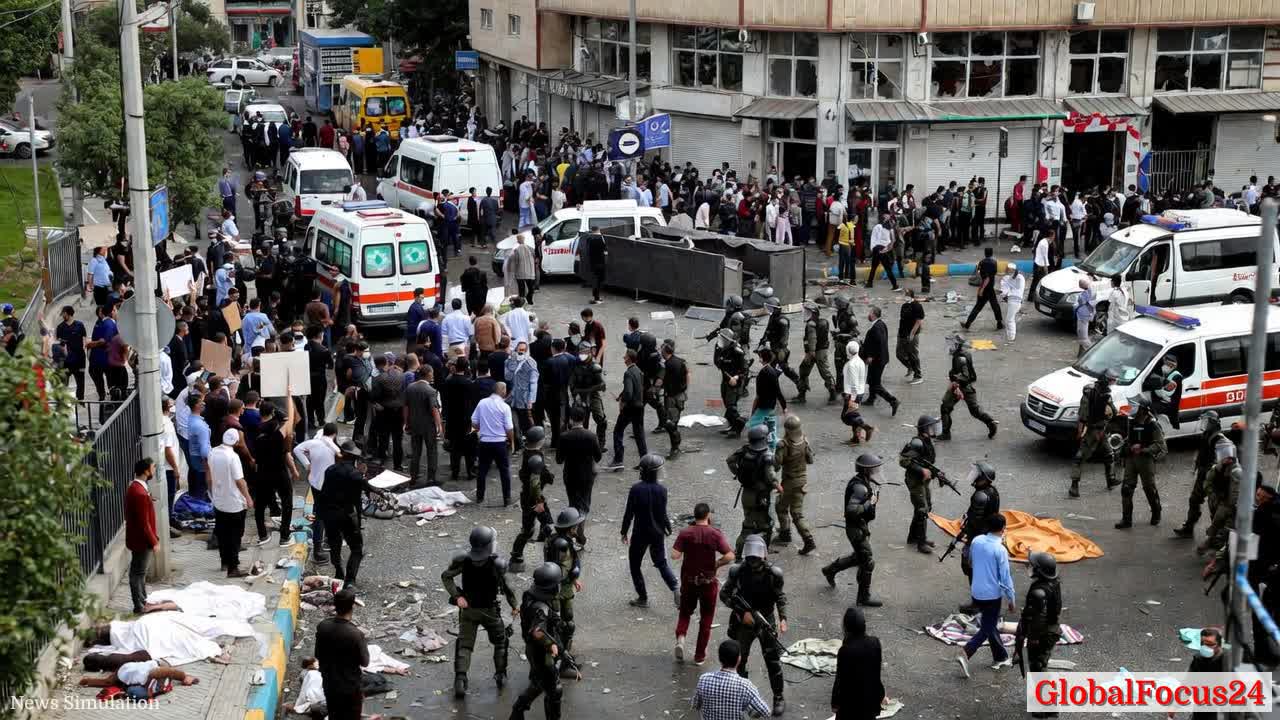
In the past week, the scale of violence has shocked even seasoned observers of Iran’s periodic unrest. Eyewitnesses describe scenes of carnage in major cities such as Tehran, Shiraz, Isfahan, and Mashhad, where streets reportedly turned into battlegrounds during the nights of January 8 and 9. Live ammunition, sniper fire, and mass arrests have left thousands dead and many more wounded. Hospitals, morgues, and emergency centers are overwhelmed, with unverified reports suggesting bodies piled in hangars and warehouses after medical facilities ran out of space.
As the regime tightened control, a near-total nationwide internet blackout severed contact with the outside world, concealing the full extent of the crisis and suppressing independent reporting. The blackout has further deepened fears of a humanitarian catastrophe unfolding largely beyond international scrutiny.
Economic Collapse as Catalyst
The protests that erupted in late December were sparked by what many Iranians describe as unbearable economic hardship. Years of international sanctions, government mismanagement, and endemic corruption have driven inflation into triple digits and forced the national currency, the rial, to historic lows. Ordinary citizens struggle with severe unemployment, unaffordable food prices, and energy shortages.
For merchants in Tehran’s Grand Bazaar and industrial workers in Ahvaz, the protest movement represents both desperation and defiance. "We can no longer feed our families," said one shopkeeper via a secure messaging channel before the blackout. “Prices change by the hour, and what we earn is worth nothing by evening.”
Economists note that Iran’s economic decline is not a sudden phenomenon but rather the culmination of decades of structural inefficiencies. Heavy dependence on state-controlled oil revenues, coupled with chronic underinvestment in other sectors, has created a fragile system acutely sensitive to export disruptions and currency shocks. Recent international isolation has only amplified these weaknesses, driving widespread public anger toward the regime's leadership.
The Anatomy of Repression
The state’s response has been swift and unrelenting. Security forces launched sweeping crackdowns across urban centers, using armored vehicles, riot police, and sharpshooters stationed on rooftops. Videos that briefly surfaced online before the blackout showed protesters running for cover as gunfire echoed through dense neighborhoods.
Witnesses in Tehran reported that on January 9, security units fired indiscriminately into crowds. Makeshift field hospitals, set up by volunteers and medics, were raided. Many of the injured were allegedly detained directly from hospital beds. Relatives searching for missing loved ones have encountered military checkpoints blocking access to morgues.
The scale of the killings recalls previous episodes of repression in Iran, including the November 2019 protests over fuel price hikes that left hundreds dead, according to international human rights groups. However, analysts describe the current crackdown as far more extensive and systematic. “What we are seeing now is a deliberate use of overwhelming force to eliminate dissent altogether,” said a Middle East security expert based in London.
Historical Parallels and Lessons
Throughout its modern history, Iran has experienced cycles of uprising and repression — from the Constitutional Revolution of 1906 to the Islamic Revolution of 1979, and later demonstrations in 1999, 2009, and 2019. Each wave reflected deep-rooted tensions between state authority and public demands for freedom and accountability.
Yet, unlike previous eruptions, the current movement seems to draw participants from across all sectors of society. Reports suggest the involvement of students, labor unions, women’s groups, and even former regime supporters disenfranchised by economic decay. This broad base, combined with widespread despair over living conditions, has transformed what might once have been localized protests into a nationwide call for change.
Regional comparisons underscore Iran’s volatility. Neighboring Iraq and Lebanon have also faced mass demonstrations in recent years over economic decline and political corruption but managed to avoid the level of lethal suppression now seen in Iran. Observers warn that Tehran’s approach risks turning a social and economic crisis into a prolonged insurgency.
The Humanitarian Toll
As the blackout persists, fragments of information continue to emerge through clandestine networks and foreign-based Iranian journalists. Leaked footage and satellite imagery suggest large gatherings in provincial towns despite continuous shootings by security forces.
Medical staff in several hospitals report critical shortages of blood supplies and antibiotics. Some have been forced to work under surveillance, aware that treating demonstrators could lead to their arrest. Families line up outside medical centers, pleading for updates on relatives whose bodies have vanished into government custody.
The emotional toll is profound. “I haven’t heard from my brother in days,” a young woman said in a voice message shared through encrypted channels. “The hospitals say they can’t tell us anything. We just want to know if he’s alive.”
Human rights organizations outside Iran have called for an international investigation, demanding access for independent observers. With communication disrupted, however, reliable casualty figures remain uncertain. Unconfirmed tallies from exile groups suggest that deaths may number in the thousands, making this one of the deadliest episodes of state violence in Iran’s contemporary history.
International and Regional Response
Governments across the Middle East and Europe have reacted cautiously, issuing statements of concern while urging restraint. Regional powers are watching closely, aware that instability in Iran — a key geopolitical player — could reverberate across borders.
Neighboring states fear potential refugee flows and disruptions in energy exports. Oil markets have already shown signs of volatility, with prices rising amid speculation about supply risks and unrest in key production regions. Analysts say even short-term disruption in Iran’s oil infrastructure could affect global markets, particularly for countries in Asia that depend on imported fuel.
So far, Iran’s leadership has blamed “foreign interference” for the unrest, a familiar refrain used to justify internal crackdowns. Yet, few within the country accept this narrative. Many Iranians express frustration at what they perceive as decades of failed governance. “They always say it’s the outsiders,” one protester said in a recorded message before the blackout. “But it’s our children who are hungry, our people who are dying.”
Uncertain Future
As of mid-January, the situation in Iran remains fluid and perilous. Communications are sporadic, and rumors abound of dissent within the regime itself. Some reports indicate that local security units have refused orders to fire on civilians, suggesting possible fractures in loyalty.
Whether this unrest marks the beginning of sustained resistance or another cycle of repression remains unclear. Historical precedent suggests that the government’s control apparatus — rooted in the Revolutionary Guard, intelligence services, and paramilitary Basij forces — is capable of suppressing dissent through both coercion and fear. Yet, the depth of current anger and the economic collapse driving it could make simple containment impossible.
For now, Iran stands at a crossroads. The scale of civilian suffering, the erosion of public trust, and the regime’s reliance on lethal force have created a volatile combination that may determine the country’s future for generations to come.
A Nation’s Pain
Even in silence, the voices of those lost reverberate through whispers, smuggled recordings, and fleeting posts that vanish as the internet flickers on and off. Across Tehran’s skyline, smoke still rises from charred barricades. In provincial towns, candlelight vigils flicker in defiance of curfews.
The world may not yet see the full extent of what has transpired in Iran this month, but the echoes of January’s horror have already reshaped its national consciousness. What began as protests against economic despair has spiraled into an existential struggle — one that now defines an entire generation’s confrontation with power, repression, and the relentless pursuit of freedom.