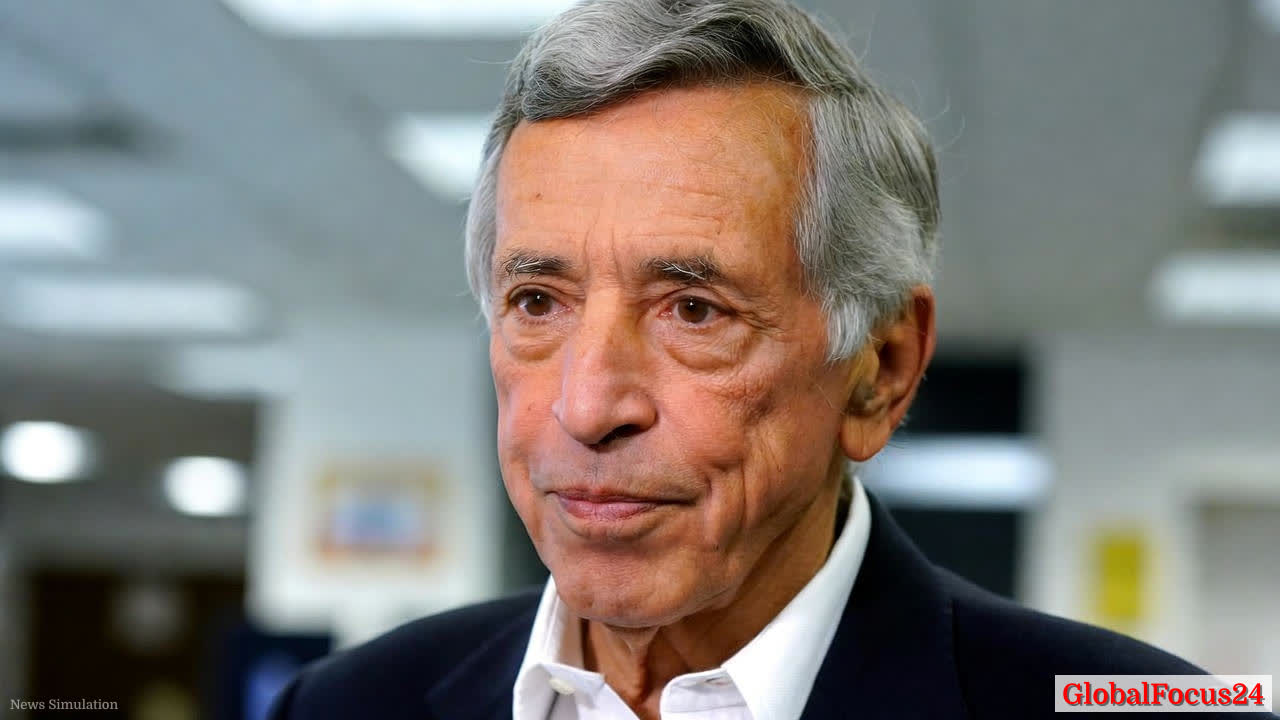
Peter Arnett’s Legacy Endures in Global Journalism as He Passes at 91
A veteran correspondent whose career spanned decades of conflict, Peter Arnett has died at the age of 91, leaving an indelible imprint on international reporting and the public understanding of war and its consequences. Arnett, renowned for his fearless frontline coverage and sharp-eyed storytelling, earned a Pulitzer Prize in 1966 for his reporting on the Vietnam War, a milestone that cemented his status as one of the era’s defining war correspondents. His work helped shape how audiences worldwide perceived the human costs of conflict and the complexities of international diplomacy.
Historical context: a career forged in turbulent decades Arnett began reporting in a period marked by rapid decolonization, Cold War tensions, and a shifting media landscape that increasingly demanded immediacy from the newsroom. His early dispatches from the Vietnam War, published during a time when television was beginning to redefine public engagement with distant theaters of operation, demonstrated a journalist’s willingness to enter dangerous zones to tell the stories of civilians, soldiers, and local communities caught in the crossfire.
The Vietnam coverage that earned him the Pulitzer Prize reflected a broader shift in war reporting: the move from distant analysis to on-the-ground narrative that exposed the human impact of strategic decisions. Arnett’s dispatches, characterized by clear, direct prose and a journalist’s insistence on verifying details from multiple sources, helped readers understand not only the military dynamics but also the social and political undercurrents shaping the conflict. That approach remained a throughline across his subsequent assignments, including coverage of conflicts in the Middle East, Africa, and beyond.
Economic impact: journalism as a public good and the costs of investigative reporting Arnett’s career spanned an era when war reporting was expensive and often perilous. The economic model for international journalism has shifted multiple times since the 1960s, with print circulation, wire services, and later digital platforms investing in correspondents who can deliver timely, in-depth reporting from dangerous regions. His work underscored the value of on-site reporting in informing policy debates, humanitarian aid decisions, and international business interests affected by conflict and instability.
The financial dynamics of war correspondence have evolved, but the core principle remains: high-quality frontline reporting requires resources for travel, security, verification, and veteran editorial judgment. Arnett’s stories frequently highlighted human tolls alongside strategic imperatives, a balance that helped maintain public interest and accountability, which in turn influences funding for international desks, newsroom safety protocols, and partnerships with local journalists who provide essential ground-level insights.
Regional comparisons: how Arnett’s legacy echoes across different theaters From Southeast Asia to the Middle East and Africa, Arnett’s reporting illustrated common threads in conflict zones: the disruption of daily life, the resilience of communities, and the complex interplay of local and international actors. In Southeast Asia, his Vietnam coverage brought into focus the asymmetries of power, the experiences of civilians, and the long shadows cast by foreign intervention. In the Middle East, his later work reflected how regional dynamics—tribal affiliations, state actors, and non-state groups—shaped, and were shaped by, geopolitical maneuvering. Across diverse regions, Arnett consistently emphasized human-centered storytelling alongside rigorous corroboration, a combination that elevated public understanding while preserving journalistic integrity.
His approach also offers a framework for comparing regional media ecosystems. In some regions, local reporters operate under significant risk, with access tightly controlled by authorities or insurgent groups. Arnett’s career demonstrates the importance of corroboration, context, and humane framing when reporting in volatile environments. For audiences and editors, his example underscores the value of cross-border collaboration, multilingual sourcing, and the use of corroborative visual and textual evidence to paint a fuller picture of conflict’s impact.
Profiles in courage: how Arnett mentored a generation of journalists Beyond his on-the-ground reporting, Arnett was known for mentoring younger journalists, encouraging rigorous fieldwork, ethical standards, and a willingness to challenge official narratives when necessary. His leadership helped shape newsroom cultures that prioritize safety, accuracy, and transparency, even in high-pressure situations. By championing thorough verification, he inspired reporters to pursue long-form investigations, feature-driven storytelling, and in-depth documentary work that complements breaking news coverage.
Public reaction: a journalism community mourning a pioneer Newsrooms, scholars, and readers around the world have reacted with a mix of solemn respect and retrospective appreciation. Colleagues note that Arnett’s voice—measured, lucid, and unafraid to tell uncomfortable truths—set a bar for reporting that remains relevant in an era of rapid information flow and evolving media platforms. The public exchange around his passing has highlighted the enduring demand for reporting that not only informs but also bears witness to the human dimensions of conflict.
Technological evolution: from teletype to digital platforms and data-backed storytelling Arnett’s career tracks the evolution of journalism itself. He began in a era of teletype and wire services, where dispatches traveled at the speed of global networks and editors weighed competing reports in real time. Over the decades, the rise of 24-hour news, satellite communications, and, more recently, digital platforms and social media, transformed how frontline reporting is produced, verified, and distributed. Yet the core skill—clarity, corroboration, and context—remains central. Arnett’s work illustrates how strong storytelling, grounded in solid reporting, translates across formats and technologies while retaining its human focus.
Public safety and ethics: a reminder of journalist responsibilities The profession’s ethical framework—truth-telling, minimizing harm, and avoiding sensationalism—was a throughline in Arnett’s reporting. In dangerous environments, journalists must balance the imperative to inform with considerations for the safety of sources, colleagues, and vulnerable populations. His legacy emphasizes the importance of transparency about methods, sources, and limitations, as well as a commitment to presenting diverse perspectives to counterbalance single-sided narratives.
Looking forward: lessons for aspiring reporters and contemporary outlets For journalists continuing Arnett’s legacy, several takeaways remain pertinent:
- Prioritize verification and multi-source corroboration, especially in fast-moving or chaotic scenes.
- Ground war reporting in human stories to illuminate the broader implications of conflict for civilians and communities.
- Foster cross-cultural sourcing and multilingual capabilities to access a fuller range of perspectives.
- Invest in newsroom safety, digital security, and sustainable funding models that support long-form reporting and international coverage.
- Maintain a cool-headed, objective tone that allows readers to interpret events without political bias while preserving the critical insight that helps readers assess policy and outcomes.
Impact on readership and trust in news media Arnett’s example reinforces a broader public expectation: that war reporting should be reliable, context-rich, and human-centered. As audiences navigate a crowded media landscape with competing narratives, the demand for journalists who can deliver accurate, nuanced, and empathetic reporting remains high. This moment of reflection on Arnett’s career also underscores the importance of preserving editorial independence and protecting reporters in danger zones, ensuring that vital storytelling can continue even when risks are high.
Concluding reflections: a life dedicated to telling difficult truths Peter Arnett’s passing marks the end of a chapter in journalism that prioritized courage, rigorous reporting, and ethical storytelling. His Pulitzer-winning work from Vietnam set a standard for international reporting that influenced countless journalists who followed. By weaving historical context, economic considerations, regional comparisons, and a commitment to factual clarity, his career offers a template for reporters seeking to illuminate the realities of conflict with accuracy and humanity. As the newsroom community honors his contributions, the broader public remains reminded of journalism’s essential role in documenting history, holding power to account, and giving voice to those affected by war.
Public response and memorials: commemorating a landmark career Tributes from fellow journalists, media organizations, and veterans of conflict reporting have highlighted Arnett’s capacity to convey complexity with candor. Memorial events and remembrances have focused on his mentorship, his willingness to endure hardship for stories that mattered, and his unwavering commitment to truth in journalism. These acknowledgments reinforce the enduring value of rigorous frontline reporting in an age of rapid information and evolving media ethics.
Additional context: Arnett’s broader influence on the press Beyond his battlefield coverage, Arnett’s reporting helped shape broader conversations about press freedom, the responsibilities of the media in democratic societies, and the role of journalism in shaping international understanding. His career stands as a case study in how a single journalist’s work can influence policies, public opinion, and the standards by which news organizations evaluate and pursue global stories.
In memoriam: a salute to a pioneer who championed the craft of frontline reporting As the journalism profession reflects on Peter Arnett’s legacy, the focus remains on the enduring virtues of careful sourcing, clear storytelling, and a steadfast commitment to bearing witness. His life’s work—rooted in the conviction that informed citizens deserve to understand the forces that shape their world—continues to guide reporters navigating present-day conflicts, humanitarian crises, and the ongoing quest for truth in reporting.
Would you like a shorter version suitable for an update brief or a feature sidebar highlighting specific landmark reports from Arnett’s career?