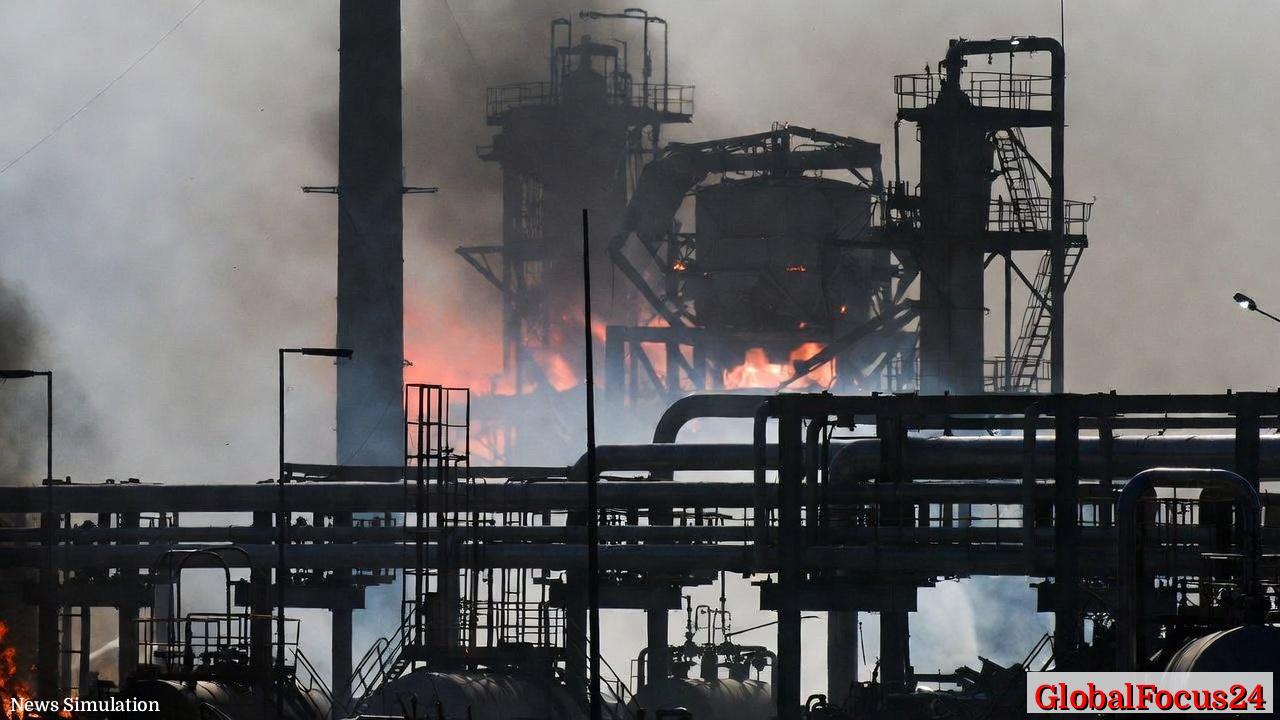
Brent crude surges as Middle East energy strikes raise global supply concerns
Oil markets reacted with renewed volatility after a series of targeted strikes in the Middle East intensified the risk of disruption to global energy flows. Brent crude climbed to around $119 per barrel in early trading before retreating to the high $110s, signaling persistent unease among producers, traders, and energy-dependent economies. The episode follows a chain of retaliatory actions that underscore the fragile link between regional conflict and international energy prices.
Historical context of Middle East energy dynamics The region has long influenced global energy markets due to its substantial share of the world’s oil and natural gas reserves. Since the mid-20th century, shifts in supply security, sanctions, and geopolitical alignments have periodically jolted prices and redirected investment toward energy efficiency and alternative supplies. The current surge echoes a familiar pattern: geopolitical shocks in the Persian Gulf and adjacent waterways can tighten crude markets quickly, even when the immediate disruption is localized. Historical episodes—ranging from supply interruptions in the 1970s to sanctions-driven adjustments in the 2010s—demonstrate that the oil market remains highly sensitive to the perceived reliability of regional producers and infrastructure.
Immediate market response and price mechanics The spike in Brent crude prices reflects a classic risk premium: traders price in the possibility of sustained supply interruptions, logistical bottlenecks, and increased freight costs. When strikes target energy infrastructure, benchmark prices often incorporate expectations of longer-than-expected outages, re-routing of shipments, and greater reliance on strategic reserves. In this instance, initial moves above $119 per barrel signaled a strong push by buyers seeking hedges against potential shortages, followed by a partial retracement as markets reassessed the scale and duration of the disruption. The broader energy complex also exhibited volatility, with LNG and refined product markets watching corresponding developments in the Gulf region.
Regional players and energy infrastructure at the center Two critical pieces of the region’s energy puzzle are the South Pars gas field, which straddles Iran and Qatar, and Qatar’s Ras Laffan LNG complex. South Pars is among the world’s largest gas accumulations, underpinning regional power generation and export capacity. Any interruption there can reverberate through global gas markets, influencing liquefied natural gas pricing, feedstock costs for petrochemical firms, and power generation economics in importing nations. Ras Laffan, a cornerstone of Qatar’s LNG export infrastructure, links regional supply with international buyers, contributing to an LNG market that has grown increasingly interconnected over the past decade. The back-and-forth strikes thus carry implications beyond the immediate vicinity, potentially altering gas price benchmarks, shipping routes, and regressive costs for energy-intensive industries worldwide.
Economic impact across energy-dependent sectors Energy price volatility tends to spill over into consumer energy bills, manufacturing costs, and transportation logistics. A sustained price plateau near the upper end of the range can raise marginal costs for electricity generation, industrial processes, and long-haul freight. The broader macroeconomic effects hinge on several factors:
- Energy-intensive industries: Sectors such as steel, cement, and chemical manufacturing are sensitive to input costs. A sustained higher energy bill can dampen margins, influence-capital expenditure decisions, and slow downstream investment.
- Transportation and logistics: Freight markets respond quickly to fuel price shifts, affecting consumer prices for goods, from groceries to electronics. Shippers may pass on costs to end users or absorb some of the burden through efficiency measures.
- Inflation dynamics: Whileinflation is multifaceted, energy price swings contribute to inflationary pressures, particularly if prices remain elevated or volatile over several weeks or months.
- Investment signals: Energy market turbulence can influence capital allocation to alternative energy sources, energy storage, and resilient infrastructure. Investors often weigh the trade-offs between near-term price spikes and longer-term energy transition goals.
Regional comparisons and resilience considerations Looking at other energy hubs, markets in Europe and Asia have historically shown sensitivity to geopolitical risk, but they also emphasize diversification strategies. Europe, for instance, has pursued a mix of LNG imports, traditional pipeline gas, and storage capacity to dampen price shocks. Asia has benefited from growing LNG demand and diversified suppliers, though regional tensions can still trigger price spikes through freight volatility and supply constraints. In contrast, countries closely linked to the Gulf energy complex may experience amplified price swings due to proximity and exposure to the same network of energy corridors and shipping routes.
Policy implications and strategic responses Governments and energy companies typically respond to supply shocks with a blend of stockpile releases, strategic reserves, and demand-side measures. Short-term actions may include coordinated releases from national reserve inventories and temporary demand-side programs to stabilize markets. Medium- to long-term strategies often focus on diversifying energy supplies, expanding LNG import capacity, and accelerating investment in renewable generation and grid resilience. For consuming nations, the immediate takeaway is the value of hedging strategies, diversified import sources, and robust contingency planning to mitigate the risk of sudden price spikes or supply disruptions.
Public reaction and market sentiment Markets tend to reflect a mix of concern and careful speculation in the wake of such events. Analysts often emphasize the speed with which information propagates through financial markets, prompting rapid adjustments in risk assessments and position building. In regions with heavy energy import reliance, households and businesses may perceive the situation as a reminder of the interconnected nature of global energy security. Public discourse typically centers on resilience, strategic reserves, and the importance of transparent communication from policymakers and industry leaders regarding potential timelines for stabilization.
Global supply chain considerations Energy supply shocks can impact broader supply chains through multiple channels. If oil and gas prices remain elevated, transportation costs rise, impacting the cost structure of goods and services across industries. Conversely, stable or declining prices can relieve pressure on producers and shippers, enabling smoother schedules and potentially lower consumer prices. The balance between short-term volatility and long-term price trajectories will influence investment in logistics infrastructure, storage facilities, and cargo routing efficiency.
Historical comparison to similar episodes Past episodes of regional conflict-induced price spikes offer useful context. For example, supply disruptions during geopolitical tensions in the late 20th and early 21st centuries often triggered a quick rebalance as new supply routes or alternative suppliers emerged and as market expectations adjusted. The current episode bears resemblance to those patterns, with a rapid initial price move followed by a reassessment as markets gauge the durability of the disruption and the likelihood of escalation. The takeaway for market participants is the importance of monitoring productions, vessel movements, and inventory reports to anticipate potential shifts in supply and demand dynamics.
Outlook for energy markets and risk factors The outlook remains contingent on the trajectory of the conflict, the duration of any disruptions to energy infrastructure, and the degree to which regional actors can de-escalate tensions. Key risk factors include:
- Escalation risk: Further strikes or counter-strikes could tighten supply or disrupt shipping lanes, amplifying price volatility.
- Infrastructure resilience: The ability of facilities to recover quickly and the speed at which alternative supply routes can be mobilized will influence the pace of market stabilization.
- Global demand trends: Economic activity, seasonal demand, and post-pandemic normalization continue to shape consumption and price pressure.
- Strategic stock movements: Decisions by national authorities to release or replenish reserves can cap or amplify near-term price movements.
Regional analysis: Gulf economies and energy exporters Gulf economies have long intertwined their fiscal planning with energy price cycles. Higher oil prices can improve export revenues and sovereign outlooks, while also prompting concerns about inflation and cost of living for domestic populations. The balance between revenue generation and domestic affordability often guides policy responses, including potential subsidies, investment in diversification projects, and strategic infrastructure upgrades. Energy exporters may accelerate upstream development, storage expansion, and export infrastructure enhancements to capitalize on favorable price environments while mitigating risk through diversification of markets.
Conclusion: navigating a volatile but interconnected energy landscape The current surge in Brent crude prices, driven by strikes targeting energy infrastructure and subsequent retaliatory actions, underscores the persistent link between geopolitical risk and energy markets. While the market has shown resilience through rapid price adjustment and adaptive supply considerations, the situation remains dynamic. For policymakers, industry stakeholders, and energy buyers, the focus is on maintaining supply continuity, reinforcing strategic reserves, and pursuing diversification strategies to reduce vulnerability to regional shocks. As the global economy continues to rely on robust and predictable energy flows, careful monitoring of events in the Gulf region and related supply chains will be essential to anticipate price movements and plan for a range of potential outcomes.