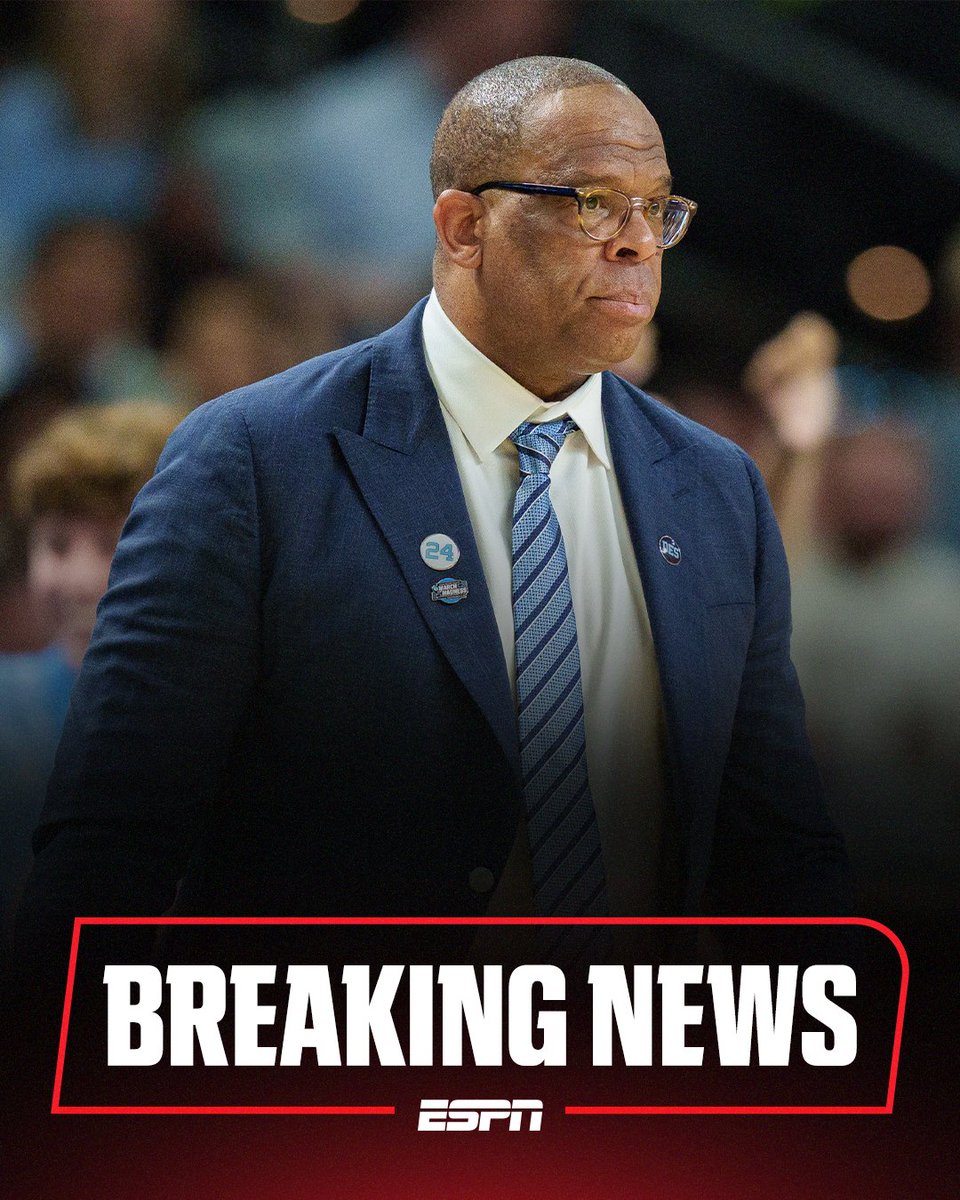
North Carolina Fires Head Coach Hubert Davis After Five Seasons Leading Tar Heels
End of an Era in Chapel Hill
The University of North Carolina at Chapel Hill announced Wednesday that it has parted ways with men’s basketball head coach Hubert Davis, ending a five-year chapter that began with high hopes and early success but closed amid mounting pressure and uneven results. Davis, a former Tar Heel player and longtime assistant under Hall of Famer Roy Williams, compiled a 106-63 record since taking over the program in April 2021.
The decision marks the first major coaching change in the storied program since Williams’ retirement and signals the university’s intention to recalibrate its basketball identity in an increasingly competitive landscape. According to university officials, the search for a new head coach will begin immediately.
A Promising Start That Faded
When Davis replaced Williams, the move was heralded as a seamless transition—an internal hire meant to preserve the Carolina Way. In his debut season during the 2021–2022 campaign, Davis seemed to validate that approach. He led North Carolina to the NCAA championship game, defeating archrival Duke in the Final Four before falling to Kansas in a tightly contested national title matchup.
That improbable tournament run restored excitement in Chapel Hill, particularly after two uneven years under Williams. Davis was praised for revitalizing the team’s chemistry and offensive flow, leaning into a mix of veteran leadership and emerging stars like Armando Bacot and Caleb Love. The Tar Heels finished 29-10 that season, a resurgence that reestablished them among the nation’s elite.
Yet the momentum proved short-lived. The following year, North Carolina began the 2022–2023 season as the preseason No. 1 team but failed to meet expectations, missing the NCAA Tournament entirely—a first for a top-ranked preseason team in modern college basketball. Over the next two seasons, inconsistency continued to plague the Tar Heels, culminating in a disappointing 19-14 record in 2025–2026 and a second-round exit from the ACC Tournament.
Institutional and Fan Pressure Mounts
Although Davis remained popular among former players and alumni for his deep ties to the program, frustration grew among fans and donors who saw the Tar Heels’ dominance slipping within both the Atlantic Coast Conference and the national stage. North Carolina’s traditional rivals—Duke, Virginia, and even Miami—appeared to evolve faster in adapting to the transfer portal and the complexities of modern college athletics, while UNC often looked caught between old-school loyalty and the new transactional realities of student-athlete mobility.
Athletic Director Bubba Cunningham acknowledged the challenges in a brief press conference Wednesday morning. “Hubert has given his heart and soul to this program,” Cunningham said. “He has represented the University of North Carolina with class and integrity. But as we evaluate the direction of the program, we believe it’s time for new leadership that positions us for sustained success.”
No interim head coach has been announced, though assistant coach Jeff Lebo and former UNC standout Sean May have been mentioned by insiders as potential short-term options.
Historical Significance and Program Legacy
The Head Coach at North Carolina holds one of the most scrutinized positions in college sports—a seat previously occupied by legends like Dean Smith, Bill Guthridge, and Roy Williams. Each of those coaches established deep-rooted success, leading the program to multiple NCAA championships and maintaining a consistent pipeline of professional-caliber players.
Hubert Davis entered that lineage with both reverence and pressure. Having been part of the 1991 Final Four team as a sharpshooting guard under Smith, Davis understood better than anyone the cultural and historical weight of the job. His approach, grounded in discipline and emotional transparency, resonated early but ultimately struggled to sustain the program’s accustomed standard of excellence.
The Tar Heels’ five-year record under Davis ranks above average nationally but falls short of the lofty benchmarks set by his predecessors. During the Smith–Williams eras, North Carolina rarely went more than a season without at least a Sweet 16 appearance. Under Davis, the program reached that round only once.
Economic and Regional Impact
Beyond the hardwood, the firing carries significant financial and regional implications. Men’s basketball is not just a sport in North Carolina—it is a major economic driver. Home games at the Dean E. Smith Center attracted nearly 20,000 fans per contest, contributing millions to local businesses in Chapel Hill and neighboring communities. A coaching change often brings both short-term disruption and renewal: merchandise sales fluctuate, donor engagement spikes, and recruiting momentum resets.
From a broader economic standpoint, performance dips in flagship programs such as North Carolina can ripple through the collegiate athletic ecosystem. The ACC’s media contracts depend heavily on marquee brands drawing national audiences, and North Carolina’s ability to command television ratings rivals that of Duke or Kentucky. Athletic departments across the conference will be watching closely to see how the Tar Heels reposition themselves under new leadership.
Recruiting Challenges and Opportunities Ahead
One of Davis’s most visible struggles came on the recruiting trail during the emerging NIL (Name, Image, and Likeness) era. While North Carolina maintained access to elite prospects, competition intensified as other programs offered more aggressive NIL collectives and transfer opportunities. Several highly touted recruits decommitted over the past two seasons, citing uncertainty around the team’s direction.
Still, the Tar Heels’ brand remains among the strongest in college basketball. A new coach with proven national recruiting experience—potentially someone from outside the Carolina coaching lineage—could signal a break from tradition and reassert the program’s modern adaptability. Athletic insiders suggest that the search committee may explore both collegiate and NBA candidates, reflecting a shift toward a more expansive outlook consistent with other blue-blood programs like Kansas and Kentucky.
Comparisons Across the College Basketball Landscape
Chapel Hill’s decision mirrors a growing trend among major programs facing heightened expectations in a changing college sports economy. In recent years, schools such as Louisville, Texas, and Michigan have all made mid-decade coaching changes in response to declining tournament success or shifting recruiting dynamics. The expectations for immediate turnaround have never been higher, particularly as television revenue and NIL investments intertwine athletic performance with institutional prestige.
Historically, the Tar Heels have rebounded quickly after transitions. When Dean Smith retired in 1997, Bill Guthridge led the team to two Final Fours in three seasons. Roy Williams, who took over in 2003 after a turbulent period under Matt Doherty, restored the program’s dominance and added three national titles. That precedent offers optimism that UNC could return to contending status sooner rather than later—provided the next coach can align tradition with modern demands.
The Emotional Toll and Fan Reaction
For many Tar Heel supporters, Wednesday’s announcement carried a note of sadness rather than anger. Davis, a soft-spoken yet passionate figure, has long been viewed as part of the Carolina family—a player who once wore the same jersey with pride and later came back to mentor new generations. His postgame interviews often echoed humility and gratitude. Those qualities endeared him to fans, even as on-court results wavered.
Social media reaction among UNC alumni and fans was divided but largely respectful. Several former players, including NBA veterans, posted messages of support thanking Davis for his leadership and mentorship. Others expressed concern about the program’s future amid what feels like a critical transition period for not just North Carolina, but for college basketball as a whole.
What Comes Next for North Carolina Basketball
As the university prepares to launch its coaching search, the stakes are clear. The next head coach must not only restore competitive consistency but also navigate the evolving terrain of college athletics—balancing traditional recruiting, player retention, and NIL management with a level of transparency and innovation that resonates with today’s athletes.
UNC’s Board of Trustees and athletic department executives are expected to convene next week to outline the hiring process, which will likely prioritize experience, national recruiting credibility, and cultural alignment with the university’s values. The goal, according to sources close to the athletic department, is to have a new head coach in place before the crucial summer recruiting cycle begins.
While the end of Hubert Davis’s tenure closes one chapter in Tar Heel basketball history, it also opens another opportunity for renewal. For a program whose identity is built on excellence, adaptability, and connection, the next few months will determine whether North Carolina can once again return to the pinnacle of college basketball—a place it has called home for much of the past century.