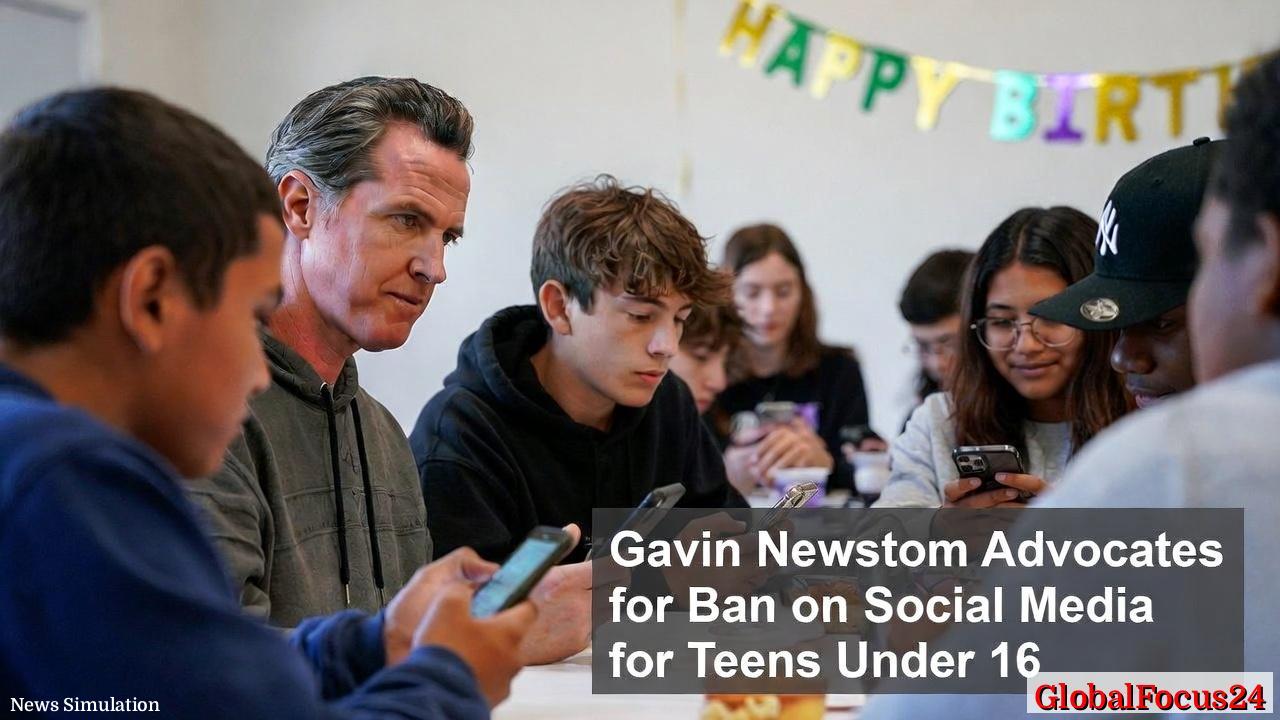
GOVERNOR NEWSOM PUSHES TEEN-SOCIAL MEDIA RESTRICTIONS AS CALIFORNIA EYES AGE-SPECIFIC ACCESS
California is moving to tighten access to social media for teenagers, with Governor Gavin Newsom publicly advocating for a minimum age requirement that would bar users under 16 from creating accounts. The proposal, which enjoys bipartisan attention in the state legislature, builds on a broader national conversation about youth mental health, digital well-being, and the responsibilities of major tech platforms. The proposal is positioned as part of a suite of measures designed to curb excessive screen time, reduce online pressures on adolescents, and empower families with clearer safety rules in a rapidly evolving digital landscape.
Historical context: a growing concern about youth digital life The push comes amid a long-running debate about how online platforms intersect with adolescent development. Over the past decade, experts have highlighted concerns ranging from sleep disruption and reduced physical activity to anxiety, cyberbullying, and the impact of highly curated feeds on self-esteem. California has previously acted on child-technology issues, including warnings about social media use and efforts to regulate content that could affect young users. Governor Newsom’s stance reflects a continuity of state-led responses to digital life, echoing concerns raised by educators, clinicians, and policymakers about balancing access to information with safeguards for vulnerable populations.
Economic impact: implications for platforms, families, and the state’s tech ecosystem The proposed age restriction would have ripple effects across several economic dimensions. For technology companies, a higher minimum age could alter user growth curves, advertising considerations, and compliance complexities. Platforms might need to deploy more robust age-verification mechanisms, invest in parental controls, and adjust product design to accommodate younger users differently. For families, the policy could influence budgeting for digital literacy resources, monitoring tools, and device management. In California, a state with one of the most dynamic technology sectors in the world, policy changes of this scale tend to spark broader discussions among investors, employers, and educators about how best to nurture a tech-forward economy while safeguarding youth well-being.
Regional comparisons: how California stacks up against peers California’s approach sits within a broader regional and international framework. In other countries, similar measures have been implemented with varying age thresholds and enforcement models. Australia’s recent move to restrict social media access for users under 16 mirrors California’s intent to create a uniform baseline for safety standards across platforms. European nations have pursued a mix of regulatory strategies, including requirements for transparency, age verification, and content moderation that can influence how platforms operate in the United States. Within the United States, several states have explored or introduced bills aimed at setting minimum ages for social media, though California’s scale and visibility place it at the forefront of this policy conversation.
Policy mechanics: what the proposal might entail in practice Key elements under discussion include establishing a statutory minimum age for account creation, requiring platforms to verify user ages, and mandating prominent warnings or parental notice for younger users. Some versions of the proposal contemplate robust parental controls and opt-in participation for families, ensuring that minors and guardians can navigate online spaces with greater clarity. The policy would likely be designed to fit within existing consumer protection and child welfare frameworks, leveraging enforcement mechanisms, penalties for noncompliance, and ongoing evaluation to assess effectiveness and unintended consequences.
Public reaction and stakeholder perspectives Public sentiment on teen social media limits is varied, reflecting broader tensions between digital connection and well-being. Proponents emphasize the potential benefits of reduced exposure to harmful content, decreased pressure to curate perfect online personas, and improved mental health outcomes for adolescents. Critics argue that blanket age restrictions could push youth toward alternative, potentially less regulated online spaces or drive engagement underground. Educational and healthcare communities have expressed cautious optimism, stressing that any policy should be accompanied by robust digital literacy initiatives, mental health support, and accessible resources for families to manage online activity responsibly.
Context within ongoing legal and regulatory conversations The policy debate touches on ongoing legal battles and regulatory questions about platform responsibility. In notable cases involving major social networks, stakeholders have debated the extent to which platforms should design features with youth safety in mind and how to address concerns about screen time and addiction. While platform developers have defended the value of digital connectivity and user autonomy, legislators have pressed for stronger safety standards and clearer accountability. The California discussion adds a high-profile dimension to this broader discourse, emphasizing state-level policy as a testing ground for potential nationwide adoption.
Technical considerations: age verification and enforcement challenges Implementing a revised age floor for social media access requires careful attention to verification methods. Trusted age checks could involve government ID verification, consent from guardians, or integration with school-based systems where appropriate. However, any approach must balance privacy with safety, ensuring that data collection complies with state laws and federal privacy standards. Platforms may contend with the ongoing challenge of users misrepresenting ages, a problem that has persisted despite existing verification systems. Policymakers, meanwhile, will weigh the trade-offs between practical enforcement, user experience, and privacy protections for minors.
Impact on education and public health initiatives Beyond the tech sector, California’s proposal dovetails with educational and public health initiatives focused on digital literacy and mental wellness. Schools are increasingly integrating lessons on responsible technology use, resilience, and media literacy into curricula. Health professionals emphasize the importance of recognizing signs of digital-media-related stress and providing families with resources to support healthy online habits. If enacted, the policy could catalyze broader investments in digital literacy programs, school-based mental health services, and community-based outreach aimed at helping teens navigate a complex online world.
Long-term landscape: potential outcomes and policy evolution Should the policy advance and gain momentum, several outcomes are plausible. Platforms may adjust product features, safety prompts, and age-appropriate experiences to align with evolving regulations. Families could experience greater clarity about online boundaries, while adolescents may seek alternative digital spaces, prompting further policy refinement. Regardless of the immediate effects, the conversation signals a sustained national interest in aligning technology design with public health priorities and child safety—an era in which policy, innovation, and personal responsibility intersect more than ever.
Conclusion: a measured step toward safer digital environments California’s exploration of a minimum age for social media use reflects a deliberate effort to address the unintended consequences of digital life on young people. By combining legislative intent with a focus on practical implementation, the state aims to establish a framework that protects youth while recognizing the realities of modern connectivity. As discussions proceed, stakeholders from government, industry, education, and health will continue to weigh the trade-offs and collaborate on solutions that safeguard well-being without stifling innovation. The outcome will likely influence how families, schools, and platforms approach online life in the years ahead.