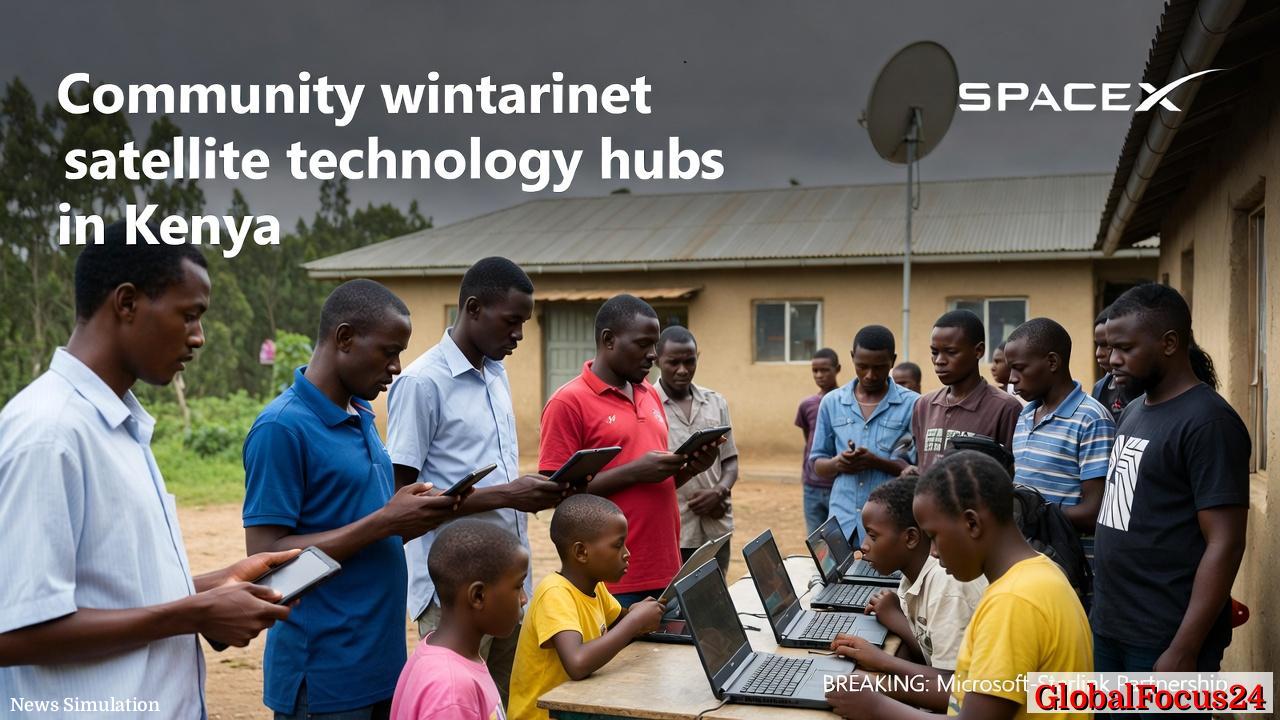
Microsoft and Starlink Partner to Expand Internet Access in Underserved Regions
In a strategic move aimed at shrinking the digital divide, Microsoft has announced a collaboration with SpaceX’s Starlink satellite network to broaden internet connectivity in rural, agricultural, and remote regions around the world. The alliance blends Starlink’s low-Earth orbit satellite technology with Microsoft’s community-driven deployment approaches and local partnerships, signaling a shared commitment to reliable, affordable, and scalable access to the internet. The initiative is positioned as a natural extension of ongoing efforts to democratize digital opportunities, from education and healthcare to commerce and civic participation.
Historical context: a long arc toward universal connectivity
Access to reliable high-speed internet has evolved from a niche luxury to a fundamental infrastructure need in modern life. In the early days of the commercial internet, connectivity was concentrated in urban centers and wealthier regions, leaving vast rural areas with limited or inconsistent service. Over the past decade, a combination of terrestrial fiber, mobile networks, and satellite solutions has pushed coverage outward, but gaps persist. Public policy, private investment, and technological breakthroughs have collectively accelerated the expansion of broadband access, particularly in developing regions where population density and geography pose unique challenges.
This latest partnership reflects a continuum of initiatives aimed at ensuring that connectivity reaches communities previously underserved by traditional infrastructure. It echoes historical milestones such as the deployment of community networks, the expansion of mobile broadband in emerging economies, and the growing recognition of digital inclusion as a driver of economic resilience. By leveraging Starlink’s satellite constellation, Microsoft intends to reach dispersed populations, farming districts, and education centers that are often far from urban hubs or where terrestrial options are cost-prohibitive.
Economic impact: unlocking opportunity at the edge
The economic rationale for extending internet access to underserved regions rests on multiple interlocking benefits. First, reliable connectivity enables farmers to access real-time market data, weather forecasts, and input suppliers, which can reduce risk, improve yields, and increase income stability. Second, small businesses gain access to online marketplaces, digital payment systems, and customer outreach channels, expanding revenue opportunities and reducing transaction costs. Third, educational institutions and libraries can deliver digital curricula, vocational training, and STEM resources, helping to cultivate a skilled workforce aligned with the needs of a modern economy.
From a macro perspective, improved connectivity can stimulate regional productivity by enabling data-driven decision-making and accelerating the adoption of AI-enabled services in agriculture, healthcare, and local government. The collaboration’s potential to drive job creation—both directly through the expansion of network infrastructure and indirectly through the growth of digitally enabled enterprises—may contribute to more resilient regional economies. Moreover, the combination of satellite coverage with local partnerships can help diversify the technology ecosystem in countries that already face investment gaps, potentially attracting further capital for complementary services such as digital literacy programs and SME support networks.
Regional comparisons illuminate varying trajectories
Several regional contexts illustrate the potential impact of the Microsoft-Starlink partnership:
- Sub-Saharan Africa: Many rural communities struggle with limited broadband options despite rapid mobile adoption. A fiber-reliant national backbone may cover major cities, while satellite-based solutions can bridge the last mile in remote districts. The Kenyan pilot, connecting hundreds of community hubs, exemplifies how agriculture-focused ecosystems—farmer cooperatives, aggregation centers, and digital facilities—can become neural networks for local markets and information exchange.
- East Africa: Agricultural value chains stand to gain from real-time data on prices, weather, and supply chain logistics. Local partners familiar with farming calendars, input procurement, and crop diversification can tailor digital tools to regional crops, such as maize, tea, or horticulture, enhancing productivity and resilience against climate variability.
- Sahel and Horn of Africa: Regions facing food security challenges can benefit from timely weather alerts, disaster risk reduction information, and telehealth capabilities that rely on robust connectivity. Satellite-enabled access could complement ongoing development programs focused on nutrition, water management, and rural electrification.
- South Asia: Remote hills and plains often experience inconsistent service. A hybrid model combining Starlink coverage with community networks and skill-building initiatives could unlock new opportunities in micro-entrepreneurship, education, and remote work.
- Latin America and the Caribbean: Densely forested or mountainous areas can pose logistical hurdles for traditional infrastructure. Satellite-based connectivity, coupled with local digital literacy campaigns, can empower smallholders, cooperatives, and local governments to participate more fully in regional markets and e-governance initiatives.
Implementation and program design: how the partnership aims to work
The initiative centers on a multi-pronged implementation strategy designed to maximize impact while maintaining practicality and sustainability:
- Satellite-enabled access: Starlink’s satellite network serves as the backbone for reliable internet connectivity in remote and underserved areas, overcoming terrain and distance barriers that hinder terrestrial networks.
- Local ecosystem development: Microsoft’s approach emphasizes collaboration with local partners, community leaders, and regional institutions to tailor deployment plans to specific needs. This includes establishing digital hubs, training programs, and maintenance capabilities that communities can sustain over time.
- Digital skills and AI readiness: Beyond access, the program prioritizes digital literacy, data literacy, and AI-enabled tool adoption. Training focuses on practical use cases such as precision agriculture, telemedicine, e-commerce, and remote education.
- Public-private collaboration: The model relies on partnerships among technology providers, local service providers, educational institutions, government agencies, and non-governmental organizations to share risk, leverage expertise, and monitor impact.
- Metrics and accountability: Success indicators will likely include connectivity metrics (uptime, latency, bandwidth), user adoption rates, job creation, and improvements in agricultural productivity or educational outcomes. Transparent reporting can help communities understand benefits and guide future investments.
Technological dimensions: surfacing the benefits of satellite and cloud-enabled ecosystems
Starlink’s low-Earth orbit satellite network offers several technical advantages for rural connectivity. LEO satellites provide lower latency and improved performance compared with traditional geostationary satellites, enabling more responsive web applications, online collaboration, and real-time data services. For rural users who previously faced slow or unstable connections, improved latency translates into more usable video conferencing for education and healthcare, faster access to cloud-based tools, and smoother online marketplaces.
Microsoft’s ecosystem—spanning Azure cloud services, AI tools, and a broad suite of productivity applications—can accelerate the value of connectivity by offering scalable platforms for data storage, analytics, and application development. The partnership envisions local digital hubs that function as gateways to cloud-based services, training resources, and co-working spaces, turning connectivity into actionable capability rather than mere access.
The public reaction and social considerations
Public response to efforts to expand internet access is often a mix of optimism and practical concern. Communities have highlighted the potential for improved agricultural outcomes, better access to education, and improved emergency communications. At the same time, stakeholders emphasize the importance of building local capacity, ensuring affordable service, and protecting privacy and data security as digital ecosystems grow.
Public optimism is frequently tempered by questions about affordability, reliability during extreme weather, and long-term maintenance. Local partners stress the necessity of sustainable business models that align with community budgets and anticipated demand. Transparent pricing, community-led governance, and locally available support can help address these concerns and foster trust.
Case study: Kenya as a pilot for scalable rural connectivity
Kenya’s rural regions provide a telling example of how the initiative could unfold in practice. The plan to connect 450 community hubs across rural and underserved parts of the country includes farmer cooperatives, aggregation centers, and digital facilities designed to support agricultural productivity and market access. The integration of digital tools—such as weather forecasting, market price data, and mobile payments—could streamline supply chains and empower farmers to participate more actively in national and regional markets.
This pilot also emphasizes capacity-building components, including digital skills training for farmers, technicians, and local administrators. By grounding technology deployment in local knowledge and agricultural expertise, the program aims to build a sustainable ecosystem where digital infrastructure remains useful even after initial implementation. The Kenyan example may serve as a blueprint for similar deployments in neighboring countries and other regions facing comparable challenges.
Policy and regulatory landscape: enabling secure, scalable deployment
Successful expansion of satellite-based connectivity into underserved regions requires alignment with regulatory frameworks, spectrum management, and data protection standards. Governments play a crucial role in facilitating safe spectrum use for satellite communications and ensuring that consumer protections keep pace with new delivery models. Regulatory clarity can reduce deployment friction and encourage investment from a diverse set of partners.
From a policy perspective, governing bodies may look to create incentives for private-sector involvement in rural connectivity, including grants, tax incentives, or public–private co-investment mechanisms. Standards-based approaches for interoperability across different networks can help ensure smooth handoffs between satellite, terrestrial, and mobile services, improving overall user experience and reliability.
Environmental and sustainability considerations
Expanding internet access via satellite involves environmental considerations, including the energy footprint of ground stations, data centers, and user-end devices. Initiatives that emphasize energy efficiency, renewable energy usage at hubs, and responsible e-waste disposal can mitigate environmental impact. Sustainable deployment plans often incorporate local sourcing of materials, training in device maintenance, and community-owned infrastructure models that enhance resilience during extreme weather events or natural disasters.
Long-term outlook: position in a changing digital landscape
As connectivity expands, the role of satellite-based internet in global digital infrastructure is likely to grow alongside terrestrial networks and 5G/6G-era technologies. The Microsoft-Starlink collaboration positions itself at the intersection of cloud-scale platforms and edge connectivity, enabling a more distributed and resilient internet ecosystem. Over time, the initiative could catalyze broader regional digital transformations by stimulating demand for local digital services, supporting remote education, and undergirding innovative agricultural practices that rely on data-driven decision-making.
Conclusion: a pragmatic step toward inclusive digital growth
The Microsoft-Starlink partnership represents a pragmatic, market-driven approach to addressing the persistent gaps in internet access that affect rural and underserved communities. By combining the reach of satellite connectivity with the ecosystem-building capabilities of Microsoft and its local partners, the program strives to create tangible, lasting benefits for farmers, small businesses, students, and public institutions. While challenges remain—cost, maintenance, regulatory alignment, and ensuring local ownership—the initiative signals a concerted effort to democratize digital opportunities and nurture resilience in communities that have long been on the far margins of the connected world.
If you’d like, I can tailor this article further for a specific audience (e.g., policymakers, business leaders, or regional readers) or adjust the emphasis between agricultural applications, education, or economic development.