Microsoft Unveils Glass Data Storage Capable of Preserving Information for 10,000 Years
A Leap Toward Eternal Digital Preservation
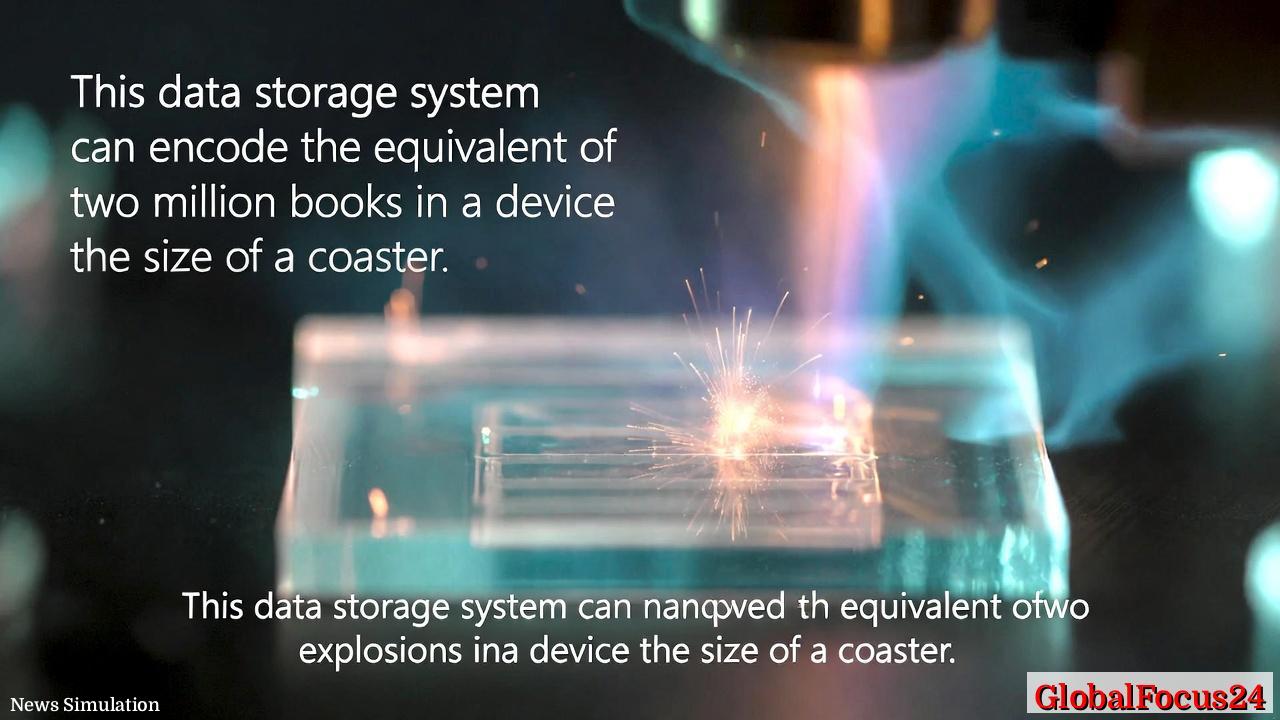
In a breakthrough that could redefine the future of long-term data storage, Microsoft researchers have successfully encoded the digital equivalent of two million printed books into a thin square of borosilicate glass roughly the size of a drink coaster. The innovation, achieved using ultra-short laser pulses to inscribe microscopic patterns into glass, marks a significant advance in humanity’s effort to preserve information indefinitely.
Unlike conventional hard drives or magnetic tapes, which degrade or become obsolete within years or decades, this novel glass-based medium promises to keep data intact for thousands of years without the need for power, maintenance, or climate control. The implications extend far beyond corporate data centers, potentially transforming how libraries, governments, and cultural institutions approach digital archiving.
How Glass Data Storage Works
At the heart of this technology lies a process known as femtosecond laser writing. Researchers use high-energy laser pulses lasting only a few quadrillionths of a second to trigger nanoscale plasma explosions inside the borosilicate glass. Each explosion forms a stable deformation—measured in nanometers—that subtly alters how light travels through the material.
By manipulating these deformations in three dimensions, scientists can encode binary data in layers throughout the glass volume. Specialized readers then interpret the patterns with polarized light and advanced microscopy techniques.
A single piece of glass measuring just 12 centimeters wide and 2 millimeters thick can store up to 4.8 terabytes of information. Once data is written, it becomes immutable; unlike magnetic or optical storage, it cannot be altered or corrupted by environmental conditions, time, or electromagnetic interference.
Durability and Stability Beyond Comparison
The promise of glass storage lies in its extraordinary durability. Microsoft’s tests indicate that data remains readable after exposure to temperatures as high as 290 degrees Celsius. Laboratory aging simulations suggest that at room temperature, the encoded information could last well beyond 10,000 years—orders of magnitude longer than any existing commercial storage medium.
Traditional digital storage technologies, whether hard drives, SSDs, or magnetic tapes, suffer from mechanical wear, oxidation, and demagnetization. As a result, organizations must migrate their archives every few years to prevent data loss. Each migration consumes vast amounts of energy and labor while risking errors or data corruption. In contrast, glass media require no ongoing maintenance, offering what researchers describe as “set-and-forget” preservation.
For museums, government repositories, and financial institutions tasked with safeguarding historical records or compliance data, such stability could translate into dramatic cost reductions and improved security over time.
Historical Roots in Archival Storage
The quest for durable data storage dates back to the dawn of computing. Early mainframes relied on magnetic drums and punch cards, giving way to magnetic tapes and disks in the mid-20th century. These systems enabled massive growth in digital information but posed new challenges in preservation. Major archives today face the constant threat of bit rot, hardware failure, and format obsolescence.
Efforts to create long-lasting media are not new. Stone and clay tablets lasted millennia, and parchment manuscripts have endured centuries. In the digital age, optical discs such as CDs and Blu-rays briefly offered a sense of permanence but were ultimately limited by capacity and physical fragility. Only in recent decades have scientists begun exploring exotic materials—such as sapphire, quartz, and glass—as potential vessels for permanent data.
Microsoft’s breakthrough builds upon earlier achievements by university research teams and collaborations with the company’s Project Silica initiative, which began in the late 2010s. The project aims to replace short-lived magnetic media with glass platters designed for archival data centers.
The Economic and Environmental Impact
Beyond its technical elegance, glass data storage could have far-reaching economic and environmental consequences. According to industry estimates, global data volume exceeded 130 zettabytes in 2025 and continues to double roughly every two years. The vast energy required to maintain and cool millions of drives and servers has become a pressing sustainability concern.
Glass storage’s low maintenance requirements and extreme longevity address both economic and ecological challenges. Since the medium needs no electricity to preserve information, its carbon footprint is effectively limited to the brief moment of writing. As data centers increasingly seek to meet green energy targets, the technology provides a potential pathway toward carbon-neutral archiving.
Organizations would also save billions of dollars otherwise spent on backup infrastructure, physical migration, and climate-controlled storage facilities. For large-scale cloud providers and national archives, these economies of scale could reshape the global data management landscape.
Regional Comparisons: From Silicon Valley to Scandinavia
While Microsoft leads in commercializing the concept, research into long-term storage mediums is flourishing globally. Scandinavian data centers—especially those in Sweden and Finland—have invested heavily in sustainable archival systems leveraging cold-climate efficiencies. Japan’s national archives have also explored sapphire-based media for cultural preservation, while European universities continue experimenting with quartz-based optical encoding.
California, in particular, remains a hub of innovation in data storage technologies. Laboratories across the San Francisco Bay Area, including those affiliated with Stanford and UC Berkeley, have pioneered advancements in photonic computing and materials science that directly influence glass storage research. The region’s synergy between academia and industry continues to drive breakthroughs that bring experimental technologies closer to commercial application.
However, the durability and simplicity of Microsoft’s new glass system give it a distinctive edge. Whereas other approaches often rely on proprietary chemical coatings or require controlled storage environments, glass offers unmatched stability under ambient conditions—making it viable for deployment in diverse climates and facilities worldwide.
Preserving Knowledge for Future Civilizations
The potential of glass data storage reaches well beyond corporate use. Digital archivists see it as a means to safeguard human civilization’s collective memory against the ravages of time, disaster, or technological collapse. From preserving the world’s literature and scientific knowledge to maintaining historical records and legal frameworks, glass could serve as a permanent repository immune to natural decay or geopolitical turmoil.
For instance, the “Memory of Humanity” projects—initiatives that aim to document global culture and history—could leverage glass data plates to create enduring, compact archives buried deep in stable geological formations. With storage densities measured in terabytes per square inch, it would take only a few hundred kilograms of glass to store the core record of modern human civilization.
Challenges and Future Research
Despite its promise, glass data storage remains in its early stages of deployment. Writing data is currently a slow process, and the specialized equipment required to inscribe and read the glass remains costly. Researchers are working to accelerate inscription speeds and improve the readability of multi-layer data structures using AI-driven light analysis and machine learning reconstruction techniques.
Standardization also poses a challenge. For large institutions to adopt glass media widely, consistent data formats and reliable long-term reading devices must be established. Microsoft has announced ongoing partnerships with industry and academia to develop an open ecosystem, ensuring future access regardless of changes in software or hardware technology.
A New Era for Data Longevity
If current progress continues, glass data storage could enter commercial use within the next decade, initially serving high-value archival sectors. Over time, improved manufacturing and automation could bring it into mainstream cloud infrastructures, providing an unprecedented foundation for data preservation.
By demonstrating a medium capable of lasting 10,000 years without degradation, Microsoft’s research signifies more than a technological milestone—it represents a cultural turning point. For the first time in the digital era, humanity may possess a medium that aligns with its oldest instinct: to leave a lasting mark for future generations.
As the volume of global data continues to soar, the quest for permanence grows more urgent. Glass storage, etched by light and hardened by time, might finally provide the answer—a future where information outlives its creators, offering continuity between civilizations yet to come.