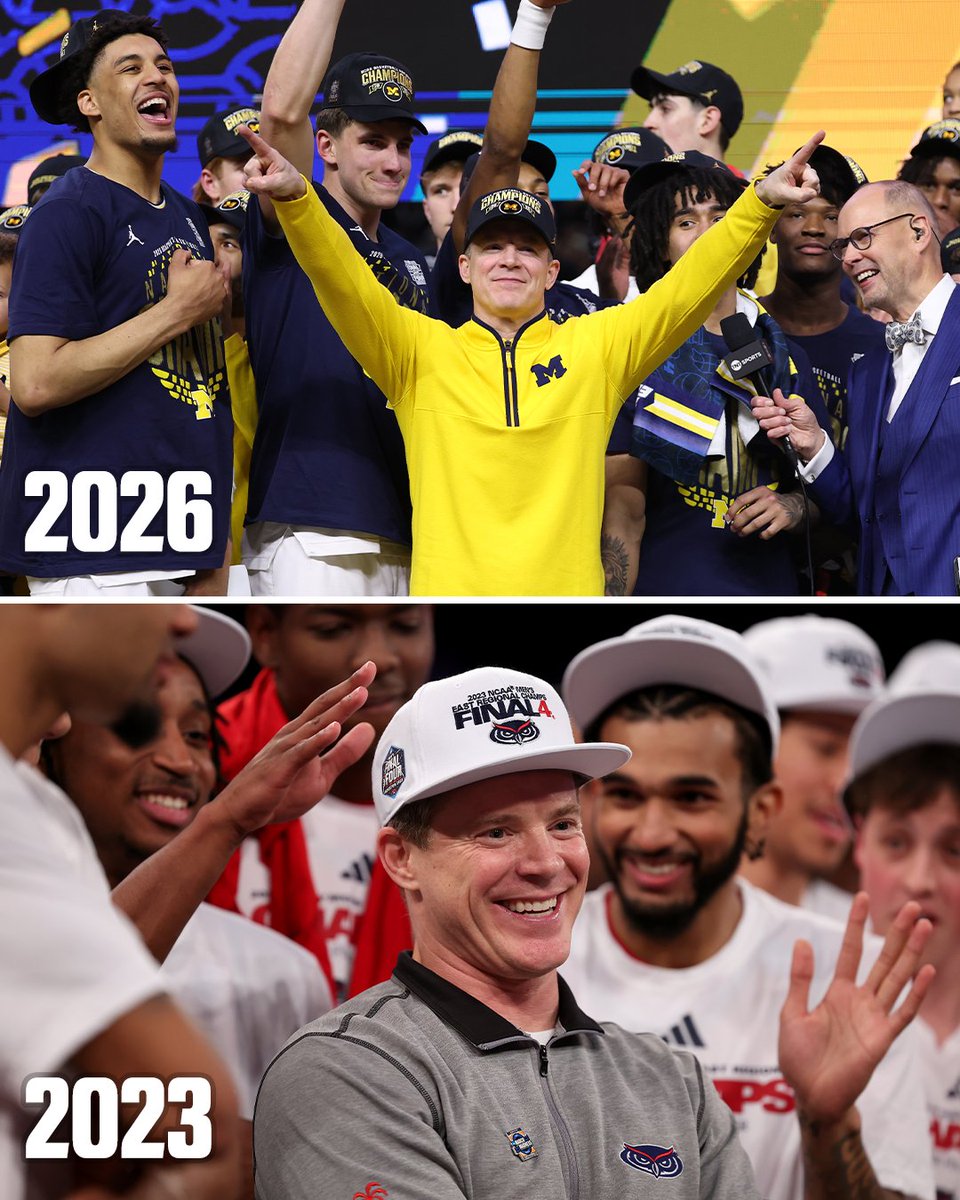
Michigan Wins 2026 NCAA Men's Basketball National Championship
INDIANAPOLIS — Under the bright lights of Lucas Oil Stadium, the Michigan Wolverines reclaimed college basketball’s biggest prize Monday night, defeating the University of Connecticut 69–63 to win the 2026 NCAA Men’s Basketball National Championship. It was Michigan’s second national title — and the first since 1989 — sealing a season that revived the program’s storied legacy and reestablished its national prominence.
The Wolverines, led by second-year head coach Dusty May, capped an extraordinary 37–3 campaign with grit, composure, and unflinching defense. Elliot Cadeau, the sophomore guard who has been the engine of Michigan’s offense all season, scored a game-high 19 points and controlled the pace throughout. The Wolverines’ immaculate free-throw performance in the closing minutes — hitting 25 of 28 overall — proved decisive against the defending champion Huskies.
A Championship 37 Years in the Making
Michigan’s victory marked the end of one of college basketball’s longest title droughts among perennial power programs. The Wolverines hadn’t hoisted the championship trophy since 1989, when Glen Rice led Steve Fisher’s team to victory over Seton Hall in Seattle. In the decades since, Michigan has come close — the Fab Five in the early 1990s, runner-up finishes in 2013 and 2018 — but the ultimate prize remained elusive.
Dusty May’s arrival in Ann Arbor in 2024 quietly signaled a reboot. Known for his tactical precision and player-first culture, May had turned Florida Atlantic University into a national story by guiding the Owls to the 2023 Final Four. When Michigan hired him, expectations were moderate: rebuild with discipline and restore pride to a proud program. Two years later, he has delivered far more than a rebuild.
“This team believed from day one,” May said after the game. “We talked about writing a new chapter in Michigan basketball history — and tonight, we did that.”
The Game: Defense and Discipline Define the Night
The championship clash unfolded as a stylistic duel between Michigan’s structured half-court execution and UConn’s athletic, fast-paced attack. UConn entered aiming for a third consecutive title, a feat not achieved since UCLA’s dynasty of the 1970s. Michigan, however, defused the Huskies’ rhythm early with physical defense and relentless rebounding.
Cadeau set the tone with poise, scoring efficiently off the dribble and orchestrating a free-flowing offense that kept UConn guessing. Senior forward Tarris Reed Jr. was pivotal inside, logging 14 points and 10 rebounds while anchoring the paint against UConn’s front line. The Wolverines outscored the Huskies 18–8 in second-chance points, turning missed opportunities into momentum.
UConn battled back late behind the shooting of sophomore guard Stephon Castle, trimming Michigan’s lead to four with just over a minute remaining. But Michigan’s free-throw precision — a hallmark of May’s coaching emphasis — shut the door. As the final horn sounded, Cadeau flung the ball skyward, and maize-and-blue confetti rained over jubilant Wolverines fans who had waited nearly four decades for this moment.
Dusty May’s Blueprint for Rebirth
May’s journey to Ann Arbor itself reads like a testament to perseverance. A former student manager under Bob Knight at Indiana, May spent years as an assistant before his breakthrough at FAU. His blend of modern analytics, balanced offense, and developmental focus turned overlooked recruits into system stars.
At Michigan, he inherited a roster in transition. Former head coach Juwan Howard left behind a program that had talent but struggled with consistency after missing consecutive NCAA tournaments. May immediately instilled a new identity: aggressive defense, precision passing, and unselfish play. The Wolverines’ turnaround from a 19-win team in 2024 to a national champion in 2026 represents one of the fastest and most complete program transformations in modern college basketball.
“This championship validates the vision,” said Michigan athletic director Warde Manuel. “Dusty has built a culture around accountability and teamwork — exactly what Michigan basketball is supposed to be.”
Statewide Pride and Celebration
From Ann Arbor to Detroit, celebrations erupted overnight. Students flooded State Street, waving flags and chanting the school’s signature “Hail to the Victors.” Restaurants and bars around campus extended hours deep into the early morning, reliving the glory reminiscent of 1989.
For a state that treasures college basketball — where rivalries with Michigan State and other Big Ten programs define winter sports culture — this victory resonated beyond campus borders. Michigan’s triumph rekindled pride and optimism across a fan base that has endured its share of heartbreak, from the vacated Final Four appearances of past decades to recent rebuilding years.
Local businesses, especially those tied to the university’s massive alumni network, are already seeing a surge in merchandise and reservations for celebration events. Economists estimate that championship-related tourism and retail sales could inject millions into the Ann Arbor-area economy over the next few weeks.
The Broader Economic and Cultural Impact
College sports success often ripples out far beyond the hardwood. Michigan’s basketball renaissance is expected to influence applications, fundraising, and brand visibility for the university. Historically, institutions that win national titles experience measurable upticks in engagement and enrollment inquiries — a phenomenon known as the "Flutie effect," named after the surge Boston College saw after Doug Flutie’s famous football moment in 1984.
For Michigan, which already boasts a prominent global reputation, the championship amplifies its appeal to prospective students and alumni donors alike. Increased TV exposure, social media engagement, and merchandise demand reinforce the university’s brand as both academically elite and athletically dominant.
Economically, the city of Ann Arbor stands to benefit as well. Major victories often lead to bursts of local spending, from apparel sales to commemorative events. Analysts from the Detroit Regional Chamber projected the short-term boost from this championship to exceed $15 million in regional economic activity, including hospitality, transportation, and broadcast revenue.
Legacy and Regional Context
In the context of college basketball in the Great Lakes region, Michigan’s triumph rebalances regional prestige. Traditional Big Ten rivals — such as Michigan State, Purdue, and Illinois — have each fielded strong teams in recent years but failed to capture the national crown. Michigan’s victory restores the conference’s competitive credibility on the national stage, marking the Big Ten’s first men’s basketball title since Wisconsin in 2000.
Regionally, the championship is also a counterpoint to the dominance of southern basketball powers. Over the past decade, programs from the ACC and SEC — including Duke, North Carolina, and Kentucky — have often overshadowed northern schools. Michigan’s disciplined style, blending Midwest resilience with modern offensive efficiency, offers a blueprint for how northern programs can once again compete at the highest level.
A New Era for Michigan Basketball
Looking ahead, Michigan’s challenge will be sustaining success in an evolving college basketball landscape shaped by the transfer portal, NIL deals, and expanded media rights. Several key players, including Cadeau and Reed, are expected to draw NBA interest, while May’s recruiting classes continue to build depth.
Still, the foundation appears unshakable. The Wolverines now combine elite player development with one of the nation’s best athletic infrastructures. Recruits seeking both exposure and education may view Michigan as the premier destination in the Midwest, rivaling longtime powerhouses like Kansas and Duke.
Analysts already project Michigan among the early favorites for next season, alongside Arizona and North Carolina. But regardless of what comes next, this 2026 title will stand as a milestone — the year Michigan reaffirmed itself as one of college basketball’s elite programs.
The Return of the Maize and Blue
When the final horn sounded in Indianapolis, fans saw more than a scoreboard victory; they witnessed restoration. From Dusty May’s calm leadership to Elliot Cadeau’s emergence as one of the sport’s brightest young stars, the 2026 Wolverines embodied balance, tenacity, and conviction.
For Michigan alumni and fans, the echoes of “Hail to the Victors” rang not just as celebration but as affirmation. After 37 years, the maize and blue once again sit atop college basketball — and the program that once defined modern March Madness has reclaimed its throne.