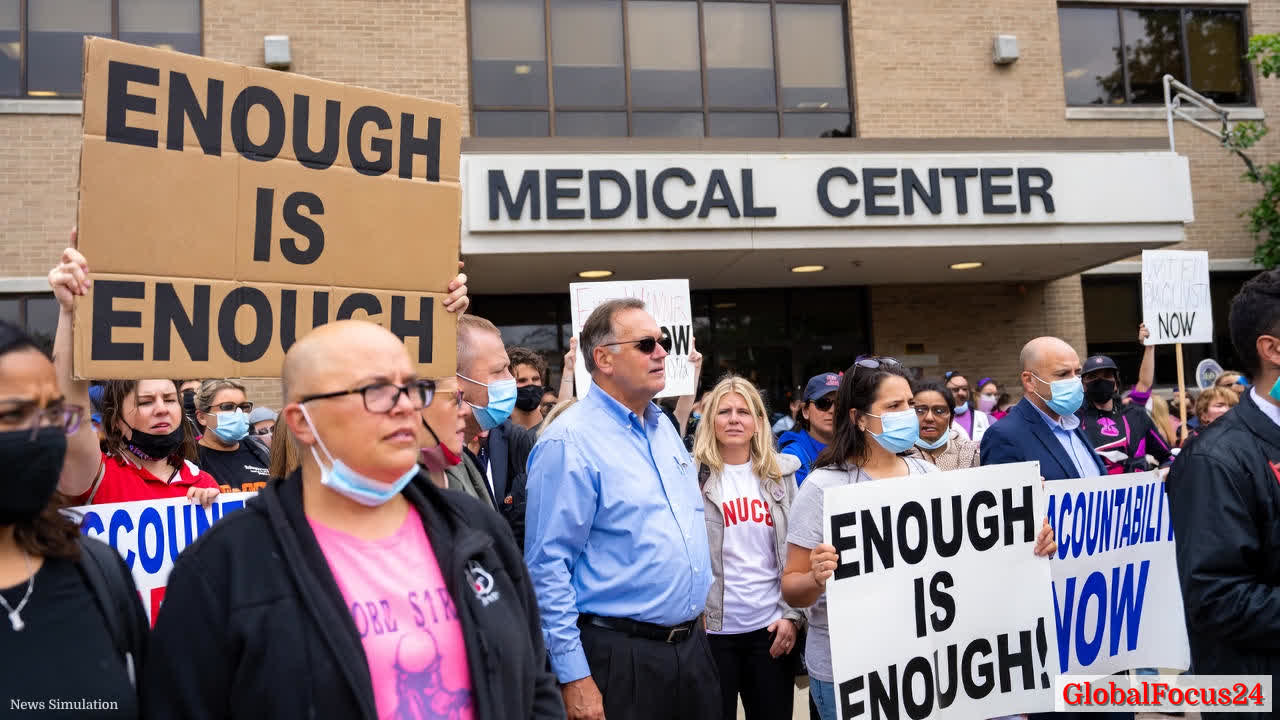
A Wave of Call Volume Following Workplace Incident Highlights Tensions Over Expression and Service Equity
A medical center is grappling with an unprecedented surge of more than 6,000 profanity-laced phone calls after an incident involving a hospital employee and a local retail worker. The event, which centers on a confrontation sparked by a red “Freedom” shirt bearing the name of political commentator Charlie Kirk, has become a flashpoint in ongoing debates about workplace expression, customer service norms, and public accountability in service industries.
Context and sequence of events The episode began when an employee of the medical center engaged in a verbal confrontation with a nearby retail worker who was wearing the shirt in question. According to eyewitness accounts and surveillance footage shared by bystanders, the medical center employee accused the worker of endorsing racist views and used explicit language, asking, “Are you f–king stupid?” The retail worker reportedly remained calm, offering a brief defense of her attire and leaving the scene without escalating the dispute.
What followed was a broader response from the public and the media, amplified by social networks and video platforms. Support for the retail worker quickly coalesced around messages of restraint and professional conduct in the face of provocation. A crowdfunding campaign to assist the worker has gained substantial momentum, approaching a notable funding milestone of $200,000, signaling strong public sympathy and solidarity with those who experience harassment in the workplace.
Impact on the medical center and its workforce The medical center’s leadership has publicly urged the community to curb the number of calls to the institution, describing the flood of calls as detrimental to patient care. Hospital administrators note that the volume of calls—many of them abusive or unrelated to patient services—diverts essential resources away from patient needs and can delay critical communications, appointment scheduling, and emergency responses.
From an operational standpoint, the incident has prompted a review of internal policies related to employee conduct, public-facing interactions, and conflict de-escalation training. Hospitals and health systems increasingly emphasize the need for robust support mechanisms for front-line staff who encounter harassment, as well as clear channels for reporting and addressing concerns that arise outside of clinical duties. The balance between protecting employee well-being and upholding patient-facing responsibilities remains a central, ongoing challenge for healthcare organizations.
Economic and reputational considerations Beyond immediate operational concerns, the incident and its aftermath have broader economic implications. Health systems operate within tight margins, and disruptions to communications infrastructure can ripple through appointment availability, patient flow, and staffing decisions. In the short term, the center may incur higher administrative costs associated with crisis management, media inquiries, and potential legal counsel. In the longer term, reputational effects—positive or negative—could influence patient loyalty, community trust, and referral patterns, particularly in regions with multiple healthcare options.
Public interest in the incident has also illuminated the economic ecosystem surrounding frontline workers. The crowdfunding response underscores the value placed on dignity, safety, and fair treatment in workplaces that routinely address life-and-death responsibilities. Campaigns that mobilize financial support for individuals who experience harassment can shape philanthropic trends and raise awareness about workplace protections, though they also invite scrutiny over fundraising ethics and the effective use of funds.
Regional comparisons and historical context Incidents involving hostile confrontations tied to expressions of personal or political belief are not unique to any one region. Historically, public-facing employees in healthcare, retail, and service sectors have faced heightened risk of verbal abuse, particularly during periods of heightened political polarization. In several metropolitan and suburban areas, analogous events have led to strengthened anti-harassment policies, expanded employee assistance programs, and partnerships with community organizations to promote constructive dialogue and conflict de-escalation training.
A comparative look at regional responses reveals a spectrum of approaches. Some health systems have implemented comprehensive survivor-support programs and rapid-response communications protocols to address both the immediate incident and the ripple effects on staff morale and patient trust. Others have focused on public messaging campaigns that emphasize respect for healthcare workers and the critical role they play in community well-being. The current situation shares threadlines with these historical patterns: a strong public reaction, concern about staff safety, and a search for balanced, enforceable standards that protect both patients and employees.
Legal and ethical considerations The event raises questions about workplace rights, freedom of expression, and professional liability. Employers retain the authority to set standards for conduct in the workplace and in any setting where employees represent the organization. However, the boundaries of acceptable behavior as they relate to off-duty or non-work contexts, particularly when interactions occur in public spaces near a workplace, can be legally nuanced. Many institutions rely on principles of workplace safety, anti-harassment policies, and code-of-conduct guidelines to navigate such situations. Ethical considerations emphasize respect, non-discrimination, and the safeguarding of both staff and customers from harassment.
Media coverage and the public’s reaction Video evidence and social media clips have played a pivotal role in shaping public perception of the incident. The calm response of the retail worker, contrasted with the heated exchange, has been highlighted as a case study in de-escalation under pressure. This narrative has contributed to broader conversations about how expression intersects with professional responsibilities, particularly in environments where employees are expected to interact with diverse communities daily.
From a journalism perspective, the incident illustrates the role of media in contextualizing conflict without sensationalism. It also demonstrates how rapid, user-generated content can influence public sentiment, for better or worse. As coverage continues, journalists are balancing the imperative to report facts with sensitivity to the individuals involved and to the communities that rely on the medical center for essential services.
Public sentiment and social dynamics Public reaction has been polarized, reflecting wider debates about political symbolism, personal attire, and the responsibilities that come with public-facing roles. Support for the store worker centers on themes of composure, dignity, and the right to wear clothing that expresses personal beliefs. Critics of the store worker’s attire often argue that clothing can signal alignment with causes, prompting broader discussions about when and how personal expression should be limited in professional contexts. The crowdfunding response indicates a substantial segment of the public values safety and respect for frontline workers, especially in settings where miscommunication can have serious consequences for patient care.
Operational recommendations for healthcare providers
- Strengthen de-escalation training: Regular, scenario-based training helps staff recognize early warning signs and respond calmly without escalating tensions.
- Define crisis communications protocols: Clear guidelines for when and how to engage with media and the public can reduce confusion and ensure consistent messaging.
- Expand staff support systems: On-site counseling, peer-support networks, and access to mental health resources can bolster resilience after stressful encounters.
- Review attire and expression policies: Reassess dress-code standards to balance personal expression with professional environment safety, ensuring policies are transparent and consistently applied.
- Establish reporting channels: Simple, confidential processes for reporting harassing incidents can help leadership respond swiftly and appropriately.
Looking ahead As investigations or internal reviews proceed, the medical center’s focus will likely center on patient safety, staff well-being, and maintaining public trust. The incident serves as a microcosm of broader societal dynamics, where personal expression, political discourse, and service obligations intersect in high-stakes environments. The evolving narrative will be shaped by how the organization communicates its findings, what policy changes—if any—are enacted, and how the community reconciles the competing interests of safeguarding frontline workers and upholding individual rights.
Regional implications for healthcare systems nationwide For health systems outside the immediate area, the episode could serve as a catalyst for benchmark-setting across regions. Hospitals and clinics may evaluate their own conflict-management training, customer service standards, and employee safety measures in light of rising expectations from patients, staff, and the broader public. Shared learnings might include the value of proactive outreach to communities, transparent accountability measures, and a commitment to ensuring that essential healthcare services operate without disruption due to external pressures.
In sum, the incident has unleashed a multifaceted conversation about workplace respect, public accountability, and the delicate balance required to protect both patients and staff in a high-demand health environment. While the immediate focus remains on preventing interruptions to patient care, the long-term implications touch on workplace culture, policy development, and the social contract that binds healthcare providers to the communities they serve. The outcome will hinge on measured actions, responsible communication, and a sustained commitment to safeguarding human dignity within the healthcare system.