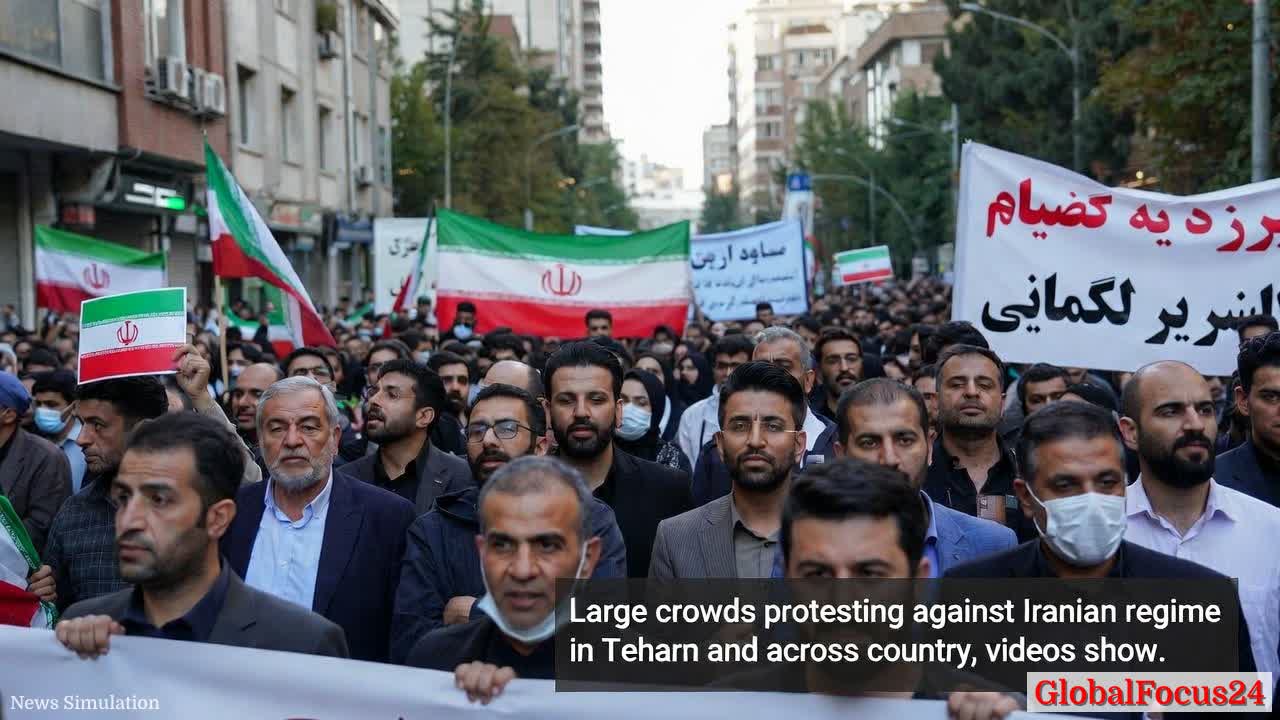
)Massive Protests Across Tehran and Iran Signal Broad Public Outcry as Regime Faces Renewed Pressure
Iranwide demonstrations unfold in major cities as crowds surge in Tehran and beyond, signaling a sustained public demand for political and social change. Witnesses report dense gathers, coordinated marches, and impassioned chants challenging authorities, while security forces monitor and attempt to manage the wave of protests that has stretched across several weeks. The events mark a pivotal moment in Iran’s contemporary history, with implications for regional stability and economic resilience.
Historical context and roots of the current protests
- A long arc of political struggle. Iran’s modern political landscape has repeatedly tested regime legitimacy, especially in periods of economic stress, social reforms, and questions about governance. This cycle of mobilization and suppression has historically shaped Iran’s domestic energy, culture, and regional posture, providing the backdrop for today’s demonstrations. The current wave can be viewed within this continuum of civil expression, state response, and public demand for accountability. The sustained public attention mirrors past periods when economic pressures and governance concerns translated into organized, nationwide action.
- Economic pressures as a catalyst. In recent years, sanctions, currency volatility, and inflation have placed a heavy burden on households. Economic strain often translates into broader discontent when coupled with perceptions of inequitable policy distribution or perceived corruption, fueling collective action and public demonstrations. Historical patterns show that when economic pain intersects with political grievances, protest movements tend to gain momentum and sustain themselves over longer periods.
- The regional context. Iran’s neighbors have watched closely as protest dynamics unfold, with regional powers weighing the potential implications for cross-border stability, energy markets, and diplomacy. In neighboring countries, moments of popular mobilization have sometimes influenced reform debates, while at other times triggering swift governmental responses aimed at preserving order. The current events thus carry significance beyond Iran’s borders, shaping regional conversations about governance, human rights, and economic resilience.
Economic impact and strategic implications
- Short-term disruption to daily life and markets. Large gatherings and related security measures can affect transportation networks, business operations, and consumer activity in urban centers. Vendors, commuters, and small businesses may feel immediate ripple effects as city centers adapt to gathering patterns and crowd control measures. This creates a visible economic signal that can influence investor sentiment and consumer confidence in the near term.
- Long-run considerations for growth and investment. Prolonged social unrest often prompts policymakers to reassess economic strategies, energy subsidy structures, and social safety nets. Governments facing sustained demonstrations may accelerate reforms aimed at restoring public trust, potentially altering investment climates, currency stability, and job creation trajectories. The balance between reform and stability will shape Iran’s medium- to long-term economic outlook.
- Regional trade and energy markets. The trajectory of Iran’s domestic stability has implications for regional energy supply, transit routes, and broader Middle East economic dynamics. If instability persists, regional partners may adjust trade arrangements, investment commitments, and energy planning, while international partners may recalibrate sanctions relief conversations and development projects. Market participants typically monitor such developments for price signals and risk assessments related to energy supplies and regional security.
Public response and civil society dynamics
- Grassroots organization and digital mobilization. Social media, messaging apps, and independent networks are playing a role in coordinating gatherings and sharing information about safety, routes, and meeting points. Civil society groups, labor unions, and student associations have historically leveraged such platforms to organize peaceful demonstrations and to advocate for reforms through nonviolent means. The current episodes highlight the continued importance of organized civilian voices in shaping public discourse.
- Safety and human rights considerations. As demonstrations unfold, concerns about crowd management, civilian protection, and the protection of fundamental freedoms are central to international observations. Reports from participants emphasize the importance of safe assembly, proportional law enforcement responses, and clear avenues for peaceful protest. Observers also stress the need for dialogue channels that can translate public concerns into constructive governance.
Geopolitical and regional comparisons
- Comparisons with past protest waves in the region. Across the broader Middle East, countries have experienced waves of protest driven by economic concerns, governance questions, and calls for greater political participation. While each country faces unique dynamics, the underlying drivers—economic stress, legitimacy questions, and calls for reform—often appear in similar shapes: mass mobilization, staged government responses, and ultimately policy reassessment.
- Domestic policy responses in comparable economies. In several regional peers, governments have pursued a mix of subsidies recalibration, social support expansion, and targeted reforms intended to address grievances without compromising stability. The magnitude of public response in Iran suggests that any policy shift would need to be carefully calibrated to maintain social cohesion while addressing core demands.
- International diplomacy and sanctions architecture. The broader international framework surrounding Iran, including sanctions regimes and diplomatic engagement, continues to influence political calculus inside the country. External actors weighing engagement strategies must consider how domestic movements affect negotiation leverage, reform timelines, and the feasibility of policy concessions.
Historical context in perspective
- Echoes of reform movements and reform-era debates. Past periods of heated discourse around governance, civil liberties, and economic reforms provide a lens for interpreting today’s protests. While circumstances evolve, the insistence on meaningful participation, accountability, and transparent policy processes remains a common thread in many reform-oriented currents across Iran’s modern history.
- The resilience of civic voices. Across decades, persistent civil society actors have demonstrated capacity to sustain attention on governance questions even amid heavy political pressure. This resilience is a key factor that shapes both the trajectory of protests and the potential for negotiated settlements or policy adjustments.
Regional comparisons in governance experiences
- Economic reforms and public reception. In comparable economies facing stagnation or inflation, governments that align policy adjustments with public communication and transparent implementation tend to see better social outcomes and improved investor confidence. Iran’s situation underscores the complexity of implementing reforms within a framework where public trust has been tested by years of economic turbulence.
- Public engagement as a stabilizing factor. Regions that invest in inclusive dialogue, clear policy roads, and tangible social protections often experience more stable transitions, even amid dissent. The current moment in Iran could become a turning point if channels for constructive engagement widen and demonstrators feel that grievances are being addressed in a credible manner.
What comes next: potential pathways and uncertainties
- Dialogue and reform. A plausible path toward de-escalation involves the initiation of credible, accountable discussions between government representatives and civil society actors, under international monitoring where appropriate. Such talks would require clear agendas, measurable milestones, and independent verification to restore public trust and reduce tension.
- Policy adjustments and safety mechanisms. Immediate steps could include targeted economic relief measures, subsidies reassessment, job protection initiatives, and strengthened protection of civil liberties. The design of these measures would benefit from transparent budgeting, performance metrics, and public reporting to maximize effectiveness and legitimacy.
- Long-term governance considerations. Beyond immediate measures, enduring solutions may hinge on institutional reforms that enhance governance transparency, strengthen rule-of-law channels, and expand avenues for civic participation. Achieving durable outcomes would likely require persistence, credible leadership, and sustained public engagement.
Conclusion: a pivotal moment with wide-ranging consequences
The current wave of protests in Tehran and across Iran represents a watershed moment in contemporary Iranian affairs. By combining economic pressures with questions about governance and personal freedoms, the mobilization highlights a public readiness to demand substantive changes. The coming weeks and months will be critical as policymakers weigh reforms, public concerns, and strategic interests at home and abroad. The world watches for signs of dialogue, reform, or potential escalation, recognizing that the outcome will influence not only Iran’s internal trajectory but also regional stability, energy markets, and international diplomatic dynamics.