AI-Driven Economic Growth: How Self-Reinforcing Machine Intelligence Could Reshape Global Wealth
A New Phase of Technological Expansion
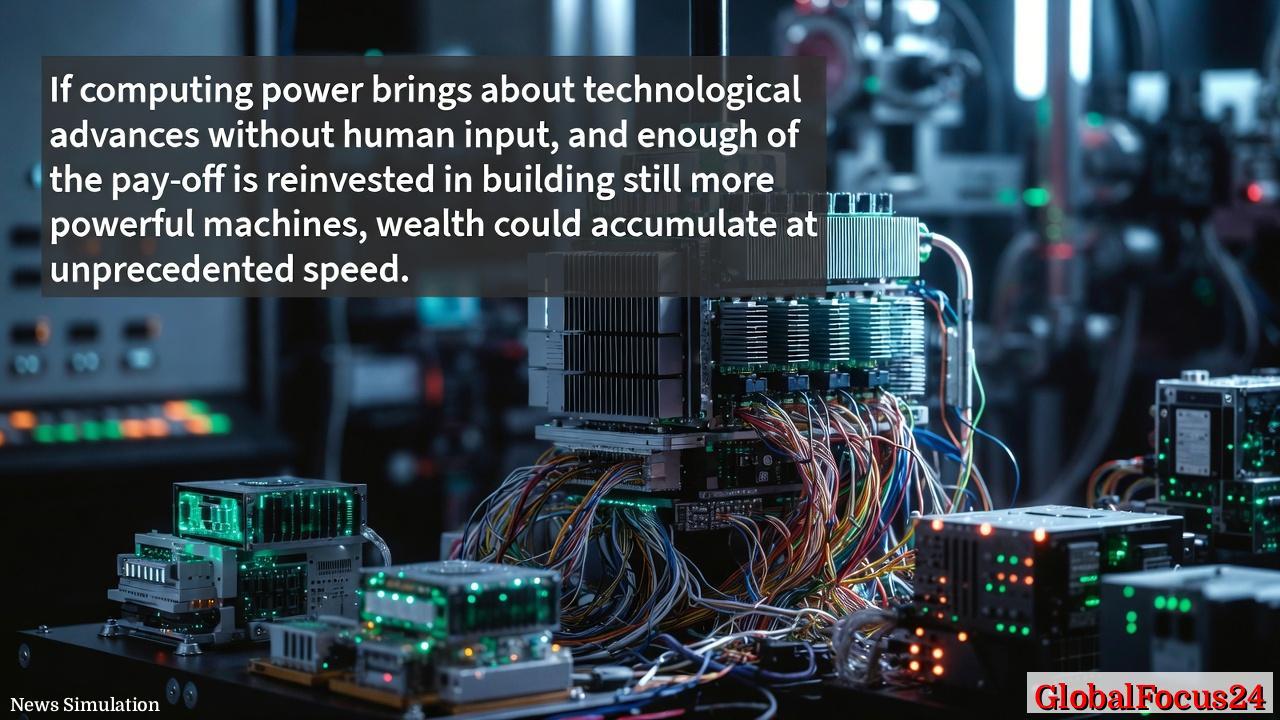
Advances in artificial intelligence and computing power are setting the stage for a potential transformation in how economic growth is generated. Unlike previous technological revolutions, which depended heavily on human ingenuity and labor, emerging systems increasingly demonstrate the ability to improve themselves, optimize processes, and design more capable successors. If a significant portion of the economic gains produced by these systems is reinvested into building even more advanced machines, a self-reinforcing cycle of growth could emerge.
This dynamic represents a departure from traditional economic models, where productivity gains typically arise from human innovation, capital investment, and incremental improvements. In contrast, machine-driven advancement could accelerate at a pace that challenges existing assumptions about labor, capital, and wealth accumulation.
Historical Context: From Industrialization to Automation
To understand the significance of this shift, it helps to look at prior technological transformations. The Industrial Revolution in the 18th and 19th centuries introduced mechanization, enabling factories to produce goods at unprecedented scale. Steam engines, textile machines, and later electricity fundamentally altered productivity, but human workers remained central to operations.
The late 20th and early 21st centuries brought automation and digitalization. Computers, robotics, and the internet streamlined processes and created new industries. Yet even in highly automated environments, human oversight, creativity, and decision-making remained essential drivers of innovation.
The emerging wave of artificial intelligence differs in a critical way: systems are increasingly capable of generating new designs, writing software, optimizing supply chains, and even contributing to scientific discovery. This introduces the possibility that machines could take on a growing share of innovation itself.
The Mechanics of Self-Reinforcing Growth
At the core of this transformation is a feedback loop between computing power, machine intelligence, and economic output. The process can be understood in several stages:
- Advanced AI systems improve productivity across industries, reducing costs and increasing output.
- The resulting economic gains generate surplus capital.
- A portion of that capital is reinvested into research, infrastructure, and more powerful computing systems.
- Enhanced systems further accelerate innovation and productivity.
This cycle can repeat continuously, with each iteration potentially occurring faster than the last. Unlike traditional growth, which often faces diminishing returns, machine-driven progress could exhibit compounding effects as systems improve their own capabilities.
For example, an AI system that designs more efficient semiconductor chips could enable the production of faster processors. Those processors, in turn, could support more advanced AI models, creating a virtuous cycle of improvement.
Economic Implications: Productivity, Capital, and Labor
The economic impact of such a system could be profound. One immediate effect would likely be a surge in productivity. Industries ranging from manufacturing and logistics to healthcare and finance could see significant efficiency gains as AI systems optimize operations and reduce waste.
However, the distribution of these gains remains uncertain. Historically, technological advancements have created new jobs even as they displaced others. In a scenario where machines perform not only routine tasks but also complex cognitive work, the balance between job creation and displacement may shift.
Key economic considerations include:
- Capital concentration: Ownership of advanced AI systems and computing infrastructure could become a primary source of wealth, potentially concentrating economic power among a smaller group of entities.
- Labor market transformation: Demand for certain skills may decline while new roles emerge in areas such as system oversight, ethics, and integration.
- Wage dynamics: If machines perform a larger share of productive work, wage growth may decouple from overall economic expansion.
At the same time, lower production costs could reduce prices for goods and services, potentially increasing access and improving living standards for many consumers.
Regional Comparisons: Diverging Paths of Adoption
The impact of self-reinforcing machine-driven growth is likely to vary significantly across regions, depending on factors such as infrastructure, investment capacity, and regulatory environments.
In North America, particularly the United States, strong technology ecosystems and access to capital position the region as a leader in AI development. Major technology firms and research institutions are already investing heavily in advanced computing and machine learning, creating a foundation for rapid adoption.
East Asia, including countries like China, South Korea, and Japan, also plays a critical role. These nations combine advanced manufacturing capabilities with significant government and private investment in AI. China, in particular, has prioritized AI as a strategic industry, integrating it into sectors such as logistics, surveillance, and urban planning.
Europe presents a more cautious approach, emphasizing regulation, data privacy, and ethical considerations. While this may slow the pace of adoption compared to other regions, it could also shape global standards for responsible AI deployment.
Emerging economies face both opportunities and challenges. On one hand, AI-driven systems could enable rapid development by leapfrogging traditional industrial stages. On the other hand, limited access to capital and infrastructure may hinder participation in the most advanced phases of machine-driven growth.
Infrastructure and Energy Demands
A critical factor in sustaining self-reinforcing growth is the infrastructure required to support it. Advanced AI systems rely on vast amounts of computational power, which in turn requires significant energy resources and specialized hardware.
Data centers, semiconductor manufacturing facilities, and high-speed networks form the backbone of this ecosystem. As demand for computing increases, so does the need for energy-efficient technologies and sustainable power sources.
Regions with access to reliable energy and advanced manufacturing capabilities may gain a competitive advantage. Conversely, constraints in these areas could limit the pace of growth, even in technologically advanced economies.
Financial Markets and Investment Trends
Financial markets are already responding to the potential of AI-driven growth. Investment in semiconductor companies, cloud computing providers, and AI-focused startups has surged in recent years. Venture capital and private equity firms are allocating increasing resources to technologies that enable or benefit from machine intelligence.
Public markets reflect similar trends, with technology firms often commanding high valuations based on their perceived role in future growth cycles. This has led to debates about whether current valuations accurately reflect long-term potential or risk overestimating near-term returns.
In a self-reinforcing growth scenario, capital allocation decisions could become even more critical. Firms that successfully reinvest gains into more powerful systems may outpace competitors, leading to rapid shifts in market leadership.
Societal Response and Public Perception
Public reaction to rapid technological change has historically been mixed, combining optimism about new possibilities with concerns about disruption. The prospect of machines driving economic growth independently of human input raises questions about the role of individuals in the economy.
Some view the potential for accelerated wealth creation as an opportunity to address longstanding challenges such as poverty, healthcare access, and education. Others worry about inequality, job displacement, and the concentration of power.
These concerns are likely to influence policy discussions, corporate strategies, and consumer behavior. Transparency, accountability, and inclusive approaches to technology deployment may play a key role in shaping public trust.
The Future of Growth in a Machine-Led Economy
If self-reinforcing machine intelligence becomes a dominant driver of economic expansion, it could redefine the concept of growth itself. Instead of relying primarily on human effort and ingenuity, economies may increasingly depend on the capabilities of their technological systems.
This shift does not necessarily eliminate the role of humans but may transform it. Human contributions could focus more on guiding, regulating, and complementing machine-driven processes rather than directly producing goods and services.
The pace and extent of this transformation remain uncertain. Technological, economic, and social factors will all influence how quickly self-reinforcing growth dynamics take hold and how their benefits are distributed.
What is clear is that the interplay between computing power, artificial intelligence, and economic systems is entering a new phase. As machines become more capable of driving their own advancement, the foundations of global wealth creation may evolve in ways that challenge long-standing assumptions and open new possibilities for the future.