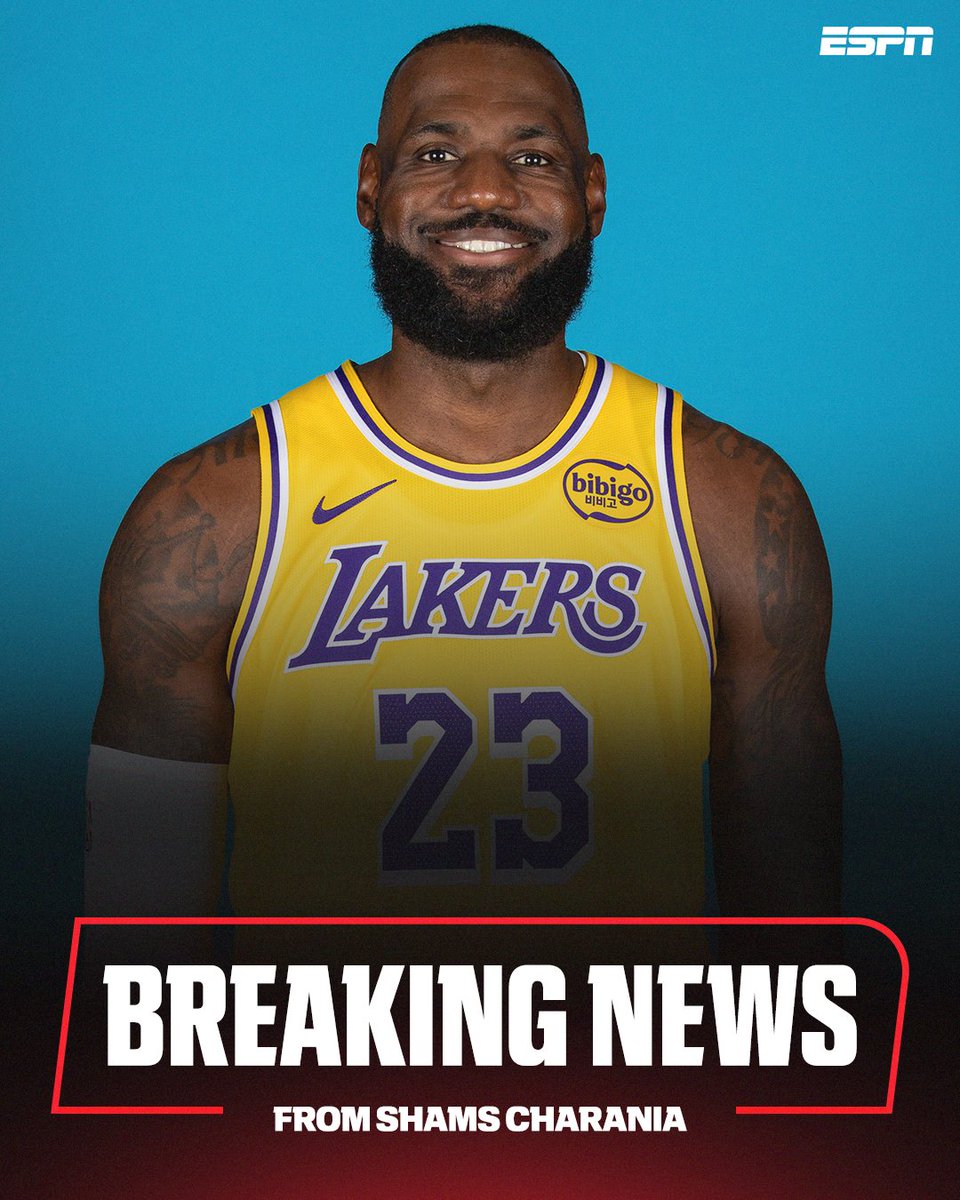
LeBron James Rejoins Los Angeles Lakers After G League Assignment, Full Practice Participation Set for Monday
A Surprise Return Signals the Next Chapter in LeBron’s Storied Career
In a development that has captured the basketball world’s attention, LeBron James has been reassigned to the Los Angeles Lakers from NBA G League affiliate South Bay Lakers, according to reports from Shams Charania of The Athletic and Stadium. The 21-year veteran, who has spent the past several days participating in full practices and 5-on-5 sessions with the developmental team, is expected to rejoin Lakers practice on Monday in El Segundo.
This move marks a significant step in his return to full NBA action, signaling that his much-anticipated comeback from recent rest and rehabilitation is close. Sources around the league describe his performance in the G League sessions as dominant, with observers noting that his conditioning and basketball rhythm appear sharp — a testament to both his longevity and professionalism.
The Strategic Importance of a G League Stint
LeBron James’ temporary assignment to the South Bay Lakers drew massive attention over the weekend, as it is rare for a player of his stature to take part in G League workouts. The decision reflects an evolving strategy in professional basketball, where even superstar athletes utilize the developmental ecosystem to regain form or test physical readiness in a lower-pressure environment before returning to NBA competition.
Historically, G League assignments for veteran players have been infrequent but not unprecedented. Notable stars such as Kevin Durant and Steph Curry have participated in controlled scrimmages with affiliate teams while recovering from injuries or managing workload. However, James’ involvement carries symbolic weight — underscoring both the changing culture around NBA player development and the growing integration between major franchises and their G League affiliates.
Historical Context: Longevity and Adaptation
Now in his 21st season, LeBron James has redefined what endurance means for an NBA athlete. Few players have maintained elite-level performance past the age of 38, yet James’ ability to adapt his game and physical preparation continues to set a benchmark. His resilience recalls other legends who extended their careers through diversification and strategic rest, such as Kareem Abdul-Jabbar’s emphasis on conditioning in the 1980s or Tim Duncan’s load-managed seasons with the San Antonio Spurs.
James entered the 2024–25 season already approaching several major milestones. With more than 39,000 career points, he remains the NBA’s all-time leading scorer, and his influence over team chemistry and locker-room dynamics is unrivaled. Yet, as the Lakers navigate a competitive Western Conference, the organization’s decisions increasingly balance long-term sustainability with short-term performance goals.
A Focus on Conditioning and Team Rhythm
League insiders describe James’ weeklong stint with South Bay as focused on high-intensity drills, strength conditioning, and controlled scrimmages against younger players. It provided him with game-speed repetitions without the physical toll of NBA-level opposition. According to reports, he played several full 5-on-5 sessions, engaging actively in fast-break transitions and half-court sets designed to simulate the Lakers’ system under head coach Darvin Ham.
The Lakers, currently sitting in the middle tier of the Western Conference standings, have struggled with consistency through the early months of the season. While stars Anthony Davis and Austin Reaves have carried stretches of offensive production, the absence of James — their most experienced playmaker and on-court leader — has been palpable. His return to full practice hints at a renewed push to establish rhythm before a difficult slate of winter games that includes matchups against Phoenix, Denver, and Golden State.
The Broader Impact on the Lakers’ Season Outlook
LeBron James’ anticipated return could reshape the Lakers’ trajectory over the next several weeks. Beyond his scoring and passing, his presence affects the team’s defensive rotations, transition spacing, and overall IQ on the court. Statistically, when James is active, the Lakers’ offensive efficiency improves dramatically, with fewer turnovers and higher three-point percentage among role players due to the gravitational effect of his playmaking.
The front office, led by general manager Rob Pelinka, has been transparent about emphasizing health and endurance across the roster. By leveraging the G League for tune-ups, the organization demonstrates a forward-thinking approach — one that prioritizes longevity and functional team development within the broader Lakers ecosystem.
Economically, this narrative extends beyond the court. The Lakers remain one of the NBA’s most marketable brands, and James’ every appearance generates measurable increases in ticket sales, local broadcast ratings, and digital engagement. His return aligns perfectly with holiday-season scheduling, a crucial revenue window for both the franchise and league partners.
The Evolution of NBA Player Management
James’ brief G League chapter also highlights a notable evolution in how elite players interact with developmental systems. Once viewed strictly as talent incubators for young prospects, G League teams now serve as controlled environments for recovery, experimentation, and tactical refinement. Such integration benefits both sides — younger athletes gain firsthand experience alongside veterans, while established stars test new strategies away from the spotlight.
Around the league, similar patterns have emerged. The Golden State Warriors and Houston Rockets, for example, have assigned rotation players to their affiliates for specialized training or film-based work. This model reflects broader changes in the NBA’s emphasis on individualized performance tracking and load management, backed by advanced sports science and analytics.
Comparing Regional and Organizational Approaches
Within the Western Conference, several teams have adopted differing philosophies toward player conditioning and midseason rest. The Denver Nuggets rely heavily on structured offseason recovery programs, while the Dallas Mavericks integrate hybrid workouts between their main roster and G League operations. The Lakers’ approach, spearheaded by veteran leadership, combines traditional preparation with data-driven recovery cycles monitored by their sports science department.
James’ case underscores this balance. His decision to embrace a short-term G League assignment demonstrates open-mindedness toward evolving training culture — signaling that even the league’s most senior figures are adapting to modern methodologies.
Fan and Media Reaction
Public reaction to the news of LeBron James’ reassignment has been swift and diverse. Social media platforms erupted over the weekend with clips and photos of James practicing in South Bay gear, many fans expressing admiration for his humility and commitment to constant improvement. Others interpreted the move as a strategic masterstroke by the Lakers, maximizing the NBA’s developmental infrastructure to support one of its most valuable assets.
For the G League, this brief appearance by an all-time great has been a marketing windfall. Attendance reports from South Bay practices saw a notable uptick, while televised coverage and online streams reached record engagement metrics. The moment underscores how interconnected the NBA’s various tiers have become — blurring the lines between grassroots development and elite competition.
A Look Ahead: What Comes Next
Sources close to the Lakers organization expect LeBron James to participate in Monday’s full-team practice session without restrictions, pending final medical clearance. Assuming his conditioning holds, his return to game action could come within the week, potentially aligning with the team’s upcoming home stand at Crypto.com Arena.
The Lakers face a critical stretch leading into December, with playoff positioning already tightening across the Western Conference. A healthy James could tip the balance in several marquee matchups while stabilizing rotations that have faced inconsistency since early November.
Beyond immediate performance, his reintegration raises important questions about how the Lakers manage veteran workloads down the stretch. The franchise, which last captured an NBA title in 2020, continues to recalibrate its roster around a blend of seasoned experience and emerging youth. James’ leadership remains the core throughline of that evolution — shaping both team culture and competitive outlook.
The Legacy Continues
LeBron James’ reassignment and imminent return to the Lakers reaffirm not only his durability but also his ongoing influence on the dynamics of modern basketball. More than two decades into his career, he continues to rewrite conventions surrounding athlete longevity and professional discipline. His choice to take part in a G League environment symbolizes a humility rare among global icons, as well as a trust in the systems designed to support sustained excellence.
As the Lakers prepare for the next phase of their season, the league watches closely. Every chapter in James’ career feels monumental, each step a study in adaptation and ambition. For now, one thing is certain: LeBron James is back where he belongs — preparing once again to lead the Lakers under the bright lights of Los Angeles, with history still unfolding in his wake.