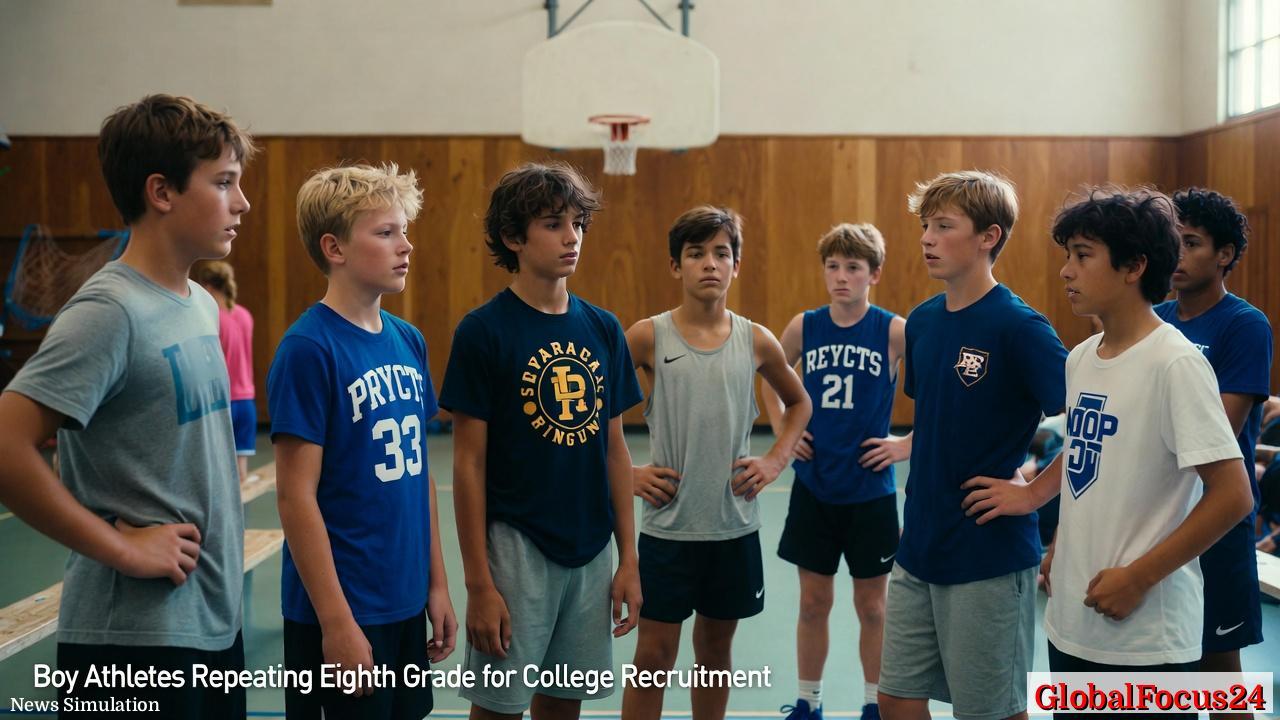
High School Holdbacks as a Pathway to Future NIL Potential
In classrooms and gyms across the country, a quiet shift is unfolding among high school athletes and their families. A growing number of talented young football, basketball, and other team-sport athletes are repeating the eighth grade or pursuing a formal “holdback” year, aiming to position themselves for early recruitment and the potential financial windfall associated with name, image, and likeness (NIL) opportunities. This trend, while anecdotal in many communities, is increasingly visible in regions where college programs recognize the value of senior-year development and where financial realities for student-athletes and their families intersect with the evolving landscape of college athletics and sponsorships.
Historical context: the evolution of NIL and the recruitment ecosystem
The modern NIL era began in earnest a few years ago when federal and state policy changes allowed athletes to monetize their name, likeness, and personal brand. Before this shift, college athletes could not profit from endorsements or personal appearances without risking amateur status or eligibility issues. The NIL framework unlocked a host of possibilities, from social media sponsorships to autograph opportunities and paid appearances at camps and events. While the program’s formal boundaries are still evolving, the core idea remains: a student-athlete’s marketability can be a capital asset, not just a college education and competition record.
In this environment, recruiters and college programs have increasingly examined an athlete’s potential beyond a single season, looking at long-term projection, physical development, and leadership qualities. For families facing rising tuition costs and the potential for a life-altering college scholarship, NIL adds a new layer of strategic planning. Holdback decisions are not purely about academic performance; they’re a calculus that weighs maturation, height and weight progress, on-field performance, and the ability to command sponsorship or endorsement deals in the years to come.
Economic impact: how a holdback year could translate into opportunity
Holding a student back for a year can influence a young athlete’s readiness for higher levels of competition and, by extension, their marketability. A stronger recruitment profile can affect several economic dimensions:
- College scholarship leverage: A higher-profile senior year can translate into more or larger scholarship offers. While the terms of NIL deals are negotiated at the college level, a strong recruitment framework can position an athlete to secure better financial packages, including stipends, academic support, and access to exclusive NIL preparation resources.
- Brand-building and sponsorships: Early development in media skills, social media presence, and community engagement can be critical. A holdback year provides more time to cultivate a personal brand, assemble a portfolio of highlight reels, and demonstrate leadership—attributes that appeal to potential sponsors in a NIL landscape.
- Long-term earnings potential: For some athletes, the extra year creates a bridge to more lucrative opportunities later in college or immediately post-graduation, when professional leagues, sponsorships, and media work can converge. This is especially relevant in sports with well-developed NIL ecosystems or in regions with universities that actively support athlete-driven marketing initiatives.
- Education and career planning: An extended high school period may allow students to take advanced coursework, earn dual credits, or complete certifications that enhance long-term career prospects—either within athletics administration, sports science, or business fields tied to sponsorship management.
Regional comparisons: how different markets are adapting
- West Coast hubs prioritize development and visibility: In coastal and inland areas with strong prep circuits, schools and clubs emphasize weekend showcases, video production, and social media analytics to boost visibility. Families frequently invest in travel, private coaching, and media training to maximize the return on a holdback year.
- Midwest and Plains communities: Regions with a tradition of multi-sport participation are focusing on balanced development, aiming to avoid early specialization. Holdback decisions here often involve input from school districts, youth leagues, and local sponsors who understand the cumulative effect of performance metrics, classroom achievement, and community leadership on NIL potential.
- Southeast and Atlantic corridors: Areas with deep football traditions and robust high school networks may see holdbacks tied to regional recruiting cycles and recruiting events. Local media coverage and booster club activity can magnify a player’s profile, creating a more tangible path to NIL opportunities.
- Northeast considerations: In markets with strong academic emphasis and limited scholarship risk, holdback decisions may hinge on the balance between academic progression, athletic readiness, and the willingness of higher-ed programs to invest resources into extended development and NIL readiness programs.
Professionalization of NIL readiness
As NIL ecosystems mature, a growing cadre of support services has emerged to assist athletes and families in making informed decisions. These include:
- Athletic development guidance: Strength and conditioning programs tailored to late bloomers, injury prevention, and sport-specific skill refinement can help a year of growth translate into on-field results.
- Personal branding and media training: Coaches, agents, and consultants offer coaching on social media strategy, public speaking, interviews, and content creation—skills that become valuable when negotiating NIL deals.
- Educational interoperability: Programs that integrate NIL education with college admissions counseling ensure that students understand scholarship dynamics, academic eligibility, and the long-term implications of their branding efforts.
- Legal and financial literacy: Advisors provide guidance on contract basics, tax implications, and safeguarding earnings to support sustainable, compliant monetization of a student-athlete’s brand.
Public reaction and community perspectives
Families facing the choice of a holdback year report a mix of emotions: hope that a stronger development trajectory yields higher scholarship offers and NIL potential, tempered by concerns about the social and academic disruption a repeat year can create. Communities often rally around athletes who pursue this route, viewing it as a disciplined, long-term investment in a challenging competitive landscape. Local media coverage, school board discussions, and booster organizations can amplify the conversation, shaping norms about what constitutes fair opportunity versus pressure to defer normal academic progression.
Athletic governance and policy considerations
The expansion of holdback decisions intersects with broader governance questions in amateur athletics. Critics caution against overemphasis on branding and monetary prospects at the expense of scholastic achievement, athlete well-being, and equitable access. Proponents argue that NIL readiness is a practical response to a changing economic paradigm in sports, where early exposure and professional-style marketing can help talented athletes negotiate college environments that support both education and monetized opportunities.
To ensure a fair and sustainable approach, several policy guardrails have gained traction:
- Clear eligibility and compliance standards: Schools and governing bodies emphasize adherence to NCAA rules, state laws, and school policies to prevent exploitation or misrepresentation.
- Standardized measurement of readiness: Objective criteria—such as performance metrics, academic progress, character references, and evidence of leadership—help families compare holdback options on a level playing field.
- Transparent disclosure requirements: Athletes, families, and programs increasingly adopt transparent reporting practices about NIL activities, ensuring sponsors and communities understand the scope and nature of branding efforts.
- Safeguards for educational priorities: Programs that integrate NIL readiness with academic development aim to keep student-athlete education at the center, preventing shifts that would undermine long-term career options beyond sports.
Case studies and illustrative examples
- Case A: A quarterback with a history of leadership and strong in-school academics chooses a one-year holdback to maximize physical development and on-field maturity. In the senior year, he becomes a focal point in regional recruiting events and garners local endorsements tied to community programs. The result is a more robust college scholarship package and opportunities for branded content with youth sports initiatives.
- Case B: A multi-sport athlete in a basketball-rich region uses the holdback year to diversify skills, sharpen decision-making on the court, and build a social media portfolio that demonstrates versatility. By the time college coaches evaluate him in fall of his senior year, he has a well-documented growth trajectory and a handful of early sponsorship inquiries.
- Case C: An athlete balancing academic rigor and social impact focuses on NIL literacy from the outset. The holdback year serves as an opportunity to study business fundamentals, participate in community outreach, and develop a personal brand that aligns with family values. When college recruiters arrive, the athlete presents a cohesive package that includes academic readiness, leadership, and marketability.
Regional comparisons revisited: where the strategy pays off
In regions with high concentrations of private institutions, athletic departments often provide more structured NIL support programs, including access to credentialed marketing professionals and clearer pathways to sponsorship opportunities. Public schools, meanwhile, may rely on community partnerships to offer similar resources, though funding and organizational capacity can vary widely. The net effect is that holdback strategies sometimes reflect the local ecosystem: communities with robust support networks and clear channels to higher education can translate a year of development into tangible scholarship and NIL outcomes more efficiently.
Implications for families: navigating the decision
- Start with a realistic appraisal of athletic potential: Families should consider the likelihood of competing successfully at the next level given current development and the expected rate of physical and skill maturation over the holdback year.
- Assess academic plans: An extended high school timeline can provide space to strengthen coursework and test readiness, with potential spillover benefits into college eligibility and scholarship considerations.
- Evaluate support resources: Access to strength and conditioning coaches, media training, legal counsel, and NIL literacy education can significantly influence outcomes.
- Consider long-term goals: If the aim is to maximize collegiate opportunities and post-college earnings through branding and sponsorships, a holdback year may align with those ambitions; if the priority is timely graduation and immediate workforce entry, the calculus may shift.
Conclusion: a measured path in a dynamic landscape
The holdback year as a strategy for athletic development and NIL readiness reflects a broader reimagining of how young athletes can navigate education, sport, and emerging monetization opportunities. While not a universal solution, it offers a structured approach for families seeking to optimize a years-long arc of growth, competition, and public presence in a rapidly changing economy. The conversation continues to evolve as schools, sponsors, and policymakers refine guidelines to support athlete well-being, education, and equitable access to opportunities that may define a student’s life beyond the high school gym or field.