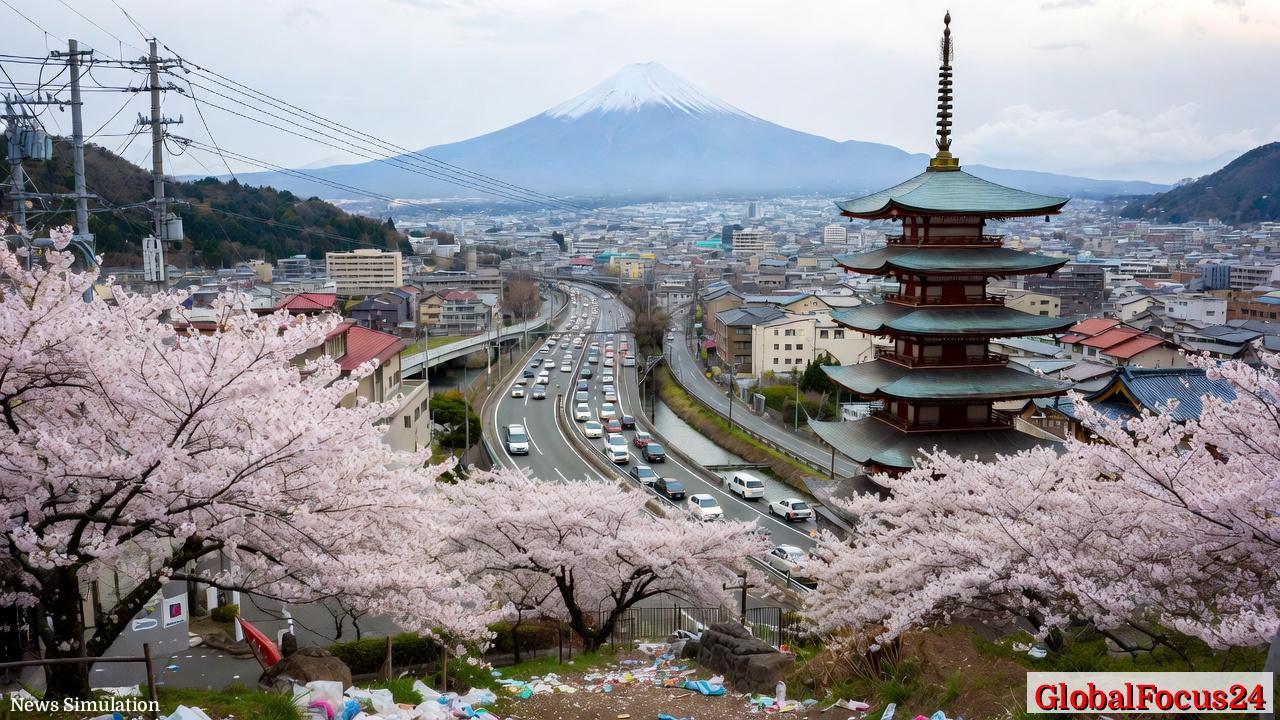
Fujiyoshida Cancels Cherry Blossom Festival Amid Overtourism, Seeks Balance Between Beauty and Community
A historic cherry blossom celebration near Mount Fuji has been canceled for this year, as local officials in Fujiyoshida cite chronic overtourism and mounting disruptions to daily life for residents. The decision marks a notable shift in how Japan’s springtime sakura season is managed by communities grappling with the economic allure of visitors and the social costs of overcrowding.
Historical Context: A Festival Built to Elevate a Region The sakura season has long been a magnet for domestic and international visitors, turning small towns into seasonal hubs of activity each April. In Fujiyoshida, the festival originated a decade ago as a response to growing curiosity about the panoramic vistas of Mount Fuji framed by flowering cherry trees. The centerpiece has been Arakurayama Sengen Park, whose pagoda provides one of the most photographed perspectives of Japan’s iconic landscape. By design, the festival aimed to boost local commerce, raise the area’s profile, and attract travelers who might otherwise overlook a quieter corner of Yamanashi Prefecture.
Yet, history shows that turning a beloved natural spectacle into a recurring event can intensify pressures on infrastructure, housing, and public space. Over the years, the festival evolved from a modest, community-led celebration into a magnet for tens of thousands of visitors during peak bloom. The city’s leadership, reflecting broader national conversations about how to balance tourism growth with residents’ quality of life, has now concluded that the current model is unsustainable.
Economic Impact: Tourism as a Double-Edged Sword The economic impulse behind Fujiyoshida’s festival is undeniable. A successful sakura event can stimulate local hotels, restaurants, and souvenir shops, generating revenue that sustains small businesses and seasonal employment. In the short term, visitors flock to the area, contributing to sales and tips that ripple through the local economy. In recent years, however, the cost of rapid visitor growth has begun to outweigh the gains for many residents and business owners.
Officials report that during peak blossom periods, daily visitation climbed as high as 10,000 people. While this influx offers an immediate economic boost, it also strains narrow streets, emergency services, and waste-management systems. The resulting friction—litter, traffic jams, and disturbances in private properties—creates ambient resentment among locals who must navigate crowded sidewalks and intrusive photo pursuits. The festival’s cancellation, therefore, is a difficult but rational decision aimed at preserving the long-term economic stability of the community. If managed correctly, alternative strategies could preserve revenue streams while reducing disruption, such as staggered visitation, controlled access, or investment in infrastructure and public amenities.
Regional Comparisons: Lessons from Closeby and Beyond Fujiyoshida’s stance aligns with broader regional efforts to temper overtourism while maintaining cultural and economic benefits. In nearby Fujikawaguchiko, authorities previously addressed misbehavior by restricting access to one of Japan’s most photographed spots, deploying barriers to deter careless tourism. The aim was to protect sensitive sites and maintain a sense of local control over visitor flow, signaling a shift from unlimited access to smarter, necessity-driven management.
Internationally, cities facing similar pressures have adopted varied tools. Italian authorities recently introduced a €2 admission fee for access to Rome’s Trevi Fountain viewing area, a move designed to fund maintenance and regulate crowds. In Venice, day-tripper policies impose fees for certain periods to manage peak loads and protect fragile infrastructure. These measures illustrate a growing global trend: tourism growth must be guided by sustainable practices that safeguard civic life and the integrity of beloved landmarks.
What This Means for Fujiyoshida and the Region The cancellation of the festival does not equate with the end of tourism in the area. Instead, it signals an intent to recalibrate growth, investing in visitor management and community resilience. Possible paths forward include developing a staged visitation plan during shoulder seasons, expanding green spaces to absorb crowds, and improving facilities to reduce spillover into private residences. By foregrounding residents’ dignity and living environment, Fujiyoshida could still capture the economic upside of tourism through more controlled, predictable flows that better align with local capacity.
Public Reaction and Social Dynamics Residents’ responses to overtourism in the region have been a mix of nostalgia for a cherished cultural moment and concern over daily life disruptions. Local voices highlight the need to preserve quiet neighborhoods, safety, and the ability to enjoy private outdoor spaces—elements that many visitors respectfully seek, but which can be compromised by excessive crowds and unmanaged behavior. The festival cancellation reflects a public acknowledgment that past approaches did not sufficiently balance these competing needs. In the absence of a major festival, the community is likely to see an increased emphasis on smaller-scale attractions, timed events, and curated experiences that highlight the area’s natural beauty without overwhelming local infrastructure.
Behavioral Trends: Why This Year Was Different Several forces have intensified the current cycle of overtourism. A weak yen in past years, coupled with social-media-driven demand for photogenic landscapes, spurred a surge in visitor interest. The result has been a flood of travelers who arrive with high expectations of perfect vistas and seamless access to iconic viewpoints, often challenging neighborhood norms and private property boundaries. When the scale of visitation eclipses a community’s capacity to manage it safely and respectfully, drastic measures—such as canceling major events—become a credible option to preserve long-term livability and reputational integrity.
Implications for Local Policy and Infrastructure The decision to cancel is also a policy signal. It invites a reassessment of how Fujiyoshida coordinates with regional tourism boards, transportation networks, and municipal services. Logistics planning, zoning considerations, and environmental protection measures can be strengthened to accommodate visitors while preserving residents’ daily routines. Investments in public transit efficiency, dedicated pedestrian lanes, increased waste-reduction programs, and better signage can all contribute to a more resilient system that supports sustainable tourism growth.
Long-Term Outlook: Rebuilding Trust and Visitor Experience Looking ahead, Fujiyoshida has a unique opportunity to redefine its festival and broader tourism strategy in ways that emphasize quality over quantity. A revised model could feature limited-entry access during peak days, extended shoulder-season campaigns, and collaboration with local businesses to create meaningful experiences that showcase the region’s culture, crafts, and culinary traditions. By aligning visitor expectations with community norms, the area can protect cherished landmarks, improve safety, and sustain economic vitality over time.
Public Messaging and Community Engagement Clear, transparent communication will be essential to rebuilding trust between residents and visitors. Local authorities can share rationale for policy changes, outline safety and cleanliness standards, and provide practical guidance on how to navigate peak bloom periods without compromising personal space or privacy. Public engagement initiatives—town hall meetings, surveys, and collaborative planning sessions—can help shape a tourism framework that reflects community values while still offering meaningful experiences for travelers.
Conclusion: Balancing Beauty, Livelihood, and Responsibility The Fujiyoshida decision to cancel this year’s cherry blossom festival highlights the delicate balance communities must strike between celebrating natural beauty and maintaining a livable environment. It underscores a broader global challenge: how to cultivate sustainable tourism that respects local residents, protects iconic sites, and sustains regional economies. By embracing strategic, inclusive approaches to visitor management, Fujiyoshida can transform a painful interruption into a foundation for a more resilient, vibrant future that honors both the sakura and the people who call the area home.