Iran's Unrest Deepens as Reports of Sexual Violence and Brutal Crackdowns Emerge
Mounting Allegations of Abuse Amid Widening Protests
Iran is facing one of its most intense internal crises in years as new allegations of sexual violence by security forces against detained protesters have surfaced. A human rights organization reported that among those assaulted was a teenage demonstrator, allegedly subjected to brutality during detention. The accusations come amid a wave of protests sweeping across the nation, fueled by economic collapse, surging inflation, and deepening frustration with the country’s leadership.
Since late December 2025, demonstrations have erupted in more than 200 cities and towns across dozens of provinces. What started as anger over economic hardship — marked by the rapid devaluation of the rial and the skyrocketing cost of essentials — has now evolved into direct challenges to the regime itself. Protesters have been chanting slogans calling for the removal of the supreme leader, defying not only government authority but the ideological foundation on which the Islamic Republic has stood for more than four decades.
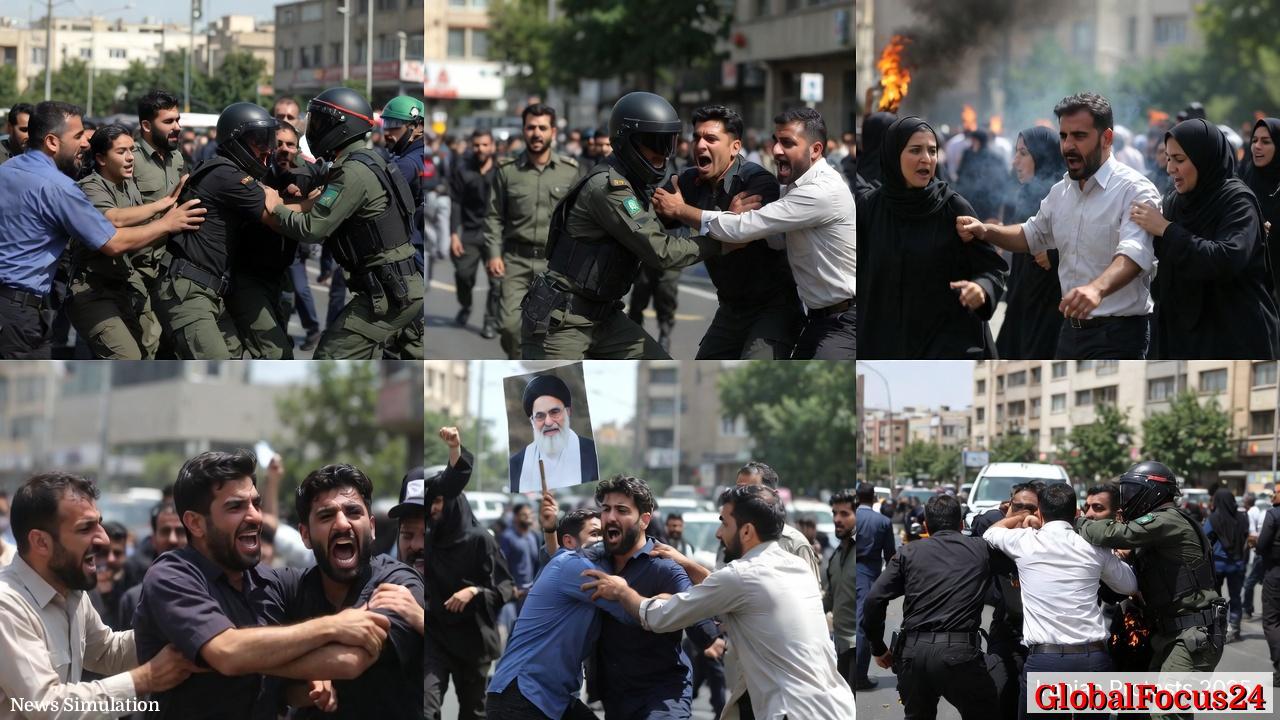
Security forces have responded with characteristic severity. Witnesses, activists, and rights groups report widespread use of live ammunition, beatings, and mass detentions. The state continues to impose internet blackouts to restrict the flow of information, while officials have promised swift and harsh punishment for anyone accused of participating in what they describe as “rioting” or “foreign-backed sedition.”
A Protest Movement Rooted in Economic Desperation
Iran’s economy has been in steep decline for years, with inflation now estimated to have surged well beyond 60 percent by some independent economists. The national currency has lost much of its value, reducing the purchasing power of ordinary Iranians and driving up the cost of basic necessities such as bread, fuel, and medicine.
Many Iranians attribute the crisis to a combination of international sanctions and economic mismanagement. While U.S. and European restrictions have long targeted Tehran’s nuclear and defense programs, domestic corruption and misallocation of funds have exacerbated the country’s fiscal instability. The government’s attempts at subsidy cuts and price controls have offered little relief, further inflaming public anger.
In December 2025, widespread strikes among industrial workers and teachers signaled the fragile state of public patience. Their grievances quickly attracted broader participation, turning economic protest into a national movement expressing political dissent. The demonstrations have drawn people from many segments of society, including middle-class professionals, students, and retirees — groups once hesitant to take part in street protests.
Historical Parallels and Lessons from Past Uprisings
The current unrest recalls earlier waves of protest in Iran’s modern history. The 2009 Green Movement, triggered by disputed presidential elections, saw millions of Iranians take to the streets before being violently suppressed. More recently, the 2019 fuel price protests also led to widespread bloodshed, with human rights organizations estimating hundreds of fatalities. However, observers note that the present unrest appears more geographically dispersed and socially diverse, suggesting a deeper erosion of public confidence in state institutions.
Unlike earlier demonstrations focused on specific grievances or electoral outcomes, the late 2025 protests have targeted the very legitimacy of Iran’s political system. Chants of “Death to the dictator” and acts such as burning portraits of the supreme leader underscore a growing defiance. The visible participation of women — many publicly removing headscarves or smoking in defiance of social laws — carries symbolic weight, echoing global calls for gender equality and civil rights.
Reports of Brutality and Sexual Violence in Detention
Among the most disturbing developments are credible reports of physical and sexual violence inflicted on detainees, including minors. Human rights watchdogs allege that some protesters were subjected to assault while in custody as a means of extracting confessions or deterring further dissent. The reported sexual assault of a teenage detainee has drawn international condemnation, with advocacy groups demanding independent investigations.
Such abuses, according to experts, fit a historical pattern in Iran’s response to public unrest. Documented instances of torture, coerced confessions, and sexual violence in detention date back decades, often occurring in tightly controlled facilities run by the Islamic Revolutionary Guard Corps (IRGC) or intelligence agents. The use of these tactics, rights advocates argue, underscores the regime’s reliance on fear and humiliation rather than reform or dialogue.
The Iranian authorities have denied the latest allegations, dismissing them as “propaganda fabricated by hostile media.” Yet with independent journalists facing arrest and the internet largely restricted, verifying reports remains challenging. Despite the blackout, videos and testimonies continue to leak through encrypted channels, offering glimpses of the violent repression unfolding on Iran’s streets.
International and Regional Reaction
The unrest has drawn sharp criticism from international human rights organizations and growing alarm among regional neighbors. Western governments have called for restraint and respect for demonstrators’ rights, though direct intervention remains improbable given ongoing global geopolitical tensions. Sanctions already imposed on Tehran over its nuclear activities and military support to armed groups across the Middle East have left limited diplomatic leverage for new punitive measures.
In the region, gulf states have been monitoring events closely. Many fear that instability in Iran could spill over, affecting energy markets and border security. The Persian Gulf’s strategic importance as a global oil passageway adds to the urgency. Analysts note that renewed unrest in Iran could also disrupt crude supply or shipping logistics, potentially placing upward pressure on global oil prices — a scenario reminiscent of the 2022–2023 disruptions caused by regional tensions.
Economic Fallout and Currency Collapse
The protests and ensuing crackdown have further weakened investor confidence in Iran’s already fragile economy. In January 2026, the rial hit a historic low on the unofficial market, intensifying pressure on households and small businesses. Imports of essential goods, already complicated by sanctions, have become increasingly unaffordable.
Banks have experienced periodic runs as citizens withdraw savings in anticipation of further devaluation. Factory owners and retailers report declining sales and chronic supply shortages. Meanwhile, workers say wages have failed to keep pace with prices, and many public employees endure months-long delays in salary payments.
Economists warn that without structural reforms and credible anti-corruption measures, recovery will remain unattainable. Iran’s limited access to international financial systems and the continued diversion of state revenue toward defense and security spending further restrict the government’s ability to stabilize markets or provide relief.
The Role of Women and Youth in the Movement
Women have emerged as prominent figures in the protests, drawing on longstanding frustration over discriminatory laws and social restrictions. Viral videos show women marching bareheaded, burning scarves, and chanting alongside men — acts that challenge not only political authority but entrenched social codes. The protest movement has also galvanized younger generations, many of whom have come of age under sanctions and repression, facing bleak prospects for employment and freedom.
Youth participation adds a generational dimension to the unrest. Many grew up connected to global culture through technology, even under censorship, and express aspirations for a more open society. The regime’s strict control over media and education has not prevented this cultural evolution, and the protests now serve as an outlet for accumulated frustration and disillusionment.
The Government’s Response and Future Outlook
Authorities have so far maintained an uncompromising stance. High-ranking officials describe the protests as plots orchestrated by “foreign saboteurs,” repeating a familiar narrative deployed during previous crises. The judiciary has announced expedited trials for those arrested, and state television continues airing forced confessions from detainees — a tactic widely condemned by human rights observers.
Despite the state’s overwhelming coercive power, analysts suggest that the ongoing unrest signals an inflection point. Economic mismanagement, coupled with generational alienation and social inequalities, has eroded trust in the ruling establishment. While the protests may be suppressed in the short term, the underlying grievances — inflation, unemployment, and political exclusion — remain unresolved.
Should the government persist with heavy repression without offering reforms, it risks deepening the legitimacy crisis that now threatens its long-term stability. Observers note that every major protest wave in Iran over the past two decades has returned stronger and more politically charged than the last.
A Nation at a Crossroads
As 2026 unfolds, Iran faces a volatile mix of economic despair, political tension, and public defiance. The nation’s future hinges on whether its leadership can address the roots of the discontent rather than dismiss them as foreign conspiracies. The haunting reports of brutality — particularly against vulnerable detainees such as the assaulted teenager — have intensified public outrage and international scrutiny.
For ordinary Iranians, daily life is becoming more precarious. Prices continue to soar, and the fear of repression hangs heavily over the populace. Yet despite the risks, tens of thousands persist in demanding accountability and change, lighting candles and chanting through the night in defiance of curfews and security patrols.
This moment marks not only another chapter in Iran’s long struggle between authority and aspiration but perhaps the beginning of a more profound reckoning with decades of unfulfilled promises. Whether the regime responds with reform or repression may determine the trajectory of the nation — and its people — for years to come.