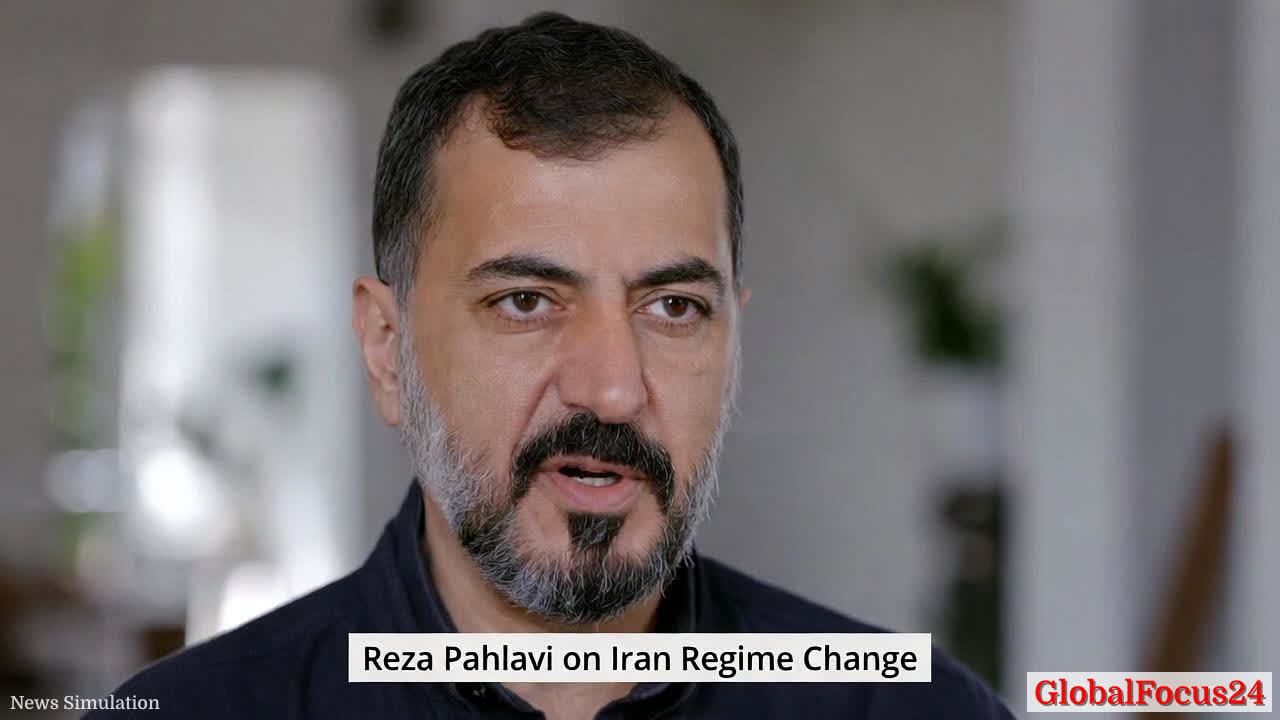
Reza Pahlavi Calls for Iranian Change from Within as Protests Surge
A leading opposition figure, Reza Pahlavi, has reiterated a central premise of his public stance on Iran’s future: political transformation must originate with the Iranian people, and should occur without foreign military intervention. In a recent interview, he framed the moment as uniquely pivotal, characterized by widespread domestic discontent, economic strain, and a broad call for systemic change. His remarks come as Iran’s streets continue to witness demonstrations across dozens of cities, driven by a constellation of grievances and a generational shift in political sentiment.
Historical Context and the Qadr Suru of a Movement
Iran’s modern political timeline has repeatedly tested the balance between popular protest and state power. The 2009 Green Movement marked a watershed moment when millions mobilized against perceived electoral irregularities and demanded greater political open-ness. While the movement did not achieve its immediate objectives, it reshaped how Iranians view dissent and governance. The 2022 Mahsa Amini protests further intensified demands for accountability and human rights reforms, drawing broader segments of society into the public square. Against this backdrop, Pahlavi’s assertion that real change must be homegrown resonates with a long-running thread in Iranian political culture: external actors can influence pressure points, but the legitimacy of any transition ultimately rests with Iranians themselves.
Economic Pressure as a Catalyst
Economic hardship has increasingly become a central driver of domestic unrest. Inflation, currency depreciation, sanctions-related distortions, and a stagnant employment landscape have eroded household purchasing power and intensified public frustration with the management of the economy. Pahlavi’s analysis highlights how economic distress amplifies political vulnerability for any regime and sharpens the public’s demand for a new political compact. For observers, the linkage between economic viability and political legitimacy is not new, but the present moment underscores how intertwined these forces are in Iran. As the government navigates limited access to international finance, technology, and strategic goods, the public’s expectation of a more transparent, accountable economic governance framework becomes a common denominator across diverse social groups.
Regional Comparisons: Iran and Neighboring Transitions
When viewed through a regional lens, Iran’s political dynamics echo broader trends in the Middle East and Central Asia where states have faced renewed questions about governance legitimacy, public service delivery, and security guarantees. In some neighboring contexts, transitions have been tumultuous, entailing periods of instability or power vacuums. Iran’s leadership maintains a robust security apparatus and a deep-rooted ideological framework, factors that can complicate and slow transitions. Yet the momentum described by Pahlavi—an organized civil-society push for democratic reform, a willingness among defections within security and administrative ranks, and increasing international attention—maps onto patterns observed in other transitional cases where domestic coalitions, rather than external forces, have taken the lead in shaping a post-crisis settlement.
Security Landscape and Defection Trends
Pahlavi’s remarks emphasize defections from regime forces as a signal of mounting friction within the state’s core pillars. If security workers, bureaucrats, and regional administrators begin to recalibrate loyalties or withdraw support, the dynamics of governance shift perceptibly. Such trends can alter the cost calculus for the ruling establishment, potentially lowering the threshold for negotiated settlement or reform. However, they also raise complex questions about transitional governance—how to preserve essential state functions while dismantling or reconstituting the institutions that sustained decades of governance under the Islamic Republic. The delicate balance between amnesty for lower-ranking personnel and accountability for top officials remains a central policy dilemma in any prospective transition.
A Transitional Strategy: The Prosperity Project
Pahlavi has outlined what he terms a “Prosperity Project” intended to guide Iran toward stability and democratic governance in the post-regime era. The plan emphasizes economic reforms designed to restore investor confidence, stabilize inflation, and rebuild public trust in state institutions. In his framework, the first 100 days are crucial for signaling intent and momentum, including practical steps toward economic stabilization and social reconciliation. For the international audience, the project points to the practical reality that a successful transition must address bread-and-butter concerns—jobs, housing, price stability, and reliable public services—alongside political reform. The emphasis on a structured, phased approach also suggests an awareness of the risks associated with abrupt upheaval, including the risk of economic disruption, institutional paralysis, and social fragmentation.
Governance and Accountability: A Delicate Partition
A central component of Pahlavi’s approach is accountability for those who bore responsibility for repression or malfeasance, paired with amnesty for many rank-and-file personnel. This dual aim reflects a mainstream transitional governance principle: to foster reconciliation and prevent cycles of vengeance, while ensuring that the highest echelons of power are held to account. The challenge lies in balancing justice with stability, ensuring that credible legal processes are visible and legitimate to the public, while avoiding the destabilizing effects of punitive indiscrimination. In practice, establishing transitional justice mechanisms—through trials, truth commissions, or other public accountability efforts—will require careful design, broad legitimacy, and robust due process protections.
Public Sentiment and Generational Shifts
Public sentiment in Iran has long featured a generational split, with younger Iranians increasingly prioritizing economic opportunity, personal freedoms, and clarity about political direction. Reza Pahlavi’s position as a paternal figure within the opposition underscores the evolving dynamics of the movement, particularly in how leadership is perceived by a broad cross-section of society. His insistence on an impartial facilitator role—leaving the ultimate form of government to the public’s determination—speaks to a strategic attempt to unify diverse factions around a shared, outcome-focused process rather than a fixed ideology. For observers, the question remains whether such a positioning can sustain broad-based participation and consensus in the face of entrenched political interests and competing visions for Iran’s future.
International Dynamics: External Actors and Internal Reforms
The global backdrop to Iran’s internal debate involves a spectrum of foreign actors and policy approaches. While Pahlavi rejects foreign military intervention as a pathway to change, external dynamics—diplomatic engagement, sanctions policy, and regional security considerations—will inevitably influence the tempo and texture of any transition. The international community often weighs principles of self-determination against regional stability and human rights concerns. In this context, international attention can help amplify peaceful, negotiated solutions while also ensuring that transition plans include clear guardrails against violence, extremism, or power vacuums. The balance between respect for sovereignty and the protection of fundamental rights remains a persistent tension in discussions about Iran’s future.
Role of Civil Society and Media
A robust civil society and a free, functioning media landscape are critical to any transition that aims to be legitimate and durable. Social groups, professional associations, and independent outlets can facilitate dialogue, document abuses, and present alternative policy proposals that reflect a wide array of experiences within Iranian society. For transitional leaders, preserving space for civil society—while safeguarding against coercive responses from hardliners—will be essential to prevent backsliding and to maintain public confidence in the reform process. The public’s ability to organize, debate, and monitor reform efforts contributes to a more resilient transition pathway.
Economic Reconciliation and Resource Management
Beyond macroeconomic stabilization, any durable transition must address the mechanics of resource management, energy policy, and structural reform. Iran’s economy is deeply entwined with its energy sector, public subsidy structures, and domestic commercial activity. A credible reform agenda will need to outline how subsidies are rationalized, how currency stability is achieved, and how public investment is allocated to critical sectors such as industry, agriculture, and technology. A phased, transparent approach to these reforms can help mitigate social disruption while signaling genuine commitment to long-term prosperity.
Public Health, Education, and Social Services
Social services, including health and education, are often barometers of governance quality. In a transitional context, maintaining or improving access to essential services helps sustain public support and reduces the likelihood of unrest driven by service gaps. Plans that include investments in healthcare infrastructure, teacher training, and digital literacy programs can contribute to a more resilient society and foster long-term economic development. Integrating these considerations into the Prosperity Project could enhance its appeal to a broad audience, including working families and regional communities most affected by economic volatility.
Regional Competitiveness and Comparisons
Iran’s regional standing in terms of competitiveness, investment, and innovation will influence how a post-transition economy performs. Countries with stable governance, transparent institutions, and regulatory predictability tend to attract more foreign direct investment, accelerate technology transfer, and improve supply-chain resilience. For Iran, achieving similar benchmarks would require credible institutions, predictable policy frameworks, and strong protection for property rights. While no two transitions are alike, lessons from other regional experiences suggest that stabilizing institutions, coupled with pragmatic economic reforms, can help unlock growth potential and reduce volatility during the initial years after a transition.
Public Reactions and Perceptions
Public reaction to leadership proposals and transitional plans tends to be diverse, reflecting Iran’s social and political heterogeneity. Some segments may welcome a peaceful path to reform, while others remain skeptical about the likelihood of meaningful change or fear of instability. The perceived legitimacy of any transitional arrangement will hinge on inclusive participation, transparent decision-making, and demonstrable progress on economic and social fronts. Continuous engagement with communities, labor groups, student associations, and professional networks will be essential to building consensus and sustaining momentum.
The Path Forward: Hope, Caution, and Pragmatic Diplomacy
As Iran navigates this critical juncture, the emphasis on self-determined change underscores a principle repeated in many peaceful transitions: durable reform requires broad-based engagement, credible leadership, and a clear plan for governance that protects civilians and maintains essential services. While the international community can play a supportive role—through dialogue, economic cooperation, and confidence-building measures—the core driver remains the Iranian people’s agency and resolve. In this framework, Reza Pahlavi’s approach presents a structured, pragmatic roadmap that seeks to balance ambition with the realities of governance, security, and social cohesion.
Conclusion: A Moment of Opportunity and Responsibility
The ongoing protests reflect a nation wrestling with decades of political tradição, economic constraints, and shifting generational expectations. Reza Pahlavi’s message—change must come from within, guided by an orderly, inclusive process—resonates with a long-standing aspiration for national self-determination. If translated into a credible, widely supported transition plan, the moment could offer a path to a more prosperous and accountable Iran. The next chapters will hinge on the ability of Iranian leaders, civil society, and international partners to translate rhetoric into practical reforms that stabilize the economy, protect civil rights, and lay the foundations for a durable, peaceful political order.