Iran’s Student Protests Mark Historic Wave After Crackdown
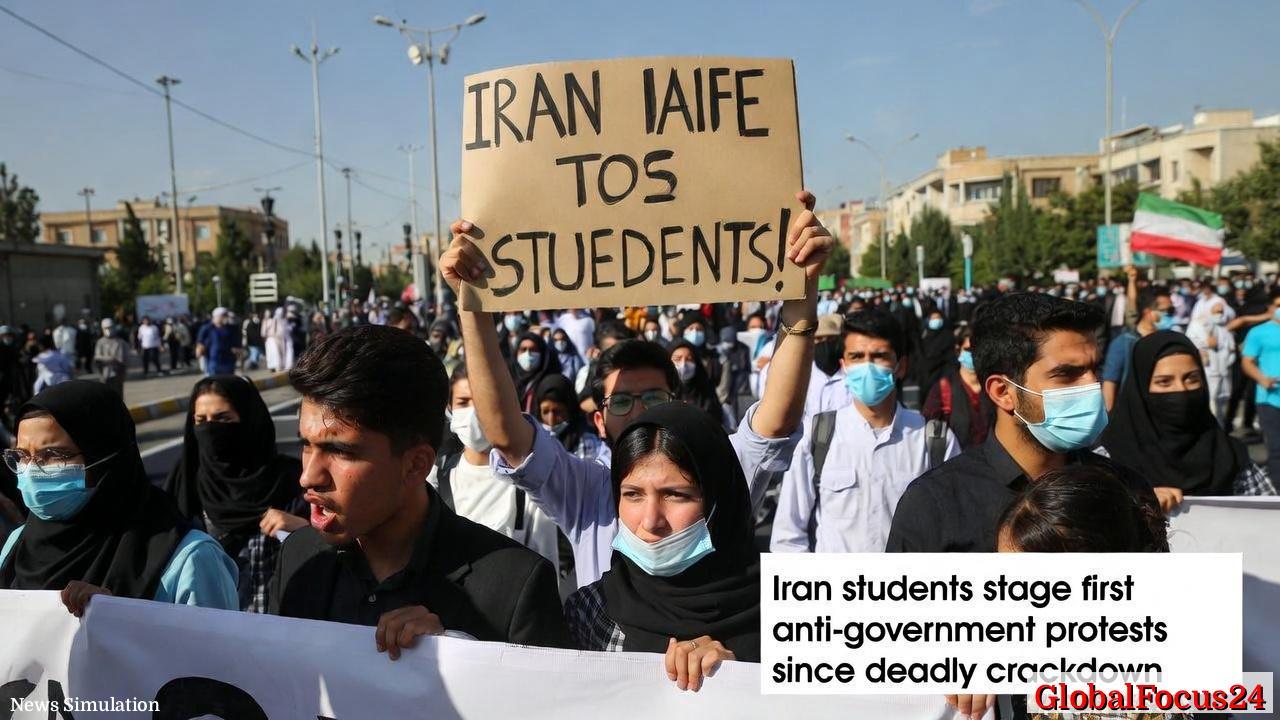
In cities across Iran, university campuses became stages for a coordinated wave of protests led by students, signaling the emergence of a national movement that has drawn fresh attention to the tensions between authorities and a diverse cohort of young Iranians. The demonstrations—described by observers as the first large, organized expression of dissent since a deadly crackdown on nationwide protests last month—underscore a complex moment for the country’s political and social landscape. As students took to streets and dormitories, they connected calls for reform with broader concerns about economic hardship, civil rights, and the pace of change in a country where higher education has long been a hub of political thought.
Historical context: a lineage of student activism in Iran and its echoes today Iran’s universities have historically been hotbeds of political discourse and civic mobilization. From the days of the 1953 coup through the Islamic Revolution and the subsequent decades, student groups have played pivotal roles in shaping public opinion and challenging state narratives. In the last decade, higher education institutions repeatedly became stages for debates on political freedoms, labor rights, and the cost of living. The most recent protests arrive in a continuum of student-led activism that has endured despite periods of repression, periods of relative liberalization, and the persistent demands of a generation seeking greater personal and professional opportunity.
What set the latest protests apart is their scale and speed. The demonstrations began on multiple university campuses and quickly spread to neighboring neighborhoods, with students organizing through social networks, informal study groups, and peaceful march routes. Organizers emphasized nonviolent discipline, but participants faced a range of responses from authorities, including police presence near campus gates and dispersed gatherings in urban centers. The sense of urgency among students grew as economic pressures—rising living costs, currency volatility, and disrupted supply chains—accentuated calls for broader reforms.
Economic context and potential impact The protests occur against a backdrop of economic headwinds that have affected households across Iran. Inflation, a fluctuating exchange rate, and sanctions-related constraints have pushed up essential goods prices, constrained government spending, and intensified concerns about long-term economic stability. For many students, the economic question is not abstract theory but immediate livelihood: accommodation costs, meal plans, transportation, and the opportunity costs associated with extended time in higher education.
From a macroeconomic perspective, sustained student activism can influence labor market dynamics and policy attention. Universities have historically contributed to human capital development, research output, and innovation ecosystems. When student voices align with concerns about wages, job prospects, and entrepreneurship opportunities, the result can be a stronger push for reforms related to education funding, grants, and collaboration with the private sector. In the near term, universities themselves may adapt by offering more flexible programs, expanded internship pipelines, and targeted support for student housing, all of which carry implications for local economies around major campuses.
Regional comparisons: how similar movements have unfolded nearby Looking at comparable episodes in the broader region, student-led movements in neighboring countries have often functioned as barometers of broader social change. In some cases, campus protests have catalyzed policy debates about governance, civil liberties, and higher education funding, while in others they have remained largely contained within university precincts. The Iranian protests echo a pattern where campuses become focal points for wider conversations about the distribution of political power and the pace of reform.
City-by-city dynamics show both convergence and divergence. In metropolitan centers with large student populations, the demonstrations have tended to attract larger crowds and more sustained attention from international observers, while smaller college towns have seen more modest but symbolically important expressions of solidarity. Economically, regions with more diversified local economies or stronger private sector activity may experience different spillovers—ranging from heightened consumer sentiment and small-business activity to shifts in local investment priorities and municipal policy responses.
Policy environment: what authorities’ responses reveal The response from authorities to the student protests has varied by city and moment, reflecting a calculated balance between maintaining public order and addressing public discontent. Official statements have regularly framed demonstrations within the framework of national security and public stability, while in several instances authorities have allowed peaceful gatherings to proceed with some oversight. Human rights observers have urged restraint and emphasized the importance of protecting the rights of assembly and expression. The evolving stance of policymakers—especially on issues related to education, youth employment, and social freedoms—will influence how the protests develop in the weeks ahead.
Public sentiment: resilience, fear, and expectations Public reaction to the student-led protests has been mixed but largely sympathetic toward the underlying grievances. Many residents see higher education as a pathway to opportunity and personal advancement, and the protests have reinforced the perception that the status quo is failing to deliver affordable living conditions and meaningful progress for the younger generation. At the same time, fear of reprisals and uncertainty about the trajectory of political reforms have tempered outward demonstrations in some neighborhoods. Community discussions outside campus gates increasingly highlight a desire for peaceful, constructive civic engagement that can translate into tangible improvements in daily life.
The role of media and international observers Media coverage of the protests has played a vital role in shaping international understanding of the situation, as does on-the-ground reporting from regional journalists and independent observers. The narrative surrounding student protests is influenced by the broader global discourse on civil rights, economic reform, and the role of education in society. International observers have called for transparency and nonviolent conduct, while policymakers in other nations monitor developments for implications concerning regional stability, energy markets, and diplomacy. In this context, universities are not isolated spaces; they are connected to transnational conversations about governance, human rights, and the responsibilities of state institutions to its citizens.
Historical consequences and potential trajectories If the current momentum sustains, the protests could leave a lasting imprint on Iran’s political and social architecture. Long-term effects might include renewed attention to higher education funding, reforms in student housing and campus facilities, and policies aimed at expanding internship opportunities and industry partnerships. The protests could also influence how political parties, student unions, and civic organizations interact with the public, potentially reshaping norms around dissent, negotiation, and policy-making.
Conversely, the crackdown narrative—if it reemerges—could deepen mistrust in the political establishment and catalyze new cycles of civil society activity. The tension between security considerations and civil liberties is a persistent thread in Iran’s domestic affairs, and how authorities calibrate this balance will have consequences for regional perceptions of Iran’s openness to reform and dialogue.
Socioeconomic dimensions: generations of opportunity and challenge For many families, the student protests highlight intergenerational dynamics in Iran’s economy. Younger generations face different expectations about career trajectories, education costs, and the feasibility of pursuing entrepreneurial ventures in an environment with regulatory constraints and limited access to capital. The protests bring these concerns to the fore, underscoring a broader demand for an economy that can translate talent into usable opportunities: skilled graduates who can contribute to innovation, manufacturing, technology, and service sectors without facing prohibitive barriers to entry.
Local economies and university towns may experience ripple effects as well. Campuses often anchor surrounding businesses—cafes, bookstores, affordable housing, and transportation services. When student activity surges, consumer demand and foot traffic rise, providing temporary boosts to local retailers. If sustained, this activity can influence municipal planning priorities, encouraging policymakers to invest in urban infrastructure, transportation access, and safety measures for densely populated campus corridors.
A path forward: constructive engagement and durable reforms Experts suggest several avenues through which authorities and student groups might translate the current energy into durable improvements. These include transparent channels for dialogue between university leadership, student representatives, and policymakers; targeted programs that connect students with apprenticeships, internships, and entrepreneurship incubation; and ongoing monitoring of consumer prices and living costs to ensure affordability for families supporting students. Emphasizing nonviolence, accountability, and open communication can help preserve social cohesion while allowing space for legitimate dissent and policy refinement.
Conclusion: a pivotal moment for Iran’s educational and economic future The emergence of large-scale student protests represents more than a moment of street demonstration. It is a signal of a generation seeking to shape its own future—one where higher education serves as a catalyst for opportunity, innovation, and civic engagement. As campuses continue to organize, the country watches how authorities respond, how economic pressures evolve, and how regional comparisons inform a broader understanding of reform dynamics. The coming weeks will be decisive in determining whether this wave of student-led activism translates into meaningful policy changes, improved economic conditions, and a more open civic space—or whether it fades as part of an ongoing cycle of protest and repression. In any case, the events underscore the enduring link between education, economy, and public life in Iran, and they reflect a moment when students are asserting a role as stewards of the nation’s future.