Iranian National Sentenced in France for Promoting Terrorism Online
A French Court Delivers a Strong Message on Digital Extremism
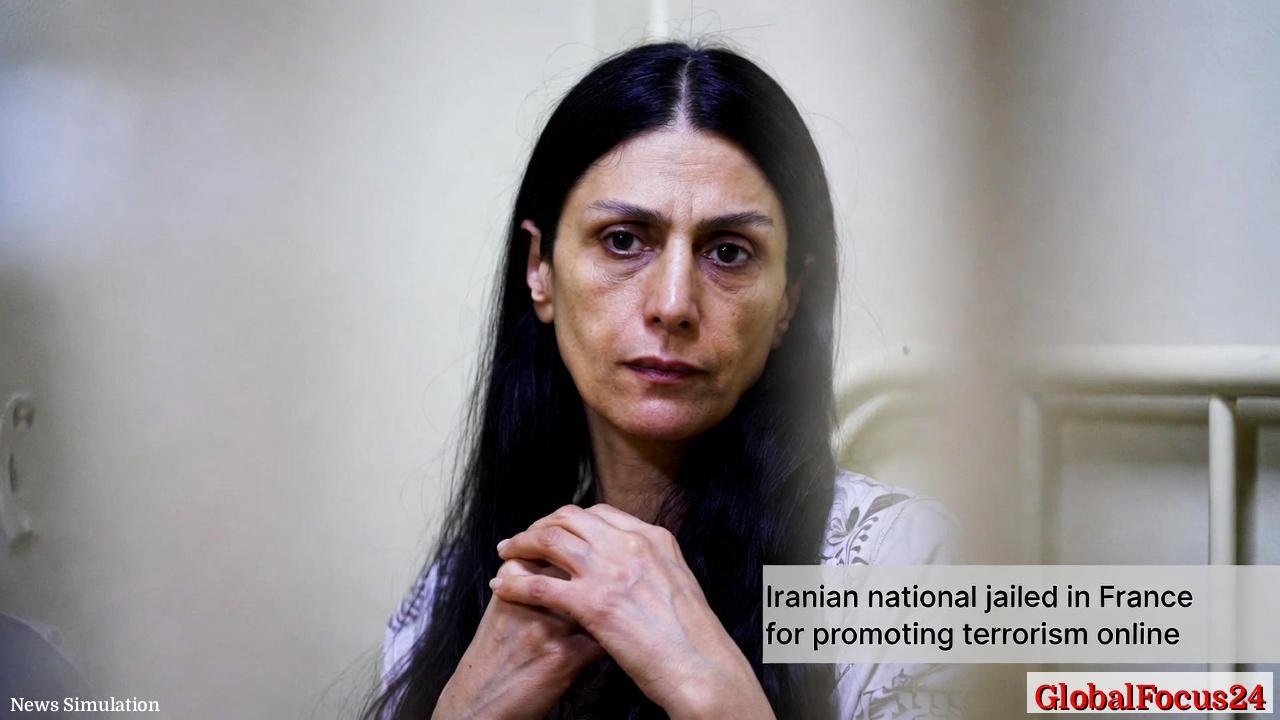
A French court has sentenced Iranian national Mahdieh Esfandiari to prison for promoting terrorism online, marking a significant development in France’s ongoing battle against extremist propaganda. The ruling underscores the country’s determination to curb cyber radicalization and reinforces Europe’s broader efforts to combat online extremist networks exploiting social platforms for recruitment and ideological influence.
According to judicial sources, Esfandiari was found guilty of disseminating digital content that glorified terrorist organizations and encouraged acts of violence against civilians. French authorities described her online activities as “persistent and deliberate,” aimed at reaching vulnerable individuals susceptible to radical narratives. The verdict, handed down in Paris, follows an extensive investigation by cybercrime and counterterrorism units that traced Esfandiari’s digital footprint across encrypted messaging channels and social media accounts.
France’s Tough Stance on Online Radicalization
France has long been one of Europe’s most vigilant countries in addressing online terrorism promotion. Since the mid-2010s, following a series of devastating terrorist attacks, French lawmakers have expanded legal definitions of “apology for terrorism” to include digital activity, livestreamed statements, and online publications.
Under the French penal code, promoting or justifying terrorism is a serious offense punishable by imprisonment and heavy fines. The Esfandiari case fits into a broader framework of legal measures designed to dismantle digital infrastructures that amplify extremist ideologies. Over the past decade, French courts have handled increasing numbers of similar prosecutions involving online propaganda, many tied to global jihadist movements but also to far-right and separatist agendas.
The Evolution of France’s Counterterrorism Legislation
France’s legislative evolution in the fight against terrorism has been shaped by necessity and tragedy. After the 2015 Paris attacks, the government introduced sweeping powers under the state of emergency that later became part of ordinary law, strengthening digital surveillance and expediting online content takedowns.
Esfandiari’s conviction falls under sections that criminalize the dissemination of messages inciting violence or supporting groups designated as terrorist organizations under French and European law. Legal experts note that this framework has been repeatedly tested and refined through challenges in France’s Constitutional Council and the European Court of Human Rights.
In practice, these laws aim not only to prevent real-world violence but also to deter the online spread of extremist propaganda that can radicalize isolated individuals. France’s judiciary has emphasized that freedom of expression does not extend to content that encourages terrorism, a stance shared by many EU member states confronting the same challenge.
Investigation and Digital Evidence
Esfandiari’s online activities first drew the attention of French authorities through a tip from Europol’s Internet Referral Unit, which monitors extremist content globally. Investigators reportedly uncovered evidence that she managed several pseudonymous accounts disseminating materials sympathetic to banned organizations and sharing videos that praised previous attacks in the Middle East and Europe.
French cyber investigators, equipped with enhanced digital forensics tools, provided the court with detailed analyses of Esfandiari’s communications and network of contacts. The prosecution argued that her content was intentionally structured to appeal to impressionable users, using ideological framing and emotional imagery commonly employed in extremist recruitment.
During the trial, defense attorneys characterized Esfandiari’s posts as “personal expressions of political frustration” rather than incitement. However, the court concluded that the digital evidence demonstrated a clear intent to promote or justify terrorist acts, crossing the line into criminal conduct.
Regional and International Context
The sentencing of Mahdieh Esfandiari takes place amid a larger European effort to counter online extremism, particularly as digital propaganda evolves with new technologies such as artificial intelligence and encrypted messaging. France, Germany, and the United Kingdom have all enhanced cooperation under EU security frameworks, creating joint task forces to identify and remove extremist content within hours of detection.
The European Union’s Digital Services Act, which came into full effect in 2024, has imposed additional obligations on major online platforms to act swiftly against illegal content, including terrorist material. France has been a leading advocate for such regulations, arguing that state sovereignty and public safety must extend into the digital realm. Enforcement of these laws has gained urgency as terrorist organizations adapt to algorithm-driven media and fringe networks that elude traditional policing.
The Broader Impact in Iran-France Relations
While Esfandiari’s case primarily concerns French domestic law, it also touches indirectly on strained relations between France and Iran. French institutions have faced diplomatic sensitivity when charging Iranian nationals, though officials emphasized that the trial was conducted strictly under French jurisdiction and in full accordance with legal norms.
The Iranian government has not publicly commented on the case, but diplomatic observers say it highlights the growing complexity of international law enforcement in cases involving online activity that crosses borders. Cyber offenses often require multinational collaboration, and France has called repeatedly for the creation of shared databases to better monitor digital threats originating abroad.
Economic and Social Ramifications of Counterterrorism Efforts
Beyond the immediate legal implications, cases like Esfandiari’s also illustrate the economic and societal costs of addressing digital terrorism. The French government invests more than €1 billion annually in counterterrorism operations, including cyber intelligence, technological infrastructure, and judicial processing.
Tech platforms operating in France are required to comply with increasingly stringent content moderation laws, which have prompted both compliance costs and controversy regarding privacy rights. Companies face significant penalties for failure to remove flagged content promptly, a policy that has reshaped digital media operations across Europe.
Opponents of rigid online regulations argue that excessive censorship could stifle freedom of expression. Proponents, however, point to declining numbers of extremist recruitment accounts and the dismantling of digital networks as evidence that robust intervention works. The continuing debate underscores a central tension in democratic societies—balancing civil liberties with collective security.
Comparisons Across Europe
France’s approach to combating online extremism has often set the tone for its neighbors. Germany enforces similar provisions under its Network Enforcement Act, known as NetzDG, which holds social media companies accountable for failing to remove extremist content within tight deadlines. The United Kingdom’s Online Safety Act, enacted in 2023, likewise empowers regulators to impose heavy fines on platforms that host terrorist material or fail to prevent its spread.
In comparison, France’s judiciary plays a more direct role in criminal prosecutions for digital incitement, reflecting the country’s civil law tradition. Courts often interpret “apology for terrorism” broadly, enabling prosecutors to act against symbolic gestures, slogans, or even artistic expressions that could be construed as glorifying violent movements.
While human rights advocates sometimes question the scope of these laws, public opinion in France has generally supported firm measures in light of the nation’s traumatic history with terrorism.
Public and Expert Reactions
The Esfandiari verdict has generated mixed public reaction. Civil rights groups expressed concern about potential overreach, warning that expanding definitions of terrorism-related speech could chill legitimate political discourse. Yet counterterrorism experts and many citizens viewed the sentencing as both necessary and proportionate, given the identifiable connection between online radicalization and violent acts in recent years.
Digital security specialists note that France’s vigilance reflects a new reality where online influence can translate directly into real-world harm. Extremist propaganda rarely remains confined to the virtual space; it shapes perceptions and behaviors that can lead to violence. The Esfandiari ruling thus represents more than an individual punishment—it symbolizes a broader societal resolve to confront dangerous speech online.
Looking Ahead: The Challenge of Digital Propaganda
As France continues to refine its strategies against terrorism in the digital age, experts predict that artificial intelligence, deepfakes, and encrypted peer-to-peer networks will complicate enforcement. The government is investing in next-generation monitoring systems designed to detect extremism patterns in real time, while legal scholars advocate for transparent oversight to ensure that fundamental rights are preserved.
Esfandiari’s sentencing reinforces a clear message: disseminating or supporting extremist ideology on digital platforms will carry serious legal consequences in France. The balance between liberty and security, ever delicate, remains central to Europe’s evolving confrontation with the persistent threat of online radicalization.
In a world where digital content shapes ideology and behavior at unprecedented speed, France’s latest court decision underscores both the promise and peril of the information age—and the responsibility of societies to safeguard the former without succumbing to the latter.