Internet Blackout in Iran Deepens Amid Escalating Protests and Violence
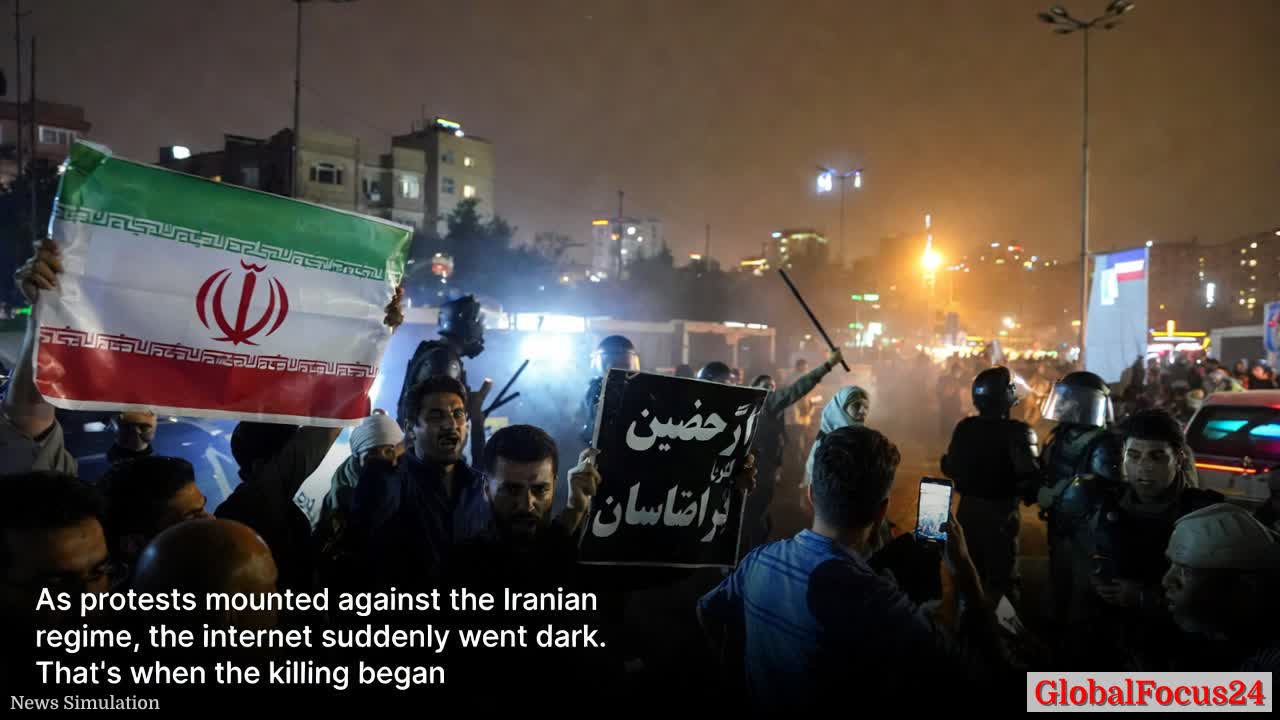
As waves of anti-government demonstrations swept across Iran, the country was abruptly plunged into an internet blackout that left millions disconnected from the outside world. What followed, according to eyewitnesses and human rights observers, was a chilling escalation of violence. Mobile networks went down, messaging platforms froze, and cities that only moments before shared images of unrest fell silent. In that silence, the killing began.
Government Crackdown and Disruption of Communication
The pattern was not new. Since 2019, Iranian authorities have repeatedly cut access to the internet in response to civil uprisings. The latest shutdown, however, marked one of the broadest and most coordinated efforts yet to suppress digital communication. Experts say the outage began with the throttling of mobile data services, followed by a complete block on international connections.
Telecommunication analysts monitoring global traffic reported an immediate drop of more than 80% in Iran’s connectivity within hours of the unrest intensifying. Only limited access through government-linked networks remained active, primarily for official institutions and state media. For citizens trying to communicate with family members or document events, the blackout was total.
The restriction on communication coincided with reports of escalating force against protesters. In several provincial capitals, security forces allegedly opened fire on demonstrators, leading to dozens of casualties. Without social media or live reporting, information circulated slowly, pieced together through encrypted satellite connections and diaspora networks abroad.
Historical Context of State-Controlled Internet in Iran
Iran’s government has long exercised tight control over digital communication. The country began developing its “National Information Network” (NIN) — a domestically controlled intranet — more than a decade ago. Officially presented as a cybersecurity measure to reduce foreign surveillance, the project gradually evolved into a tool for censorship and information control.
During the 2009 Green Movement, online platforms such as Twitter and Facebook were instrumental in mobilizing protests. The government’s response at the time was to restrict certain websites while maintaining partial connectivity. In the years that followed, however, the strategy shifted toward complete shutdowns during crises. The most infamous of these came in November 2019, when fuel price hikes triggered nationwide demonstrations that were met with both violent crackdowns and a weeklong internet blackout.
That 2019 blackout became a defining moment in the digital history of Iran. It marked the first use of large-scale “kill switch” tactics to disconnect citizens from the global web, setting a precedent that has since been refined and repeated. The method allows authorities to suppress images and reports of violence before they can reach international audiences.
Fear and Uncertainty on the Ground
For many Iranians, the blackout imposed more than just digital silence — it instilled deep fear and isolation. Ordinary communication chains for families, students, and small business owners broke overnight. Internet-based services that power everything from e-commerce to banking ceased functioning, amplifying the sense of emergency and confusion.
Witnesses in Tehran and Mashhad described scenes of chaos as streets filled with tear gas and panic spread. “It felt like the world disappeared,” said one resident in a digital message later relayed through a proxy network. “You couldn’t call, you couldn’t message — you just heard gunfire and screaming.”
Human rights organizations based outside the country have accused Iranian security forces of using information blackouts to conceal mass arrests, arbitrary detentions, and extrajudicial killings. While official state media portrayed the unrest as the work of “foreign agitators,” leaked videos that eventually reached outside networks painted a starkly different picture — one of heavily armed forces firing into crowds.
Economic Consequences of Nationwide Outages
The repeated shutdowns are not only a human rights issue; they carry profound economic costs. Iran’s already struggling economy, burdened by years of sanctions and inflation, suffers billions in losses every time digital infrastructure is disrupted.
In today’s connected economy, internet-dependent services play a vital role in sustaining trade, logistics, and communication. Small online retailers lose customers, local entrepreneurs cannot process payments, and tech startups face business paralysis. According to estimates from international monitoring groups, each day of a full internet shutdown can cost Iran tens of millions of dollars in economic productivity.
Beyond immediate losses, the recurring shutdowns erode investor confidence. Regional technology hubs in Turkey and the United Arab Emirates have gained a competitive edge as Iranian innovators find themselves locked out of the global digital marketplace. This growing digital isolation widens the gulf between Iran and its neighbors, many of which actively promote high-speed connectivity and e-commerce growth.
Regional Comparisons and Global Implications
Iran’s use of internet blackouts aligns it with a small but growing list of states deploying similar strategies to quell dissent. In recent years, countries such as Myanmar, Ethiopia, and Sudan have imposed nationwide connectivity restrictions during political unrest. In each case, the aim was to limit public coordination and the spread of dissenting narratives.
By contrast, regional peers like Qatar and the United Arab Emirates have embraced transparency and reliability in digital infrastructure as a cornerstone of their modernization strategies. Internet freedom indexes across the Middle East reveal a widening divide between countries using the web as an engine of growth and those weaponizing it as a tool of control.
This dynamic has not escaped international attention. Western governments and human rights organizations have repeatedly condemned Iran’s digital repression, with some calling for targeted sanctions on companies and individuals involved in implementing shutdown orders. Nonetheless, the technical complexity of tracing such operations, often embedded in state-run telecom monopolies, makes accountability elusive.
The Digital Weaponization of Silence
What distinguishes the Iranian blackout from routine censorship is its synchronization with violence on the ground. Analysts argue that the blackout is not merely a defensive tactic but a deliberate component of crowd-control strategy. By eliminating connectivity, authorities reduce the risk of live-streamed evidence and weaken the psychological resolve of protesters who rely on global visibility for safety.
This form of “digital siege,” as some researchers describe it, transforms technology itself into a weapon of state power. It denies citizens the ability to bear witness and transforms urban centers into informational voids. In that void, narratives can be rewritten — or erased entirely.
Resistance Through Connection
Despite the risks, many Iranians continue to find ways to break through the blackout. The use of proxy servers, decentralized networks, and satellite-based messaging systems has grown rapidly, supported in part by the Iranian diaspora and international digital rights advocates.
Parallel to this, global tech companies have quietly explored avenues to support information flow into and out of the country, though such efforts often clash with sanctions or the risk of state retaliation. In previous shutdowns, low-orbit satellite technologies and VPN services provided limited lifelines for communication, allowing small streams of verified information to reach human rights groups abroad.
These efforts underscore a persistent truth: information, once decentralized, is difficult to contain entirely. Each blackout seems to fuel greater innovation in circumvention technology, gradually eroding the effectiveness of digital suppression.
The Cost of Silence
The events unfolding in Iran underscore a fundamental tension between state power and individual rights in the digital age. As authorities attempt to control narratives through technological force, citizens respond by rewriting the rules of resistance. Yet each cycle of protests, shutdowns, and violence exacts a human toll that cannot be measured in bandwidth or bytes.
Families remain separated, businesses shuttered, and the collective memory of what happened during those dark hours is left to oral recollection and fragmentary evidence. For many Iranians, the blackout symbolizes more than censorship — it is a reflection of a deeper struggle for agency and truth.
As the nation grapples with the aftermath, the world is left to piece together the echoes of events that occurred in near-total darkness. What emerges from that silence is both haunting and urgent: a reminder that in the modern era, the fight for freedom often begins with the right to connect.