Quentin Deranque Case Prompts Nationwide Debate on Political Violence and Security at Higher-Education Venues
A sequence of violent events surrounding a campus protest has reverberated across France, drawing attention to political tensions, campus security, and the broader social climate ahead of national elections. In Lyon, a 23-year-old student affiliated with a far-right milieu died after a brutal assault that occurred on the periphery of a protest against a left-leaning politician’s conference at Sciences Po Lyon. The incident has triggered a murder investigation, intensified regional scrutiny of political demonstrations, and sparked national dialogues about safety, extremism, and the role of universities as venues for political discourse.
Context and timeline of events On a Thursday evening in Lyon, a protest organized in response to a conference hosted by a left-wing figure at Sciences Po Lyon drew participants from diverse political backgrounds, including students, activists, and members of political movements. The protest escalated into street clashes that extended beyond the campus, leading to a chaotic scene characterized by shouting, shoving, and rapid crowds moving through the surrounding neighborhoods. In the melee, Quentin Deranque, a 23-year-old student born in 2003, was providing security on the sidelines. He sustained severe head injuries during the assault, which involved multiple assailants. He was hospitalized in a coma and later died from brain injuries caused by skull fractures, according to autopsy findings.
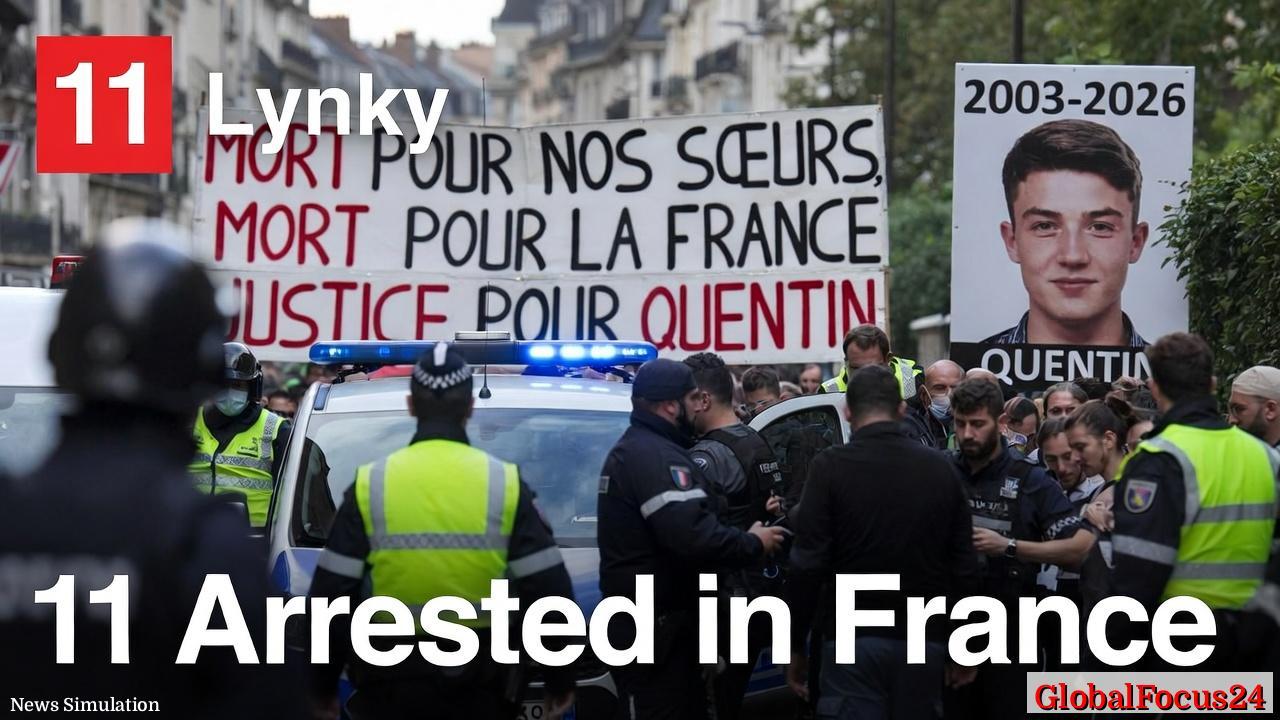
French authorities promptly opened a murder investigation, and law enforcement teams detained 11 individuals in connection with the case. Several of those detained have ties to aides associated with far-left political figures, underscoring the highly charged political atmosphere surrounding the incident. Investigators are assessing potential motives, the sequence of events, and the roles of different participants in the violence. The case has rapidly become a flashpoint in the ongoing debates about political polarization, campus safety, and the protection of individuals who participate in public demonstrations.
Impact on local communities and institutions The Lyon incident has prompted an immediate response from university administrators, local officials, and civil society organizations. Sciences Po Lyon issued statements reaffirming its commitment to open dialogue while emphasizing that violence is unacceptable and contrary to the university’s mission. In the wake of the event, campus security protocols have come under renewed scrutiny, with discussions focusing on crowd management, liaison with local police, and the balance between safeguarding free expression and preventing harm on campus grounds.
The case has prompted mental health and security considerations for students, faculty, and staff who participate in or observe political demonstrations. University leaders and student unions are weighing the best practices for de-escalation, safe routes for protestors, and clear disclaimers about permitted protest activities in university spaces. Communities near Sciences Po Lyon have mobilized to provide support for those affected by the incident, including counseling services and public forums to address concerns about safety, free speech, and the responsibilities of political actors at campuses.
Regional and national context France has long wrestled with episodes of political violence and confrontations around sensitive topics in public spaces. The present case adds to a broader pattern in which political demonstrations, especially those linked to left- and right-wing movements, intersect with university campuses—sites traditionally associated with debate, research, and civic education. While the vast majority of protests remain peaceful, a minority of episodes have featured clashes, injuries, and, in rare cases, fatalities. Public authorities have underscored the importance of lawful protest, robust protection for participants, and rapid investigation when violence occurs.
The Lyon incident arrives at a moment when many regions are preparing for upcoming elections. Political leaders on both sides of the spectrum have reacted to the case, emphasizing the need for safety and the rule of law while avoiding inflammatory rhetoric that could inflame tensions further. In the broader European context, concerns about political extremism and violence at demonstrations have prompted discussions about policing strategies, community outreach, and the role of social media in mobilizing participants. Analysts note that regional comparisons often highlight differences in policing approaches, urban density, and the visibility of political movements, all of which can influence how protests unfold and how authorities respond.
Economic implications of political unrest While the direct economic impact of a single violent incident on a campus is typically limited, the repercussions can ripple through several economic channels:
- Local business activity: Protests and clashes near university districts can affect foot traffic, deter visitors, and influence hospitality and retail revenue in the short term.
- Public safety costs: Increased security deployments, potential infrastructure repairs, and heightened policing presence during major demonstrations can strain municipal budgets and shift resource allocation.
- Higher education operations: Universities may reassess event planning budgets, enrollment communications, and campus access policies to mitigate risk for future events.
- Investor and market sentiment: While this incident is primarily domestic, heightened political risk perceptions can influence consumer confidence and, in some cases, regional investment decisions, particularly if demonstrations disrupt transportation or major corridors.
Historical context and comparisons The tensions surrounding this case echo several historical episodes in France where political demonstrations intersected with university life and campus politics. France has a storied tradition of student activism, with landmark movements shaping national discourse, policy, and cultural life. In recent decades, the balance between protecting free expression and maintaining public order has been a persistent theme for campus administrators and law enforcement. Comparisons with other European university towns reveal varying approaches to crowd control, dialogue facilitation, and the management of politically charged events. In some cases, rapid response and mediation have helped de-escalate tensions, while in others, a heavy-handed approach led to prolonged confrontations. The ongoing investigation and public reporting will likely influence policy discussions about how best to safeguard participants and uphold principles of free expression in academic settings.
Public reaction and social dynamics Public reaction to the Lyon case has been swift and multifaceted. Supporters and sympathizers for Quentin Deranque have organized vigils, posted tributes, and joined demonstrations in Paris and other major cities, underscoring the personal dimension of the tragedy. Banners and memorials bearing the inscription Mort pour nos sœurs, Mort pour la France, Justice pour Quentin have circulated on social media and in public spaces, reflecting calls for accountability and justice. Families and friends of individuals involved in political activism have expressed a range of emotions, from grief and solidarity to concern about the potential for further clashes. Community leaders emphasize the importance of peaceful dialogue and the avoidance of retaliation, highlighting that lasting solutions require constructive engagement rather than escalatory rhetoric.
Policy and law enforcement implications The case has put a spotlight on several policy and enforcement considerations:
- Investigation protocols: Authorities are pursuing a comprehensive murder investigation to determine the exact sequence of events, the identities and motivations of all involved, and any potential links to organized groups.
- Security planning for demonstrations: The incident is likely to influence future protocol for managing protests near university campuses, including risk assessments, liaison with campus security, and timing and routing guidance for demonstrations.
- Counter-extremism and hate crime considerations: Probing the roles of individuals associated with political extremes may shape ongoing debates about how to monitor and deter extremist activity while protecting civil liberties.
- Legal processes: The judicial system’s handling of the case, including charges, trial proceedings, and the rights of the accused and the victims’ families, will be closely watched by observers interested in due process and the balance of security with civil rights.
Regional comparisons within France In other major urban centers, universities often face similar challenges—balancing open inquiry with the safety of participants. Paris, Lyon, Marseille, and other regional hubs have developed varying models of campus security coordination with municipal police and national forces. Factors such as urban density, student demographics, and the presence of multiple political organizations can influence how protests unfold and how quickly authorities can respond. Observers note that successful mitigation often hinges on proactive diplomacy, pre-event risk assessments, and clearly communicated rules governing demonstrations on campus property and surrounding streets.
Portrayals of memory and commemoration As the case enters the public consciousness, communities are grappling with how to honor Quentin Deranque while maintaining focus on the pursuit of justice and safety. Memorials, moments of silence, and public statements reflect a collective desire to transform grief into a commitment to peaceful civic engagement. Cultural and educational institutions may increasingly feature discussions about the responsibilities that come with participating in political discourse and the value of safeguarding human life in the course of public debate.
What comes next The murder investigation remains active, with investigators seeking to establish a detailed reconstruction of events, determine suspect connections, and assess potential motives. Legal proceedings will unfold in the coming months, with updates potentially affecting policy debates about campus safety, protest governance, and the fight against political violence. While the immediate focus is on accountability for those involved, policymakers and educators may use the incident to reinforce best practices for preventing violence at demonstrations, ensuring medical and mental health support for those affected, and fostering an environment where diverse viewpoints can be expressed without fear of harm.
Regional security and resilience planning In the wake of such incidents, regional authorities and university systems often reassess risk mitigation strategies. These may include enhanced training for campus security personnel, clearer incident command structures during protests, and formal agreements between universities and local law enforcement agencies for rapid response. Public health responders and mental health services could see increased demand as communities address the emotional impact of violence at public events. By building resilience—through planning, coordination, and open channels of communication—cities and universities can better navigate future demonstrations and preserve the integrity of academic spaces as platforms for civic engagement.
Conclusion The Lyon case underscores the fragility of peaceful political dialogue when violence intrudes upon civic spaces. It raises critical questions about how societies can safeguard individuals who participate in demonstrations, how institutions can balance free expression with safety, and how communities can transform tragedy into enduring commitments to justice and nonviolence. As investigations proceed and public discourse continues, the wider national conversation will likely include renewed emphasis on safety protocols for campus events, the role of authorities in de-escalating confrontations, and the enduring importance of protecting human life in the pursuit of democratic ideals.