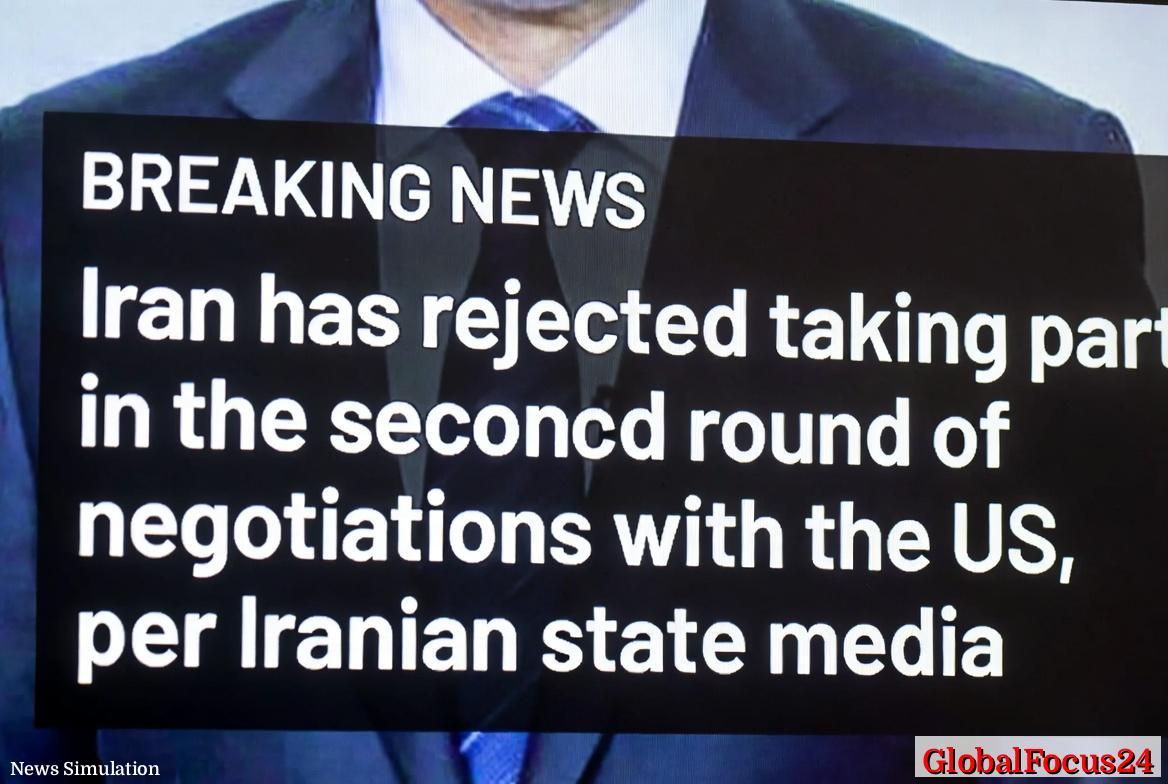
Iran Declines Second Round of Talks With United States as Tensions Rise Over Threats and Regional Diplomacy
Iran Rejects Follow-Up Negotiations
Iran has declined to participate in a planned second round of negotiations with the United States, signaling a sharp escalation in diplomatic tensions between the two countries. The decision came just hours after U.S. President Donald Trump announced that an American delegation was en route to Pakistan for discussions tied to broader regional security and diplomatic efforts.
Iranian officials did not provide extensive public detail about the refusal but indicated that current conditions were not conducive to meaningful dialogue. The move effectively halts momentum that had been building toward renewed engagement, raising concerns among international observers about the potential for further deterioration in already strained relations.
U.S. Warning Raises Stakes
The diplomatic impasse intensified following President Trump’s warning that the United States would target Iranian infrastructure, including bridges and power plants, if no agreement is reached. The statement introduced a heightened level of urgency and uncertainty, drawing attention from global markets and regional stakeholders.
Such warnings mark a significant departure from traditional negotiation rhetoric, which typically emphasizes incentives and mutual concessions. Analysts note that explicit references to infrastructure could signal a shift toward more aggressive posturing, potentially complicating diplomatic pathways.
Historical Context of U.S.-Iran Relations
Relations between the United States and Iran have been marked by decades of tension, punctuated by periods of limited engagement. Since the 1979 Iranian Revolution, diplomatic ties have been largely severed, with sporadic attempts at negotiation often faltering over issues including nuclear development, sanctions, and regional influence.
The Joint Comprehensive Plan of Action (JCPOA), signed in 2015, represented a rare moment of cooperation. The agreement placed limits on Iran’s nuclear program in exchange for sanctions relief. However, the U.S. withdrawal from the deal in 2018 and the subsequent reimposition of sanctions led to a renewed cycle of mistrust and economic pressure.
Recent attempts to revive dialogue have faced structural challenges, including disagreements over compliance, verification, and the scope of future agreements. The latest rejection underscores how fragile these efforts remain.
Regional Dynamics and Pakistan’s Role
The announcement that a U.S. delegation was heading to Pakistan introduces an additional layer of complexity. Pakistan occupies a strategic position in South Asia and maintains diplomatic relations with both Washington and Tehran. While the exact agenda of the talks has not been fully disclosed, the visit highlights Washington’s broader regional approach.
Pakistan has historically played a balancing role in regional diplomacy, often acting as an intermediary or facilitator in sensitive discussions. Its involvement could signal an effort by the United States to build alternative channels of communication or to address overlapping security concerns, including border stability and energy cooperation.
Comparatively, other regional actors such as Oman and Qatar have previously served as neutral venues for U.S.-Iran dialogue. Pakistan’s inclusion suggests a potential shift in diplomatic geography, reflecting evolving alliances and strategic priorities.
Economic Implications of Escalating Tensions
The breakdown in negotiations carries significant economic implications, both regionally and globally. Iran’s economy, already under strain from years of sanctions, faces renewed uncertainty as prospects for relief diminish. Key sectors such as energy exports, banking, and infrastructure development are particularly vulnerable.
For global markets, the situation introduces volatility, especially in oil prices. Iran holds some of the world’s largest proven oil reserves, and disruptions or threats to its infrastructure can influence supply expectations. Even the possibility of conflict tends to drive speculative increases in energy prices, affecting industries and consumers worldwide.
Regional economies are also impacted. Neighboring countries that rely on trade routes or energy partnerships with Iran may experience indirect effects, including higher costs and logistical disruptions. In contrast, energy-exporting nations outside the region could benefit from rising prices, highlighting the uneven distribution of economic consequences.
Infrastructure Threats and Strategic Considerations
The specific mention of bridges and power plants in U.S. warnings has drawn attention to the strategic importance of infrastructure in modern conflict scenarios. Such assets are critical not only for economic activity but also for civilian life, making them sensitive targets.
Historically, infrastructure targeting has been associated with attempts to weaken an opponent’s operational capacity. However, it also raises humanitarian concerns and can lead to long-term economic damage that extends beyond immediate military objectives.
In Iran’s case, infrastructure development has been a central component of its economic resilience strategy, particularly in response to sanctions. Investments in domestic energy production and transportation networks have aimed to reduce reliance on external systems. Any threat to these assets is therefore seen as particularly consequential.
Public Reaction and International Response
Public reaction within Iran has reflected a mix of caution and defiance. State media has emphasized national sovereignty and the importance of negotiating from a position of strength, while also acknowledging the economic pressures faced by ordinary citizens.
Internationally, the development has prompted calls for restraint. Various governments and organizations have reiterated the importance of dialogue and the risks associated with escalation. Diplomatic channels remain active, though the rejection of talks represents a setback for those advocating engagement.
Comparisons have been drawn to previous periods of heightened tension, including the early 2000s and the years following the U.S. withdrawal from the JCPOA. In each case, cycles of pressure and response have proven difficult to break, often requiring sustained international mediation efforts.
Strategic Outlook and Future Scenarios
The immediate outlook remains uncertain. Iran’s refusal to engage in a second round of negotiations does not necessarily preclude future talks, but it indicates that conditions would need to change significantly. Factors such as shifts in rhetoric, confidence-building measures, or third-party mediation could influence the trajectory.
From a strategic perspective, both countries face complex calculations. For the United States, maintaining pressure while avoiding unintended escalation is a delicate balance. For Iran, resisting external demands while managing internal economic challenges presents its own set of constraints.
Regional actors will likely continue to play a role in shaping outcomes. Countries with diplomatic ties to both sides may seek to facilitate communication, while also safeguarding their own interests in a stable regional environment.
Broader Implications for Global Stability
The situation extends beyond bilateral relations, touching on broader questions of global stability and conflict prevention. Energy markets, trade routes, and security alliances are all interconnected, meaning that developments in one area can have far-reaching effects.
Historically, periods of heightened U.S.-Iran tension have coincided with increased geopolitical uncertainty. The current episode appears to follow a similar pattern, with markets reacting tos and governments reassessing risk.
As diplomatic efforts continue in various forms, the emphasis remains on preventing escalation while exploring pathways to renewed engagement. The rejection of talks marks a significant moment, but it is part of a longer narrative that continues to evolve.