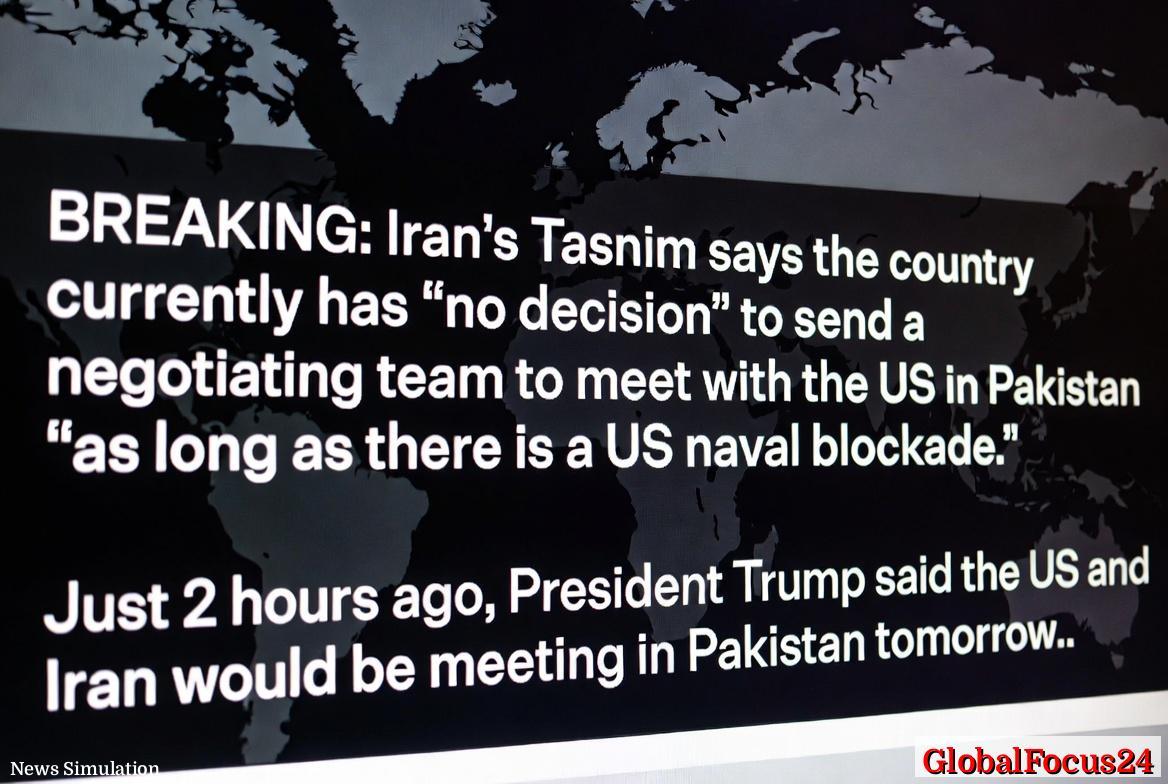
Iran Declines Talks With United States in Pakistan Amid Ongoing Naval Blockade
Diplomatic Standoff Deepens as Tehran Rejects Meeting
Iran announced Sunday that it has no plans to dispatch a negotiating team to meet with the United States in Pakistan while a U.S. naval blockade remains in effect, signaling a sharp escalation in an already tense diplomatic standoff. The statement came just hours after U.S. President Donald Trump publicly indicated that talks between the two countries were scheduled to take place the following day in Pakistan.
Iranian officials framed their position as a matter of principle, emphasizing that meaningful negotiations cannot proceed under what they described as coercive military pressure. The announcement effectively halts what had appeared to be a rare opportunity for direct engagement between the two longtime adversaries.
The conflicting messages underscore the fragility of communication channels between Washington and Tehran, where even preliminary diplomatic overtures are vulnerable to rapid breakdowns amid shifting geopolitical conditions.
Background: A Long History of Strained Relations
Relations between Iran and the United States have been marked by decades of mistrust, dating back to the 1979 Iranian Revolution and the subsequent hostage crisis at the U.S. Embassy in Tehran. Since then, diplomatic ties have remained severed, with intermittent attempts at negotiation often derailed by regional conflicts, sanctions, and military tensions.
In recent years, disputes over Iran’s nuclear program, regional influence, and maritime security have intensified. Efforts to revive or replace earlier agreements have faced repeated setbacks, with both sides accusing each other of undermining stability in the Middle East and beyond.
The current standoff reflects this broader historical pattern, where periods of tentative engagement are frequently interrupted by strategic disagreements and competing security priorities.
The Role of the Naval Blockade
At the center of the latest dispute is the U.S. naval blockade, which Iran views as a direct threat to its sovereignty and economic lifelines. While details of the blockade’s scope have not been fully disclosed, it is widely understood to involve heightened U.S. naval presence in key maritime corridors, potentially restricting Iranian shipping activities.
For Iran, maritime access is critical. The country relies heavily on oil exports transported through strategic waterways, including the Strait of Hormuz, one of the world’s most vital energy chokepoints. Any disruption to shipping routes can have immediate and significant economic consequences.
Iranian officials argue that negotiating under these conditions would amount to conceding leverage, a stance that reflects a broader resistance to negotiating under pressure. The government has repeatedly emphasized that any talks must occur in an environment free from military coercion.
Pakistan’s Emerging Role as a Diplomatic Venue
Pakistan’s mention as a potential host for U.S.-Iran talks highlights its evolving role as a regional intermediary. Historically, countries such as Switzerland and Oman have served as neutral channels for communication between Washington and Tehran. Pakistan’s involvement suggests a shift toward broader regional participation in facilitating dialogue.
Islamabad maintains diplomatic relations with both the United States and Iran, positioning itself as a potential bridge between the two. Its geographic proximity and strategic interests in regional stability make it a plausible venue for discussions.
However, Iran’s refusal to attend under current conditions raises questions about the feasibility of Pakistan’s role in this instance. Without mutual agreement on the terms of engagement, even neutral ground may not be sufficient to bring both parties to the table.
Economic Implications of Continued Tensions
The standoff carries significant economic implications, particularly for global energy markets. Iran is a major oil producer, and any disruption to its exports can influence global supply and pricing dynamics. The presence of a naval blockade introduces uncertainty that can ripple through international markets.
Investors and analysts closely monitor developments in the region, as heightened tensions often lead to increased volatility in oil prices. Shipping routes through the Persian Gulf are critical not only for Iran but also for other major producers in the region.
Potential economic impacts include:
- Increased oil price volatility due to perceived supply risks.
- Higher shipping and insurance costs for vessels operating in affected waters.
- Disruptions to regional trade flows, particularly for energy exports.
- Broader uncertainty affecting global financial markets.
For Iran, the economic stakes are particularly high. Sanctions have already constrained its economy, and additional maritime restrictions could further limit its ability to generate revenue from oil exports.
Regional Comparisons: Maritime Tensions and Negotiation Dynamics
The current situation bears similarities to other instances where maritime security and diplomacy intersect. In the South China Sea, for example, disputes over navigation rights and territorial claims have similarly complicated diplomatic engagement between regional powers.
Likewise, in the Black Sea, tensions involving naval deployments have influenced negotiations related to trade and security arrangements. In each case, the presence of military assets in contested or strategic waters has added layers of complexity to diplomatic efforts.
These comparisons highlight a broader pattern: when military pressure is perceived to overshadow diplomatic initiatives, negotiations become more difficult to sustain. Confidence-building measures, such as reducing military presence or establishing clear communication channels, are often necessary to create conditions conducive to dialogue.
Public and International Reaction
The announcement has drawn attention from international observers, many of whom view the breakdown in potential talks as a missed opportunity to de-escalate tensions. While official reactions from other governments have been measured, there is a clear concern about the implications for regional stability.
Public sentiment within Iran appears to align with the government’s stance, with many viewing the refusal to negotiate under blockade conditions as a defense of national sovereignty. In the United States, reactions have been more varied, reflecting differing perspectives on the use of military pressure as a negotiating tool.
International organizations and diplomatic entities are likely to continue encouraging dialogue, emphasizing the importance of peaceful resolution mechanisms in addressing complex geopolitical disputes.
Prospects for Future Negotiations
Despite the current impasse, the possibility of future negotiations remains. Diplomatic efforts between the United States and Iran have historically been characterized by periods of stalemate followed by renewed engagement.
Key factors that could influence the resumption of talks include:
- Adjustments to the naval blockade or broader military posture.
- Third-party mediation efforts aimed at rebuilding trust.
- Shifts in regional dynamics that create incentives for dialogue.
- Economic pressures that encourage compromise.
The role of intermediaries, whether regional actors like Pakistan or traditional facilitators, will likely be critical in any future attempts to restart negotiations.
Strategic Calculations on Both Sides
Both Washington and Tehran face complex strategic calculations. For the United States, maintaining pressure through a naval blockade may be seen as a way to strengthen its negotiating position. For Iran, refusing to engage under such conditions reinforces its stance against external pressure.
This dynamic creates a challenging environment for diplomacy, where each side must balance domestic expectations, regional considerations, and international perceptions.
The absence of direct communication channels further complicates matters, increasing the risk of misunderstandings or unintended escalation.
Conclusion: A Delicate Moment in U.S.-Iran Relations
The decision by Iran to decline participation in talks under current conditions marks a significant moment in U.S.-Iran relations. It underscores the persistent challenges of bridging deep-seated divisions while navigating immediate security concerns.
As the situation continues to evolve, the interplay between military posture and diplomatic outreach will remain central. Whether through Pakistan or another intermediary, the path to dialogue will likely depend on creating conditions that both sides perceive as equitable and conducive to meaningful negotiation.
For now, the gap between announcement and reality highlights the fragile nature of diplomacy in a region where strategic interests, economic pressures, and historical grievances converge.