Iran’s Deadly Crackdown: Thousands Killed in One of the Bloodiest Episodes in Decades
A Nationwide Uprising Meets Brutal Suppression
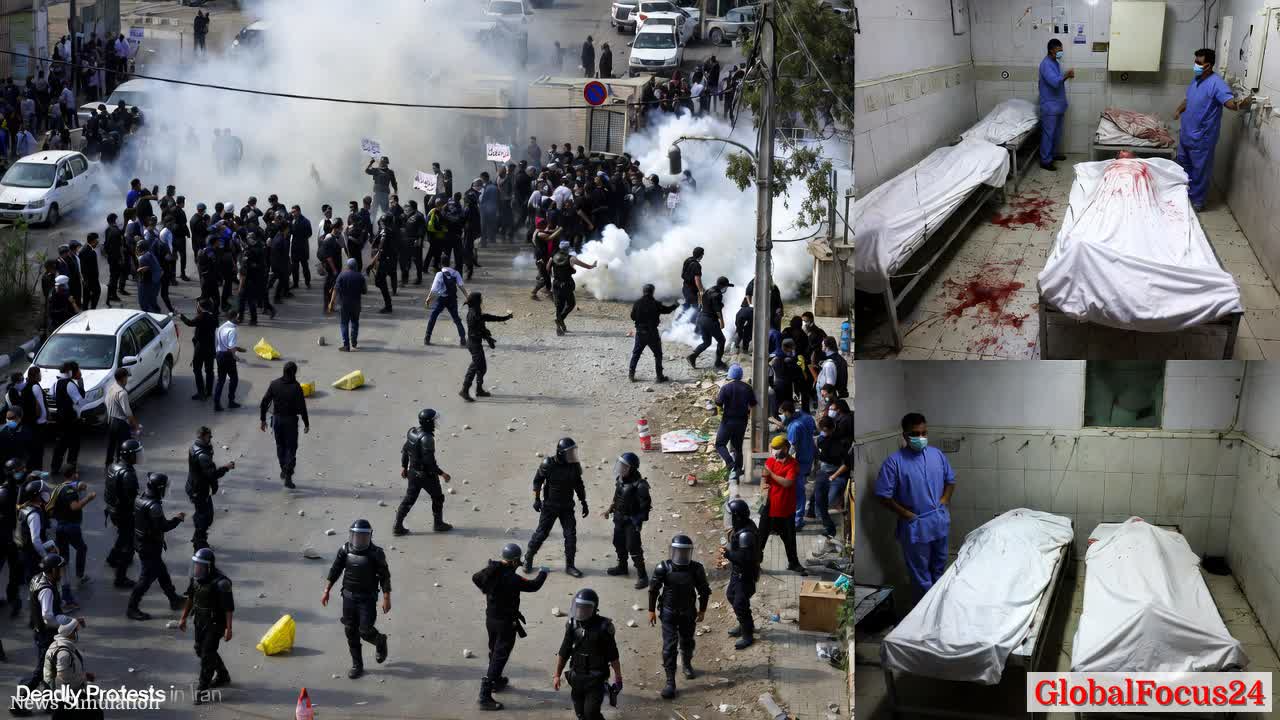
Iran is confronting one of the deadliest chapters in its modern history as reports emerge of thousands killed during a sweeping crackdown on nationwide protests. The unrest, triggered by widespread grievances over economic hardship, political repression, and long-standing social restrictions, has spiraled into an unprecedented eruption of violence. Even the conservative estimates—more than 2,000 deaths in the initial phase—position this crisis as one of the most lethal state responses to civilian dissent in the country’s recent history.
Unofficial counts place the death toll far higher, some suggesting up to 12,000 fatalities amid retaliatory raids and urban clashes. Much of the violence occurred during a 48-hour period between January 8 and 9, when Iran experienced a near-total internet blackout, cutting off cities from the global community and obscuring the full scale of the bloodshed.
Communication Blackout and Information Suppression
The near-total shutdown of Iran’s internet marked a decisive moment in the conflict. Analysts note that such digital blackouts have become a hallmark of the state’s crisis management, used to prevent the coordination of protesters and the flow of information to international media. During those critical days, eyewitnesses reported that security forces moved aggressively through neighborhoods in Tehran, Shiraz, Mashhad, and Sanandaj, firing live ammunition into crowds and conducting door-to-door raids to round up suspected organizers.
The blackout also compounded the difficulty for families seeking news of missing relatives. Hospitals and morgues in several provinces reported being overwhelmed, as residents described seeing trucks transporting bodies out of major city centers. Human rights monitors, relying on satellite imagery and testimony from exiled Iranians, have labeled the crackdown as one of the largest coordinated military operations against civilians in the Islamic Republic’s history.
Historical Parallels: Echoes of 2019 and 1979
To understand the scale of the current crisis, many observers draw parallels to two previous moments of mass unrest: the November 2019 fuel price protests and the 1979 revolution that reshaped the Iranian political order. In 2019, hundreds—potentially more than 1,500 according to international organizations—were killed when security forces crushed demonstrations sparked by sudden fuel price hikes.
This new wave of protests, however, has surpassed that toll by orders of magnitude. Unlike previous eruptions that were confined to economic triggers, the recent unrest appears driven by a wider sense of political and social exhaustion across the population, cutting across age, class, and gender. The government’s decision to respond with overwhelming force underscores the deep fear among ruling authorities of another nationwide uprising akin to those that brought down the monarchy nearly half a century ago.
Economic Desperation and Social Grievances
The roots of the unrest run deep in Iran’s battered economy. Years of international sanctions, compounded by internal mismanagement and corruption, have left broad swaths of the population struggling with soaring inflation, a falling currency, and rising unemployment. Middle-class families have seen their savings evaporate, while the cost of basic necessities—bread, meat, and medicine—continues to climb beyond reach.
Young people, who make up a majority of Iran’s population, face limited opportunities and deep frustration with rigid social codes that restrict daily life, especially for women. Many of the initial demonstrations began peacefully, calling for greater freedom and accountability. But as security forces responded with increasing force, protests grew in scale and intensity, spreading to nearly every province within days.
The Toll on Civilians and Communities
Estimates suggest more than 18,000 people have been detained since the protests began, including students, journalists, activists, and even children. While the government claims that “foreign agitators” were responsible for much of the unrest, available evidence points overwhelmingly to indigenous, grassroots mobilization.
The fatalities have affected nearly every community. In ethnically diverse regions such as Kurdistan, Baluchistan, and Khuzestan, eyewitnesses reported disproportionate use of live fire, particularly in areas with longstanding histories of marginalization. Families have shared accounts of relatives buried under tight security supervision, often without the ability to hold public funerals—a strategy aimed at preventing further gatherings.
Hospitals, already strained by years of sanctions and shortages, have struggled to treat the wounded. Medical workers have reportedly faced pressure not to disclose the number of casualties, while some facilities were placed under security control to prevent the release of evidence.
Government Stance and Official Denials
Iranian state television and government officials have downplayed both the death toll and the scope of the unrest, describing the protests as “limited riots” orchestrated by hostile states. Authorities claim security forces acted only in self-defense when confronted by “armed saboteurs.” However, footage circulated on encrypted networks shows large crowds of unarmed civilians facing heavily armed police units and militia groups, undermining official narratives.
Observers note that Tehran’s leadership is pursuing a dual strategy—offering limited reforms in rhetoric while deploying the full weight of its security apparatus in practice. Despite promises of investigations into alleged misconduct, few believe significant accountability will follow, given the historic pattern of impunity that has characterized similar crackdowns in the past.
The Role of the Revolutionary Guard and Basij Forces
The Islamic Revolutionary Guard Corps (IRGC) and its auxiliary Basij militia have been at the forefront of the suppression effort. Witnesses describe scenes of armored vehicles deployed in urban centers, with coordinated assaults carried out primarily at night. The use of these elite paramilitary forces underscores the regime’s view of the protests as an existential threat rather than a domestic security issue.
The IRGC’s influence extends beyond security operations; it dominates large sectors of Iran’s economy and wields heavy political power. Its involvement in domestic crackdowns often signals the state’s commitment to maintaining control at any cost. Analysts suggest that the extended deployment of these units also risks alienating segments of the population that had once viewed them with nationalist pride.
Regional Comparisons: Repression and Resistance in Context
The scale of the death toll positions Iran’s crackdown among the most violent government responses in the Middle East in recent decades. Comparable episodes include Egypt’s Rabaa massacre in 2013, when security forces killed hundreds of demonstrators, and Syria’s early 2011 protests, which spiraled into a civil war. In contrast, while protests in Lebanon and Iraq in recent years were met with deadly force, the intensity and uniformity of Iran’s military response stand out for their sheer magnitude and coordination.
For regional observers, Iran’s trajectory offers both a warning and a pattern: entrenched governments facing popular uprisings increasingly rely on overwhelming force rather than dialogue, pushing societies closer to long-term instability. The aftermath of such violence often breeds deeper resentment, further isolation, and greater economic strain.
International Reaction and Global Implications
The international community has expressed alarm but remains limited in its response. Human rights organizations have called for independent investigations and sanctions targeting high-ranking security officials. Several countries have condemned the violence and urged Iran to lift restrictions on internet access and release detainees. However, geopolitical considerations—particularly Iran’s role in regional energy markets and international negotiations—have tempered the scope of punitive measures.
For Iranians abroad, the crisis has galvanized diaspora communities into organizing protests and humanitarian campaigns. Calls for accountability continue to echo across major capitals, while digital activists seek to circumvent censorship by documenting atrocities via satellite networks and encrypted messaging.
Looking Ahead: A Fractured Nation in Turmoil
The mass loss of life has deepened Iran’s internal fractures. Trust between the state and its citizens appears more strained than ever, with growing resentment not only toward the political elite but also toward institutions once seen as untouchable. Economically, the crackdown is likely to exacerbate existing instability, deterring foreign investment and worsening inflation. Socially, the trauma from widespread violence may linger for generations.
While the government may claim short-term control, the underlying issues—economic despair, demands for social freedom, and generational disillusionment—remain unresolved. Each major protest since 2009 has returned stronger and more widespread, suggesting the cycle of unrest and repression may continue until structural change occurs.
A Country at a Crossroads
Iran stands at a decisive crossroads. The current crisis has shown both the depth of public frustration and the state’s willingness to use overwhelming force to suppress it. For decades, Iran’s people have endured a delicate balance between hope and fear, progress and repression. Now, as reports of thousands dead and tens of thousands imprisoned circulate despite official denials, that balance may be shifting irreversibly.
Whether the country moves toward reform or deeper authoritarianism will depend largely on how its leaders respond to this moment of national reckoning—and on the resilience of a population that, despite the risks, continues to demand a voice in shaping its own future.