Tlaxcala Embroidered Garments Sharpen Mexico’s Cultural Spotlight as Indigenous Artisans Leave a Global Stamp
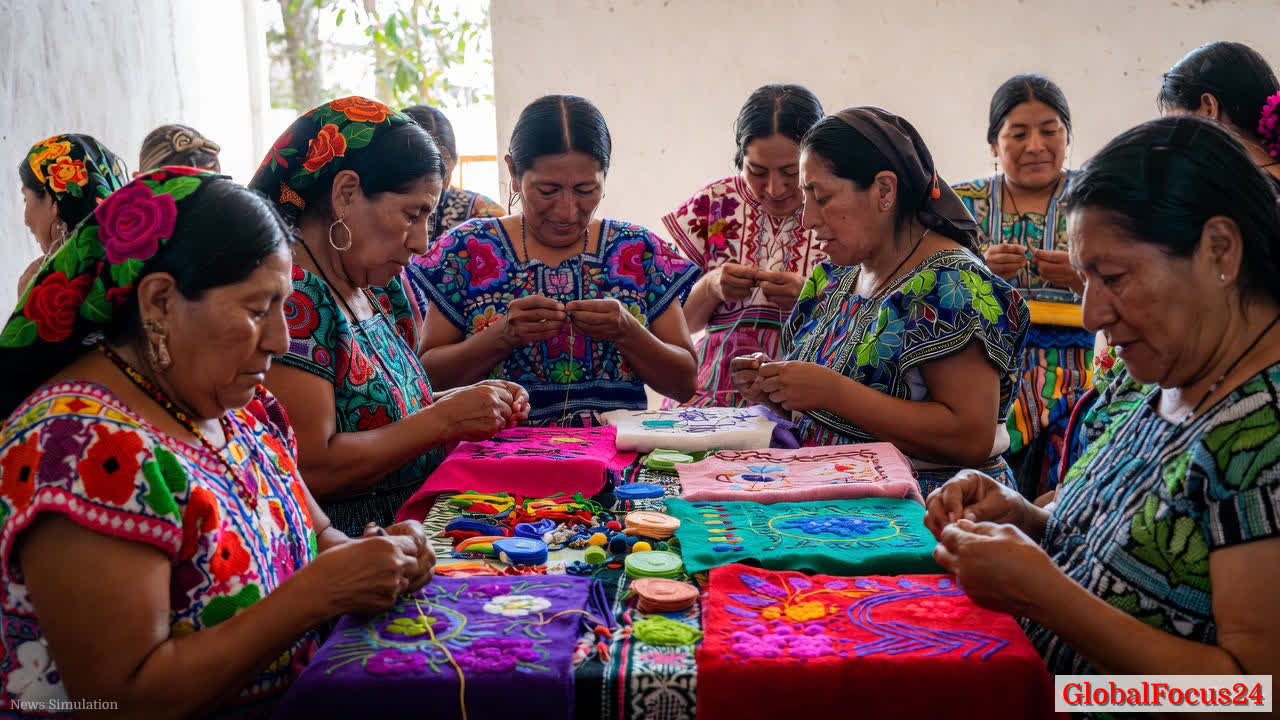
Tlaxcala, Mexico — A coalition of Indigenous women artisans in Tlaxcala has quietly become a powerhouse behind some of Mexico’s most recognizable formalwear, crafting hand-embroidered huipiles and dresses that have increasingly defined the wardrobe of President Claudia Sheinbaum and, by extension, the country’s cultural diplomacy. Their collective work, rooted in centuries-old textile traditions, intersects with national identity, economic resilience, and a broader global appetite for authentic, ethically produced fashion. As these garments move from village looms to state receptions and international media, they illuminate both the enduring value of Indigenous craftsmanship and the complex interplay between tradition, recognition, and market forces in modern Mexico.
Historical threads: from village looms to national staging
The Tlaxcala embroidery tradition sits at the crossroads of Mesoamerican aesthetics and colonial-era textile exchanges. Local women have sustained a repertoire of motifs—geometric patterns, florals, symbols drawn from corn, clay, and celestial imagery—passed down through generations. The craft flourished within close-knit communities where cooperative work, shared resources, and mutual aid supported families across decades of economic fluctuation. In recent years, these communities have faced pressures from globalization, urban migration, and changing economic incentives. Yet they have also benefited from a renewed public interest in Indigenous design and the circulation of “story-rich” garments that carry meanings beyond their stitching.
The president’s wardrobe, repeatedly highlighted in public ceremonies, has become a stage for this revival. When Sheinbaum selected these embroidered pieces for high-visibility moments, they did more than adorn a public official; they broadcast an authentic voice of the people who sew the fabric of the nation. The Grito de Independencia ceremony in Mexico City, where the president wore a Tlaxcala-embellished garment, became a focal point for national conversation about craft, labor, and representation. For many artisans, such moments validate decades of craftwork and signal a broader willingness among leadership to acknowledge Indigenous contributions to the country’s cultural life.
Economic impact: weaving resilience into regional development
The Tlaxcala embroidery initiative represents more than aesthetics; it is a model of local economic resilience embedded in cultural heritage. Artisans describe a supply chain that begins with seedling livelihoods and ends with garments in the hands of national figures and global audiences. The economic ripple effects are tangible:
- Direct income for skilled artisans: Hand-embroidered pieces command premium prices in both domestic and international markets, reflecting labor-intensive methods and unique patronage networks. This creates a pathway from informal, home-based production to formalized artisan enterprises, encouraging youth participation in traditional crafts.
- Community wealth and multipliers: As artisans earn more, they reinvest in materials, training, and shared workshop spaces. Cooperative models amplify benefits across families and neighboring villages, improving access to financing, health care, and education.
- Market diversification: Public interest has broadened markets beyond local fairs, driving collaborations with fashion designers, cultural institutions, and tourism initiatives. This diversification reduces reliance on a single buyer and increases bargaining power for artisans.
- Tourism synergies: Tlaxcala’s textile heritage enriches cultural tourism, offering workshops, demonstrations, and immersive experiences that align with sustainable travel trends. Tourists increasingly seek authentic, transparent stories about the people behind the garments they purchase.
Regional comparisons: Tlaxcala in a national tapestry
Mexico’s textile economy is deeply regional, with distinct traditions across states such as Oaxaca, Chiapas, Yucatán, and Veracruz. Tlaxcala’s embroidery stands out in several ways:
- Motif specificity: Tlaxcala motifs are often precise and highly geometric, reflecting a lineage of design choices that differ from, say, the more fluid motifs seen in other regions. The resulting pieces are immediately recognizable to connoisseurs, enabling Tlaxcala artisans to carve out a niche within the broader Mexican textile landscape.
- Labor intensity: The Tlaxcala approach emphasizes meticulous hand-stitching and patchwork that create rich textures and depth. This labor-intensive method, while time-consuming, adds durability and a tactile quality valued by collectors and fashion houses seeking authenticity.
- Cultural resilience: Tlaxcala communities have maintained languages, rituals, and collaborative labor systems that continue to reinforce the social fabric around textile work. This cohesion translates into a robust supply of skilled artisans who can scale production without compromising quality.
- Policy and support: National and regional programs aimed at preserving Indigenous crafts have varied across states. Tlaxcala’s success stories are often tied to localized training, microfinance access, and partnerships with cultural institutions that help translate traditional methods into market-ready products.
The public reaction: a narrative of pride, critique, and possibility
Public response to the president’s embrace of Tlaxcala embroidery has been nuanced. For supporters, the inclusion of Indigenous textiles signals a forward-looking appreciation for diverse cultural contributions and a rejection of tokenism. It reinforces a message that Indigenous artistry has living relevance and economic vitality, not only historical value. Families and communities involved in the craft describe this visibility as a source of pride and a validation of their life’s work.
Critics, however, caution against reducing complex traditions to political optics. They call for ongoing, meaningful investment in artisan training, fair wages, and transparent supply chains that ensure equitable distribution of benefits. To many observers, the conversations around these garments should translate into durable, systemic improvements—better access to education, healthcare, and financial services for weaving communities—rather than episodic marketing moments.
Public sentiment has also grown in step with broader cultural currents that elevate craft-based products as sustainable alternatives to mass-produced fashion. As climate-conscious consumption rises, hand-embroidered garments—crafted with low-tech, long-lasting materials—offer a desired blend of longevity, artistry, and ethics. In Tlaxcala, the story resonates with a public eager to see mainstream fashion intersect with traditional methods in ways that honor both the artisans and the ecosystems around their work.
Design and technique: sustaining a living tradition
The artisans’ process begins with selecting threads and fabrics—often natural fibers sourced locally—before entering a workflow that emphasizes patient, collaborative embroidery. Each piece can feature dozens or hundreds of hours of hand stitching, with patterns that carry layered meanings, from agricultural cycles to local legends. The artistry is not merely decorative; it serves as a medium for transmitting cultural memory across generations.
Technical mastery is complemented by careful quality control and ethical production practices. Artisans use traditional stitches adapted for contemporary fits and silhouettes, ensuring that the garments meet modern wearability standards while preserving integrity of the original craft. This balance between tradition and modernity is central to sustaining interest among younger artisans who seek both cultural continuity and viable economic opportunities.
Sustainability and ethical considerations
The Tlaxcala embroidery initiative aligns with growing consumer demand for sustainable fashion that values artisans’ rights and transparent supply chains. Key sustainability and ethics considerations include:
- Fair compensation: Ensuring living wages for artisans is essential to sustaining the craft’s viability. Cooperative models often reflect more equitable distribution of profits across the supply chain.
- Transparent sourcing: Water use, dye materials, and raw fiber sourcing are increasingly scrutinized by conscientious buyers. Local sourcing helps reduce environmental impact and supports regional economies.
- Cultural integrity: Respect for the communities’ consent and ownership over designs is critical. Collaborative agreements that protect intellectual property and prevent misappropriation are becoming standard practice in ethical textile networks.
- Long-term resilience: Diversifying product lines to include accessories, decor, and ready-to-wear items helps create recurring demand, reducing vulnerability to market fluctuations.
Profiles of the artisans: voices from Tlaxcala
In interviews, artisans emphasize a sense of shared purpose and the bridge between generations. Virginia Arce, a seasoned textile artisan, recalls the moment Sheinbaum wore one of their embroidered pieces during a national ceremony. The emotional reaction of family members—watching from home or a distant city—underscored the emotional stakes tied to visibility. Arce notes that public recognition helps counteract stereotypes and underestimation faced by Indigenous crafts. “Everything we do is art,” she says, framing the craft as a serious, culturally embedded practice rather than a peripheral hobby.
Another artisan highlights the importance of mentorship and knowledge transfer. Seasoned practitioners work closely with younger sewists, teaching techniques, color theory, and pattern composition. The intergenerational exchange is a backbone of the community, enabling continuous refinement of motifs while preserving the core identity of Tlaxcala embroidery.
Global reach: fashion houses, cultural institutions, and media interest
As Tlaxcala embroidery enters global fashion conversations, fashion houses and cultural institutions increasingly seek out authentic, handmade textiles. Designers incorporate Tlaxcala motifs into high-end collections, while museums and galleries spotlight textile arts as a form of living culture. This cross-border interest helps diversify the audience for Indigenous textiles and elevates Tlaxcala on the world stage.
Media coverage of these garments—ranging from fashion magazines to documentary segments—also contributes to a broader narrative about Mexico’s diverse cultural landscape. The storytelling around the textiles becomes a vehicle for educating audiences about the social and economic dimensions of Indigenous craft, including the daily realities of the artisans who keep these traditions vibrant.
Policy implications and future outlook
Looking ahead, policymakers and cultural entrepreneurs are exploring strategies to sustain and scale Tlaxcala’s embroidery initiative without compromising its integrity or the artisans’ autonomy. Potential policy directions include:
- Expanded funding for artisan cooperatives: Grants and low-interest loans to facilitate equipment upgrades, training, and market access.
- Certification and labeling programs: Clear indications of origin and craftsmanship can help consumers make informed choices and support ethical practices.
- Education and vocational training: Integrating textile arts into regional education systems and youth programs to nurture the next generation of artisans.
- International collaborations: Partnerships with global fashion brands and cultural institutions can open new channels for exposure while ensuring fair benefit-sharing.
Conclusion: a living tradition in the modern economy
Tlaxcala’s embroidered garments have evolved from regional curiosities to symbols of national pride and global cultural dialogue. The artisans’ work not only adorns political moments but also anchors a broader movement toward recognizing Indigenous craftsmanship as a vital part of Mexico’s economy and identity. As the public continues to respond with admiration and curiosity, the future of Tlaxcala embroidery hinges on sustaining fair livelihoods for artisans, protecting the integrity of traditional techniques, and weaving these stories into broader conversations about culture, economy, and justice.
Notes on terminology and context
- Huipil: A traditional tunic-like garment worn by Indigenous women in various regions of Mexico, often elaborately decorated with embroidery.
- Tehuantepec textiles: A reference point for understanding regional embroidery traditions in southern Mexico, illustrating the diversity of Mexican textile practices.
- Grito de Independencia: Mexico’s Independence Day ceremonial event, a moment when symbolic fashion choices can amplify cultural narratives.
Public access to wearables with Tlaxcala embroidery continues to grow as demand for authentic, ethically produced textiles expands. In the broader arc of Mexican fashion and cultural representation, these garments symbolize both heritage and modernity, signaling a future where Indigenous artistry remains at the forefront of the country’s creative economy.