Annual Everyday Giving in India Surpasses Billions in rupees, Study Finds
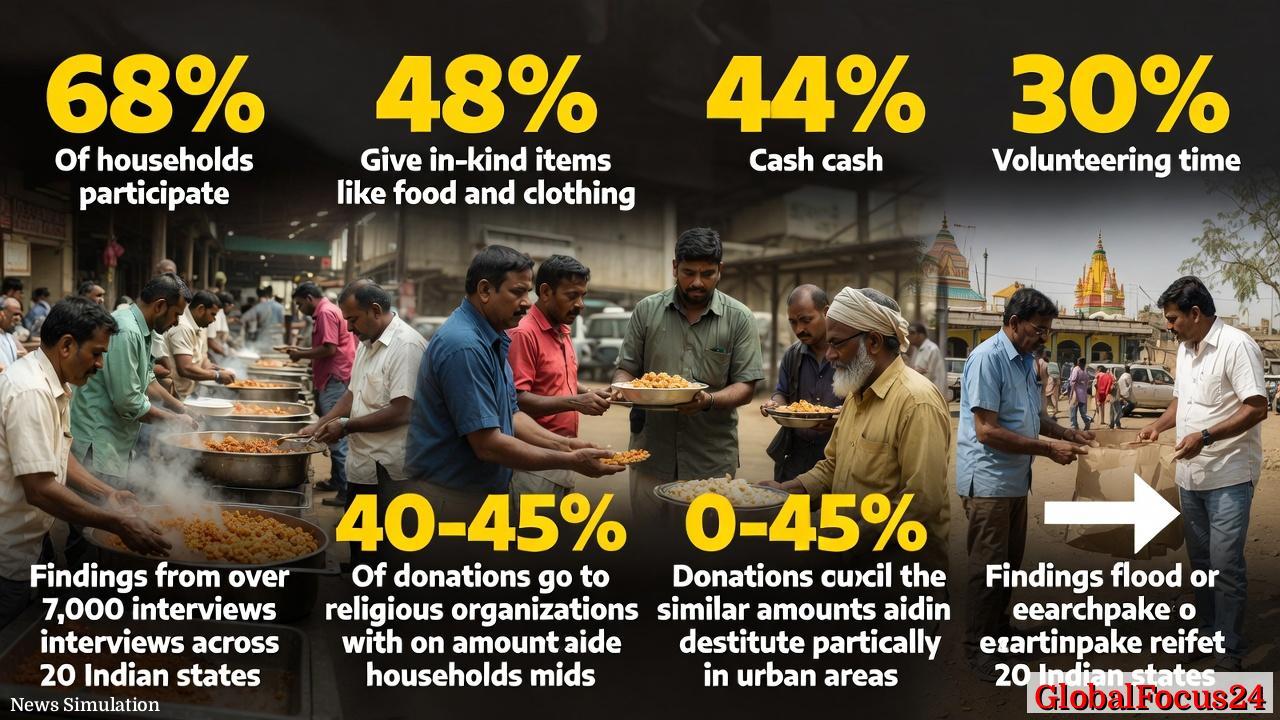
A new study reveals that everyday household giving in India totals an estimated 540 billion rupees ($6 billion) annually, reflecting a broad-based culture of charitable action that spans income levels, regions, and communities. The research, which drew on more than 7,000 interviews across 20 states in both urban and rural settings, highlights how cash donations, in-kind contributions, and volunteer time combine to form a robust, informal backbone of private philanthropy in one of the world’s fastest-growing major economies.
Historical context: a long-standing culture of mutual aid Charitable giving in India has deep historical roots that predate modern philanthropy. Across centuries, religious institutions, community kitchens, and local associations have organized aid during famines, floods, and other hardships. The new study situates contemporary giving within this continuum, noting that daily generosity is not a novelty but a cultural practice embedded in social obligation and faith-based networks. Even as urbanization accelerates and consumer spending rises, households continue to combine practical aid—food, clothing, household items—with personal time and labor to support neighbors and strangers alike.
What the study measured
- Scope of giving: Everyday giving encompasses cash donations, in-kind contributions (such as food, clothing, and household goods), and volunteer time directed toward nonprofits, religious bodies, and community organizations.
- Participation rate: About 68% of surveyed households reported engaging in some form of giving, underscoring widespread participation rather than concentration among a small donor base.
- Composition: In-kind contributions accounted for roughly 48%, cash donations about 44%, and volunteering around 30% of the overall giving activity described by respondents.
- Motivations and channels: More than 90% of givers identified a religious or moral duty as their primary motivation. Giving typically arises through in-person requests at homes, places of worship, or public spaces, rather than through online campaigns.
- Geographic and demographic patterns: Rural areas reported that religious institutions were the primary recipients, while urban centers saw more diverse destinations, including aid to destitute individuals and organized non-religious groups. Education level correlated with participation, with graduates and postgraduates more likely to give. Even lower-income households participate, and giving rises with income. Household heads’ gender influenced preferences: male-headed households leaned slightly toward religious giving, while female-headed households more often supported individuals in need.
- Economic footprint: Everyday giving constitutes about 15% of total philanthropy in India but accounts for nearly a third of private donations directed to the organized social sector. As household consumption expands, this segment is poised to grow further.
Regional comparisons and implications
- Rural versus urban dynamics: Rural communities show a stronger emphasis on religious institutions as the primary recipients of aid, reflecting the central role of temples, mosques, churches, and other faith-based organizations in rural life. Urban areas display a broader spectrum of beneficiaries, with significant assistance to destitute urban residents and participation in non-religious nonprofit initiatives.
- Comparative scale to other economies: The study’s framing positions India’s everyday giving within a global context. In the United States, individual donations totaled approximately $392 billion in 2024, comprising about two-thirds of total charitable giving. In the United Kingdom, public donations were around $20.7 billion, with individual and legacy giving representing about 30% of charitable income. While direct comparisons require careful caveats about exchange rates and definitional scope, the Indian figure underscores a substantial, grassroots layer of philanthropy that complements formal philanthropic channels found in higher-income economies.
- Implications for the private social sector: The data indicate that informal, person-to-person philanthropy remains a critical conduit for relief and development, especially in rapid-growth regions and among lower- to middle-income households. This organic flow of resources—through kitchen-based community support, door-to-door aid, and temple-linked outreach—helps fill gaps left by formal services and institutions.
Economic impact and social dynamics
- Direct assistance and resilience: Food donations feed communal kitchens and support vulnerable households, contributing to short-term relief and longer-term resilience in communities prone to crisis. Cash contributions enable recipient organizations to allocate resources flexibly, while volunteering provides labor and expertise that can amplify the impact of donated funds.
- Multiplier effects: The aggregate effect of everyday giving extends beyond immediate relief. Local economies benefit as in-kind donations circulate through neighbor networks, repair and maintenance tasks are completed by volunteers, and religious and community organizations mobilize volunteers for disaster response and social services.
- Public perception and behavior: The observed generosity reflects a social norm where aid is accessible and personal—requests for help occur through familiar channels, and giving is woven into daily routines. This cultural pattern can influence how governments and NGOs design outreach, prioritize services, and partner with community networks.
Methodology and limitations
- Data collection: The study conducted over 7,000 interviews across urban and rural contexts in 20 Indian states, using a mixture of self-reported recall and national consumption data to profile givers by income segments.
- Timeframe: Participants recalled giving activity over a three-month period, which was then scaled to annual figures. The research notes that the data capture occurred during months with relatively fewer religious events, suggesting that active participation could be higher during festival seasons when charitable requests typically intensify.
- Scope considerations: While the study provides a comprehensive portrait of everyday giving, it acknowledges potential underreporting or variation in how households interpret in-kind contributions and volunteering. The segmentation by income, region, and gender offers a nuanced view, yet the dynamic nature of giving means that annual totals can fluctuate with economic cycles and social events.
Implications for policy and philanthropy
- Harnessing informal channels: Recognizing everyday giving as a substantial and resilient component of private philanthropy offers policymakers and non-profit leaders a pathway to collaborate with trusted community networks. Leveraging religious institutions, local NGOs, and community groups can improve reach, ensure accountability, and address gaps in social safety nets.
- Complementing formal philanthropy: The study’s findings suggest that formal giving structures—foundations, corporate philanthropy, and government-backed programs—operate alongside, rather than in opposition to, everyday giving. Coordinated efforts can harness the strengths of both sectors: the scale and accountability of formal channels with the immediacy and trust embedded in informal networks.
- Targeted outreach and inclusivity: The gender and education correlations point to opportunities for inclusive engagement. Tailored outreach that respects community customs while promoting broader participation can help sustain and grow this vital form of support across diverse demographics.
Public response and narratives
- Societal sentiment: Across regions, the public reaction to everyday giving is generally positive, with communities recognizing the social fabric that sustains them through mutual aid. News of widespread participation often sparks conversations about social responsibility, volunteerism, and the role of faith-based institutions in civic life.
- Cultural continuity: The persistence of everyday giving across generations and income groups highlights its role as a cultural anchor. Family traditions, religious observances, and neighborhood networks reinforce cycles of giving, creating a sense of shared stewardship that transcends individual circumstances.
Conclusion: a living, adaptive system of private philanthropy The study’s portrait of everyday giving in India reveals a dynamic and deeply rooted practice that translates personal generosity into collective resilience. With more than half a trillion rupees channeled annually through cash gifts, in-kind support, and volunteer work, this informal philanthropy forms a substantial pillar of civil society. As India’s economy continues to expand, the flow of everyday generosity is likely to grow, reinforcing social cohesion and complementing formal charitable institutions. The findings illuminate how households, communities, and faith-inspired networks together sustain a welfare landscape that adapts to changing needs while preserving a long-standing tradition of giving at the grassroots level.