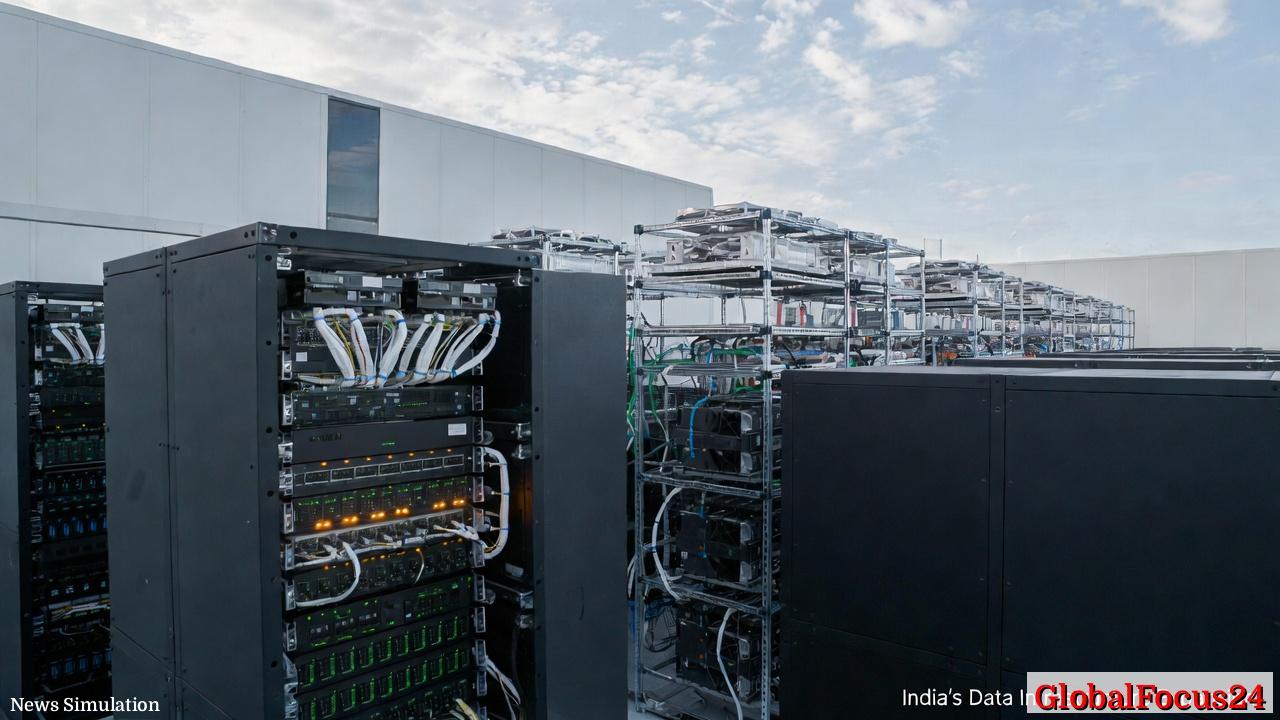
India’s Data-Centre Boom: Redrawing the Digital Infrastructure Map
India’s data-centre landscape is undergoing a decisive transformation, propelled by accelerating demand for cloud services, AI workloads, 5G rollouts, and a national push toward digital inclusion. The country’s growing internet footprint, combined with favorable economics, regulatory clarity, and a workforce with evolving tech skills, is reshaping where data is stored, processed, and routed. The result is not just a surge in capacity but a strategic shift in how data flows across the subcontinent and beyond.
Historical Context: From Sparsely Hosted to Strategically Centralized
A decade ago, India’s data-centre market consisted of a handful of regional facilities clustered around major metros such as Mumbai, Bengaluru, and Chennai. These facilities primarily served domestic clients and multinational enterprises with regional footprints. Over time, the demand curve shifted as more Indian organizations migrated workloads to the cloud and as global cloud providers expanded their footprints to offer low-latency access to users across the country. This period saw the beginning of a more deliberate approach to data localisation, data sovereignty, and disaster recovery planning within the Indian market.
The initial growth was gradual and cautious, driven by concerns around power reliability, cooling reliability, and real estate costs. Yet as electricity grids modernized, power quality improved, and data-centre operators began to implement advanced energy-management solutions, the economics began to tilt in favor of more expansive capacity. The arrival of undersea cable upgrades and a steady stream of international investment added further momentum, setting the stage for a robust, long-term expansion cycle.
Economic Impacts: Jobs, Innovation, and Global Competitiveness
The data-centre surge is driving tangible economic benefits across multiple layers of the economy. First, it creates high-skilled, well-paying jobs in construction, engineering, operations, and cybersecurity. Facility design and maintenance require specialized expertise in cooling systems, power distribution, fire suppression, and resilience planning. In addition, data centres act as anchors for local infrastructure development, including improved grid resilience, fiber connectivity, and urban planning coordination.
Second, the facilities enable a broader ecosystem of digital services. Cloud adoption accelerates the modernization of industries such as financial services, healthcare, manufacturing, and education. With more data stored closer to end users, latency reductions translate into improved customer experiences and more efficient business processes. This, in turn, encourages startups and established enterprises to deploy more data-intensive applications locally, fostering innovation in areas like fintech, e-commerce logistics, and AI-driven analytics.
Third, the investment wave stimulates technology transfer and supply-chain diversification. Global operators bring best practices in security, efficiency, and sustainability, which can elevate local standards. Local suppliers—from rack manufacturers to power equipment and cooling specialists—gain access to longer-term contracts, training programs, and exposure to international procurement standards. This ripple effect can strengthen India’s position in the global data-centre supply chain, with regional players expanding capabilities and scale.
Regional Comparisons: India in Context with Asia and the Americas
Within Asia, India’s data-centre market sits alongside China, Singapore, Hong Kong, and Indonesia as a critical node in the regional data fabric. Each market presents different regulatory environments, energy costs, and market maturities. Singapore remains a premier data-hub for Southeast Asia due to its stable regulatory regime and open cross-border data flows, while China’s market is characterized by distinctive policies and a slower pace of foreign-entry. India’s competitive edge lies in a vast population base, rapid digital adoption, and a government-focused push toward digital public infrastructure. The nation’s appeal as a base for disaster recovery and data sovereignty solutions also resonates with multinational firms seeking regional redundancy and data-residency assurances.
In the Americas, India’s growth trajectory contrasts with North American markets that already boast very large-scale campuses and highly mature supply chains. Indian facilities often emphasize flexibility, modular expansion, and proximity to emerging urban centers where demand is accelerating. For multinational cloud providers, India offers a balance of scale potential and market access, enabling tailored regional strategies that support both domestic requirements and export-oriented services to neighboring regions in South Asia and the Middle East.
Regulatory and Policy Context: Building a Predictable, Safe Environment
A steady regulatory framework is essential to sustaining confidence in a data-centre expansion. India has seen a sequence of policy developments aimed at ensuring data security, resilience, and fair competition. Transparent licensing processes, clear tax treatment for data-centre projects, and incentives for renewable-energy-powered facilities have helped reduce some of the traditional barriers to entry. In parallel, the push toward data localisation—requiring certain types of data to be stored domestically—has created clear demand signals for domestic capacity.
Energy policy and sustainability standards are also central to the sector’s outlook. Data centres are energy-intensive facilities, and operators increasingly prioritize efficiency through advanced cooling technologies, intelligent energy-management systems, and on-site generation where feasible. The combination of economic incentives and environmental stewardship helps align business objectives with national priorities around sustainable growth and climate resilience.
Technological Trends Driving Capacity and Efficiency
Several megatrends are shaping how India’s data-centre era unfolds:
- Hyperscale expansion: Global tech players are investing in hyperscale campuses capable of supporting tens or hundreds of megawatts of IT load. These campuses enable economies of scale, lower per-unit storage costs, and faster deployment of cloud services. For India, hyperscale development signals not only capacity growth but also a maturation of the market’s demand profile.
- Edge computing adoption: As 5G rollouts accelerate and consumer and enterprise applications demand ultra-low latency, edge facilities are becoming more prevalent. Small- to mid-sized data centres closer to metropolitan hubs reduce round-trip times and support applications such as real-time analytics, autonomous systems, and immersive media.
- Renewable energy integration: The push for sustainability is transforming the data-centre energy mix. Operators are increasingly pursuing on-site solar and wind power, power purchase agreements (PPAs) with green energy producers, and partnerships with utilities to ensure a reliable, low-carbon energy supply. This not only reduces operating costs over time but also strengthens resilience against grid fluctuations.
- Cooling innovations: Efficient cooling remains a critical cost determinant. Advances in liquid cooling, modular cooling architectures, and free-air cooling—where climate conditions permit—help lower power usage effectiveness (PUE) and reduce total energy consumption, especially in hot coastal regions.
- AI-driven optimization: Data-centre management platforms leveraging machine learning optimize cooling, power usage, and fault detection. These tools improve reliability and reduce operational expenditures, enabling facilities to run closer to their physical limits while maintaining safe margins.
Public-Reaction and Market Sentiment: Confidence and Opportunity
Public reaction to the data-centre boom is mixed but largely optimistic. Local communities often welcome the investment for the jobs, infrastructure upgrades, and enhanced digital services that accompany new facilities. Residents, however, may raise concerns about noise, traffic during construction, and perceived environmental impact. Facility operators address these concerns through transparent community engagement, noise-mitigation measures, traffic management plans, and ongoing environmental monitoring.
Market participants cite a balanced sentiment that combines urgency with caution. The urgency stems from the need to secure land, critical permits, and utility connections in a competitive environment where dozens of new facilities may be proposed within a single metropolitan area. Caution arises from the long construction timelines, the capital intensity of projects, and the need to align with evolving regulatory expectations and energy strategies.
Supply Chains and Workforce Development: Building Resilience
A resilient data-centre ecosystem depends on a robust local supply chain and a skilled workforce. India’s engineering talent pool—particularly in electrical, mechanical, and software disciplines—serves as a strong foundation for operations and innovation. Training programs, partnerships between universities and industry, and on-the-job upskilling are essential to maintaining high standards of reliability and security.
Local suppliers specializing in critical components such as power distribution units, cooling systems, racks, and cabling are increasingly integrated into multinational procurement cycles. As demand grows, these suppliers can scale up their capabilities, driving improvements in quality, service levels, and after-sales support. This development helps reduce lead times, lowers logistics costs, and supports faster project delivery.
Infrastructure and Location Strategies: Choosing the Right Footing
Strategic site selection plays a pivotal role in determining a data centre’s performance and cost profile. Key considerations include:
- Proximity to metro hubs and fiber routes: Being near dense urban centers reduces latency and improves connectivity to major internet backbones. It also supports easier access to a large pool of technical talent and service providers.
- Power reliability and diversity: Regions with stable electricity supply and diverse grid sources minimize the risk of outages. Proximity to renewable-energy resources or dedicated power lines helps in achieving sustainable operations and predictable costs.
- Cooling resources: Climate-sensitive designs influence cooling strategies. Coastal locations with sea-water cooling potential or cooler inland sites offer advantages for energy efficiency.
- Land costs and regulatory environment: Real estate availability and predictable permitting accelerate project timelines. Markets with clear tax incentives and streamlined approvals reduce the total cost of ownership.
- Resilience and disaster planning: Sites with robust flood protections, seismic considerations, and redundant infrastructure contribute to long-term reliability and business continuity.
Strategic Implications: Redrawing the Global Plumbing
As India expands its data-centre capacity, it gains greater control over the “plumbing” through which vast data volumes pass. This control translates into several strategic implications:
- Improved data sovereignty: By hosting more data domestically, Indian enterprises and service providers can meet regulatory requirements with greater confidence, potentially reducing cross-border data transfer complexities.
- Enhanced disaster recovery options: Local redundancy options help organizations maintain continuity in case of regional disruptions, creating a more resilient national digital backbone.
- Competitive positioning for regional services: A robust data-centre network supports India’s ambitions to offer regional cloud services, potentially attracting multinational clients seeking cost-effective regional hubs with strong local support.
- Catalyzing the domestic tech economy: A mature data-centre ecosystem can attract ancillary industries—telecom operators, cybersecurity firms, and hardware suppliers—expanding the country’s tech-industrial complex and export potential.
Environmental and Social Considerations: Balancing Growth with Stewardship
Sustainability remains a central thread in the data-centre narrative. Operators invest in energy-efficient designs, renewable energy sourcing, and responsible water management in some cooling systems. Community engagement and transparent reporting about environmental impact help balance growth with social license. The industry increasingly views sustainability not only as a regulatory mandate but as a competitive differentiator, aligning with corporate ESG goals and investor expectations.
Future Outlook: A Medium-Term Trajectory
Looking ahead, India’s data-centre market is poised for continued expansion, though the pace will hinge on macroeconomic conditions, energy pricing, and continued policy clarity. The next several years are likely to witness:
- Consolidation and specialization: Larger operators may acquire smaller facilities to achieve scale, while niche players focus on edge data-centre solutions or specific verticals such as financial services or e-commerce logistics.
- Deeper regional expansion: Beyond traditional metro centers, secondary cities with growing digital demand and favorable energy economics may attract new facilities, broadening the geographic footprint and reducing congestion in major hubs.
- Innovation ecosystems around data: The data-centre footprint will dovetail with AI research, startup ecosystems, and enterprise digital transformations, reinforcing India’s position as a hub for next-generation technologies.
Conclusion: A Turning Point in Digital Infrastructure
India’s data-centre investment cycle marks a turning point in the country’s digital infrastructure story. It is a movement from a developing to a more mature, strategically centralized network that can support a broad spectrum of services—from cloud and AI workloads to edge computing and disaster recovery. The economic benefits are tangible, from skilled employment opportunities to enhanced digital services that spur business efficiency and innovation. While challenges remain, including ensuring grid reliability, managing environmental footprints, and maintaining inclusive access to digital opportunities, the trajectory is clear: India is increasingly shaping the channels through which its data flows, reinforcing its role as a critical node in the global data economy.