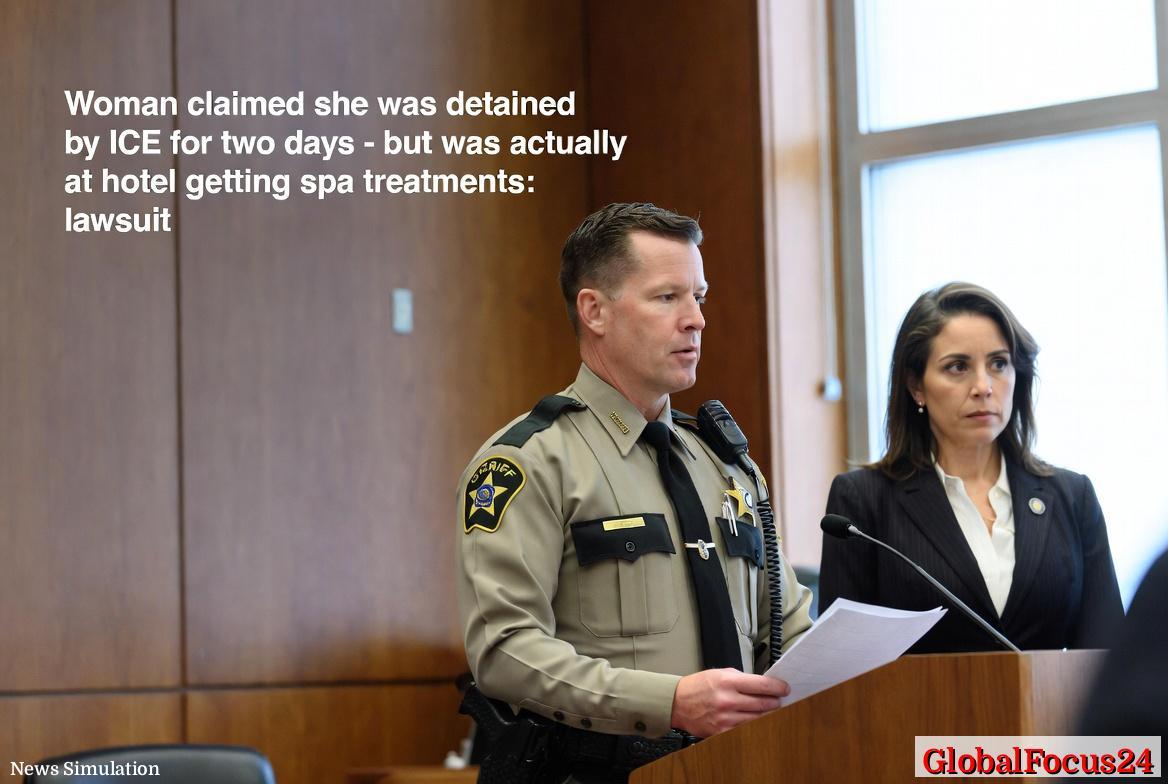
Illinois Woman Accused of Fabricating Immigration Detention Faces $1 Million Defamation Lawsuit
Sheriff Alleges False Claims of Detention Damaged Reputation
A federal defamation lawsuit filed in Wisconsin accuses an Illinois woman of fabricating claims that she was unlawfully detained by immigration authorities for nearly two days after returning from an international trip. According to court documents, the woman, Sundas “Sunny” Naqvi, 28, of Skokie, Illinois, allegedly spent the time in question at a suburban Chicago hotel, enjoying spa treatments and room service rather than being in custody.
Dodge County Sheriff Dale Schmidt filed the lawsuit seeking $1 million in damages, arguing that Naqvi’s widely publicized allegations falsely implicated his department and damaged the reputation of law enforcement agencies in multiple states. Schmidt’s attorney said the evidence presented in the case includes surveillance footage, hotel records, cellphone data, and electronic messages that contradict Naqvi’s story.
Background: A Viral Press Conference
Naqvi captured significant public attention last month following a dramatic press conference in Chicago, where she appeared alongside Cook County Commissioner Kevin Morrison. During the event, Naqvi claimed she had been detained for approximately 43 hours after landing at O’Hare International Airport from Turkey on March 5. She alleged federal agents took her into custody, transferred her to an Immigration and Customs Enforcement (ICE) facility in Broadview, Illinois, and later moved her to the Dodge County Jail in Wisconsin before her release.
The claims drew instant media coverage and prompted calls for investigation into the alleged treatment of U.S. citizens by federal immigration authorities. Naqvi, a U.S. citizen of Pakistani descent, described the supposed ordeal as traumatic and discriminatory, saying it left her physically and emotionally shaken.
But according to the lawsuit filed by Schmidt, every aspect of Naqvi’s claim was a fabrication. The sheriff asserts that his department never took her into custody and that official records confirm no such detention occurred.
Evidence Reveals Hotel Stay, Not Detention
Court filings in the defamation case outline a timeline starkly different from Naqvi’s account. Records obtained by investigators show that Naqvi was stopped for routine secondary inspection by Customs and Border Protection at O’Hare for approximately 90 minutes — a standard process for many travelers returning from overseas. She was cleared and allowed to leave the airport around 1:00 p.m. that afternoon.
According to hotel records, Naqvi checked into the Hampton Inn & Suites in Rosemont, Illinois, at 1:17 p.m. on March 5 — a ten-minute drive from O’Hare. Surveillance footage from the hotel and timestamped phone data reportedly show her entering and exiting the hotel over the next two days.
Investigators also uncovered text messages and digital receipts showing Naqvi booked spa treatments, used the hotel gym, and ordered meals during that time. In one message cited in the lawsuit, she asked a friend to pay for a spa service using their credit card. Cell tower data and traffic cameras additionally tracked her phone’s movement within the Rosemont area, not Wisconsin, as she had claimed.
None of the facilities Naqvi named — including the ICE office in Broadview and the Dodge County Jail — have any record of her being booked, processed, or held in custody.
Law Enforcement Pushes Back
Sheriff Schmidt’s defamation suit asserts that Naqvi’s allegations caused reputational harm not only to his office but to local law enforcement personnel who were falsely accused of mistreating a traveler in federal custody. The suit also names Commissioner Morrison, who appeared beside Naqvi at the press conference, as a co-defendant.
“These false claims were not only reckless but malicious,” Schmidt said in a statement announcing the lawsuit. “They undermined public trust in law enforcement and sparked outrage based on a story that never happened.”
Attorneys representing Schmidt said the department faced a surge of angry messages, social media backlash, and calls for accountability in the aftermath of the press conference. The claims, they said, spread rapidly across social platforms and prompted questions from state and federal officials. According to the sheriff, the lawsuit aims to restore the reputation of his department and hold Naqvi accountable for what he characterizes as a deliberate campaign of misinformation.
Public Reaction and Political Fallout
The high-profile nature of the case has drawn sharp public interest across Illinois and Wisconsin. Initially viewed as a troubling example of potential civil rights violations, Naqvi’s story prompted widespread support from advocacy groups and local politicians. However, as details of the alleged fabrication have emerged, that support has largely receded.
Community leaders have expressed concern about the broader implications of the incident, suggesting that false claims of immigration detention risk undermining legitimate reports of civil rights abuses. “Allegations like these must be treated seriously,” said one Chicago-based immigration attorney. “But they also require careful vetting to ensure credibility. When false stories gain traction, they erode trust for real victims.”
Neither Naqvi nor Morrison has commented publicly since the release of the lawsuit. Legal representatives for both parties have not issued formal responses, though court filings indicate they plan to challenge the defamation claims. If the evidence presented by the sheriff’s office is verified, legal experts say the case could result in significant financial and reputational consequences for the defendants.
Historical Context: A Sensitive National Issue
The controversy arrives amid a long-standing public debate over federal immigration enforcement and the experiences of travelers subjected to enhanced screening at major airports. O’Hare International Airport, one of the busiest gateways in the country, has for years been a focal point of discussions surrounding border procedures and civil liberties.
Incidents of prolonged detentions or mistaken identity by immigration officials have occasionally occurred, sometimes leading to lawsuits and settlements. However, cases involving fabricated claims of detention are rare and often attract national attention because of their potential to distort public perception of systemic issues.
Experts in public affairs note that the Naqvi case highlights the fragility of trust between communities and law enforcement agencies at a time when misinformation can travel rapidly across media channels. The rise of viral activism — often built around social media storytelling — has changed how allegations are made, investigated, and believed. “It underscores the importance of verification before amplification,” said a professor of media ethics at DePaul University. “A viral claim can shape perception long before evidence emerges.”
Economic and Reputational Impact
Beyond reputational harm to individual law enforcement agencies, false allegations of misconduct can lead to broader economic and administrative costs. Investigative reviews, administrative leave for involved officers, and efforts to address public confusion consume taxpayer resources and strain local budgets.
In Dodge County, officials reported spending additional staff hours reviewing facility logs, coordinating with federal agencies, and fielding media inquiries about the purported detention. Tourism and business leaders in the Wisconsin county expressed frustration that the allegations brought negative attention to the region, which relies heavily on its reputation for safety and community-oriented policing.
Comparatively, other Midwestern jurisdictions have also grappled with the cost of misinformation campaigns. In Indiana and Minnesota, for instance, false reports of law enforcement misconduct in the past decade triggered multi-agency investigations that cost hundreds of thousands of dollars before being debunked. Officials say such incidents highlight the financial ripple effect of misinformation in a climate of heightened political sensitivity.
The Road Ahead in Court
The defamation suit will now move through the federal judicial system, with hearings anticipated later this year. Legal analysts note that while defamation cases involving public officials face high legal thresholds — plaintiffs must prove actual malice or reckless disregard for truth — the presence of physical records, video footage, and digital evidence could strengthen Schmidt’s case.
For Naqvi, the allegations of fabrication pose potential criminal implications beyond the civil suit if prosecutors determine that false statements were knowingly made to federal authorities. While no criminal charges have been filed, the Department of Justice has not commented on whether it is reviewing the case.
Broader Lessons for Public Accountability
The Naqvi controversy serves as a cautionary tale about the intersection of public advocacy, truth, and reputation in the digital age. As public platforms increasingly amplify personal narratives, the consequences of false claims — intentional or otherwise — are magnified several times over. Law enforcement officials, advocacy groups, and the public alike are now reflecting on how best to encourage transparency while maintaining rigorous standards for factual accuracy.
If proven in court, the case could stand as one of the most visible examples in recent years of a fabricated detention claim in the United States — and a reminder that in the era of instant outrage, confirmation remains the cornerstone of credibility.