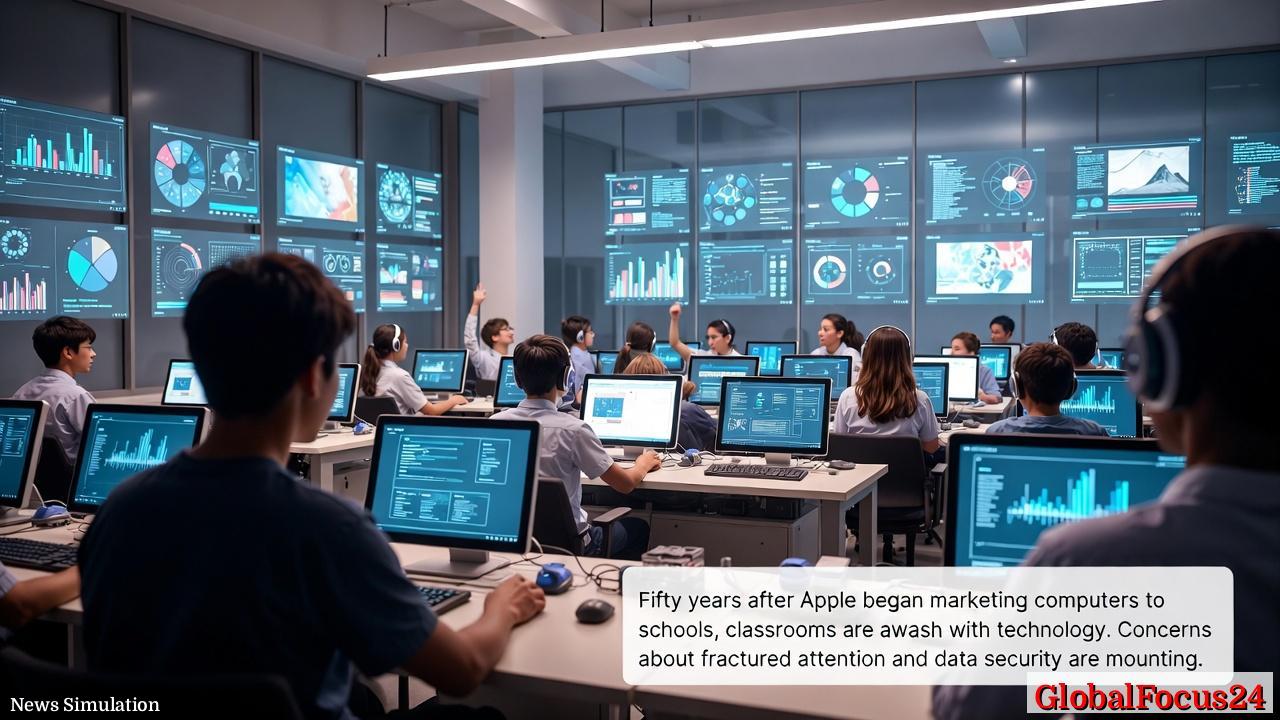
)Fifty Years After Apple’s School Push, Tech in Classrooms Shapes Learning, Economy, and Communities
The anniversary of Apple’s early push to bring computers into schools marks a pivotal moment in education, with classrooms worldwide now saturated by technology that reshapes how students learn, teachers teach, and communities invest in the future workforce.
Historical context: from novelty to necessity
- The modern classroom has evolved from chalkboards and textbooks to interactive screens, cloud-based collaboration, and personalized software. This transformation began decades ago when personal computers first entered schools, gradually expanding as hardware became more affordable and education departments embraced digital tools as essential resources. Today, the presence of devices in classrooms is common, shaping routines, pedagogies, and expectations for student achievement.
- Early adopters helped set expectations for digital literacy as a core skill, alongside reading, writing, and arithmetic. Over time, curricula shifted to include coding, data analysis, and media literacy, reflecting the growing role of technology in everyday life and the economy. This historical arc explains why schools now often partner with tech vendors, universities, and local employers to align classroom practice with workplace needs.
Economic impact: investment, productivity, and regional variability
- School technology programs have spurred substantial capital expenditures on devices, networks, and security infrastructure. Districts and municipalities allocate funds for device refresh cycles, bandwidth upgrades, and robust cybersecurity measures to protect students and data. These investments ripple beyond classrooms, stimulating local economies through hardware procurement, service contracts, and professional development for teachers.
- In regions with high-speed connectivity and strong technology ecosystems, schools tend to experience more rapid gains in digital literacy and student engagement. The economic benefits can include improved college readiness, higher STEM enrollment, and a more skilled local workforce that attracts employers. Conversely, areas with uneven access or aging infrastructure may face persistent gaps, underscoring the importance of targeted funding and policy attention to prevent widening inequities.
Regional comparisons: what works where
- In technology-forward regions, schools often deploy integrated platforms that coordinate assignments, feedback, attendance, and analytics. This integration enables administrators to monitor student progress in real time and tailor interventions, potentially reducing dropout risk and accelerating mastery of core concepts. Such approaches tend to correlate with stronger college-going rates and early career readiness.
- In other markets, successful programs emphasize blended learning models that combine in-person instruction with offline activities and community partnerships. This balance can mitigate bandwidth limitations while preserving essential hands-on experiences, such as lab work or maker-space projects. Across different geographies, the common thread is purposeful alignment of technology with pedagogy, not technology for technology’s sake.
Educational outcomes: opportunities and challenges
- Technology-enhanced classrooms can expand access to diverse learning resources, including simulations, virtual labs, and adaptive assessments that personalize pacing. When implemented with thoughtful instructional design, these tools support differentiated instruction and give teachers more bandwidth to address individual learning needs.
- However, concerns about fractured attention, screen time, and data privacy persist. Schools increasingly adopt comprehensive policies on device usage, digital citizenship, and data governance to address privacy and security considerations. Stakeholders emphasize transparent communication with families about how data are collected, stored, and used to support learning.
Teacher roles and professional development
- Teachers play a central role in translating digital resources into meaningful learning experiences. Effective professional development focuses on instructional design, assessment alignment, and classroom management in technology-rich environments. Ongoing support helps educators integrate tools without sacrificing core pedagogical goals.
- Collaborative models, such as professional learning communities and peer coaching, help teachers share successful strategies for leveraging technology. When educators have a voice in selecting tools and shaping implementation plans, technology adoption tends to be more sustainable and impactful.
Student experience: engagement, collaboration, and creativity
- Students increasingly collaborate across devices and geographies, using cloud-based documents, coding platforms, and multimedia projects. These practices prepare learners for modern workplaces that require teamwork, rapid problem-solving, and the ability to communicate ideas clearly across digital channels.
- At their best, technology-enabled classrooms foster curiosity, creativity, and critical thinking. Students can experiment with simulations or design challenges, receiving feedback that supports iterative improvement. The result is a more engaging learning environment that can boost motivation and deep understanding.
Policy and governance: ensuring equitable access
- Equitable access remains a top policy priority. Governments and school districts pursue funding strategies to provide devices, reliable internet, and accessible software to all students, including those in underserved communities. This approach aims to close gaps in preparation for higher education and careers.
- Cybersecurity and privacy protections are increasingly central to governance. Schools implement multi-layered security, incident response plans, and clear data-use policies to protect students’ information while enabling educators to harness digital tools effectively. Transparent governance helps maintain trust among families and communities.
Public reaction and cultural implications
- Communities often respond with a mix of optimism and caution. Parents and students celebrate expanded access to information and collaborative opportunities, while educators and policymakers weigh the costs, benefits, and long-term implications of ongoing investment. Public sentiment typically concentrates on balancing innovation with responsible stewardship of resources and privacy.
- Regional contrasts in enthusiasm and uptake can reflect local economic conditions, infrastructure readiness, and school leadership. In places where technology is seen as a catalyst for opportunity, adoption tends to accelerate, while skepticism may slow progress in other districts. This dynamic underscores the importance of inclusive planning and community engagement.
Historical parallels: tech in education as a broader trend
- The current era mirrors past shifts when schools adopted radio, television, and later the internet to supplement instruction. Each phase brought improvements in access to information but also required careful attention to pedagogy, equity, and teacher preparation. The present moment represents a continuation of that evolution, with digital devices and online platforms serving as multipliers for learning when integrated thoughtfully.
- Looking back at the broader arc, sustained gains in digital literacy often depend on sustained investment, strong leadership, and a culture of continuous improvement. Regions that combine high-quality training for teachers with reliable infrastructure tend to realize the most durable benefits. This historical perspective highlights why sustained commitment matters as much as initial funding.
Conclusion As classrooms continue to envelop technology, the educational landscape is shaped by careful balancing of access, pedagogy, and security. Fifty years after the early push to bring computers into schools, the blend of devices, software, and networks has become a core driver of learning, economic development, and regional competitiveness. The ongoing challenge remains to maximize benefits for every student while safeguarding privacy and supporting teachers in guiding this powerful tool toward meaningful, tangible outcomes.