Geno Auriemma’s Apology After South Carolina Loss Signals a Season’s Close and a Public Comeback
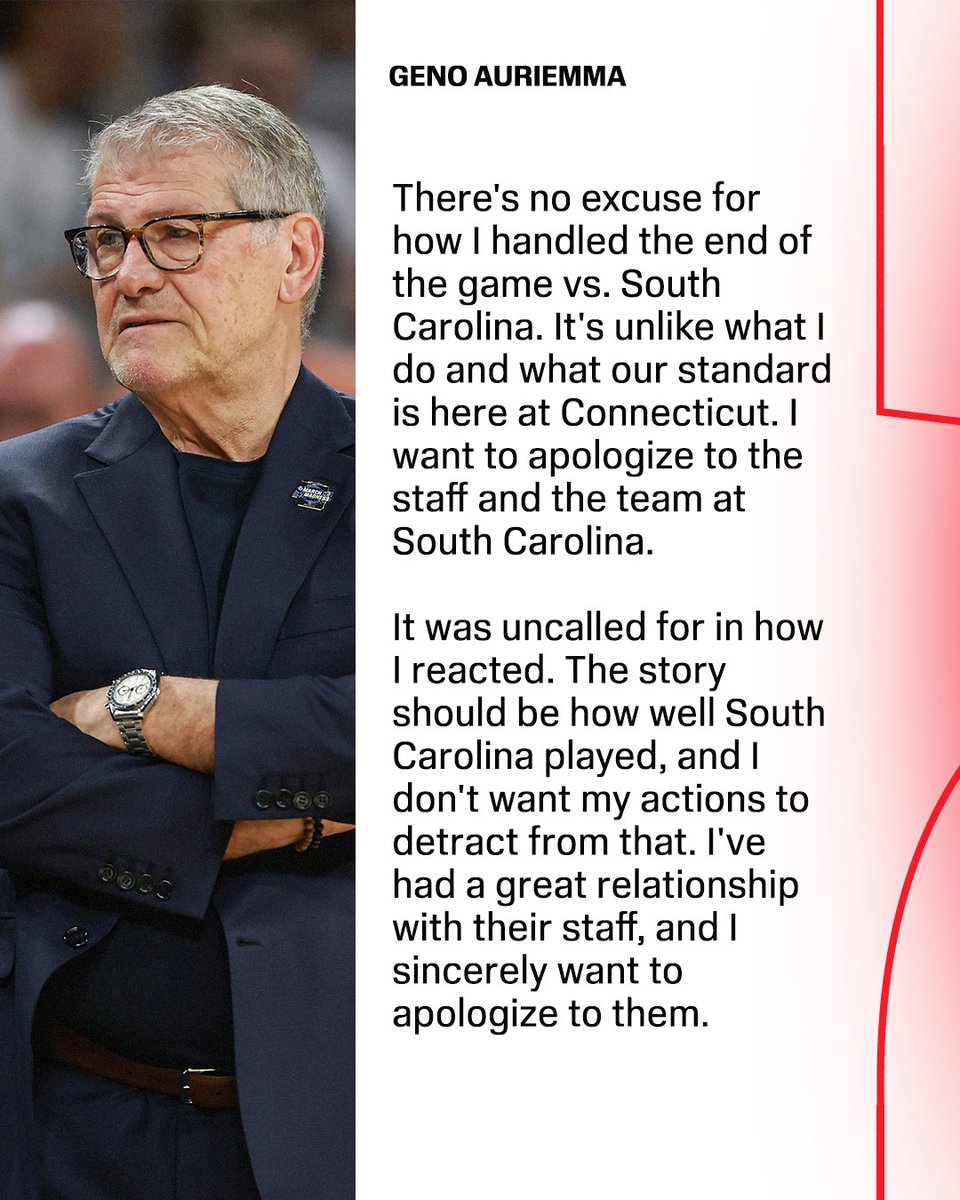
Geno Auriemma apologized publicly for an emotional outburst at the end of Connecticut’s Final Four clash with South Carolina, a moment that overshadowed what had been a hard-fought game and a testament to the enduring competitiveness of women’s college basketball. The coach’s words, issued through UConn’s athletics communications office, emphasized accountability, reaffirmed the program’s high standards, and redirected attention to South Carolina’s performance as the narrative focus.
Historical context: the UConn–South Carolina rivalry and the evolution of women’s college basketball
- The ongoing UConn vs. South Carolina rivalry has framed a significant chapter in women’s college basketball history. Since Dawn Staley rebuilt the Gamecocks into a national powerhouse, the matchup has come to symbolize a high-stakes test of strategy, depth, and resilience on the court. The latest chapter follows a season in which both programs navigated shifting rosters, heightened media scrutiny, and the pressure of maintaining elite status in a sport where sustained success demands excellence across generations. The coach’s apology arrives within this storied context, acknowledging the moment’s noise while underscoring the long-term focus on on-court excellence and sportsmanship.
- South Carolina’s program, under Staley, has mounted a dominant run with multiple deep NCAA Tournament runs and championships, shaping a benchmark that peers measure themselves against. Auriemma’s remarks, framed against this backdrop, reflect the culture of accountability that has long defined UConn’s program, even as it contends with the emotional intensity that high-stakes postseason games generate.
Economic impact and implications for collegiate athletics
- Postseason performances in women’s basketball carry measurable economic implications for universities, including ticket sales momentum, alumni engagement, and brand value associated with competing at the sport’s highest level. Auriemma’s public reckoning with his actions may influence sponsorships and media narratives, potentially affecting fan sentiment and attendance in future seasons as schools calibrate the balance between passion and professionalism on the sidelines. The broader pattern of public accountability in high-profile programs often correlates with stronger institutional commitments to athlete development, compliance, and community relations, which can shape donor engagement and fundraising trajectories.
- In regions with deep basketball traditions, such as the Northeast and the Southeast, postseason exposure amplifies local economic activity around game-day logistics, media production, and related hospitality sectors. The ripple effects extend beyond the arena, contributing to regional discussions about investment in women’s athletics, coaching pipelines, and support systems for student-athletes who balance athletics with academics. The public response to Auriemma’s apology can influence stakeholders’ confidence in the program’s leadership and its capacity to steward growth responsibly.
Regional comparisons and implications for the sport nationwide
- Across the country, programs in states with robust college sports ecosystems—California, Texas, North Carolina, and Florida among them—are watching how elite programs manage pressure, maintain competitive rosters, and cultivate a culture that prioritizes both performance and civility. Auriemma’s statement may be interpreted as a benchmark for behavior under fire, offering a model for other coaches grappling with the emotional dimensions of postseason play. Such moments often prompt constructive conversations about coaching conduct, player welfare, and the boundaries of competitive intensity in college athletics.
- Comparatively, conferences with strong basketball traditions have historically benefited from high-profile postseason runs by member institutions, which in turn drive investments in facilities, recruiting, and student-athlete support services. The public handling of the incident and the immediate apology can serve to stabilize relationships with conference partners and media outlets, ensuring continued visibility for the sport and its athletes as the landscape of women’s college basketball evolves toward broader national prominence.
Public reaction and the human element
- Fan responses to Auriemma’s apology have ranged from supportive reflections on accountability to critiques of on-court friction during heated moments. In many cases, public discourse around coaching conduct in women’s basketball emphasizes a balance between passion for the game and adherence to a standard of respect for opponents, officials, and staff. The timely apology is likely to be viewed by many fans as a crucial step in preserving the integrity of the sport and the dignity of all participants, while also recognizing the emotional intensity that postseason basketball can generate.
- Beyond the immediate game, the incident touches on broader themes about leadership, mentorship, and the responsibilities that come with managing a program with a storied legacy. For student-athletes, witnessing a coach acknowledge missteps publicly can reinforce lessons about accountability, accountability being a cornerstone of personal and professional development. The narrative arc—from intense competition to a measured public apology—offers a constructive lens through which to view the sport’s ongoing maturation.
Contextual factors shaping the moment
- The Final Four setting adds a layer of pressure, as the culmination of a season’s work sits on the precipice of historical achievement. In such moments, the line between strategic intensity and emotional expression can blur, making transparent, timely contrition essential for maintaining focus on performance and team cohesion. Auriemma’s statement aims to re-center attention on South Carolina’s execution and the broader takeaway that the game was decided by the opponent’s strengths rather than a single post-finish exchange.
- The broader storyline includes the evolution of media coverage around women’s basketball, as more programs invest in narrative control, transparent communication, and fan engagement. In this climate, a coach’s public acknowledgment of fault can be a strategic step in sustaining trust with supporters, critics, and the broader sports ecosystem that follows every twist in a high-profile rivalry.
Strategic takeaways for readers and stakeholders
- For fans and alumni, the incident underscores the importance of accountability in leadership roles within collegiate sports. Auriemma’s apology signals a willingness to reflect, repair, and refocus attention on athletic excellence, a pattern that resonates with the values many communities associate with university athletics. The response also reinforces the idea that the outcomes of a single game do not define a program’s trajectory or commitments to integrity.
- For administrators and athletic departments, the episode highlights the value of clear, timely communications after emotionally charged moments. Establishing a protocol for addressing on-court incidents—from apologies to reinforced standards—can help preserve program reputation, safeguard donor relationships, and support ongoing recruitment efforts in competitive landscapes across conferences and regions.
- For players and coaches across the sport, the episode serves as a case study in managing competitive pressure with professionalism. It illustrates how high-stakes environments demand rapid, responsible responses that honor opponents, officials, and the broader basketball community while preserving the shared goal of advancing the sport’s growth and visibility.
Conclusion (note: no wrap-up prompt) Geno Auriemma’s postgame apology after Connecticut’s defeat by South Carolina arrives as a measured pivot from intense emotions to a reaffirmation of values, situating the moment within a broader history of rivalry, regional development, and the sport’s evolving public discourse. As eyes turn toward next season, the emphasis remains on performance, sportsmanship, and the ongoing maturation of a program deeply embedded in the fabric of women’s college basketball. The episode offers a instructive reminder that leadership in sports often hinges on balancing competitive fire with accountability, ensuring that the story ultimately remains about the players’ skill, the coaches’ stewardship, and the game’s enduring appeal.