French Naval Officer’s Fitness App Slip Reveals Charles de Gaulle’s Location in the Mediterranean
A Routine Run Turns Into a Security Breach
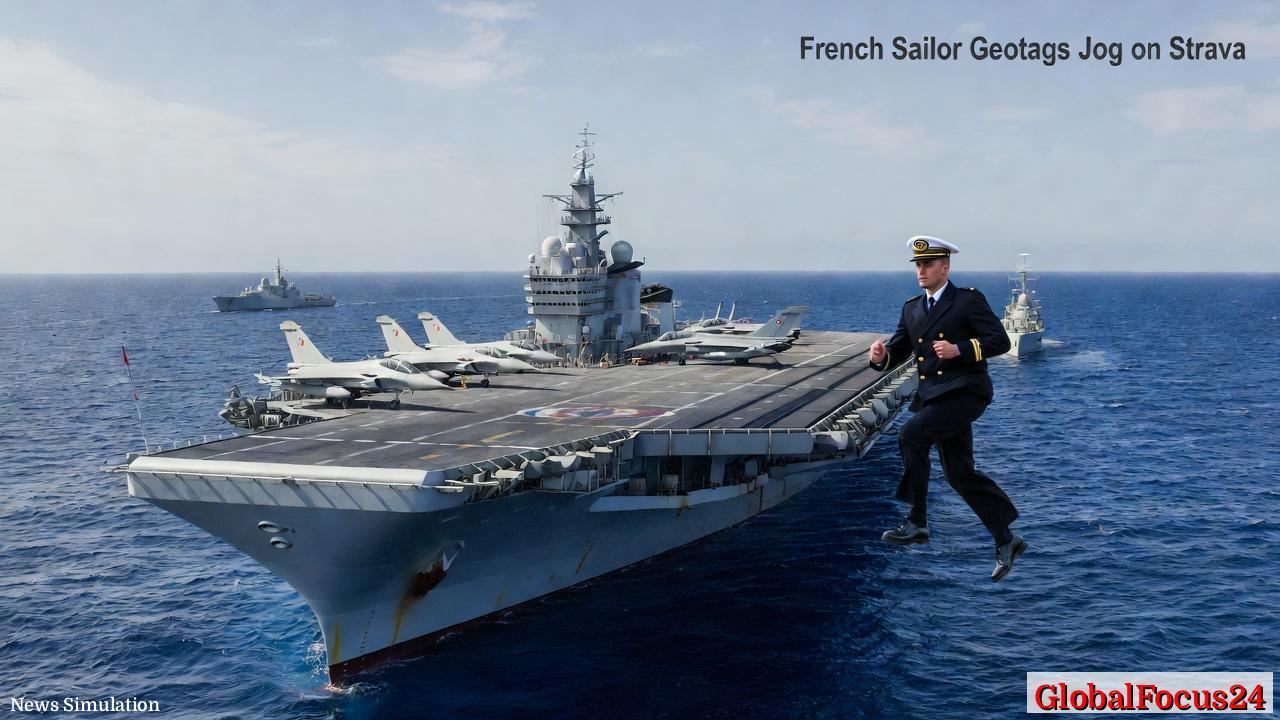
A French naval officer has inadvertently exposed the precise location of the country’s flagship nuclear-powered aircraft carrier, Charles de Gaulle, after sharing a routine jog tracked by a fitness app. On March 13, the officer recorded a 7.23-kilometer run lasting just under 36 minutes on the vessel’s flight deck using a smartwatch and Strava, a popular fitness-tracking platform.
The GPS data from the Strava activity was publicly visible and pinpointed the ship’s position in the eastern Mediterranean, approximately 100 kilometers off the southern coast of Turkey and northwest of Cyprus. While the Charles de Gaulle was already known to be operating in the region, the disclosure of its exact coordinates has raised immediate concerns over operational security (OPSEC) within the French Navy and among NATO allies.
Background: The Charles de Gaulle and Its Strategic Significance
Commissioned in 2001, the aircraft carrier Charles de Gaulle is France’s only nuclear-powered surface vessel and the centerpiece of its naval strike group. The ship can carry up to 40 aircraft, including Rafale M fighter jets, and serves as a vital tool for France’s force projection abroad. As the leader of Carrier Strike Group 473, it typically operates with a complement of frigates, submarines, and a supply ship to form a self-sustaining combat unit.
The carrier’s presence in the Mediterranean has been part of France’s ongoing contribution to regional security and coalition missions. In early 2026, the vessel was deployed amid heightened tensions across the Middle East, with naval forces from multiple nations increasing their visibility in nearby waters. The location leak, though not catastrophic on its own, represents a significant point of vulnerability that could have exposed the ship and its escorts to real-time surveillance.
The Digital Trail: How Fitness Apps Pose Military Risks
The incident reflects a familiar pattern in which commercially available fitness-tracking apps unintentionally reveal sensitive information. Strava, used by millions worldwide, aggregates movement data to create heat maps, showing popular routes for runners and cyclists. In 2018, researchers and journalists discovered that these heat maps could reveal the locations of secretive military installations, including bases in Syria, Afghanistan, and Africa, simply by tracking soldiers’ exercise routines.
While militaries around the world responded to that early warning with new digital security policies, the persistence of such incidents shows that enforcement remains inconsistently applied. Fitness devices continue to present a tempting mix of utility and vulnerability: they encourage physical training and monitor health metrics, but they also upload real-time geolocation data to public servers unless explicitly disabled.
Official Response and Internal Investigation
The French Navy has not formally commented on the specifics of the incident but has confirmed that an internal investigation is underway. According to defense sources familiar with the matter, the officer’s Strava profile was quickly set to private, and the activity was deleted within hours of detection. However, once data are publicly posted on the internet, they can be difficult to fully retract, especially given that third-party tracking sites often archive fitness data automatically.
Military analysts note that this disclosure—though seemingly minor—undermines the operational principle of unpredictability that is crucial for deterrence missions. In naval operations, position data are classified precisely to avoid enabling adversaries to target or monitor fleet activity in near-real time. As such, the French General Staff is expected to reinforce digital hygiene protocols across all deployed units.
Echoes of Past Incidents
This event is not unique to France. In 2018, similar Strava data inadvertently mapped the jogging routes of U.S. soldiers around clandestine intelligence and drone bases. Later, in 2020, a British servicemember’s use of a fitness app exposed the outline of a restricted area in the Falkland Islands.
Even beyond the military, GPS leaks from wearable technology have caused high-level embarrassments for governments and corporations alike. The central problem arises from the dual-use nature of digital devices: tools meant for personal wellness also function as sophisticated, sensor-driven data aggregators.
For state militaries, this creates a persistent tension between modernization and security. Wearable tech is often encouraged for its health and performance insights, yet it remains a recurring vector for intelligence exposure.
Mediterranean Security Context
The Mediterranean Sea has become an increasingly active theater for naval operations, with competing deployments from NATO, Russia, and regional powers. In recent months, both NATO and Russian fleets have increased patrols near the eastern Mediterranean, while tensions over maritime borders and energy exploration zones remain unresolved.
The Charles de Gaulle’s current mission reportedly includes supporting anti-smuggling operations and monitoring regional military activity related to the ongoing instability in the Middle East. The carrier’s presence also serves as a show of force and assurance to allied nations such as Greece and Cyprus, which remain strategically important for European naval logistics.
Given this environment, even a seemingly harmless disclosure takes on heightened significance. The exposure of a strike group’s position could allow adversaries to track its movement, predict maneuvers, or correlate its presence with unfolding regional events—all of which could compromise mission effectiveness.
Economic and Diplomatic Considerations
From an economic perspective, such incidents can affect more than just security postures. The accidental leak comes amid growing international scrutiny over data privacy and surveillance technologies. European defense industries, including those in France, have invested heavily in digital command and control systems that rely on secure communication networks. Consequently, breaches that highlight weak points in information discipline can hinder defense contracts or erode partner confidence.
Moreover, these episodes feed into broader debates about the integration of commercial technology into military environments. Defense procurement increasingly depends on civilian innovation—many advanced sensors, chips, and mobile platforms originate from consumer markets. However, with innovation comes exposure: each connected device is another potential entry point for data leaks.
Diplomatically, France faces the task of demonstrating both control and transparency in addressing the incident. Allies generally expect robust cybersecurity practices, especially for a nuclear-powered flagship. The forthcoming inquiry will likely focus not only on revising rules for wearable devices but also on establishing whether similar lapses have occurred elsewhere within the fleet.
The Future of Operational Security
This episode underscores the evolving nature of operational security in an age when nearly everyone carries a GPS-enabled device. Modern military OPSEC now extends beyond classified networks and encrypted communications; it must account for the pervasive digital footprints created by routine human activity.
Experts suggest a renewed emphasis on “digital discipline”—explicit training for servicemembers on the risks of geo-tagging, social media sharing, and third-party data syncing. For deployed units, one solution may involve designated “digital silenced zones,” where personal devices automatically disable certain functions or connect only through secure military networks.
More advanced measures could include partnerships with app developers to identify and block uploads from known military IP ranges or to anonymize data linked to sensitive operations. Still, such safeguards require cooperation between the defense sector and private tech firms—an uneasy alliance given differing incentives around openness and user engagement.
Lessons and Broader Implications
At its core, the Charles de Gaulle incident is a reminder that cybersecurity is as much behavioral as it is technical. No encryption system can compensate for inadvertent information sharing at the human level. Just as sailors in previous centuries learned to guard their ship’s coordinates in communications, today’s officers must learn to guard their digital signals.
The wider takeaway extends to governments, corporations, and civilians alike: as digital transparency becomes the default, privacy and security must be deliberately maintained. The same data streams that fuel health insights and global connectivity can also expose vulnerabilities in the most secure environments.
If history shows anything, it is that operational secrecy rarely fails because of grand espionage plots—it fails because of small, human actions that go unnoticed until they ripple across the strategic landscape.
Moving Forward
The French military’s response to this incident will likely involve stricter enforcement of digital use policies and review of all personal electronic devices aboard active ships. As the Charles de Gaulle continues operations in the Mediterranean, the episode serves as a vivid modern lesson: in the digital era, even a morning jog can have geopolitical consequences.
Through renewed vigilance and updated security protocols, France—and others with similar capabilities—will need to adapt their operational cultures to a world where every signal, post, and upload can carry strategic weight. The challenge lies in balancing the human drive for connection and convenience with the enduring necessity of secrecy at sea.