)
BANKING ON AI: France’s Investment Push Signals a Global Shift in AI Leadership
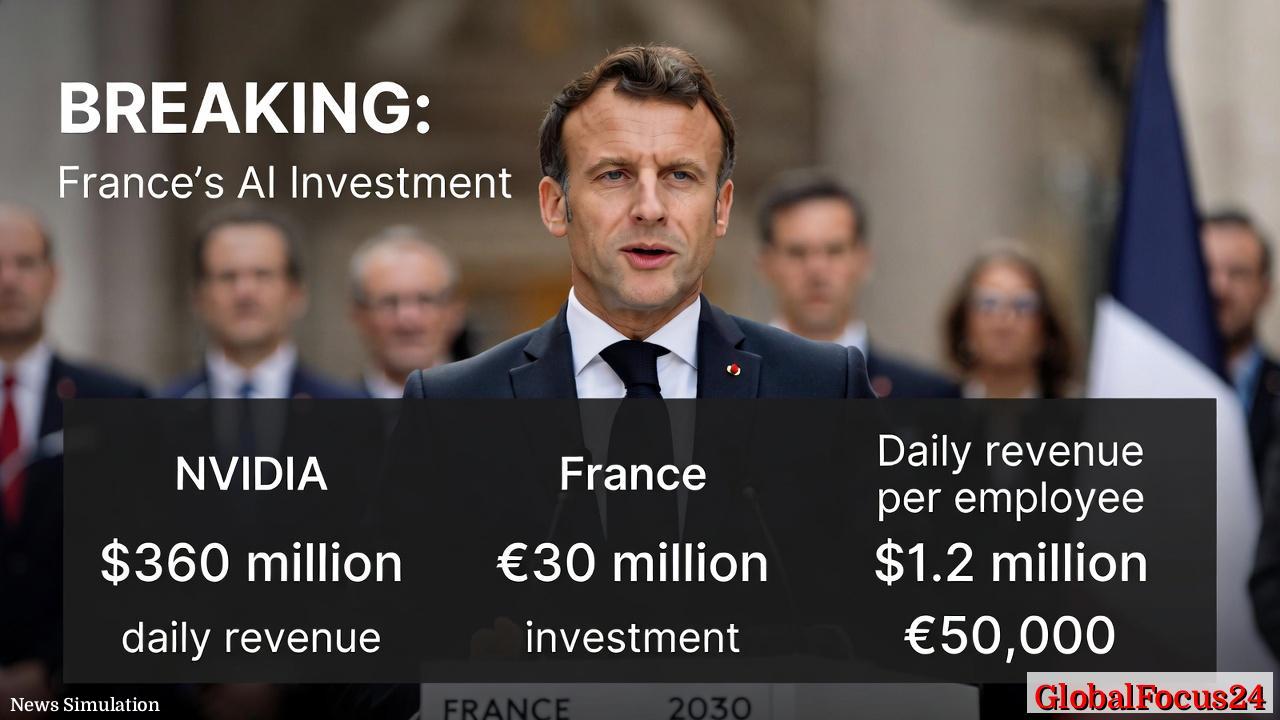
France’s bold claim that it has invested more than €30 million in artificial intelligence through its France 2030 initiative marks a notable milestone in the European tech landscape. The announcement, intertwined with statements from President Macron, underscores a broader European strategy to accelerate AI research, stimulate domestic innovation, and reduce dependence on foreign supply chains for advanced technologies. As investment flows intensify and microeconomic effects ripple through regional ecosystems, the coming years will reveal how France, alongside its European partners, translates policy pledges into tangible industrial outcomes.
Historical context: European ambition meets global 경쟁 The push comes at a moment when large-scale AI investments are reframing national competitiveness across continents. In the United States, private capital and public incentives have mobilized substantial private-sector investment, while China’s rapid progress in AI deployment is reshaping global supply chains. Europe has long sought a balanced approach: fostering cutting-edge research while enforcing robust governance, ethics, and data protection standards. France’s France 2030 program is positioned within this broader arc, aiming to align research excellence with industrial deployment and regional job creation. The timing reflects a convergence of policy momentum and market demand that began gathering steam several years ago as AI technology matured from experimental labs to commercial-grade systems. The emphasis on a €30 million benchmark signals a targeted, but strategic, step in a multi-year plan to nurture homegrown capability and attract international collaboration. This historical backdrop provides useful context for evaluating the program’s early effectiveness and its potential to influence neighboring markets in Western Europe.
Economic impact: funding, talent, and regional spillovers Investments of this scale in AI research and development are typically designed to achieve several near-term and longer-term economic objectives. First, direct funding supports university labs, research centers, and public-private consortia that can accelerate breakthroughs in machine learning, robotics, natural language processing, and AI-enabled manufacturing. Second, the program seeks to create a pipeline of highly skilled talent, drawing students and professionals into AI-focused disciplines and roles. This talent magnet effect can, over time, elevate local universities’ research profiles, attract multinational tech firms to establish or expand operations, and encourage startups to commercialize solutions with a domestic emphasis. Third, France 2030’s AI investments are expected to stimulate regional clusters—particularly in technology-rich urban centers and adjacent industrial zones—where collaboration between research institutions and industry partners can lower the cost of experimentation and shorten time-to-market for AI-enabled products. Taken together, these channels contribute to productivity gains, new job opportunities, and a more diversified high-tech economy that complements traditional sectors such as aerospace, automotive, and energy. The €30 million figure, while modest in absolute terms against the scale of global AI funding, can act as a catalytic seed that unlocks larger private investment through demonstrable results and confidence-building in the domestic AI ecosystem. This dynamic is similar to precedents in other advanced economies where government seed funding has spurred private financing and accelerated commercialization. In short, early-stage funding can be a multiplier when paired with clear milestones, strong governance, and active industry collaboration.
Regional comparisons: Europe’s AI funding landscape France’s France 2030 initiative exists within a mosaic of European AI funding efforts that vary by country, sector focus, and governance structure. Germany has emphasized industrial AI and advanced manufacturing, backed by substantial public-private partnerships and a sophisticated engineering base. The United Kingdom, post-Brexit, has pursued a mix of regulatory clarity and investment incentives to retain AI leadership within a domestic market that prizes innovation and talent mobility. In Southern Europe, several nations are piloting targeted AI programs aimed at digital transformation across public services and small-to-medium-sized enterprises. Within this continental context, France’s €30 million investment is best understood as a strategic nudge that complements national priorities in cybersecurity, healthcare innovation, and climate-tech solutions. The European approach generally rests on a balance between open science, data access, and trust-centric governance, which influences how funding is allocated, how research results are shared, and how startups participate in cross-border projects. As a result, France’s commitment contributes to a broader trend toward more coordinated European AI development, while preserving national strengths in areas such as aerospace and automotive engineering. This regional comparative lens highlights both the alignment and the distinctiveness of France’s strategy within Europe’s evolving AI ecosystem.
Industry reaction: corporate and startup ecosystem responses Industry observers tend to assess AI investments through the lens of potential return on investment, the speed of commercialization, and the creation of a favorable tax and regulatory environment. Companies participating in France’s AI initiatives typically seek access to skilled graduates, pilot opportunities for real-world deployments, and proximity to research institutions capable of supporting long-term collaboration. Startups may view public funding as a critical bridge to scale, particularly in sectors where France holds competitive advantages—defense aerospace, automotive technologies, and healthcare diagnostics, among others. Established tech firms could see the initiative as an impetus to establish regional hubs, accelerate local recruitment, and participate in joint development programs that pair university breakthroughs with industrial application. Critics, meanwhile, may question whether funding levels are sufficient to sustain a meaningful acceleration in a field where global competition is intense and where private capital often dwarfs public investment. In response, proponents argue that a well-structured, outcome-oriented program can create a baseline of AI capability that attracts larger investments, while ensuring that the benefits of AI adoption extend to regional economies and public services. The net effect depends on execution, governance, and the ability to translate research into scalable, real-world solutions.
Public sector applications: health, transport, and governance Public sector applications are often a primary motivation for national AI investments, given the potential to improve service delivery, reduce costs, and enhance decision-making processes. In France, AI-powered health analytics can support personalized medicine, epidemiology, and hospital operations, with potential spillovers into allied sectors such as medical devices and pharmaceutical research. In transportation and logistics, AI can optimize traffic management, supply chains, and urban planning, contributing to resilience in busy metropolitan areas and regional connectivity. Governance applications include smart public services, fraud detection, and efficient resource allocation, all of which can improve the quality of life for citizens while potentially reducing government overhead. Regional policymakers may closely watch how France 2030’s AI investments translate into tangible public-sector improvements, as well as how these improvements influence public trust and administrative efficiency. The ongoing rollout will likely reveal best practices for deploying AI in public services and highlight areas where further investment or regulatory refinement is needed.
Public reaction: sentiment, transparency, and democratic engagement Public sentiment around AI investments tends to blend optimism about innovation with concern about data privacy, job displacement, and ethical considerations. Transparent reporting on project milestones, impact assessments, and cost-benefit analyses can help build trust and address fears about automation. Regional newspapers, think tanks, and civil society groups often scrutinize how public funds are allocated, which entities receive support, and how outcomes are measured. In tech-forward regions, communities tend to welcome AI-enabled services that demonstrably improve everyday life, while labor groups may press for retraining programs and safeguards for workers whose roles are at risk of automation. The effectiveness of France 2030 will increasingly depend on how well policymakers contemporize AI governance with rapid technological advancement, ensuring that benefits are broadly shared and risks are proactively managed.
Conclusion: toward a sustainable, innovation-led trajectory France’s cited investment in AI through the France 2030 plan signals a deliberate step in a global race to harness the transformative potential of artificial intelligence. The program’s real-world impact will hinge on execution, cross-sector collaboration, and the ability to translate research into durable economic and social value. As European nations calibrate funding with governance, talent development, and industry partnerships, France’s approach contributes to a regional blueprint that emphasizes strategic seeding, regional clustering, and outcome-oriented investment. The coming years will reveal whether the €30 million figure evolves into a broader, more robust AI ecosystem capable of sustaining momentum, drawing international attention, and delivering measurable improvements across public and private sectors.