Loudoun County’s Data-Center Boom: A County’s Transformation from Airwaves to Infrastructure
Loudoun County, Virginia, has emerged as one of the most influential data-center clusters in the United States, a surge driven by strategic incentives, robust infrastructure, and a leadership team that blends local government experience with a bold vision for economic development. The county’s evolution from a bedroom community in the Washington, D.C. metropolitan area to a national hub for digital infrastructure offers a window into how jurisdictions can shape the economic landscape through targeted policy, public-private collaboration, and careful planning.
Historical context: from rural outskirts to a tech-forward corridor Loudoun County’s roots run deep in the agrarian and early suburban chapters of Northern Virginia. Over the past two decades, the region surrounding Washington, D.C. became a magnet for technology, cybersecurity, and connectivity services. The county’s ascent as a data-center powerhouse began with the recognition that proximity to government agencies, defense contractors, and a dense network backbone could translate into durable economic advantages. Local leaders identified data centers not simply as facilities to house servers but as anchor institutions that could stabilize tax bases, support high-wage employment, and catalyze ancillary economic activity.
The transition was catalyzed by a mix of physical assets and policy choices. Loudoun’s geography—flat terrain, deep bedrock, and an abundant supply of suitable land—combined with fiber-rich corridors and substation capacity that could accommodate high-density computing loads. The county also benefited from its position in the broader national energy market, where power reliability and resilience became as important as raw capacity. As data environments grew in complexity and scale, Loudoun positioned itself to offer not only space but a coherent ecosystem: reliable electricity, advanced telecommunications, and streamlined permitting frameworks designed to attract substantial, long-term investments.
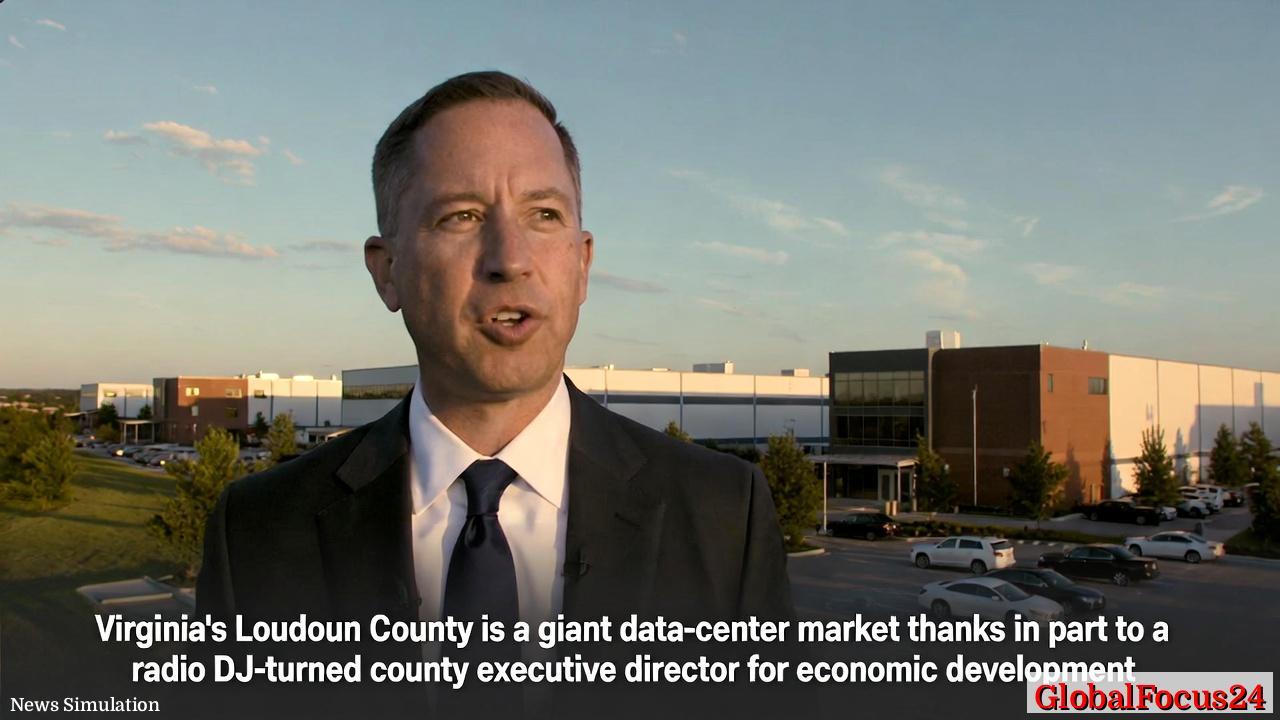
Leadership that anchors development A unique facet of Loudoun County’s data-center story is the leadership approach that pairs local governance with private-sector insights. A former radio DJ who rose to become the county’s executive director for economic development brought a distinctive blend of public engagement and pragmatic development strategy to the job. That background helped shape a narrative around place-making—how to present Loudoun as a place where companies can expand operations with confidence. The leadership style emphasized accessibility, responsiveness, and transparent communications with developers, investors, and residents alike. The result has been a clearer, more predictable process for large-scale projects, an attribute that matters as data centers span hundreds of thousands of square feet and require coordinated approvals across multiple agencies.
Public-private collaboration has played out in explicit incentives and targeted development strategies. Loudoun County offered a combination of tax incentives, economic development grants, and infrastructure support designed to lower the barriers to entry for major data-center operators. These incentives were paired with a fast-track permitting process for critical infrastructure, ensuring that projects could move from concept to construction on a schedule that matched the pace of the industry. In practice, this meant not just reducing friction but aligning public resources with the long-term needs of a sophisticated, capital-intensive sector.
The scale of investment and economic impact The data-center footprint in Loudoun County has grown into a multi-billion-dollar industry that supports a broad ecosystem. Large-scale facilities require substantial electrical capacity, cooling solutions, and robust network connectivity. As facilities proliferated, they helped catalyze job creation—both direct, in-house roles within data facilities and indirect positions in construction, engineering, property services, and ancillary businesses. The economic impact extends beyond tax revenue and employment; it also influences real estate markets, utility demand, and regional branding as a technology-forward locale.
Developers and operators note that reliability and resilience are essential to sustaining growth. Data centers demand extremely high uptime, redundant power systems, advanced cooling, and secure physical and cyber protections. Loudoun’s infrastructure investments—underground fiber networks, local distribution capacity, and collaborations with utility providers—have been critical to maintaining service levels that enterprise clients demand. The presence of hyperscale operators alongside regional players has helped diversify the county’s data-center portfolio, reducing exposure to single-client dependency and spreading demand across multiple tenants and market segments.
Regional comparisons: Loudoun in the national data-center landscape Loudoun County sits in a league with other major data-center hubs, each with its own set of strengths and strategic advantages. In the broader Mid-Atlantic and Southeast regions, jurisdictions compete on electricity pricing, climate to optimize cooling costs, land availability, and regulatory predictability. Loudoun’s advantage has centered on a combination of proximity to the nation’s capital, a mature fiber network, and a governance framework that accelerates large projects while maintaining environmental and community considerations.
Compared with peers in Virginia and neighboring states, Loudoun has demonstrated an ability to scale quickly while maintaining a favorable business climate. The county’s approach to siting, zoning, and infrastructure coordination has often been cited as a best practice benchmark for other municipalities seeking to attract data-center investment. In conversations about regional competitiveness, Loudoun’s experience underscores a broader trend: as demand for digital infrastructure grows, counties that provide a reliable, transparent, and efficient permitting process can attract and retain high-value investments even in markets with abundant competing sites.
Infrastructure as a driver of resilience and growth A cornerstone of Loudoun’s success has been the deliberate development of critical infrastructure. Data centers require reliable electricity, cooling capacity, and robust connectivity. The region’s utility framework must deliver consistent power, often with redundant feeds and emergency generation capabilities. Loudoun’s strategy has included partnerships with utility providers to ensure transmission reliability, rapid response to outages, and the capacity to meet surging demand during peak internet traffic periods. For operators, the ability to access diverse routes and backhaul connectivity reduces risk and supports service-level agreements with clients.
Cooling strategies also play a pivotal role in the operational efficiency of data centers. Advances in energy-efficient cooling systems, liquid cooling technologies, and advanced heat management help reduce overall energy consumption. In Loudoun, developers have invested in modern cooling infrastructure and sustainable design practices, aligning with corporate sustainability goals while controlling operating costs in an industry where power usage is a dominant cost driver.
Public sentiment, workforce implications, and regional quality of life The growth of data centers in Loudoun County has prompted a range of public reactions, from admiration for economic vitality to concerns about land use, traffic, and local services. County officials have responded with ongoing planning initiatives intended to balance economic development with quality of life. For residents, the presence of high-tech facilities has raised questions about long-term community impacts, including housing affordability for workers who support the ecosystem and the potential effect on local services. In response, leadership has pursued comprehensive planning efforts, transportation upgrades, and investments in public amenities to ensure that growth proceeds with consideration for neighborhood character and environmental stewardship.
From a workforce perspective, the data-center boom has drawn a workforce that spans construction trades, electrical engineering, network engineering, cybersecurity, and facilities management. While some of these roles require specialized training and certification, the regional labor market has adapted by expanding vocational training opportunities, collaborating with local colleges and technical institutes to create pipelines of skilled workers. This alignment between industry demand and education helps sustain the sector’s growth and supports broader regional prosperity.
Environmental and sustainability considerations Sustainability has become a central element of the data-center narrative in Loudoun. Operators increasingly pursue energy efficiency, use of renewable energy sources, and smart water or vapor-compression cooling technologies to reduce environmental footprints. The county’s regulatory framework has evolved to encourage sustainable practices without compromising reliability or economic viability. By integrating environmental considerations into site planning and operational standards, Loudoun aims to set a standard for responsible digital infrastructure development that other jurisdictions may emulate.
Public-private incentives and the path forward Looking ahead, Loudoun County’s data-center strategy appears poised for continued expansion, contingent on balancing growth with community goals. The incentives that helped attract investment will likely adapt to reflect shifting market conditions, including changes in electricity pricing, land availability, and evolving data-security requirements. The ongoing challenge is to sustain a predictable, efficient development process while maintaining rigorous standards for land use, environmental stewardship, and stakeholder engagement.
Strategic lessons for other regions Loudoun’s experience offers several actionable insights for communities seeking to bolster digital infrastructure ecosystems:
- Provide predictable policy environments: A consistent permitting process and transparent decision-making reduce project risk for developers and investors.
- Align incentives with long-term value: Incentives should support not just initial capacity additions but ongoing maintenance, reliability, and workforce development.
- Invest in backbone infrastructure: Reliable power, diverse fiber connectivity, and cooling capability are non-negotiable for attracting hyperscale and enterprise data centers.
- Foster an ecosystem approach: Data centers thrive when paired with training programs, utility partnerships, and proximity to research institutions, creating a network effect that supports broader tech growth.
- Balance growth with community priorities: Ongoing engagement, traffic planning, and environmental safeguards help maintain public support and sustainable expansion.
Public reaction and the sense of urgency As large-scale facilities rose along prime corridors, the public mood reflected a mix of optimism and vigilance. Local business owners highlighted improved tax revenues and the creation of high-paying jobs, while residents emphasized the need for infrastructure that keeps pace with growth. Newss about power stability, water usage, and land conservation underscored the importance of proactive governance. The sense of urgency around infrastructure resilience, cybersecurity, and environmental stewardship has become a defining feature of Loudoun’s ongoing development narrative.
Conclusion: a model for the future of regional economic development Loudoun County’s ascent as a data-center hub demonstrates how a region can translate strategic leadership, targeted incentives, and robust infrastructure into a durable, high-value economic sector. By fostering a climate of collaboration among government, industry, and educational institutions, Loudoun has shown that complex, capital-intensive industries can thrive at the regional level without sacrificing community well-being. The county’s path—from radio airwaves to data streams—highlights the power of adaptable leadership, a clear development framework, and a long-term commitment to building an infrastructure-first economy that serves both business needs and residents alike. As demand for digital services continues to grow, Loudoun’s experience stands as a compelling blueprint for other communities aiming to harness the transformative potential of modern data infrastructure.