Europe’s Economic Crossroad: War in Iran Tests Energy Lifelines and Regional Unity
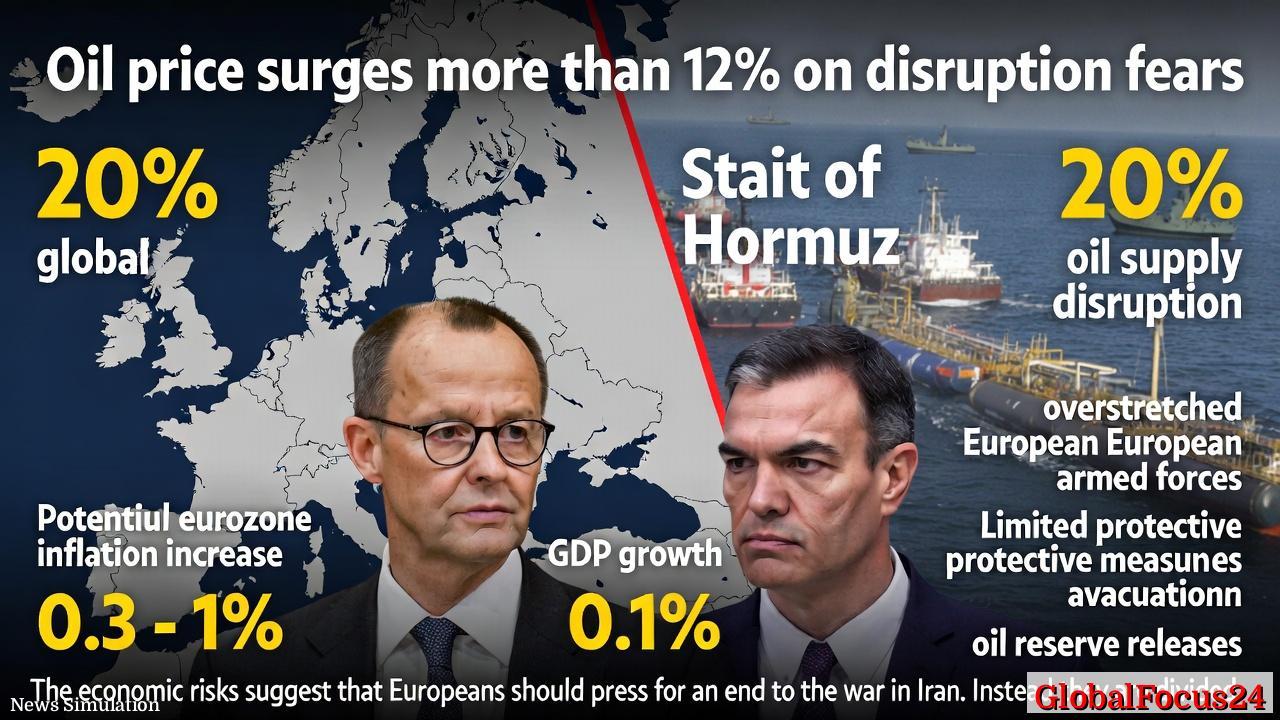
In the wake of escalating hostilities in the Middle East, Europe faces a sharp test of economic resilience and strategic cohesion. The conflict, centered on Iran and its regional posture, has disrupted the Strait of Hormuz—a critical artery that transits roughly 20% of global oil supplies. The initial market reaction was swift: crude prices surged by double digits, reminding European lawmakers and businesses how quickly geopolitics can translate into higher costs at the pump, in manufacturing, and across households.
Historical Context: Oil, Power, and European Integration To understand Europe’s current predicament, it helps to recall the long arc of energy security in the European project. Since the 1970s oil shocks, European policymakers have pursued diversification—greater energy efficiency, alternative routes, and strategic stockpiling—to cushion external shocks. Yet the Strait of Hormuz remains a chokepoint that concentrates risk. The region’s turbulence echoes earlier episodes when political crises or military escalations reverberated through European energy markets, testing the EU’s capacity to coordinate responses across 27 member states with varied energy portfolios, industrial structures, and political cultures.
The present crisis arrives at a moment when Europe’s economy is still navigating a fragile post-pandemic rebound and the still-uneven recovery from earlier crises. Inflation in the euro area has been stubbornly cyclical, with energy prices a persistent driver. Economists warn that a sustained disruption of crude flows could lift eurozone inflation by roughly 0.3 to 1 percentage point and shave a modest amount from GDP growth, depending on duration and market expectations. While these numbers may seem modest in isolation, they must be weighed against a broader backdrop: a euro area economy that remains sensitive to energy inputs, supply chain frictions, and geopolitical risk premia that can influence investment decisions and consumer spending.
Economic Implications: From Fuel Costs to Financial Stability A short, contained conflict would still carry tangible costs, but the economic damage would be more contained than a drawn-out confrontation. In the near term, higher energy prices can feed into transportation costs, manufacturing inputs, and the prices of goods that rely on international shipping and refinery operations. Persistent volatility in energy markets can complicate corporate planning, particularly for energy-intensive sectors such as chemical manufacturing, metals production, and automotive supply chains. Policymakers would weigh measures to shield households and businesses while maintaining price stability, a balancing act that has defined ECB responses in recent years.
Conversely, a prolonged war risks tipping the eurozone into a more pronounced slowdown or even a shallow recession, depending on how long supply disruptions persist and how central banks calibrate policy. A longer conflict may prompt more aggressive energy conservation measures, acceleration of diversification projects, and strategic reserve usage. It could also intensify policy trade-offs, such as prioritizing price stability over growth, which has been a recurring theme for the European Central Bank in recent cycles. The risk of inflationary persistence, higher fuel costs, and potential policy reversals would be a key concern for investors and households alike.
Regional Comparisons: Europe, North America, and Asia Compared to North America, Europe’s energy exposure is more diffuse across several economies with varying energy mixes and levels of diversification. North American markets, benefiting from significant domestic oil production in the United States and Canada, might better absorb crude price shocks, though not without cost to manufacturing chains and consumer energy bills. In Asia, energy-importing economies balance the dual pressures of elevated energy costs and demand cycles in major manufacturing hubs. In all regions, a surge in global oil prices tends to tighten financial conditions, influence exchange rates, and shift consumer behavior toward savings and caution.
Within Europe, there are notable differences in how member states experience the crisis. Energy importers with higher energy intensities and less diversified supply chains face starker near-term pressures. Nations with stronger industrial bases and more diversified energy portfolios—including LNG imports, renewables, and strategic storage—may weather price volatility with greater resilience. The EU’s capacity to coordinate energy purchases, reserve releases, and regulatory measures will be tested as the bloc seeks to cushion households and firms without compromising long-term climate and energy goals.
Policy Responses: Mitigation, Coordination, and Preparedness Given the dispersed political views across Europe, achieving a swift, unified response requires deft diplomacy and credible actions that align economic stabilization with strategic objectives. Short-term mitigation options include targeted social transfers or energy subsidies to vulnerable households, acceleration of energy efficiency programs for households and businesses, and the strategic release or reallocation of oil reserves to moderate price spikes. These steps can dampen immediate pain without signaling a broader commitment to unsustainable energy policies.
More durable resilience hinges on strategic diversification and regional cooperation. The EU may prioritize accelerating LNG terminal capacity, cross-border energy interconnections, and joint procurement to reduce fragmentation in energy markets. Investments in renewables, battery storage, and grid modernization can reduce susceptibility to oil-price shocks over time, while preserving the bloc’s climate commitments. The crisis underscores the importance of a coherent European energy security strategy that aligns short-term stabilization with long-term decarbonization.
A critical strategic dimension is diplomacy. With a diverse set of viewpoints among member states, the EU’s ability to present a unified stance affects its negotiating leverage with external actors and its credibility in global markets. The bloc’s approach may emphasize de-escalation, humanitarian protection, and adherence to international law, paired with practical measures to safeguard energy markets and supply chains. Even as some leaders advocate for firmer supports or actions, the risk of escalating the conflict remains a central constraint on European political calculus.
Public Reaction and Social Impacts Public sentiment across Europe is likely to mirror a mix of concern, pragmatism, and calls for responsible leadership. Citizens feel the squeeze of higher energy and transport costs, especially in regions with heavier reliance on imported oil. Businesses, from small merchants to large manufacturers, face heightened cost pressures and longer planning horizons. This real-world impact translates into broader societal questions about energy independence, the pace of transition to renewables, and the resilience of supply chains that underpin daily life.
In this context, regional media, business associations, and labor unions participate in shaping the conversation around energy security and economic strategy. Public opinion often prioritizes stability and predictable policy rather than rhetoric, reinforcing the appeal of steady, evidence-based measures that reduce volatility and protect livelihoods. The social dimension of the crisis thus becomes a barometer for the political and economic choices that Europe must make in the coming months.
Strategic Takeaways for Europe
- Energy security remains a central pillar of European stability. The Strait of Hormuz crisis highlights the need for diversified energy sourcing, stronger storage capabilities, and integrated cross-border responses that can absorb shocks without destabilizing growth.
- Economic resilience depends on credible, targeted policy tools that shield households while advancing long-term energy transition goals. This balance requires careful calibration to avoid inflationary pressures that could undermine consumer confidence.
- European unity is a strategic asset but also a political challenge. Building consensus on energy policy, defense posture, and diplomatic strategy will determine whether Europe can translate economic coping into strategic leverage in a volatile region.
- The broader global context matters. Europe’s economic health is intertwined with global energy markets, trade dynamics, and geopolitical developments far beyond its borders. Monitoring, adaptation, and proactive policy design will be essential as the situation evolves.
What Lies Ahead: Scenarios and Implications
- Short, contained conflict: Europe mitigates immediate price spikes with emergency measures, maintains macroeconomic stability, and accelerates energy diversification. Growth remains modest but resilient, and inflation pressures ease as markets normalize.
- Prolonged conflict with persistent disruption: Inflation could persistently run hotter, energy costs stay elevated, and investment confidence could weaken. The ECB might temper monetary tightening or adjust its stance to support growth, while energy policies prioritize resilience and diversification.
- Diplomatic breakthrough: A negotiated de-escalation reduces risk premiums and stabilizes energy prices. Europe capitalizes on renewed stability to advance climate and energy agendas, strengthening supply chains and regional cooperation.
Conclusion: Navigating an Uncertain Energy Landscape Europe enters a decisive period where energy security, economic health, and political unity must align. The crisis in the Middle East exposes vulnerabilities in energy supply networks and tests the EU’s capacity to present a unified strategic approach. By focusing on practical resilience—accelerating diversification, expanding storage, and strengthening cross-border coordination—Europe can not only withstand near-term shocks but also set a course toward a more secure and sustainable energy future. As markets adjust and policymakers respond, the region’s ability to balance immediate needs with long-term objectives will shape economic performance and public confidence for years to come.