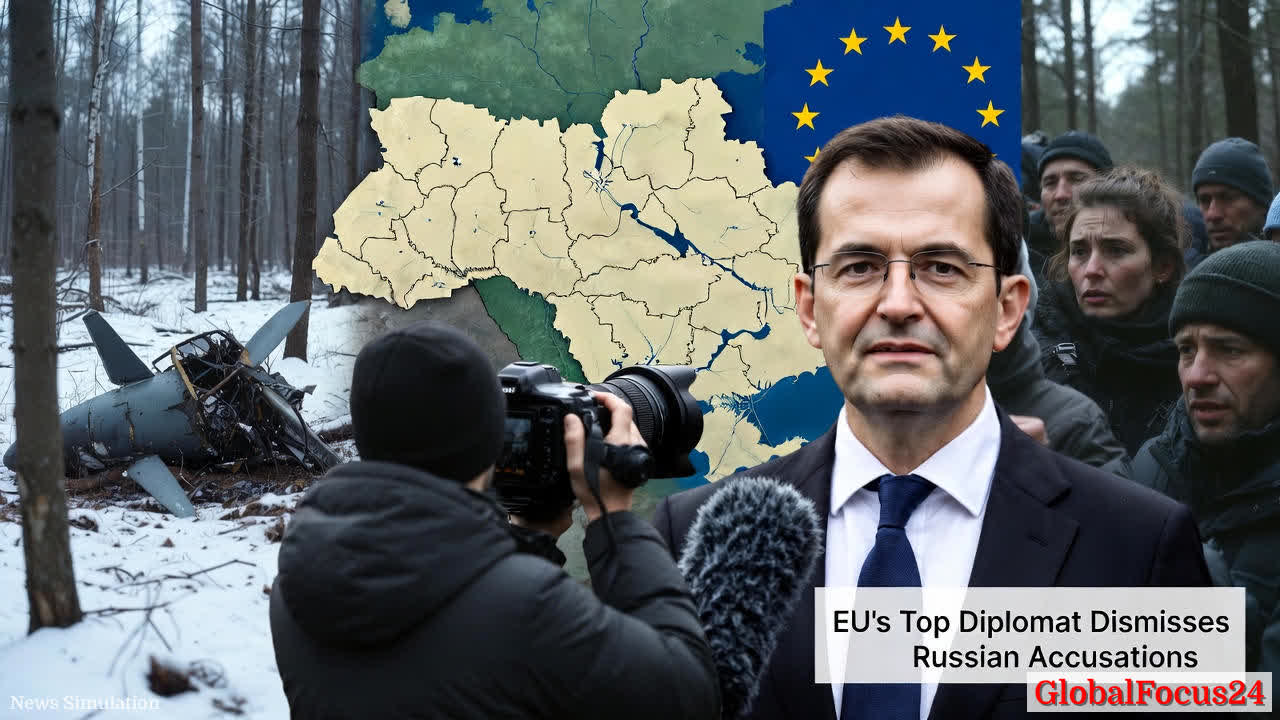
EU Diplomat Rejects Russian Drone-Strike Claims as Peace Efforts Persist
A top European Union diplomat dismissed Russian accusations that Ukraine launched a drone attack on government facilities, including a residence associated with President Vladimir Putin. The official framed the assertions as a distraction from Moscow’s own actions and urged observers not to credit claims from a party repeatedly responsible for civilian harm and infrastructure damage in Ukraine.
Context and background The Russian government has repeatedly alleged Ukrainian operations against high-value targets inside Russia as part of an escalating information campaign. In this instance, Moscow asserted that drones were launched from Ukraine’s border regions and that one drone reached the vicinity of a private residence on Lake Valdai in the northwest. The Kremlin signaled that the incident could influence Russia’s posture in peace negotiations, a reminder that talks have long faced strategic and political headwinds alongside battlefield realities.
Independent verification of Russia’s proof has been elusive. The material released by Russian authorities includes a map of alleged launch corridors, footage of a downed drone described as Ukrainian-made, and a citizen account of a loud sensory event. However, analysts caution that drone-component sourcing is widespread, complicating attribution. Local reporting by an independent outlet in the region found that a majority of residents near the claimed site did not hear or observe an approaching drone swarm, highlighting the difficulty of cross-border attribution in real-time conflict scenarios.
In Kyiv, Ukrainian officials dismissed the accusations as laughable and not credible as evidence. They characterized the Russian material as politically motivated and designed to complicate diplomacy at a moment when discussions with Western partners were moving toward concrete security guarantees for Ukraine.
Economic and regional implications The broader context includes ongoing, high-stakes questions about defense support, security guarantees, and the economic resilience required to sustain a prolonged conflict. Ukraine has emphasized the need to protect critical civilian infrastructure and maintain uninterrupted energy and transport networks even during periods of intensified hostilities. In response to recent events, several Ukrainian regions experienced disruptions, with energy outages and residential damage in urban centers such as Odesa, underscoring the human and economic toll of continued hostilities.
Odesa’s recent attacks illustrate a layered strategy: while Kyiv remains the political and administrative nerve center, southern port cities bear the brunt of destabilizing strikes that target housing, utilities, and economic activity. The damage to an apartment block and injuries to residents, including children, compounded the immediate humanitarian needs and added urgency to the government’s calls for shielded civilian infrastructure and accelerated reconstruction.
From an economic perspective, the conflict’s persistence continues to regulate the availability of energy resources, trade routes, and investment confidence across the wider region. Industrial output, foreign direct investment, and the reliability of essential services are all sensitive to the security environment. In spite of the disruption, markets and policymakers remain focused on maintaining resilience through diversified energy supplies, regional cooperation, and international support for reconstruction and modernization efforts.
Historical context The present tensions sit within a longer arc of post-Soviet security challenges, where Russia’s strategic posture has repeatedly intersected with Ukraine’s pursuit of sovereignty and Western integration. Past episodes of cross-border hostilities, proxy actions, and information warfare have demonstrated that control over narratives can influence negotiations and public opinion as much as battlefield outcomes. Regional comparisons show that countries facing similar security dilemmas—whether through territorial disputes, external pressure, or external sponsorship of insurgent activity—often rely on clear communication, credible verification mechanisms, and robust civil defense to mitigate risk and reassure civilians.
Meanwhile, Europe’s security architecture has evolved through a blend of deterrence, diplomacy, and alliance commitments. The latest sequence of events has prompted renewed emphasis on coordinated responses among EU member states and allied partners, including reaffirmed commitments to Ukraine’s security and energy resilience. In parallel, Western governments have pressed forward with talks that aim to consolidate security guarantees, defense cooperation, and mechanisms designed to deter aggression while maintaining space for diplomatic engagement.
Public reaction and civilian impact Across Ukrainian cities and towns, residents have responded with a mix of resolve and concern. In Kyiv, a sense of urgency accompanies everyday life as air-raid alerts momentarily interrupt routines, even as authorities stress that critical infrastructure remains outside the line of fire. The emotional and psychological toll of ongoing fear of disruption to homes and workplaces underscores the importance of protecting civilian spaces and ensuring rapid emergency response capabilities.
Communities in affected areas have demonstrated solidarity, with local organizations and volunteers coordinating assistance for those displaced or harmed by strikes. In Odesa and other coastal cities, residents describe the resilience of local networks—neighborhood groups, clinics, and small businesses—that keep essential services functioning even when power and water supplies are compromised. Cultural and civil society activities, including public events and charitable initiatives, persist as expressions of endurance amid uncertainty.
Strategic diplomacy and the path forward Diplomatic efforts are moving forward against a backdrop of complex security guarantees, trust-building measures, and credible, verifiable assurances. High-level discussions involving the United States, the United Kingdom, France, and Germany have focused on security guarantees that could deter aggression while creating a predictable framework for risk management. In parallel, European leaders have signaled readiness to host and coordinate diplomatic engagements to sustain momentum toward peace and stability in the region.
Over the coming months, the international community is expected to emphasize the following pillars:
- Enhanced defense and deterrence: Coordinated readiness and interoperability among NATO and EU members to deter aggression and reduce harm to civilians.
- Security guarantees and verification: Mechanisms to monitor commitments, verify compliance, and address violations promptly through established international channels.
- Economic resilience and reconstruction: Support for critical infrastructure, energy continuity, and industrial recovery to stabilize the affected regions and support long-term growth.
- Humanitarian protection and civil defense: Expanded resources for emergency response, shelter, medical care, and social services to safeguard civilians during ongoing hostilities.
Regional comparisons offer useful lessons. In other conflict-affected regions, successful security approaches combine transparent verification processes with robust civilian protection programs and diversified energy and supply chains. These patterns help reduce the probability of misattribution and build public confidence in accountability, even amid high tension and geopolitical maneuvering.
Journalistic note on verification and evidence Attribution in modern warfare often hinges on multiple strands: physical forensics, independent on-site reporting, open-source intelligence, and corroboration from neutral observers. When drone activity is alleged, analysts look for distinctive hardware signatures, flight logs, and telemetry data that can tie a device to a specific producer, operator, or region. Yet in fast-moving conflicts, data can be contested or manipulated. The most credible assessments balance official statements with independent verification and transparent methodologies. For readers, this means remain cautious about initial claims and seek corroboration from multiple, trustworthy sources before drawing conclusions about responsibility or intent.
Conclusion As 2026 unfolds, the conflict remains unpredictable, with security assurances and regional stability weighing heavily on political leadership and civilian lives alike. The EU’s emphasis on diplomacy, credible verification, and humanitarian resilience reflects an effort to sustain momentum toward a durable peace while navigating a difficult information environment. The latest allegations underscore the complexity of maintaining public trust and ensuring that policy responses are grounded in verifiable facts and practical measures that protect civilians and support economic recovery.
Public sentiment across the region signals a cautious optimism: a desire for peace, tempered by recognition of the enduring costs of war. Cities like Kyiv, Odesa, and other Ukrainian communities continue to demonstrate resilience, underscoring the imperative for steady, principled leadership and sustained international engagement. As policymakers balance deterrence with diplomacy, the ultimate objective remains clear: secure a stable, peaceful future for Ukraine and a Europe that can thrive without recurring disruption from armed conflict.