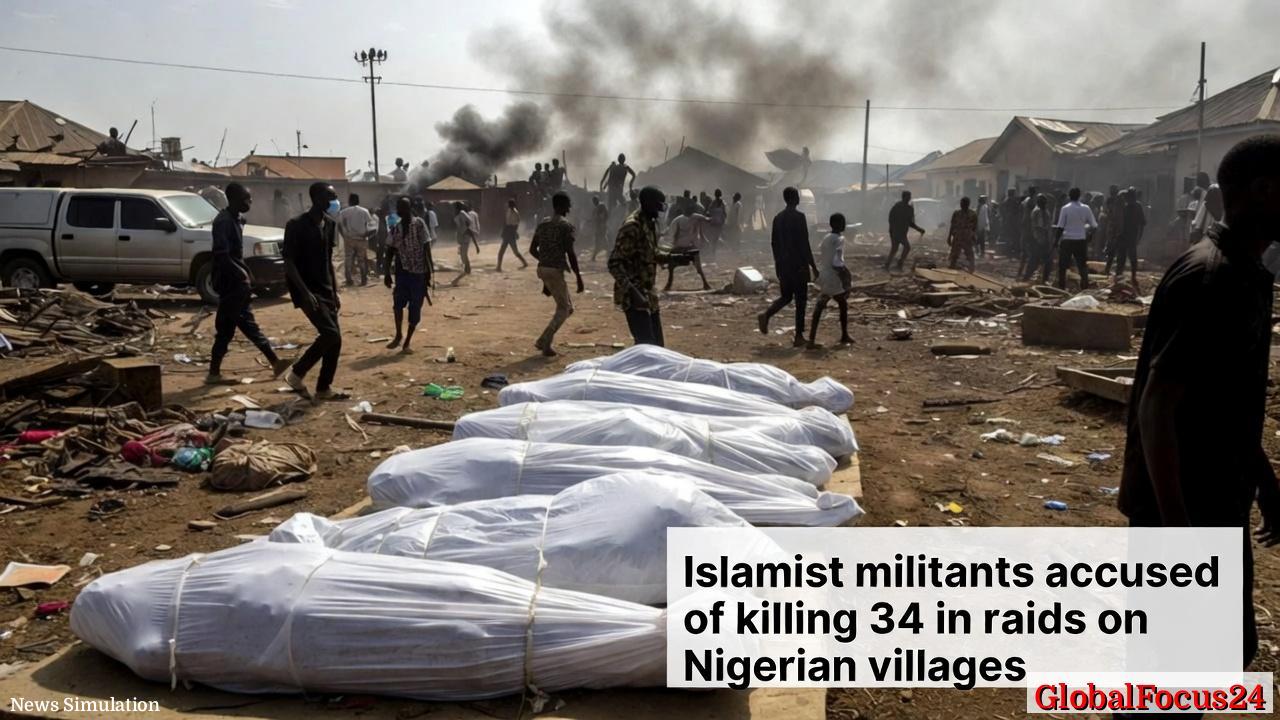
Lakurawa Militants Accused of Killing 34 in Nigeria's Kebbi State
A deadly wave of coordinated attacks in Kebbi State, Nigeria, has left at least 34 people dead and numerous communities traumatized, spotlighting the evolving security landscape in the country’s northwestern frontier. The assaults, carried out by suspected Islamist militants linked to the Lakurawa faction, unfolded in several remote villages near the Nigeria-N Niger border, where residents described an exceptionally well-organized operation that overwhelmed local defenses and forced thousands to flee their homes in fear and confusion. The episode adds to Nigeria’s long-running struggle with insurgent and criminal networks that operate across diverse terrains, from dense rural areas to porous border regions.
Historical context: a borderland that breeds risk and resilience
The Kebbi strikes come against a backdrop of a region long shaped by border dynamics, ethnic diversity, and historical contestation over resources and security. Kebbi State sits along routes that have historically connected communities across the Nigeria-Niger frontier, routes that traders, herders, and families have relied upon for generations. In recent years, this border zone has also become a theater for fragmented jihadist movements, smuggling networks, and localized bands that blend into civilian life by marrying into communities and blending recruitment with social ties. The emergence of Lakurawa within this landscape did not occur in a vacuum; it builds on a pattern of small, agile cells that leverage remote terrain and limited state presence to carry out rapid, high-impact attacks.
What is known about Lakurawa
Authorities have labeled Lakurawa a terrorist organization, placing it under a national ban since last year. Reports indicate the group has affiliations with jihadist factions operating in nearby areas in Mali and Niger, maintaining a presence along the Nigeria-Niger border through marriages, local ties, and recruitment among young residents. In the past, Lakurawa has demonstrated a capability for coordinated violence—raids that employ simultaneous assaults to overwhelm local defenses and sow widespread fear. The latest episode suggests a strategic intent to destabilize multiple settlements in a single operational window, a tactic that complicates immediate counterinsurgency responses and heightens the risk of civilian harm.
Security response and ongoing operations
Following the killings, Nigerian security forces have deployed to the affected districts to protect communities, assist survivors, and conduct tracking operations aimed at disrupting the militants’ escape routes. The government has signaled a renewed emphasis on border-area security, where the militants are believed to be most active. In parallel, local authorities are grappling with the humanitarian consequences—displaced families, damaged infrastructure, and disrupted livelihoods—that will require substantial relief and recovery efforts over weeks and months.
Economic impact: disrupted livelihoods and regional confidence
The Kebbi attacks reverberate beyond immediate casualties. Local economies in border districts rely heavily on agriculture, small-scale trade, and informal transit linking communities on both sides of the border. When violence erupts, farms are abandoned, markets stall, and supply chains for essential goods become erratic. The disruptions can erode household incomes, undermine agricultural cycles, and deter investment in fragile rural economies that already face climate-related pressures and logistical challenges. Over time, repeated episodes of violence can contribute to a steady decline in regional economic activity, with broader implications for neighboring states that share similar demographic and security profiles.
Regional comparisons: Kebbi in the broader security mosaic
Nigeria’s security environment is multifaceted, with several regions confronting different flavors of threat. The northeast has endured years of Boko Haram and ISIS-affiliated activity, while the northwest and central zones face kidnapping, banditry, and clashes over land and resources. Kebbi’s experience illustrates how border regions can become flashpoints for insurgent activity that blends with everyday life, exploiting the fluid movement of people and goods. Compared with other areas, Kebbi’s terrain—scarred by arid stretches, riverine pockets, and scattered settlements—poses unique challenges for intelligence gathering, rapid mobilization, and civilian protection. The Lakurawa phenomenon, with its cross-border ties, also underscores the importance of regional cooperation in counterterrorism—sharing intelligence, strengthening border controls, and coordinating humanitarian assistance across national lines.
Civilian impact and public response
Witnesses describe a scene of panic mixed with resilience as villagers sought safety and aid. The attack’s brutality—indiscriminate firing in several villages—has sparked outrage and a renewed plea from communities for protection and accountability. In the wake of the violence, displaced families are seeking shelter in nearby towns or with relatives, while local leaders coordinate essential needs such as food, water, and medical care. The public mood reflects a mix of grief, anger, and resolve: many residents emphasize the need for sustained security measures and predictable, transparent government support to rebuild trust and deter future raids.
Humanitarian and policy implications
The Kebbi events highlight the long arc of humanitarian needs that accompany armed conflict in rural Nigeria. Beyond immediate safety, displaced populations require long-term support—housing, livelihoods restoration, access to education, and psychological first aid for communities traumatized by violent incursions. Policy-makers face a dual challenge: preventing further violence and ensuring that aid and reconstruction reach the hardest-hit areas promptly and equitably. Strengthening community policing, expanding local intelligence capabilities, and leveraging regional partnerships can help reduce vulnerability while avoiding the politicization of security measures that could alienate communities.
Operational lessons and strategic considerations
Several operational themes emerge from this and related incidents:
- Coordination across levels: The complexity of border-area violence demands synchronized action between federal authorities, state security services, and local communities to identify threats early and respond rapidly.
- Border stabilization: Strengthening surveillance, crossing-point controls, and information sharing with neighboring countries is essential to disrupt cross-border recruitment and logistics networks.
- Community engagement: Building trust with communities helps improve reporting mechanisms and diminishes the appeal of militant recruitment by reducing grievances and increasing resilience.
- Humanitarian integration: Pairing security operations with humanitarian responses ensures that civilian protection remains central and that aid delivery is not hindered by security concerns.
Sociopolitical context: avoiding simplification while acknowledging complexity
The Kebbi attacks should be interpreted within Nigeria’s broader security panorama, which includes a spectrum of armed groups and security challenges. While Lakurawa is a focal point in current reporting, it exists among a mosaic of actors with different motivations and operational styles. Analysts caution against overly simplistic attributions, as local dynamics—such as competition for land, economic pressures, and social networks—often shape militant behavior just as much as ideology. This nuanced view helps prevent mischaracterization and supports more effective, targeted responses that protect civilians and promote long-term stability.
Public safety and resilience measures moving forward
Authorities are likely to prioritize rapid security reinforcement in Kebbi and neighboring states, alongside continuous support for affected communities. The sustained emphasis on risk reduction may include:
- Enhanced patrols and rapid response units in high-risk villages.
- Expanded surveillance along border corridors and key transit routes.
- Targeted community outreach programs to address fears, reduce rumor spread, and encourage cooperative security efforts.
- Increased funding for humanitarian relief, medical support, and restoration of infrastructure in disrupted settlements.
Longer-term outlook: a security landscape that requires adaptive strategies
The Kebbi incident underscores the need for adaptive, multi-faceted security strategies that can respond to evolving insurgent tactics. As militant networks adapt to security gaps, Nigeria’s approach must balance enforcement with development—addressing the root causes that can drive young people toward violence, while maintaining firm and lawful security operations. Regional collaboration, intelligence-driven policing, and accountable governance will be critical to reducing the appeal of extremist groups and mitigating the risk of future attacks.
Conclusion: a moment of heightened vigilance and a call for coordinated action
The loss of life in Kebbi State is a sobering reminder of the fragile line between peace and violence in parts of Nigeria. While Lakurawa’s reach across borders poses a persistent challenge, the response—combining security reinforcement, humanitarian aid, and community-centered resilience—offers the best path toward stabilizing affected communities and preventing further violence. As authorities continue investigations and operations, the region’s residents sound a collective appeal for safety, stability, and sustained support to rebuild lives and livelihoods in the wake of this tragedy.