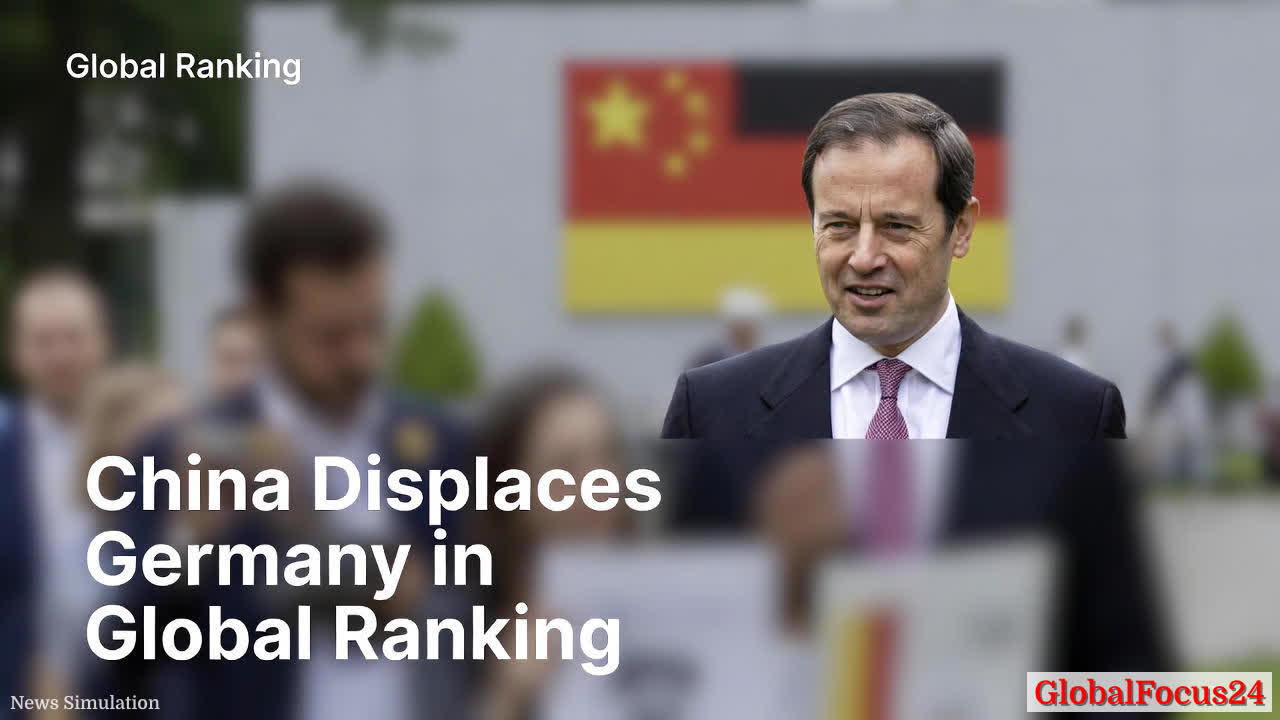
New Global Ranking: China Surpasses Germany to Enter Top Ten as Switzerland Maintains Lead in Innovation
A new global ranking measuring innovation and economic resilience places China in the top ten, ahead of Germany, while Switzerland stands out as the perennial leader in innovation. The shift signals a nuanced reordering of global economic strengths and underscores how nations balance research investment, policy stability, and industrial transformation in an era defined by rapid digitization and supply-chain reconfiguration. The evolving landscape has broad implications for regional growth, corporate strategy, and national competitiveness as economies recalibrate in response to geopolitical tensions, technological breakthroughs, and demographic shifts.
Historical Context: A Century of Industrial Evolution and Shifts in Global Innovation
To understand the current moment, it helps to look back at the long arc of global economic development. The post-World War II era saw the United States and Western Europe dominating innovation ecosystems, underpinned by strong educational systems, robust rule of law, and expansive capital markets. By the late 20th century, Japan joined this elite circle, followed by sweeping integration of Asia’s manufacturing power in the 2000s. More recently, several European nations carved out reputations for high-value, knowledge-intensive industries, with Switzerland’s system of engineering excellence, precise manufacturing, and high-caliber research institutions translating into consistent performance in global rankings.
In this context, Germany long stood as a symbol of engineering prowess, industrial durability, and the Mittelstand’s emphasis on specialization. Yet the newest ranking reveals a broader, more dynamic set of drivers: accelerating investments in artificial intelligence, biopharma, clean energy, and digital infrastructure; the globalization of research ecosystems; and policy environments that foster risk-taking in emerging sectors. The historical pattern suggests that nations able to translate scientific discovery into scalable, globally traded products tend to outpace peers in long-run competitiveness. The emergence of China among the top ten marks a watershed moment in this ongoing transformation.
China’s ascent into the top ten reflects a convergence of several strategic factors. First, a sustained push in research and development, supported by both public investment and private capital, has expanded capacity across multiple verticals—from semiconductors and telecommunications to green technologies and advanced manufacturing. Second, China’s vast domestic market creates a powerful incentive for firms to innovate domestically, with scaled deployment of new technologies across urban and rural environments alike. Third, the government’s coordinated approach to industrial policy and technology standards has accelerated the diffusion of breakthroughs into commercially viable products and services. Taken together, these elements have helped China move beyond its traditional manufacturing strengths into a broader, innovation-led growth model.
Switzerland’s sustained leadership in innovation is not accidental. The Alpine nation consistently ranks at or near the top due to a carefully designed ecosystem that blends world-class research universities, industry clusters, and a government commitment to political and economic stability. Swiss policies emphasize intellectual property protection, long-term investment horizons, and an emphasis on high-value sectors such as precision machinery, pharmaceuticals, finance, and specialty chemicals. The resulting environment supports collaboration among universities, startups, and established firms, enabling rapid translation from lab bench to market. As global competition grows more intense, Switzerland’s model remains a reference point for how stable governance and a strong regulatory framework can produce durable competitive advantages.
Economic Impact: Shifting Corridors of Growth and Investment
The reordering of top ten status among global economies carries tangible implications for investment patterns, trade relationships, and regional growth trajectories. In the short term, investors are likely to recalibrate portfolios toward regions signaling resilience and scalable innovation pipelines. For countries like China, the top-ten placement—not merely as a symbol but as a signal of capability—bolsters confidence among domestic and international investors seeking exposure to sectors tied to the next wave of productivity gains. This environment tends to attract capital toward advanced manufacturing, AI-driven services, and next-generation infrastructure projects. As investment flows strengthen in high-tech industries, urban centers that integrate research-heavy industries with job-creating manufacturing can experience a acceleration in localized economic activity and productivity.
Germany, historically a powerhouse of engineering and export-oriented industry, may increasingly face competitive pressure as more economies demonstrate faster deployment of innovation-driven growth. The shift invites Germany and its European partners to intensify collaboration on digital infrastructure, skills development, and strategic sectors where German firms hold strengths, such as automotive engineering, machinery, and chemical production. The need to modernize aging supply chains, expand digitization, and accelerate energy transition efforts is clear. A more agile, policy-aligned approach to funding early-stage research and scaling pilots could help maintain Germany’s standing in the broader innovation landscape.
Switzerland’s continued leadership has direct consequences for its economy. High-end manufacturing remains a cornerstone, but the Swiss advantage also includes robust financial services, precision engineering, and a strong healthcare cluster. As global demand for sustainable technologies grows, Swiss firms are well-positioned to convert breakthroughs into market-ready solutions, from high-precision medical devices to energy-efficient industrial processes. The country’s highly skilled labor force, combined with a social and political framework that fosters consensus-building, provides a stable base for long-term capital investment. This stability can attract long-horizon investments in research facilities, pilot plants, and cross-border collaborations that reinforce Switzerland’s status as an innovation lighthouse.
Regional Comparisons: A Closer Look at the Contours of Global Innovation
- Europe: The landscape features a mosaic of capabilities. Switzerland’s lead contrasts with Germany’s enduring strengths in engineering and manufacturing. Northern European economies emphasize digital public infrastructure and data-driven services, while Mediterranean economies explore diversified high-tech applications in fields like aerospace, life sciences, and machinery. The European Union’s push for a coordinated digital strategy and a robust semiconductor supply chain could influence future rankings as member states align around shared standards and investment programs.
- Asia: China’s rise is the most notable regional shift, complemented by growing tech ecosystems in countries such as South Korea, Japan, and Singapore. While China scales its own advanced manufacturing and AI-driven platforms, nations across Asia are pursuing complementary capabilities—ranging from semiconductor design to green energy technologies—creating a complex web of collaboration and competition. The regional dynamic underscores the importance of cross-border innovation corridors, talent mobility, and differentiated roles within global supply chains.
- North America: The United States continues to be a power player in high-risk, high-reward innovation, with strong tailwinds in software, biotech, and advanced manufacturing. Canada’s increasingly prominent tech and life sciences clusters contribute to regional diversification, while Mexico’s manufacturing base could benefit from deeper automation and supply-chain resilience if policy environments continue to attract investment. The broader North American framework emphasizes talent, capital access, and regulatory clarity as critical levers of sustained innovation.
Policy and Implementation: How Nations Translate Ideas into Economic Value
The trajectories observed in the latest ranking underline a core policy insight: the most successful economies balance long-term commitment with pragmatic execution. Countries that maximize returns on research funding often deploy several overlapping strategies:
- Invest in human capital: Strong education systems, vocational training, and immigration policies that attract scientists and engineers help sustain a pipeline of skilled workers capable of advancing complex technologies.
- Strengthen research ecosystems: Proximity between universities, research institutes, and industry accelerators can shorten the path from discovery to commercialization. Government co-funding and tax incentives for R&D can amplify private sector efforts.
- Build strategic infrastructure: Highly reliable energy grids, ultra-fast communications networks, and semiconductor supply chains reduce bottlenecks and enable rapid deployment of innovations at scale.
- Protect intellectual property while encouraging collaboration: A balanced approach to IP rights fosters private investment while enabling knowledge diffusion through partnerships and open innovation models.
- Foster regional specialization: National strategies that emphasize competitive advantages in particular sectors can concentrate resources where they yield the greatest dividends, supporting clusters that become magnets for talent and capital.
Public Reaction: Perceptions of Change and Confidence in the Future
Public sentiment often tracks with media narratives about national competitiveness. When a country enters the top tier of an innovation ranking, it can bolster national pride, attract international talent, and reassure investors about the long-term viability of domestic industries. Conversely, shifts in rankings can prompt concern among workers in impacted sectors and spark debates about education, trade, and industrial policy. In regions facing structural adjustments, policymakers commonly emphasize retraining programs and social safety nets to ease transitions while maintaining a forward-looking growth agenda.
Environmental and Social Dimensions: Innovation as a Driver of Sustainable Development
Another layer of importance attached to global rankings is their correlation with sustainability outcomes. Innovations in energy efficiency, carbon capture, and green manufacturing not only improve competitiveness but also support climate goals. Regions that prioritize clean technology adoption tend to attract capital, create high-quality jobs, and reduce emissions, aligning economic growth with environmental stewardship. The current ranking highlights that the next wave of leading economies may be defined as much by sustainable, scalable solutions as by sheer output or manufacturing prowess.
Looking Ahead: What the New Top Ten Means for the Global Economy
As nations navigate a rapidly evolving technological terrain, the top ten ranking serves as a snapshot of where strategic choices are paying off. For China, the recognition reinforces the potential to translate scale into lasting leadership in digital and high-tech industries. For Switzerland, the continued supremacy underscores the enduring value of a holistic ecosystem that blends policy stability, world-class research, and private-sector dynamism. For Germany and other long-standing industrial powers, the challenge lies in accelerating adoption of digital tools, fostering innovation-driven growth, and sustaining high-value production in a global marketplace that prizes agility as much as capability.
Regional policies will increasingly emphasize resilience: diversifying supply chains, expanding domestic capacity in critical technologies, and cultivating international collaborations that accelerate innovation cycles. Public-private partnerships, targeted funding for early-stage ventures, and the cultivation of cross-border talent exchanges are likely to feature prominently in policy conversations as governments seek to translate abstract rankings into concrete job creation and increased productivity.
Conclusion: An Era of Dynamic Innovation with Consequences for Global Prosperity
The latest global ranking reaffirms that innovation remains the central engine of modern economic development. The entry of China into the top ten alongside Switzerland’s sustained leadership reflects a world where scale, efficiency, and speed in turning ideas into goods and services increasingly determine national success. While Switzerland continues to set the standard for a stable, highly productive innovation ecosystem, China’s ascent signals a transformation in the balance of technological capability across regions. As policymakers, business leaders, and researchers digest these shifts, the shared takeaway is clear: successful adaptation hinges on a coherent, forward-looking strategy that integrates education, infrastructure, and investment in ways that elevate not just national competitiveness but broad-based regional prosperity. A future defined by rapid technological change demands both vision and execution, with societies prepared to invest in talent, protect innovation, and foster collaboration across borders. The trajectory ahead will hinge on the ability of nations to align ambition with inclusive growth, ensuring that the benefits of innovation reach workers, communities, and ecosystems around the world.