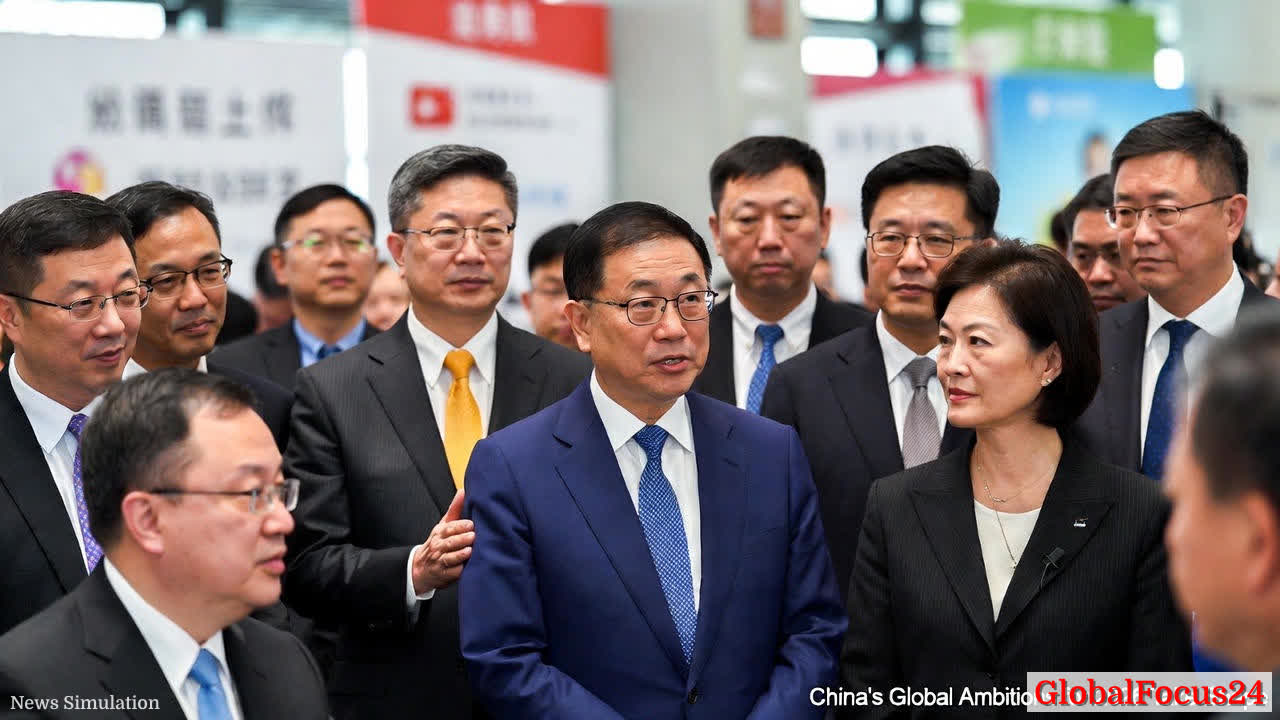
China's Global Ambitions for 2026 Take Shape
Beijing’s strategic push to extend its global footprint in 2026 comes as the country seeks to balance outward expansion with tighter domestic control over core assets. Business leaders, policymakers, and foreign partners are watching closely as a mix of state-led initiatives and private-sector adaptations shape China’s economic diplomacy this year. The overarching aim is to deepen international influence while safeguarding the assets and supply chains that underpin China’s rapid ascent in the world economy.
Historical context and evolution
China’s outward economic strategy has evolved through distinct phases since the reforms that began in 1978. Early decades centered on manufacturing scale and export-led growth, gradually transitioning to a more complex approach that includes technology, services, and investment abroad. The Belt and Road Initiative, launched in 2013, formalized a broad, long-term plan to connect Asia, Africa, and Europe through infrastructure and trade corridors. By the mid-2020s, many observers noted a shift from rapid outward expansion toward a more selective, asset-conscious approach that prioritizes critical industries and strategic resources.
This history helps explain the current posture: a country intent on leveraging global access while maintaining rigorous guardrails around sensitive technologies, strategic assets, and critical supply chains. In 2024 and 2025, several high-profile projects illustrated the tension between outward investment and domestic resilience. International collaborations continued to flourish in areas like green energy, digital infrastructure, and advanced manufacturing, even as regulators tightened controls on technology transfer and capital flows. The year 2026 is thus shaping up as a test case for how China can sustain momentum abroad without compromising the domestic foundations of its growth model.
Economic impact and investment patterns
China’s international expansion in 2026 is expected to be guided by a blend of outward direct investment, global procurement networks, and strategic partnerships. Large-scale outbound investments in energy, infrastructure, and manufacturing remain central to the plan, with a particular emphasis on regions and sectors that complement China’s domestic capabilities. Analysts anticipate continued interest in sectors such as green technology, semiconductors, and telecommunications, where China has invested heavily in recent years to reduce dependency and to position itself as a global hub for advanced manufacturing and innovation.
At the same time, domestic policy measures are likely to prioritize resilience and self-reliance in critical areas. This dual approach—open-armed with outward investments but cautious about key technologies and data-sensitive sectors—reflects a broader global trend: countries seeking strategic autonomy while engaging in a highly interconnected world. The net effect may be a more nuanced global trade and investment environment, where collaboration coexists with stricter screening and more selective engagement in sensitive industries.
Regional comparisons offer useful benchmarks. In East Asia, neighboring economies have pursued parallel growth models that combine export prowess with strategic domestic safeguards. In Southeast Asia, shared infrastructure initiatives have strengthened regional supply chains, though geopolitical frictions can influence project timelines and financing terms. In Europe and North America, revised investment rules and enhanced screening regimes have altered how cross-border deals are structured, particularly in technology and data-centric sectors. Against this backdrop, China’s 2026 strategy appears to emphasize compatibility with international norms while reinforcing domestic ownership of core capabilities.
Industry by industry overview
Green energy and critical minerals: Investments in renewable energy capacity, battery materials, and related supply chains continue to be a priority. Countries with abundant natural resources and favorable regulatory environments remain attractive partners. The aim is to diversify the global energy mix and to secure reliable access to essential inputs for China’s domestic transition to cleaner energy.
Technology and innovation: Semiconductor manufacturing, advanced IC design, and AI-related infrastructure are focal points. The global demand for cutting-edge technology sustains collaboration opportunities, even as national policies tighten export controls and safeguard sensitive know-how. Partnerships often hinge on clear transfer frameworks, joint ventures with local governance, and adherence to international standards to minimize friction.
Infrastructure and connectivity: Transport corridors, logistics hubs, and digital networks are central to extending China’s economic reach. Financing models combine public funds, state-backed banks, and private capital, with careful consideration given to risk management and local economic benefits. The objective is to reduce logistics bottlenecks and improve regional access for goods and services, which in turn supports domestic industries through more efficient global supply chains.
Financial services and trade integration: Cross-border finance, currency settlement mechanisms, and trade facilitation programs support smoother transactions with partner countries. Financial standards and regulatory cooperation remain essential to building trust and reducing transaction costs. As markets liberalize gradually, Chinese financial institutions may gain broader access to international markets, while still observing strict domestic controls on capital flows.
Public reception and societal impact
Public reaction to China’s 2026 strategy varies by region and sector. In partner economies, expectations hinge on how projects are financed, how labor is sourced, and how quickly local economies see tangible benefits such as jobs and technology transfer. Communities near new infrastructure tend to weigh immediate local benefits against longer-term shifts in land use, environmental considerations, and economic dependency.
Domestically, there is attention on how outward investment aligns with national development goals and social welfare. Policymakers emphasize the importance of safeguarding sensitive technologies, protecting critical infrastructure, and ensuring that outward ventures reinforce domestic industries rather than deplete national capabilities. The public discourse often reflects a balance between pride in global leadership and concern over loses in local employment or environmental impacts, underscoring the need for transparent governance and demonstrable economic returns.
Geopolitical considerations and resilience
China’s global ambitions in 2026 occur within a densely interconnected geopolitical landscape. Trade tensions, strategic competition, and evolving alliances influence the pace and nature of cross-border initiatives. A key question for policymakers and foreign partners is how to maintain open channels for collaboration while implementing safeguards that protect critical assets.
Resilience planning is a recurring theme. Companies increasingly prioritize diversification of supply chains, scenario analysis for sanctions or regulatory shifts, and investments in domestic capabilities to complement international ventures. In practice, this translates into more rigorous due-diligence, stronger local partnerships, and adaptive governance structures that can respond to shifting political and economic conditions without compromising strategic objectives.
Operationalizing global ambitions: best practices
- Align strategy with national development goals: Clear policy coherence helps ensure that outward investments support domestic industrial plans, regional development, and long-term growth targets.
- Emphasize governance and transparency: Robust oversight, clear transfer rules, and public accountability build confidence among international partners and local communities.
- Invest in risk management and resilience: Diversified supply chains, local manufacturing capabilities, and flexible financing arrangements reduce vulnerability to shocks.
- Prioritize sustainable development: Environmental safeguards, social responsibility, and adherence to global standards foster legitimacy and long-term viability.
- Foster inclusive partnerships: Collaborative ventures with local partners, knowledge exchange, and capacity-building initiatives create shared value and reduce friction.
Conclusion and outlook
As 2026 unfolds, China’s global ambitions are likely to be characterized by a measured, strategic posture that seeks to expand influence while preserving core domestic strengths. The balance between outward expansion and inward protection will shape not only China’s trajectory but also the broader dynamics of international trade and investment. Observers will watch for signs of how policy adjustments, market responses, and geopolitical developments converge to determine the pace and form of China’s engagement with the world in the current era.
Public and market reactions to these developments will continue to evolve, reflecting the complex interplay of opportunity and risk inherent in any major shift toward deeper global integration. For businesses, policymakers, and researchers, the year ahead will demand careful navigation of evolving norms, rigorous due diligence, and a nuanced understanding of how China’s 2026 strategy can drive growth while safeguarding national interests.