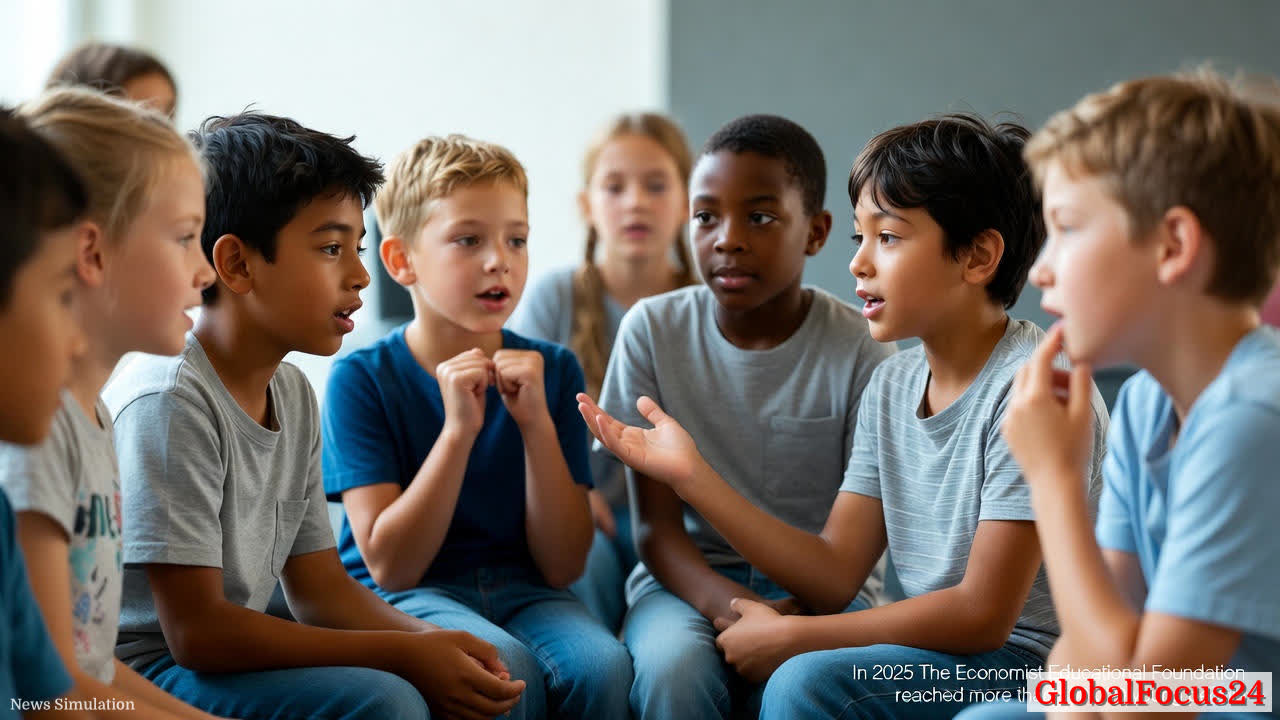
Neighborhood News Literacy Campaign Gathers Momentum to Empower Young Readers
In a season traditionally marked by holiday cheer and gift-giving, a new Christmas campaign is turning toward a different kind of generosity: empowering children with the tools to understand the news. The initiative, driven by a coalition of educators, media literacy advocates, and community organizations, seeks to build critical thinking skills among young readers, helping them navigate information with confidence and discernment. As classrooms resume after the holiday break and families gather for gatherings, the campaign’s aim is clear: teach more children to interpret, question, and engage with news in a rapidly evolving information landscape.
Historical context anchors the project in a long arc of public education that has repeatedly stressed media literacy as essential to informed citizenship. Across decades, educators have noted that the ability to analyze sources, distinguish fact from opinion, and recognize bias is not a fixed trait but a cultivated skill. The current campaign builds on this tradition, adapting it to modern challenges such as digital platforms, short-form content, and social networks that often blur the lines between news and entertainment. By foregrounding core competencies—source evaluation, corroboration, and context—the program seeks to inoculate young minds against misinformation while fostering a healthy curiosity about current events.
The campaign’s strategy blends in-person workshops, classroom activities, and community events with digital resources designed for families at home. In schools participating in pilot efforts, educators report noticeable gains in students’ ability to explain where information comes from, identify possible sensational framing, and ask probing questions about motivations behind certain stories. Students are encouraged to examine multiple viewpoints, compare reporting from different outlets, and track how a single event can be framed in divergent ways. This approach aligns with contemporary best practices in media literacy, which emphasize active learning, iterative practice, and relevance to students’ daily lives.
Economic implications of media literacy extend beyond classroom walls. In markets worldwide, information quality and trust in credible reporting influence consumer confidence, investment decisions, and civic engagement. A population adept at evaluating sources can contribute to more stable local economies by reducing the spread of rumor-driven volatility and promoting more informed discussions about public policy and community projects. In the short term, communities investing in youth media literacy may experience increased demand for educational materials, tutoring services, and after-school programs. Over the longer horizon, a well-informed generation can bolster democratic participation and workforce readiness, traits that researchers associate with resilient local economies.
Regional comparisons offer a useful lens on how communities approach news literacy. In metropolitan areas with centralized media ecosystems and robust library networks, schools tend to integrate media literacy across multiple grades, supported by public funding and nonprofit partners. These locales often report higher rates of student engagement with current events and greater capacity to access diverse sources of information. In more rural or underserved regions, the campaign emphasizes collaboration with community centers, faith-based organizations, and local media outlets to extend reach. The model prioritizes equitable access to educational tools, recognizing that digital divides and limited broadband access can impede progress. By tailoring programs to regional realities, the initiative seeks to narrow gaps and ensure that all children have a fair opportunity to develop critical thinking skills.
A central element of the Christmas campaign is its emphasis on practical, age-appropriate activities. For younger students, lessons focus on distinguishing real news from fictitious or exaggerated content through guided reading exercises, simple fact-checking tasks, and classroom discussions about hows can influence perception. For older students, the curriculum introduces concepts such as editorial balance, the role of primary versus secondary sources, and the ethics of responsible sharing. Activities leverage real-world examples that children may encounter online, such as social media posts, school announcements, or community news stories, reframing them as opportunities for inquiry rather than passive consumption.
Public reaction to the campaign has been mixed in some communities, reflecting broader conversations about media independence and the role of schools in guiding how young people consume information. Supporters argue that early literacy in news and information is a safeguard against misinformation and a cornerstone of civic participation. They point to stories of students who, through guided instruction, identified inaccuracies in misleading posts and chose to verify information before sharing. Critics raise concerns about potential parental or community sensitivities around certain topics, underscoring the need for clear boundaries, transparency, and age-appropriate content. The organizers stress that the program prioritizes neutral, evidence-based instruction and equips students with the tools to form their own reasoned judgments.
Beyond classroom walls, the campaign engages families through accessible home-learning resources. Interactive guides, short videos, and printable activities encourage families to discuss current events together, practicing critical thinking in everyday conversations. This outreach recognizes that learning to navigate the news is not confined to schools but is a community-wide endeavor. In addition to family-focused materials, the campaign collaborates with local libraries to host reading corners, media-literacy fairs, and panel discussions featuring educators, journalists, and researchers. By integrating community spaces, the initiative aims to normalize ongoing dialogue about news and information as a shared public good.
From a policy perspective, the campaign’s success is linked to how communities invest in teacher training, classroom materials, and extracurricular support. Professional development for educators plays a pivotal role in translating abstract media literacy concepts into concrete classroom practices. When teachers are confident in guiding students through the complexities of news reporting, they can foster environments where questions are welcomed and evidence is prioritized. Funding streams, whether through school budgets, grants, or nonprofit partnerships, determine how deeply and sustainably these programs can scale. The campaign’s advocates emphasize that investments in media literacy are investments in long-term societal resilience, enabling communities to respond more thoughtfully to crises, misinformation, and rapidly shifting news cycles.
The narrative surrounding the campaign also highlights the power of storytelling to make complex topics accessible. By weaving historical contexts into current events, teachers can help students understand how information evolves over time. For example, examining how a town’s economy responded to a major policy decision, or tracing the impact of a landmark event on regional demographics, allows students to connect news to tangible outcomes. Story-driven learning not only boosts engagement but also cultivates empathy and curiosity, qualities that support lifelong learning and informed citizenship.
As the campaign unfolds, measurable outcomes will be essential to gauge progress and guide adjustments. Educators and researchers propose a multi-faceted assessment framework that includes student confidence in evaluating sources, accuracy in identifying misinformation, ability to articulate Reasoned conclusions, and demonstrated willingness to engage respectfully in discussions about contested topics. Data collection will adhere to privacy protections and ethical standards, ensuring that student participation remains voluntary and that insights are used to enhance learning experiences rather than to prop up external narratives.
Local communities are encouraged to participate in upcoming outreach events, which showcase practical demonstrations of news-literacy techniques. Participants can expect activities such as mini-workshops on source verification, quick fact-check challenges, and collaborative projects where students create family-friendly “news guides” that explain how to assess information in everyday life. These hands-on experiences aim to demystify the process of news evaluation, making it accessible to learners at different stages of their educational journey.
The Christmas campaign also aligns with broader global trends recognizing media literacy as a core component of education systems worldwide. International research indicates that students who receive explicit instruction in evaluating sources, understanding bias, and recognizing misinformation tend to perform better in critical-thinking tasks across disciplines. By contributing to a more discerning public, the initiative supports not only individual learners but also the communities that depend on reliable information for policy-making, public health, and social cohesion.
In sum, the campaign represents a thoughtful response to a contemporary challenge: how to equip the next generation with the skills to navigate an increasingly complex information environment. By combining classroom instruction, family engagement, and community partnerships, the effort seeks to build a durable foundation for news literacy that can adapt to future changes in how information is produced and consumed. The goal is not to shield young people from news but to empower them to approach it with confidence, curiosity, and critical thinking. As the holiday season unfolds and the new year approaches, this initiative stands as a reminder that education remains a powerful instrument for strengthening democracy, promoting informed decision-making, and fostering a more resilient, well-informed public.
Notes for readers and stakeholders highlight the practical steps available to support the program. Schools interested in joining the pilot phase can contact district coordinators to learn about curriculum alignment with grade-level standards, professional development opportunities for teachers, and available classroom resources. Community organizations are invited to participate by hosting events, providing volunteers, and sharing local perspectives that enrich classroom discussions. Families seeking additional guidance can access user-friendly guides designed to help parents and guardians talk with children about recents, verify facts, and practice responsible sharing online. The overarching message remains clear: when communities unite to foster news literacy, they empower young minds to navigate the world with clarity, confidence, and integrity.