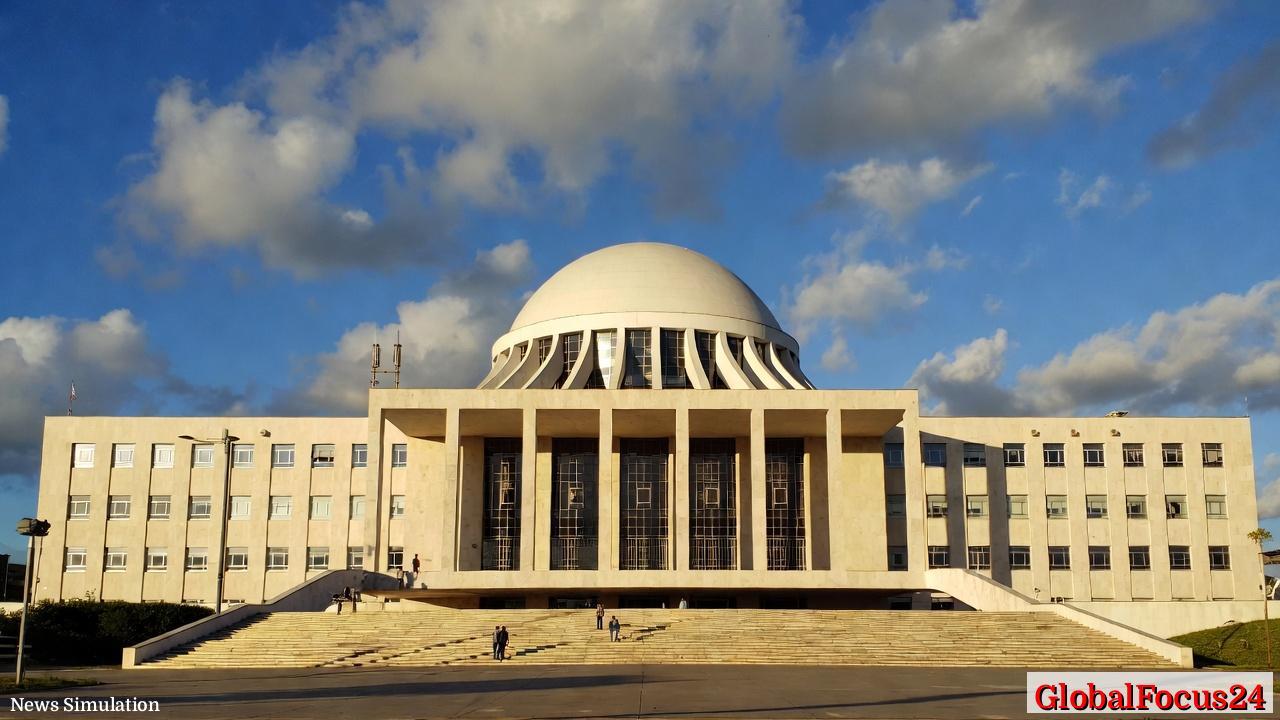
Brazil’s Supreme Court Faces Crisis of Trust Amid Mounting Public Scrutiny
Brazil’s Supreme Federal Court, once regarded as a cornerstone of the country’s post-dictatorship democracy, stands at the center of a mounting public credibility crisis. Once viewed as an emblem of Brazil’s constitutional order and judicial independence, the court is now grappling with diminishing trust amid a crescendo of scandals, political polarization, and accusations of overreach. As the highest authority in interpreting the law, the institution’s legitimacy is vital to the stability of Latin America’s largest democracy. But as controversies continue to unfold, the path to restoring confidence appears increasingly steep.
A Pillar of Democracy Under Strain
Created in 1829 during the imperial era and reconstituted by the 1988 Constitution that followed Brazil’s return to democracy, the Supreme Federal Court (STF) has long held a unique place in the nation’s political landscape. Its 11 justices, appointed by the president and confirmed by the Senate, wield immense power over issues ranging from corruption cases to electoral disputes and civil rights protections.
In the decades following the fall of military rule, the STF was seen as a guardian of the new democratic order. It played a defining role in transitioning Brazil into a rights-based, constitutional state. However, recent years have brought increased scrutiny and, for many citizens, disillusionment. Polls from major Brazilian institutions show a sharp decline in public trust toward the judiciary — a trend that mirrors broader dissatisfaction with government institutions.
Scandals and Allegations of Overreach
The erosion of credibility stems from multiple sources. A string of recent scandals involving high-profile investigations, controversial rulings, and claims of political interference has cast a shadow over the justices’ integrity and their impartiality.
Critics argue that the court has increasingly blurred the line between judicial arbitration and political activism. Some rulings — particularly those concerning media regulation, digital censorship, and the prosecution of elected officials — have sparked widespread debate over whether the STF is upholding the constitution or redefining it through expansive interpretations. Several justices have become household names, occasionally taking on roles more associated with political figures than with jurists, regularly making public statements that further inflame opinion divisions.
Public outrage has intensified around specific cases where the STF intervened in the affairs of Congress or the executive branch. While defenders argue such interventions are essential to prevent abuses of power, detractors claim they represent an encroachment on democratic processes and electoral legitimacy. The tension between judicial independence and accountability has become one of Brazil’s defining political dilemmas.
Historical Context: From Dictatorship to Democratic Watchdog
To understand the gravity of the current moment, it is necessary to recall the judiciary’s historical transformation. During the military dictatorship from 1964 to 1985, the Supreme Court was often constrained and sidelined by authoritarian decrees. The 1988 Constitution sought to correct those constraints, granting the court sweeping authority to protect civic rights, ensure checks and balances, and interpret the constitution in cases affecting national policy.
That newfound power became most visible in the early 2000s and 2010s, when Brazil’s anti-corruption investigations, particularly Operation Car Wash (Lava Jato), thrust the judiciary into the political spotlight. The STF served as both a battleground and an arbiter for the powerful, presiding over cases that toppled influential politicians and business magnates. These legal crusades initially boosted the court’s acclaim — many Brazilians hailed it as fearless in confronting corruption. But as verdicts were overturned and internal divisions spilled into public view, trust began to wane.
Institutional Challenges and the Question of Accountability
Unlike in many other democracies, Brazil’s Supreme Federal Court handles not just constitutional interpretation but also a high volume of individual appeals. Thousands of cases reach the bench every year, creating inefficiencies and procedural complexity. The sheer caseload means that justices often wield extraordinary discretion in deciding which matters to prioritize.
Critics argue that this procedural imbalance allows for selective decision-making that can favor political convenience. Calls for judicial reform — including proposals to limit the court’s caseload, impose fixed terms instead of lifetime appointments, or restrict the use of individual injunctions by justices — have gained momentum among legislators and legal scholars.
The STF’s internal governance has also come under scrutiny. Each justice enjoys near-autonomous powers over their cases, with limited oversight or collegiate coordination. Such structure contrasts sharply with constitutional courts in countries like Germany or Spain, where decisions must pass through more uniform procedural filters. Reform advocates say Brazil’s model risks subjectivity and inconsistency, fueling perceptions of politicization.
The Economic Dimension of Judicial Credibility
The judiciary’s credibility is not only a political matter — it also bears direct consequences for Brazil’s economy. Investor confidence, regulatory predictability, and the enforcement of contracts depend heavily on perceptions of judicial impartiality. When major business disputes or corruption proceedings become politically charged, domestic and foreign investors grow wary of systemic risks.
Over the past decade, Brazilian markets have shown sensitivity to judicial signals. For instance, rulings related to corporate accountability, environmental regulations, and privatization frequently move markets, shaping investor sentiment toward Brazil’s broader regulatory environment. Economists warn that prolonged institutional instability could deter much-needed foreign capital, particularly as the country competes with Chile, Colombia, and Peru for regional investment.
Brazil’s business community has voiced concerns about what it views as the growing unpredictability of judicial decisions. Many analysts contend that restoring legal certainty will be as vital to Brazil’s economic competitiveness as monetary or fiscal reform. A court seen as politicized adds an invisible premium to the cost of doing business in the country.
Comparisons Across Latin America
Brazil is not alone in grappling with judicial credibility challenges. Across Latin America, high courts have faced questions about independence, legitimacy, and political interference. In Mexico, the Supreme Court has periodically clashed with the president over constitutional reforms, while in Argentina, judicial appointments often trigger fierce partisan battles. In contrast, Chile’s judicial system maintains comparatively stable public trust due to transparent procedures and narrower judicial mandates.
Regional observers note that Brazil’s predicament is distinct because of both the court’s broad jurisdiction and its cultural prominence. The STF’s televised sessions, livestreamed to millions, reflect an unparalleled level of public exposure. Supporters argue this transparency is a hallmark of democratic accountability. Yet critics counter that it theatricalizes justice, transforming deliberation into spectacle and blurring the boundaries between legal reasoning and political messaging.
Public Reactions and the Media Environment
Public perception of the Supreme Court has become deeply polarized, often reflecting Brazil’s divided political landscape. While segments of the population see it as a bulwark against extremism and misinformation, others perceive it as an unelected body that suppresses freedom of expression and interferes in democratic debate.
Social media has become a powerful accelerant in this dynamic. The digital sphere amplifies both legitimate criticism and misinformation, often turning complex judicial issues into viral flashpoints. Online campaigns have targeted individual justices, generating threats and calls for institutional reform that sometimes veer toward radicalism. This climate complicates efforts to rebuild trust through reasoned dialogue.
The Road to Restoring Confidence
For the Supreme Court to regain public trust, legal experts suggest several avenues. Transparency in decision-making, clearer procedural standards, and consistent adherence to the constitution could strengthen institutional legitimacy. A renewed commitment to judicial restraint — where the court intervenes only when constitutionally necessary — may also reassure citizens wary of perceived overreach.
Institutional reforms aimed at improving efficiency and limiting lifetime tenure could foster accountability and generational renewal. Public education efforts to demystify judicial processes might bridge the gap between the court and the citizenry it serves. Above all, the STF must find ways to reaffirm its core mission: upholding the rule of law without appearing to dictate politics.
A Defining Moment for Brazil’s Democracy
At stake is more than the reputation of a single court. For Brazil, where the separation of powers remains a hard-won safeguard of democracy, the Supreme Federal Court’s legitimacy underpins the entire institutional framework. Losing the public’s trust would not only weaken the judiciary but could destabilize the delicate balance between government branches.
As Brazil looks ahead to another election cycle and a continued period of economic uncertainty, the restoration of judicial credibility may prove as critical to its future as fiscal discipline or political reform. Whether the Supreme Court can reestablish itself as the impartial guardian envisioned in 1988 will determine how firmly Brazil’s democracy stands through the next era of transformation.