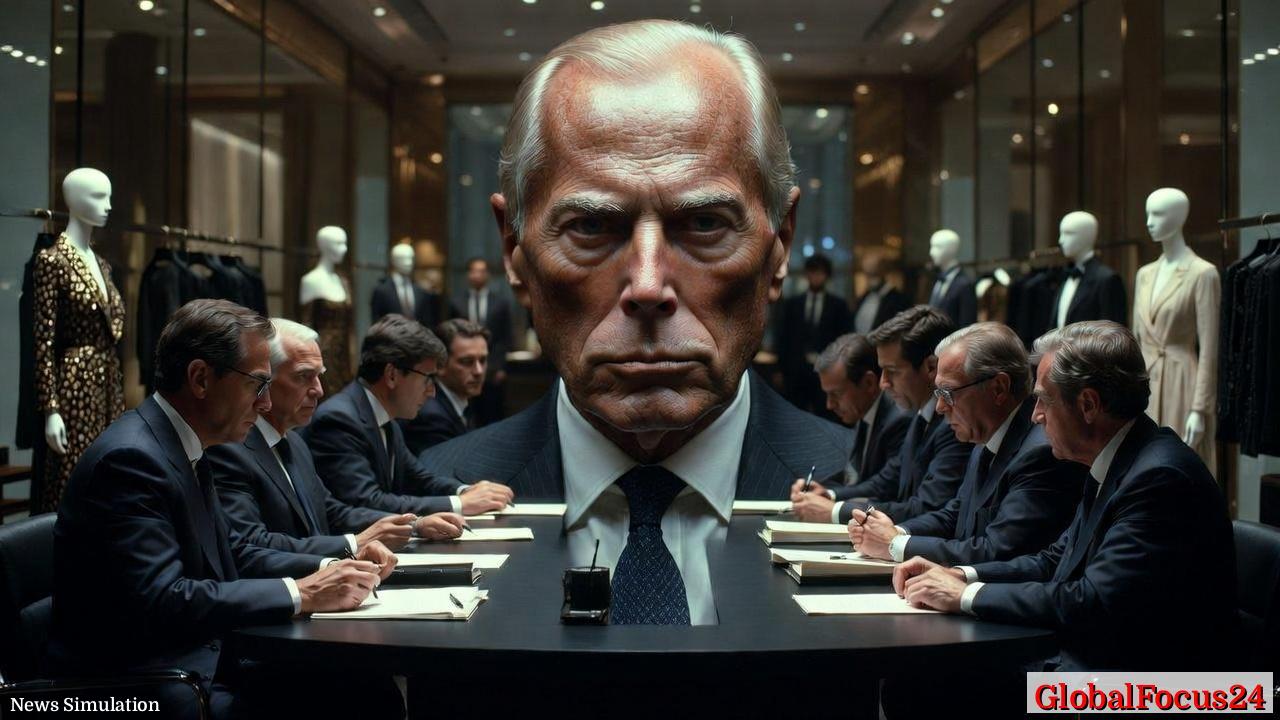
Armani’s Unsettled Will Reshapes Italian Luxury’s Horizon
Giorgio Armani’s passing in September marked not only the end of an era but the beginning of a high-stakes saga for one of Italy’s most enduring luxury houses. The will, widely analyzed as a window into the glamour and fragility of the fashion industry, has set in motion a succession puzzle that blends corporate governance, valuation drama, and the broader dynamics of global luxury. As the brand navigates a transitional period, observers are watching how leadership choices will influence a company that has long epitomized minimalist elegance, Italian craftsmanship, and steady, if sometimes cautious, growth.
Historical context: a brand built on restraint and reinvention
Armani’s ascent began in a postwar Italy that was rebuilding its fashion identity. The house carved out a niche by eschewing ostentation in favor of quiet luxury—sharp silhouettes, impeccable tailoring, and a design philosophy that prioritized timelessness over trendiness. This approach allowed Armani to weather economic cycles and shifting consumer appetites for decades, earning a loyal international following among professionals, fashion connoisseurs, and aspirational buyers alike. The company’s growth has historically been steady rather than explosive, a pattern that mirrors the broader evolution of European luxury houses that emphasize craft, heritage, and multi-generational longevity.
The will: a blueprint that unsettles, not just divides
At the heart of the matter is a document that interlaces governance, ambition, and timing. Armani’s directive to funnel a portion of ownership to specific strategic buyers—an eyewear giant, a global beauty leader, or a sprawling luxury conglomerate—within a defined timeframe, coupled with a secondary window for a larger stake sale or an eventual public listing, creates a framework that can accelerate value realization or complicate internal cohesion. The stipulation to consider a stock-market listing as an alternative suggests a willingness to let market dynamics determine the brand’s capital structure, a choice that could alter control dynamics and strategic flexibility for years to come.
A board divided: strategy versus stewardship
Early signals indicate a split among board members and senior executives. One faction leans toward strict adherence to the will, prioritizing a rapid reshaping of ownership and potential partnership with a major luxury or consumer conglomerate. The other faction argues for stabilizing the brand’s core business—lifting operating metrics, refining product pipelines, and refining channels before selling or listing. This tension is not merely a foil for corporate drama; it has real consequences for product development calendars, wholesale relationships, retail footprints, and investor sentiment.
Valuation and market context: what the timing means for investors
The luxury segment has faced a period of volatility as consumer priorities shift, supply chains normalize, and macroeconomic uncertainties linger. In such a climate, timing a stake sale or a listing can materially affect valuation. A strategic sale to a partner with scale could unlock synergies in distribution, marketing capabilities, and cross-category collaboration. Conversely, a market listing could magnify scrutiny on top-line growth, margins, and efficiency initiatives, demanding faster execution on innovation pipelines and cost discipline. For Armani, whose strength lies in brand heritage and disciplined product storytelling, balancing growth with brand integrity will be paramount to sustaining a premium valuation.
Regional comparisons: contrasting paths taken by peers
- Italy’s luxury landscape features several houses that have navigated ownership transitions through minority stake sales, family office involvement, or strategic partnerships, each with distinct outcomes. Some families have leveraged partnerships to accelerate modernization while preserving brand essence, achieving enhanced distribution networks and improved capital efficiency without sacrificing core identity.
- Global peers with comparable scale have pursued varied routes: joint ventures with luxury or lifestyle groups, selective private equity partnerships, or outright listings that unlocked liquidity and allowed reinvestment in product and retail ecosystems. The common thread across successful transitions is a clear succession plan, disciplined governance, and a credible pathway to sustaining signature craftsmanship in a rapidly changing retail world.
- The regional dynamics matter because Europe remains a focal point for luxury buyers and strategic capital. But Asia-Pacific markets—especially China—continue to play a decisive role in demand generation, brand storytelling, and retail expansion. Armani’s ability to align its brand narrative with shifting regional preferences will influence how any ownership move translates into real growth.
Economic impact: ripple effects across ecosystems
The trajectory of Armani’s ownership decision has reverberations beyond the balance sheet. A successful transition can bolster Italy’s luxury ecosystem, supporting suppliers, design talent pipelines, and downstream retailers. It can also influence employment in manufacturing hubs, distribution centers, and flagship stores that rely on the brand’s prestige to sustain a robust tourism-driven retail economy. Conversely, missteps or protracted uncertainty could dampen supplier confidence, disrupt product launches, and slow investment in regional creative industries. The fashion sector’s health is tightly linked to public perception of stability and long-term vision—qualities investors seek in brands with storied legacies.
Public reaction and brand perception: balancing urgency with poise
Public sentiment around a family-backed, globally recognized luxury house tends to be nuanced. Consumers often respond to leadership continuity with trust, especially when the brand maintains its design language, quality standards, and customer experience benchmarks. Analysts watch for signals of strategic clarity: commitments to product innovation, investment in digital commerce, and the preservation of artisanal techniques. Media coverage, while not a direct driver of sales, can influence consumer confidence and partner negotiations. Armani’s ability to articulate a future that honors its heritage while embracing selective modernization will shape social discourse around the brand in the near term.
Strategic priorities for the next phase
- Preserve brand essence while accelerating modern capabilities: Maintain the quintessential Armani look and quality while investing in digital experiences, data-driven merchandising, and omni-channel fulfillment to meet evolving consumer expectations.
- Optimize product architecture and seasonality: Streamline collections to maximize relevance across key markets, with a clear cadence that balances timeless staples with selective, timely launches.
- Strengthen governance and succession planning: Establish transparent decision-making processes, clarify ownership pathways, and align executive incentives with long-term brand health and profitability.
- Expand strategic partnerships thoughtfully: Consider partners whose capabilities complement Armani’s strengths without diluting its identity, focusing on distribution networks, beauty and eyewear integrations, and experiential retail experiences that amplify the brand story.
- Invest in regional resilience: Tailor strategies for Europe, the Americas, and Asia-Pacific to sustain demand while respecting local preferences, regulatory landscapes, and competitive dynamics.
What comes next: potential scenarios
- Rapid strategic partnership: A major luxury conglomerate or consumer goods powerhouse acquires a significant stake, infusing capital and distribution reach while allowing Armani to maintain creative autonomy and brand signaling.
- Gradual equity realignment: A staged sale to investors aligned with the brand’s long-term vision, paired with governance reforms that ensure continuity in design leadership and retail strategy.
- Public market route: A successful IPO or SPAC-style listing could provide liquidity and fuel growth, but would require clear metrics on profitability, margin expansion, and scalable operations.
- Hybrid structure: A lighthouse model combining a minority strategic investment with a majority governance framework that secures capital while preserving the creative director’s influence and brand direction.
Conclusion: a pivotal moment for Italian luxury
Giorgio Armani’s will has cast a long shadow over the brand’s immediate future and the broader landscape of Italian luxury. The decisions made by the new leadership will not only determine the fate of a single house but could also set benchmarks for how legacy fashion brands navigate ownership transitions in an era of rapid change. In a market characterized by discerning consumers, global competition, and evolving channels, Armani’s path forward will hinge on balancing respect for heritage with a disciplined, forward-looking growth strategy. As stakeholders weigh options, the industry watches closely, recognizing that the outcome will likely influence the cultural and economic fabric of luxury manufacturing for years to come.