Cannabis Reclassification Sparks Market Shakeout: Economic Implications and Regional Comparisons
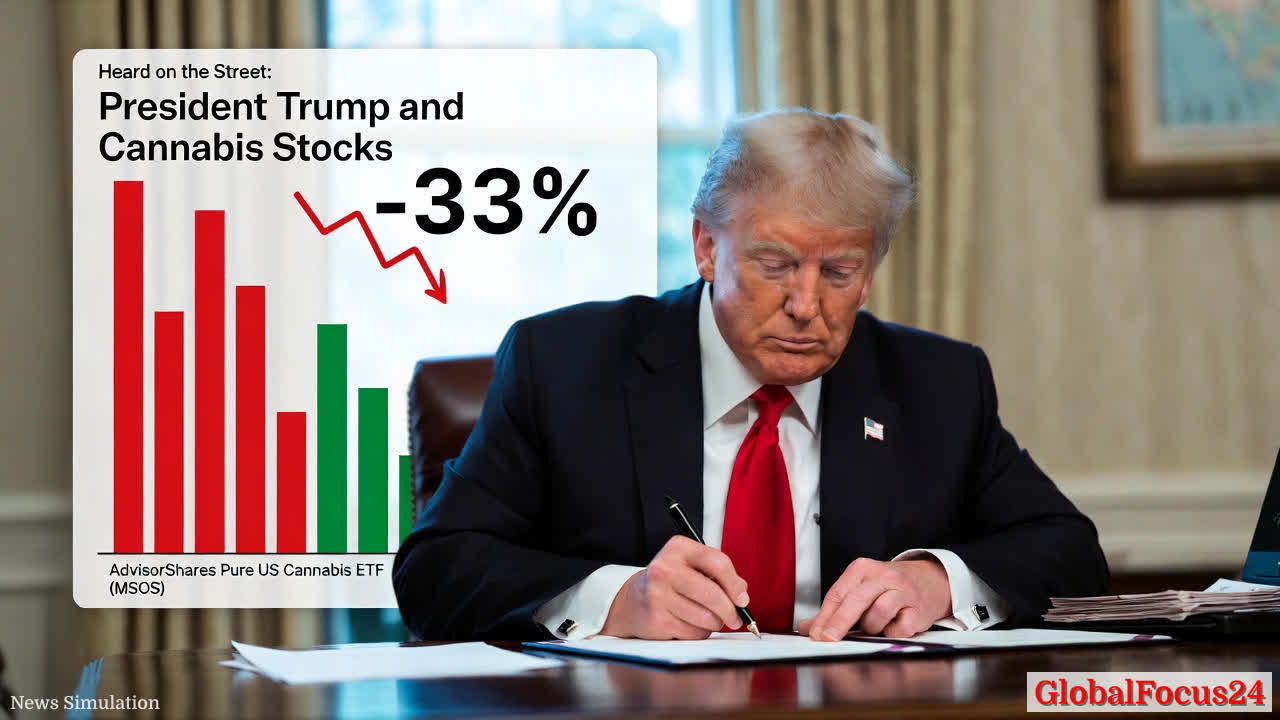
The White House recently directed the attorney general to reclassify marijuana from Schedule 1 to a lower-risk category, a move that supporters say could unlock a broader array of economic and financial benefits for the cannabis industry. In the initial response, however, equity markets and cannabis-focused funds experienced a sharp retreat, highlighting the complexity of translating policy shifts into immediate economic gains. This article provides historical context, analyzes the potential economic impact, and compares regional dynamics across major markets, all while maintaining an objective, data-informed perspective.
Historical context: policy shifts and the evolution of cannabis regulation To understand the current moment, it is essential to review the arc of cannabis policy in the United States. For decades, federal prohibition intersected with a patchwork of state laws legalizing medical and recreational use at varying paces. The discrepancy between local legality and federal status created a fraying of regulatory certainty, complicating business planning, access to banking services, and capital formation for cannabis operators.
In 2010s and early 2020s cycles, several states moving to legalize medical or recreational cannabis created a multi-layered market structure. Investors watched carefully as policy signals at the federal level suggested potential for broader market access, clearer tax treatment, and reduced compliance friction. The reclassification contemplated by the current administration is not a full legalization or federal authorization; rather, it signals a shift in how marijuana is categorized under federal law. This distinction matters: reclassification can change the interpretation of risk, potential penalties, and the regulatory environment without instantly legalizing all cannabis-related activities nationwide.
Economic impact: tax treatment, banking, and capital formation A central justification for reclassification concerns tax policy. Under the current framework, many cannabis businesses face effective tax rates far higher than other sectors due to Section 280E of the Internal Revenue Code, which disallows ordinary business deductions for Schedule I and II substances. Reclassifying marijuana could permit ordinary business deductions such as rent, wages, and utilities, potentially reducing effective tax rates significantly for compliant operators. The prospect of lower tax burdens has long been cited by industry advocates as a lever to improve profitability, cash flow, and the ability to reinvest in expansion, technology, and job creation.
Banking access is another critical channel through which policy change can reverberate through the economy. The lack of full federal banking access has compelled many cannabis businesses to operate on a cash-heavy model, increasing risk and limiting the ability to scale operations, obtain credit, or engage in traditional capital markets. A reclassification could reduce some of the regulatory frictions that restrict banking services, enabling more straightforward treasury management, payment processing, and financial reporting. This, in turn, could attract more mainstream financial institutions to participate in the sector, broadening the investor base and potentially stabilizing funding costs over time.
From an investor perspective, the initial market response to policy signals frequently hinges on expectations about execution, timelines, and accompanying regulatory steps. In the immediate aftermath of a reclassification announcement, investors often price in the likelihood of swift legislative or administrative actions, leading to a “buy the rumor, sell the news” dynamic. When the market perceives a gap between policy intent and practical implementation, stock prices can retreat as participants reassess risk, liquidity, and the durability of any anticipated tax or banking improvements.
Regional comparisons: the United States in a global context United States The U.S. cannabis landscape remains uniquely polarized by federal prohibition despite broad state-level legalization. In this environment, market participants must balance potential federal policy changes with continued state-by-state variability in rules, licensing, and consumer demand. A reclassification could unlock several channels of value, including:
- Tax efficiency gains for compliant operators, improving margins and cash flow.
- Enhanced access to banking and capital markets, supporting growth and M&A activity.
- Increased attractiveness of U.S.-listed cannabis companies to a broader range of institutional investors.
However, the path to realized gains relies on downstream actions such as formal guidance from regulatory agencies, tax code adjustments, and possible legislative developments that clarify the path to nationwide banking reform and equity market access. Until these steps are concrete, equity markets may remain sensitive to policys and the timing of potential hearings, lawsuits, or administrative decisions.
Canada Canada presents a contrasting regulatory framework, with federally legalized cannabis since 2018 and a more predictable, albeit highly regulated, market structure. While not directly affected by U.S. policy shifts, Canadian cannabis companies have benefited from early-mover advantages in product development, branding, and export capabilities. Cross-border commerce remains constrained by border controls and appliance of foreign regulatory standards, but regional investors often compare the efficiency gains, tax treatment, and financing environments across North American markets to gauge competitive positioning.
Europe European markets have advanced in medical cannabis adoption among member states and are gradually expanding adult-use opportunities in a few jurisdictions. The economic impact of U.S. policy changes can influence global investment flows, particularly if U.S. capital re-enters cannabis equities through larger IPOs or new investment vehicles. In Europe, where regulatory uncertainty persists in several countries, shifts in U.S. policy can introduce a degree of risk-off vs. risk-on recalibration as global portfolios seek to diversify exposure.
Asia-Pacific In Asia-Pacific, regulatory progress is uneven, with some markets pursuing medical programs and others maintaining stricter prohibitions. Global investors may reassess risk premia for cannabis-related assets as U.S. policy signals interact with regional regulatory developments, supplier relationships, and supply chain considerations, especially in jurisdictions pursuing pharmaceutical-grade cannabis production and exports.
Market dynamics: price movements, liquidity, and investor sentiment The initial market reaction to a policy shift that historians would classify as a reform move can be paradoxical. In the wake of the reclassification announcement, cannabis-focused exchange-traded funds and related equities often exhibit volatility driven by expectations of broader reforms, plus microstructure factors such as option activity, liquidity constraints, and the concentration of ownership among retail and hedging participants.
- Liquidity and ownership: The cannabis sector has historically shown limited institutional ownership relative to broader markets. Low institutional participation can amplify price swings in response to policy news, as a smaller cohort of investors executes larger trades.
- Options and hedging: A surge in options activity, including put purchases at strike prices close to the current level, can indicate hedging behavior by investors who anticipate ongoing volatility as the policy process unfolds.
- Tax and banking catalysts: The timing and realism of tax relief and banking reforms matter greatly. If market participants view the policy trajectory as overly incremental or reliant on several uncertain steps, prices can retreat even amid a favorable long-run outlook.
Implications for stakeholders: businesses, policymakers, and communities For cannabis companies, the potential reclassification signals a longer-run path to profitability and sustainable growth, particularly for those with strong compliance programs, robust cost controls, and scalable operations. Companies that have already invested in transparent financial reporting, efficient supply chains, and responsible governance are likely to be better positioned to translate policy gains into tangible value for shareholders and employees.
Policymakers face the challenge of balancing public health objectives with economic opportunity. A carefully crafted framework that clarifies allowable activities, ensures consumer protection, and maintains robust oversight is essential. Transparent communication about timelines, implementation milestones, and measurable outcomes can help reduce uncertainty and foster constructive engagement from investors, industry participants, and consumers alike.
Communities and workers stand to gain from job creation and new business opportunities stemming from expanded legal markets. The industry’s social impact depends on how policymakers address regulatory parity, access to banking, worker protections, and equitable licensing opportunities for historically marginalized groups. Clean, consistent policy signals can help local economies plan for growth, attract investment, and support small businesses within the cannabis ecosystem.
Regional performance indicators: what to watch
- Tax policy developments: Track changes to deduction rules and the potential impact on cash flow and effective tax rates for compliant operators.
- Banking reform progress: Monitor the progress of federal guidance or legislative measures that facilitate access to traditional banking channels for cannabis businesses.
- Capital markets activity: Observe patterns in listings, SPACs, and equity rounds involving cannabis companies, noting shifts in investor appetite and valuation multiples.
- Compliance and governance: Compare corporate governance practices, disclosure quality, and risk management maturity across leading players to gauge readiness for a more integrated financial environment.
- Market breadth: Assess whether gains are broad-based across operators or concentrated among a few large, well-capitalized firms, as this affects long-term market resilience.
Public reaction and societal context Public sentiment often mirrors a mix of optimism about economic opportunity and concern over health, safety, and regulatory equity. City councils, state regulators, and local chambers of commerce can influence how quickly and effectively policy changes translate into real-world benefits. Media narratives, while not part of policy itself, shape perceptions of risk and opportunity, influencing consumer behavior, hiring plans, and investment flows. An enduring takeaway is that policy shifts, even when positive in intent, require time to crystallize into measurable outcomes for workers, small businesses, and communities affected by the evolving cannabis landscape.
Conclusion: a cautious but hopeful horizon The proposed federal reclassification of marijuana represents a meaningful policy signal with the potential to alter tax treatment, banking access, and overall market efficiency for American cannabis companies. The initial market response—marked by volatility and a marked decline in cannabis-focused equities—reflects the gap between policy intent and practical, near-term implementation. Investors are weighing the likelihood of further regulatory steps, the pace of administrative processes, and the broader macroeconomic context that governs risk appetite in high-growth, regulatory-heavy sectors.
As the policy process advances, the most compelling story for stakeholders will be the degree to which concrete steps translate into lower operating costs, more predictable financial performance, and improved access to capital. In regions where state and federal signals align toward policy clarity and market openness, cannabis companies may begin to display stronger profitability, better balance sheets, and increased employment. For now, the road ahead holds both challenges and opportunities, with the tempo of reform and the robustness of regulatory frameworks likely to determine how quickly the sector moves from reform rhetoric to sustainable economic reality. Investors, workers, and communities alike will watch closely as the policy trajectory unfolds, seeking signs of durable change that can withstand the test of time and political cycles.