Retail investors outperform major indices in 2025 ETF trading
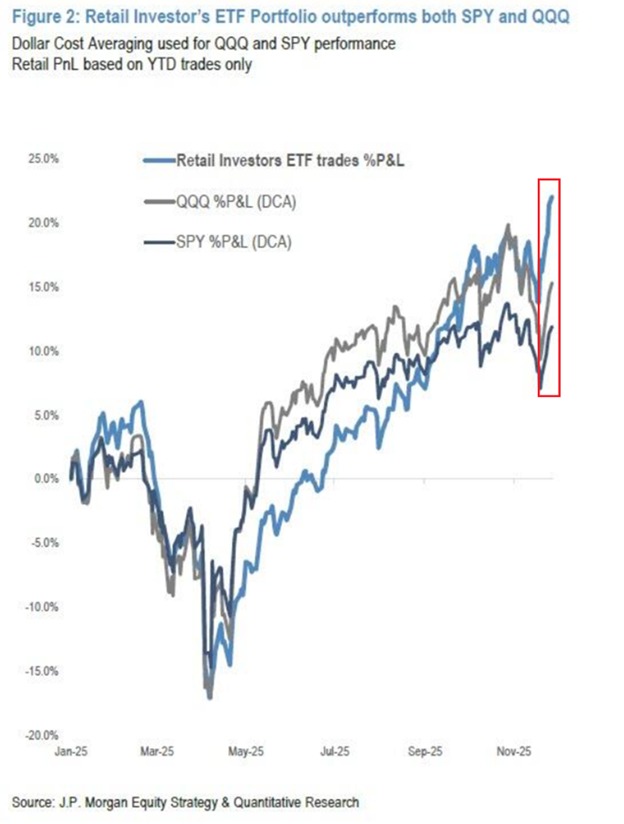
New York — In 2025, individual investors trading through exchange-traded funds (ETFs) achieved an average year-to-date return of about 23 percent, outrunning the performance of several widely watched benchmark indices. The result, observed across brokerage platforms and ETF price data, underscores how retail traders navigated a volatile year with tactical positioning and disciplined trading approaches.
Historical context: a decade of ETF-driven retail participation
The surge in retail ETF activity reflects a broader historical trend over the past decade: ETFs have become a primary vehicle for individual investors seeking diversified exposure with cost efficiency and flexibility. From early adoption of broad market index funds to more specialized sector and thematic vehicles, ETFs offer liquidity and transparency that align with many households’ ongoing efforts to build long-term portfolios while pursuing opportunistic trades in shorter timeframes. In 2025, this dynamic took on new dimensions as technology stocks, precious metals, and energy-related equities moved in tandem with shifting macro signals, fueling volatile yet potentially rewarding trading opportunities for non-professional investors.
Market dynamics in 2025: drivers behind the outperformance
Several factors contributed to the outsized performance of retail ETF baskets relative to major indices such as the S&P 500 ETF (SPY) and the Nasdaq 100 ETF (QQQ):
- Tactical sector bets: Retail traders favored technology-led rallies during late summer and fall, aligning with periods of improved sentiment around semiconductor supply chains, cloud computing spend, and AI-related upside. Concentrations in high-growth tech ETFs helped propel gains beyond broader market averages even as other segments faced headwinds.
- Precious metals as hedges and speculators: In segments of the year characterized by inflation anxiety and geopolitical uncertainty, precious metals ETFs attracted attention as hedges. Retail participants amplified exposure during price spikes, contributing to the overall performance of blended ETF portfolios that combined equities and metal futures or equivalents.
- Dollar-cost averaging effectiveness: Measured returns for some widely used benchmark indices were reported using dollar-cost averaging (DCA) strategies — a conventional method in which investors make regular, fixed investments regardless of price. This technique can moderate timing risk and smooth purchase costs over time, but the observed 23 percent performance among retail ETFs suggests that many individual investors managed to capture meaningful upside during selective market reversals.
- Market volatility and liquidity dynamics: The year’s volatility created opportunities for nimble ETF traders. Liquidity in popular ETF families allowed retail investors to rebalance quickly, rotate into underperforming segments when signals aligned, and exit positions to protect gains during sharp drawdowns. The ability to move in and out of positions with relative ease likely contributed to the observed outperformance, especially in portfolios that employed diversification across multiple ETF categories.
- Information flow and sentiment cycles: The spread of information through financial media, social platforms, and brokerage research notes influenced retail trading behavior. While this environment can amplify crowd behavior, many investors also relied on objective indicators such as price momentum, moving averages, and relative strength metrics to guide decisions. The result was a broader participation set that balanced risk and reward in a way not seen in earlier decades.
Regional and sector comparisons: how different markets aligned
- Technology versus traditional sectors: The technology sector remained a focal point for many retail portfolios. ETFs focused on software, semiconductors, and AI-enabled platforms demonstrated stronger relative performance compared with more traditional sectors like utilities or energy, which faced mixed signals from commodity price fluctuations and regulatory considerations.
- Global diversification: Some retail ETFs offered exposure to developed and emerging markets outside the United States. In several cases, international exposure helped smooth portfolio volatility, as regional cycles diverged from U.S. market rhythms. This diversification contributed to steadier returns for enthusiasts who pursued globally diversified ETF strategies.
- Commodities and inflation hedges: ETFs linked to precious metals, energy commodities, and other hard assets gained traction as hedges against inflation expectations and geopolitical tensions. While these positions can introduce higher volatility, they also provided a counterbalance to pure equity exposure in many retail portfolios.
Economic impact: implications for households and markets
- Household balance sheets and behavioral shifts: When retail investors realize outsized returns, it often reinforces a broader habit shift toward more active participation in financial markets. This can influence consumer confidence and spending patterns, particularly if gains are perceived as “skin in the game” among households. Conversely, rapid drawdowns or bursts of volatility can trigger caution and a reassessment of risk tolerance, potentially affecting savings behavior.
- Wealth effects and market liquidity: The aggregate effect of retail ETF trading on market liquidity can be meaningful, especially in liquid ETF segments. Increased retail activity may support tighter bid-ask spreads in popular funds during normal hours but could also contribute to amplified moves during periods of stress if outflows or flows reverse quickly.
- Fee competitiveness and product innovation: The success of retail ETF strategies reinforces the importance of low-cost products and accessible investment vehicles. Asset managers are incentivized to continue expanding ETF lineups with varied exposure, leverage, and thematic targeting, influencing product development across the investment management industry.
Risk factors and considerations for future years
- Concentration risk: While broad ETF diversification reduces idiosyncratic risk, concentrated positions in hot themes or a few sectors can expose portfolios to significant drawdowns if those themes reverse. Retail investors should consider position sizing and diversification to mitigate potential losses.
- Market timing and decorrelation: The apparent outperformance by retail ETFs in 2025 does not guarantee similar results in all market environments. Investors should be mindful of regime changes, shifts in monetary policy, and correlations between asset classes that can alter expected outcomes.
- Behavioral biases: Retail traders are susceptible to excitement-driven trading and confirmation bias, which can lead to overtrading or holding onto losing positions longer than prudent. Adopting a disciplined approach, including clear entry and exit criteria and ongoing risk assessment, remains essential.
Public reaction and perception: sentiment across communities
Public sentiment around 2025’s retail ETF performance ranged from optimism to cautious skepticism. For some households, the year’s results validated a long-standing belief in the democratization of investing through accessible financial products. For others, the volatility associated with high-growth tech cycles and commodity-driven moves underscored the need for financial literacy and prudent risk management. Financial educators and community forums observed a growing interest in systematic investment plans, risk budgeting, and scenario planning as ways to navigate ongoing market uncertainties.
SEO-focused context: relevance for readers seeking timely market insights
- Timely ETF performance in 2025: This year highlighted how retail investors leveraged ETFs to ride technology cycles and inflation hedges, offering a blueprint for similar market phases ahead.
- Dollar-cost averaging in practice: The use of DCA as a practical strategy within a volatile market shows how ordinary investors can participate in market rebounds without attempting to time the exact bottom.
- Sector rotation and opportunity areas: The emphasis on technology and precious metals reflects broader rotation dynamics, which can inform readers about potential thematic opportunities in the near term.
- Risk management for retail traders: The year’s experience reinforces the importance of diversification, position sizing, and disciplined exit strategies to protect gains in unpredictable markets.
- Global diversification and regional variation: Readers should consider how international exposure interacts with domestic market conditions to shape portfolio resilience.
Concluding perspective: resilience and adaptability in a shifting landscape
The 2025 year-to-date performance of retail ETFs demonstrates a noteworthy shift in how individual investors participate in financial markets. While benchmark indices posted solid returns, retail portfolios that actively rotated into favored sectors and hedges capitalized on market swings with a disciplined, diversified approach. The trend reflects a broader maturation of retail investing, characterized by greater access to sophisticated instruments, clearer pricing, and a willingness to incorporate both growth and inflation-hedging assets into a single, cohesive strategy. As market conditions evolve, the enduring lesson from 2025 may be the value of adaptability: combining diversified exposure with tactical responses to changing economic signals, while maintaining a strong emphasis on risk management and cost efficiency.