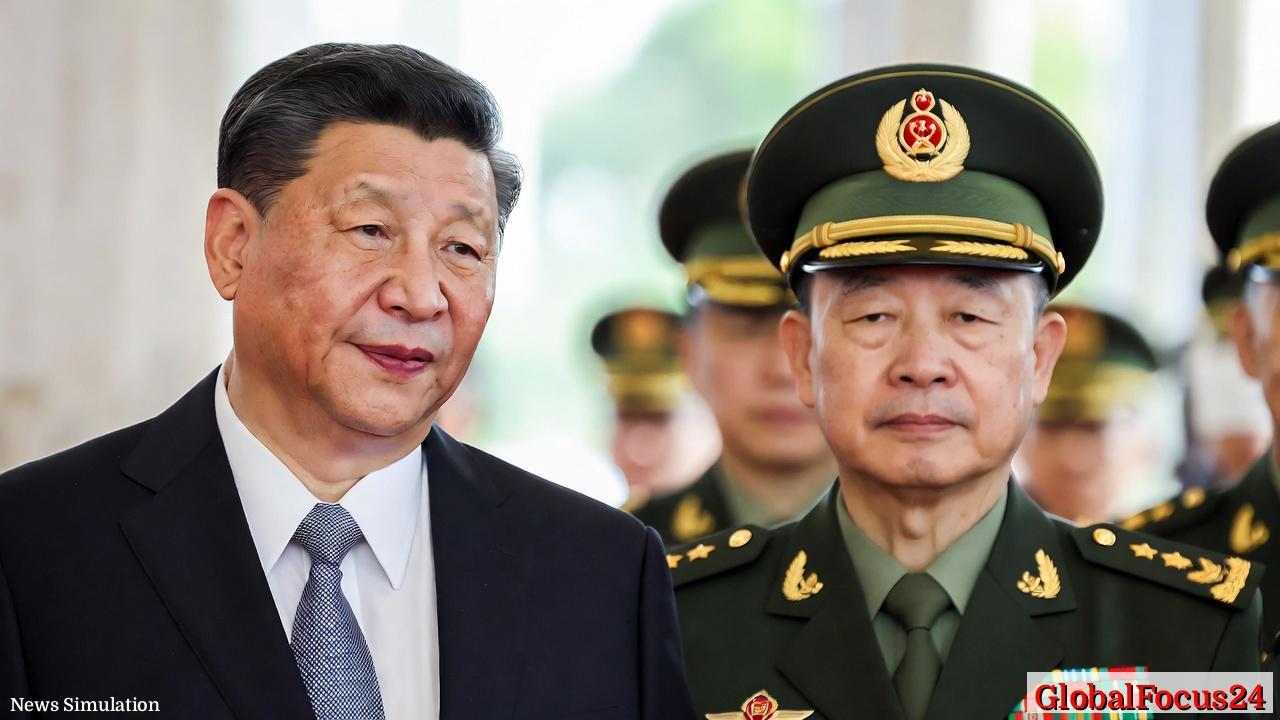
Xi Jinping Fires Top General as Corruption Allegations Roil China’s Military Commission
Beijing — In a startling move that signals continued tightening of party control over the armed forces, President Xi Jinping has dismissed General Zhang Youxia, the highest-ranking uniformed officer in the Chinese military, amid allegations of serious violations of party discipline and laws. The extraordinary decision, announced by state media and government channels, underscores the enduring priority of centralized loyalty within the People’s Liberation Army (PLA) and the Communist Party of China (CPC) as Xi seeks to reinforce governance norms at the pinnacle of military power.
Historical Context: The Party’s Long Arm Over the Military
China’s centuries-long centralized governance tradition places the CPC at the center of power, with the military operating under strict party leadership. Since the founding era, the party has maintained the principle that political control must precede military capability. The Central Military Commission (CMC), chaired by Xi Jinping since 2013, has functioned as the ultimate executive body for the PLA, balancing strategic modernization with political oversight. Zhang Youxia, who served as the first-ranking Vice Chairman of the CMC, has been a prominent figure in this structure, overseeing modernization programs, doctrine development, and the PLA’s transition toward a more modern, professional force.
Analysts note that Xi’s leadership style has consistently prioritized loyalty, anti-corruption campaigns, and structural reforms designed to align military objectives with party goals. In this context, the dismissal of a senior general on corruption and discipline grounds is not merely an internal ethics issue; it is a high-stakes signal about the boundaries of influence, accountability, and the party’s readiness to act decisively when colleagues are implicated.
Economic and Strategic Implications: A Ripple Across Defense and Supply Chains
The immediate economic impact of a leadership purge at the top echelons of the PLA can be felt in several domains:
- Defense procurement and project direction: Zhang Youxia has been associated with large-scale modernization initiatives, including advanced weapons platforms, cyber and space capabilities, and the broader push toward a more capable force. Dismissals at this level can alter project timelines, stall or recalibrate procurement cycles, and prompt a reassessment of capital expenditures across armaments programs.
- Military-industrial ecosystem: The PLA’s modernization relies on a dense network of state-backed defense contractors, international suppliers, and domestic innovation hubs. Leadership changes may influence contract awards, risk appetites, and supplier relationships, with downstream effects on regional suppliers and export-oriented sectors that feed into defense-related industries.
- Financial markets and policy signaling: While China’s defense budget operates within a broader fiscal framework, the perception of intensified anti-corruption enforcement and centralized control can affect investor sentiment, particularly among firms engaged in government contracts, defense technology, and infrastructure linked to security objectives.
- Regional security dynamics: The most immediate regional implications arise in the context of China’s strategic posture in the Asia-Pacific. A clarified chain of command and demonstrable accountability can affect how neighboring states perceive deterrence, alliance considerations, and military transparency. In countries with security collaborations with China, the political messaging surrounding leadership accountability may influence defense planning and risk assessments.
Regional Comparisons: How Other Powers Manage Military Oversight
To understand the significance of Zhang Youxia’s dismissal, it’s helpful to compare approaches to civil-military relations and anti-corruption governance in other major powers:
- United States: Civil-military relations balance professionalization with civilian oversight. While corruption investigations at high levels are rare, the system emphasizes independent investigations, accountability, and transparency within a framework of democratic governance. Leadership changes in the defense leadership often trigger reevaluation of strategic priorities but occur within a system of checks and balances that differ from one-party governance.
- Russia: Civil-military relations are tightly controlled by the Kremlin, with a history of leadership reshuffles around security agencies and military command. Anti-corruption efforts exist but often intersect with political signaling and consolidation of power, sometimes amid regional tensions and strategic priorities.
- India: Democratic governance with active parliamentary oversight ensures civilian-led defense policy discussions. Corruption probes and leadership changes can affect procurement and interoperability within a diverse ecosystem of public sector units and private defense vendors.
- EU member states: National defense ministries operate with a mix of civilian control and military advisory structures. Anti-corruption initiatives are embedded in public procurement rules and governance standards, with variations across member states in how quickly leadership changes occur following allegations.
What This Means for the PLA’s Modernization Drive
The PLA’s ongoing modernization program seeks to transform the force into a more agile, technologically adept, and globally capable military. Leadership transitions at the top level carry both symbolic and practical weight:
- Symbolic message: The party’s insistence on absolute leadership over the armed forces is reinforced. Public communications from Beijing emphasize discipline, loyalty, and the central role of the CPC in national security.
- Practical governance: A leadership transition at the CMC level can prompt reviews of training regimes, command-and-control structures, and oversight mechanisms. It may accelerate reforms aimed at tightening party supervision of military operations, readiness, and innovation pipelines.
- Talent and morale: While such actions can create short-term uncertainty within the ranks, they can also bolster confidence in a system that publicly addresses corruption and governance concerns. The long-term effect depends on the transparency and consistency of follow-up measures, including investigations, disciplinary actions, and policy reforms.
Public Reaction: Broad Impacts on Perception and Confidence
Public sentiment around a high-profile dismissal of a top general often reflects a mix of concern, reassurance, and rationalization:
- Domestic audience: Party messaging typically frames such actions as necessary to preserve unity and integrity within the military. Supporters may interpret the move as evidence of effective anti-corruption governance, strengthening belief in Xi’s leadership.
- International observers: Global defense analysts and policymakers closely monitor leadership changes for signals about strategic priorities, readiness to confront systemic risks, and potential shifts in regional posture. The framing of the incident—centered on discipline, accountability, and loyalty—can influence assessments of China’s future military behavior.
- Military personnel: Within the PLA, leadership changes can affect morale and trust. Clear communication about the rationale, scope, and next steps helps maintain stability, while ambiguity may lead to cautious behavior or speculation about succession and policy direction.
Key Details and Clarifications
- Scope of allegations: The charges involve serious violations of party discipline and laws, with accusations including corruption, failing to rein in close associates and family members, and not reporting issues promptly to party leadership.
- Other officials: General Liu Zhenli, a senior military officer, is reported to be under investigation for similar violations, signaling a broader probe within the upper echelons of the PLA.
- Structural implications: The move highlights the centrality of the CPC’s leadership in military affairs and the ongoing emphasis on ensuring loyalty and integrity across the armed forces.
- Control mechanisms: The CPC’s governance framework contends with the dual task of maintaining a capable, modern military while ensuring steadfast party control, particularly over critical domains such as strategic deterrence, cyber capabilities, and space-based assets.
Implications for International Security and Policy Agendas
The firing of a top general intersects with wider questions about regional security, alliance dynamics, and strategic risk management:
- Deterrence and readiness: By reinforcing party oversight, Beijing may aim to ensure that strategic modernization proceeds with a disciplined, coordinated approach. This could affect how rival powers gauge China’s willingness to pursue aggressive posture or engage in risk-taking in contested theaters.
- Export controls and technology leakage: Heightened scrutiny of officials could influence collaboration with foreign researchers and suppliers in sensitive defense sectors. Governments and firms may reassess vetting procedures and supply chain security to mitigate perceived risks.
- Crisis management and escalation: In periods of heightened tension, predictable and transparent command structures matter. The present developments stress the importance of robust crisis management frameworks within China, which in turn affects regional crisis stability calculations.
Historical Echoes: A Pattern of Anti-Corruption within One-Party States
China’s anti-corruption campaigns have a long history, often intertwined with leadership consolidation and policy realignment. Past episodes have sometimes targeted figures perceived as threats to centralized authority or potential rivals within the ranks. Analysts note that while such actions can deter misuse of power, they can also introduce temporary volatility as institutions adapt to new leadership dynamics. The balance China seeks is to maintain military efficacy while ensuring political fidelity to the CPC’s core mission.
Conclusion: A Pivotal Moment for China’s Military Governance
The dismissal of General Zhang Youxia marks a pivotal moment in China’s ongoing effort to fortify party control over the armed forces while preserving a path toward modernization. As Xi Jinping presides over a military that must operate with cutting-edge technology, strategic resilience, and disciplined political alignment, leadership changes at the top underscore the CPC’s enduring priority: a unified, loyal, and accountable military capable of executing the party’s strategic vision. In the coming weeks and months, observers will watch for follow-up measures—investigations, reforms to oversight structures, and policy adjustments—that illuminate how Beijing intends to reconcile rapid modernization with unyielding political discipline. The global security landscape will respond in kind, adjusting analyses of China’s strategic posture in light of this defining moment.