Wild Mammal Trade Is a Global Pathway for Human Disease, New Analysis Finds
Wild mammal trade—spanning food markets, fur and leather supply chains, biomedical research, and traditional medicines—may be acting as a persistent bridge between wildlife pathogens and human populations, according to a growing body of scientific evidence. The central concern is not abstract: a large share of traded mammal species appear to carry pathogens already capable of causing disease in people, and the risk may increase as animals remain in commerce over time.
In recent decades, outbreaks have repeatedly underscored how quickly a pathogen can move from remote ecosystems into dense communities. HIV emerged through complex zoonotic pathways, the 2014 West African Ebola epidemic accelerated after viral exposure crossed into human contact networks, and COVID-19 spread globally after a spillover event followed by rapid human-to-human transmission. While each episode has its own drivers, researchers have increasingly focused on the trade dynamics that bring people into frequent, close and often uncontrolled contact with wildlife.
What makes the current findings striking is their breadth. Rather than examining only a handful of high-profile pathogens, the analysis focuses on the prevalence of pathogens shared between traded mammals and humans, drawing on decades of wildlife trade records and pathogen-host knowledge. The results suggest that the animal trade network itself—how species move, where they are sold, and how often they are handled—can shape which pathogens gain opportunities to spread.
How wildlife commerce creates contact pathways
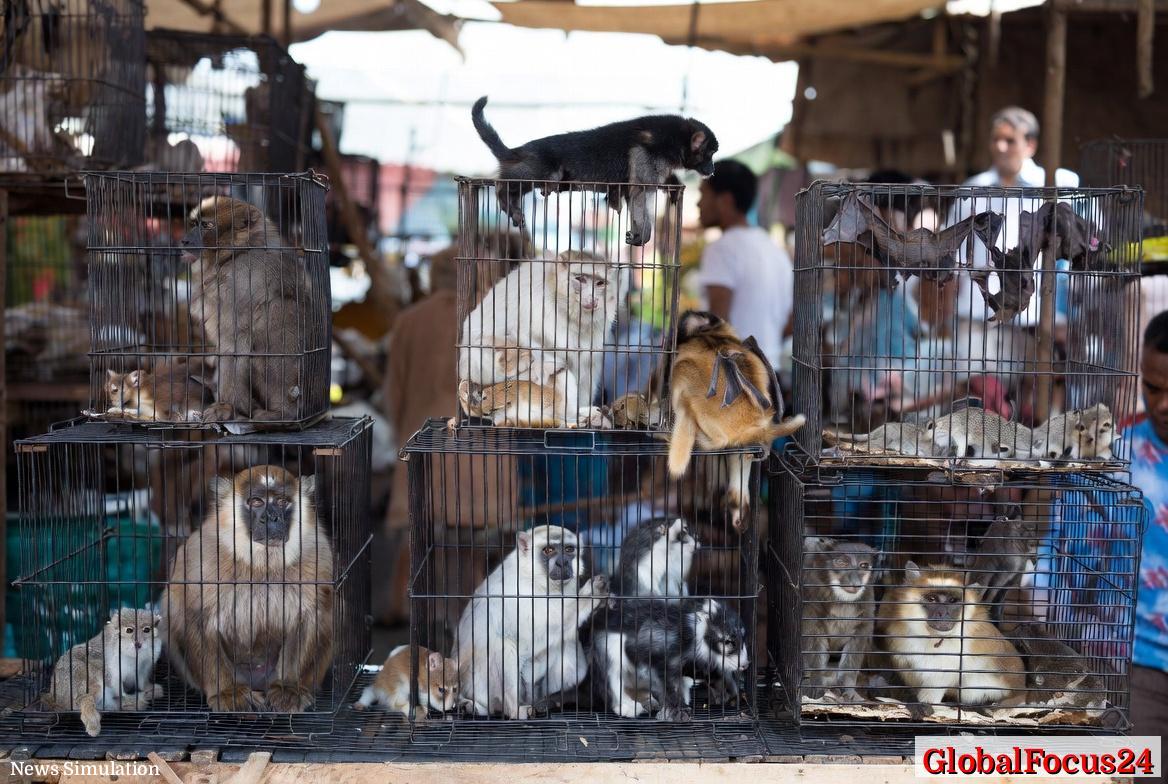
Wild mammal trade brings people and pathogens together in ways that differ from most wildlife-human interactions. Market settings concentrate multiple animal species in confined spaces, often under conditions that blur the boundaries between food preparation, veterinary processing, and informal slaughter. Animals can be stressed, transported long distances, and handled repeatedly, which can increase the shedding of infectious agents.
Live-animal trade, in particular, raises the odds of transmission. When animals arrive alive and are sold alive, the human-wildlife interface becomes more direct: handlers, buyers, and slaughterers come into contact with blood, bodily fluids, and respiratory secretions. Even where formal regulations exist, enforcement can be inconsistent, and informal market networks may operate outside health and biosecurity oversight.
In contrast, trade in animal products can still carry risks—pathogens may persist in tissues or contaminated surfaces—but the chain of contact is generally shorter and less frequent than with live specimens. The distinction matters for risk modeling because it changes the number of human exposures a pathogen experiences as it moves through the supply chain.
Scale of shared pathogens in traded mammals
The analysis indicates that nearly half of wild mammal species traded for food, fur, research, or traditional medicines carry at least one pathogen known to cause disease in humans. Specifically, more than 40 percent of traded mammal species share one or more pathogens with humans, compared with only about 6 percent of non-traded mammals. That gap suggests that the subset of mammals entering commerce may be disproportionately represented among species with zoonotic potential.
The figures do not imply that every traded animal will infect people, nor that every outbreak is caused by wildlife trade alone. Instead, the presence of shared pathogens means the biological ingredients for spillover—host-pathogen compatibility—are more common within traded species than in wildlife populations outside trade.
Researchers also report that, among traded mammals, the risk appears to deepen over time. On average, a species shares an additional pathogen with humans for every decade it remains present in wildlife trade records. This trend can reflect the cumulative effect of exposure and research attention: species repeatedly traded may be studied more thoroughly, may be involved in more handling opportunities, and may enter new market nodes that increase human contact.
Historical context: why zoonotic risk is rising
For most of human history, zoonotic spillovers occurred through episodic contact—hunting, habitat overlap, and localized food practices. The modern era has expanded both the frequency and the scale of those interactions. Several long-running forces contribute.
First, urbanization and population growth have increased demand for animal protein and exotic products, creating steady market pull. Second, global transport networks have made it possible for wildlife from distant regions to reach consumers quickly, compressing the time window during which pathogens can circulate between environments. Third, biodiversity pressures and land-use change can push wildlife toward human settlements, raising baseline exposure even before animals enter trade.
Wildlife trade adds another layer by reorganizing ecological contact into predictable, repeatable supply chains. Where spillovers used to be rare and localized, trade can create consistent opportunities for cross-species transmission. That shift helps explain why the world has repeatedly seen new or reemerging diseases that appear in clusters connected to animal contact events, including hunting, wet market exposure, and handling of wildlife for consumption.
Economic impact: public health costs and supply-chain disruptions
Zoonotic diseases carry a double economic burden: direct healthcare expenses and broader knock-on effects on labor, mobility, and trade. Even when outbreaks remain geographically contained, the uncertainty alone can trigger substantial market disruptions. Governments may impose travel restrictions; businesses may reduce risk exposure; supply chains may pause to prevent contamination or staffing shortages. Over time, repeated outbreaks erode public confidence and increase the cost of preparedness.
Wildlife trade itself also has economic dimensions beyond immediate livelihoods. Many households and small enterprises rely on wildlife markets for income, whether through harvesting, transport, retail, or downstream services such as processing and distribution. Changing regulation without alternatives can harm vulnerable workers. At the same time, failing to regulate carries hidden costs: outbreaks impose losses on far wider segments of society than those engaged in wildlife commerce.
From a risk-management perspective, investments that reduce disease transmission—such as traceability, market health controls, and limits on high-risk species—can protect both public health and economic stability. The urgency is magnified by the long lead times typical in wildlife supply chains. Once pathogens establish new footholds in human networks, recovery can take months or years and may require costly vaccines, therapeutics, and sustained public communication.
Regional comparisons: patterns across different ecosystems
Zoonotic risk does not occur evenly across regions, because wildlife diversity, trade routes, and human settlement patterns differ. Yet the underlying mechanism—pathogens moving through contact networks between animals and people—appears in multiple settings.
In parts of Central and West Africa, dense forest ecosystems, hunting traditions, and cross-border movement have historically shaped wildlife availability for local and regional markets. When economic pressures and infrastructure constraints intersect, animals may be handled in ways that maximize exposure, especially where health monitoring is limited. The Ebola outbreak in 2014 remains a reference point for how quickly a spillover-linked disease can escalate and how regional health systems can be strained.
In Southeast Asia and parts of South Asia, rapid growth in demand for wildlife-derived goods and the prominence of wet market infrastructure have also contributed to close human-wildlife contact. Climate, agriculture, and habitat conversion can bring animals into closer proximity with farms and urban peripheries, increasing baseline exposure. Market concentration then turns that exposure into a high-contact event.
In regions with a strong biomedical research sector, trade or transport of mammals for scientific use can also influence risk dynamics, depending on containment protocols and animal handling standards. Research-related transfers typically operate under more formal oversight than informal markets, but the scientific findings suggest that risk is not exclusively a function of illegality; it can also be embedded in regulated channels when biosecurity is insufficient or when animals are sourced from high-exposure contexts.
International comparison also matters because wildlife trade networks rarely respect national borders. Animals, meat, fur products, and traditional medicine ingredients can move through multi-country routes, meaning that disease risk management must be coordinated. A single weak point in enforcement or monitoring can undermine efforts elsewhere, particularly when supply chains are opaque.
Live trade versus products: where the risk concentrates
A key practical implication is the difference between trading live animals and trading animal products. Live trade increases exposure events by placing living hosts directly in human contact zones—at collection, transport, holding, sale, and sometimes slaughter. Those exposure events provide more chances for pathogens to cross species boundaries.
Animal products can still transmit pathogens, especially if they involve fresh tissues, insufficient cooking, or contamination during processing. However, the stepwise transition from wildlife to human food or materials typically introduces more opportunities for pathogen inactivation, separation, or detection through routine food safety measures. Where those measures are absent—such as informal processing or unregulated retail—risk can rise again.
This makes enforcement and health controls particularly important in markets that sell live mammals or that handle carcasses in ways that prevent hygienic separation. Risk-focused interventions can therefore prioritize high-contact points: holding cages, transport containers, butchering surfaces, and the training and protective equipment of handlers.
Why illegal trade is not the only story
Wildlife trade is often described in terms of illegality, and enforcement failures do play a role in many regions. Yet the findings emphasize that illegal trade appears to contribute only modestly relative to the overall patterns of shared pathogens. That point matters because it broadens the policy conversation.
If the primary driver were limited to black-market trafficking, then cracking down on the illegal fraction might reduce risk quickly. But when regulated trade channels, research sourcing, and legally traded food or fur contribute substantially to the pool of traded mammal species, the solution must extend beyond policing.
It also explains why risk-reduction approaches may need to target species selection, biosecurity standards, and market operations in both formal and informal contexts. The presence of pathogens in traded mammals indicates that the biological risk base exists regardless of legal status. Illegal activity can intensify the problem by increasing contact frequency and reducing transparency, but it does not appear to be the sole determinant.
Modeling trade interactions and spillover potential
The analysis incorporates evolutionary histories, proximity to human communities, and the roles of mammals in food systems and scientific research. These elements shape the plausibility of spillover by estimating how likely particular hosts are to harbor human-compatible pathogens and how often humans encounter them.
Evolutionary proximity matters because closely related organisms may share physiological features that facilitate pathogen adaptation. Proximity to human communities matters because it increases the baseline frequency of contacts, even before trade begins. Food use matters because ingestion or handling can generate exposure routes, and scientific research matters because it can create controlled but still direct animal-to-human operational interfaces.
Trade interactions also heighten risk by repeatedly bringing mammals into new contact nodes—new handlers, new markets, and new geographies. Each node creates opportunities for pathogens to persist, amplify, or encounter new human immune environments.
Implications for future regulation and prevention
Designing effective trade regulations requires moving beyond blanket bans toward targeted risk reduction. The findings point to a strategy grounded in species-level and pathway-level decisions.
Potential directions include:
- Restricting or phasing out trade in mammal species with high known overlap of human pathogens.
- Tightening biosecurity and hygienic handling requirements at holding and processing stages, especially for live trade.
- Strengthening traceability and surveillance so that health authorities can respond quickly to irregularities.
- Enhancing risk assessment for research supply chains, including pathogen screening and secure transport protocols.
- Coordinating enforcement across borders to prevent substitution into less monitored routes.
Because the risk appears to grow with continued presence in trade records, delaying action could mean expanding the pool of shared pathogens over time. That makes the policy window narrow: preventative steps taken early can reduce the probability that pathogens find repeated opportunities to cross into human populations.
Public reaction to zoonotic threats often surges after high-visibility outbreaks, but the risk is structural and persistent. Markets, supply chains, and sourcing practices do not reset simply because public attention shifts. The challenge for regulators, health agencies, and market stakeholders is to reduce contact-based transmission without undermining livelihoods or pushing trade further underground.
A practical urgency: reducing exposure now
Wild mammal trade sits at the intersection of livelihoods, culture, and public health. The analysis suggesting that traded mammals account for a disproportionately high share of human-shared pathogens reframes the issue as a preventable disease risk pathway rather than an inevitable consequence of wildlife diversity.
The most urgent takeaway is that the mechanism is already in motion. Animals continue to be caught, transported, housed, handled, and sold or studied. Each step can become a probability engine for pathogen exposure, and the evidence indicates that traded mammals—across food, fur, research, and traditional medicine—are more likely than non-traded mammals to carry pathogens capable of affecting humans.
Reducing future pandemic risk therefore depends on designing trade regulations that reflect biological reality and human contact patterns. When policy aligns with pathogen-host data, market operations, and regional supply-chain behavior, prevention becomes more than a slogan. It becomes a measurable reduction in the opportunities pathogens have to cross from wildlife into people.