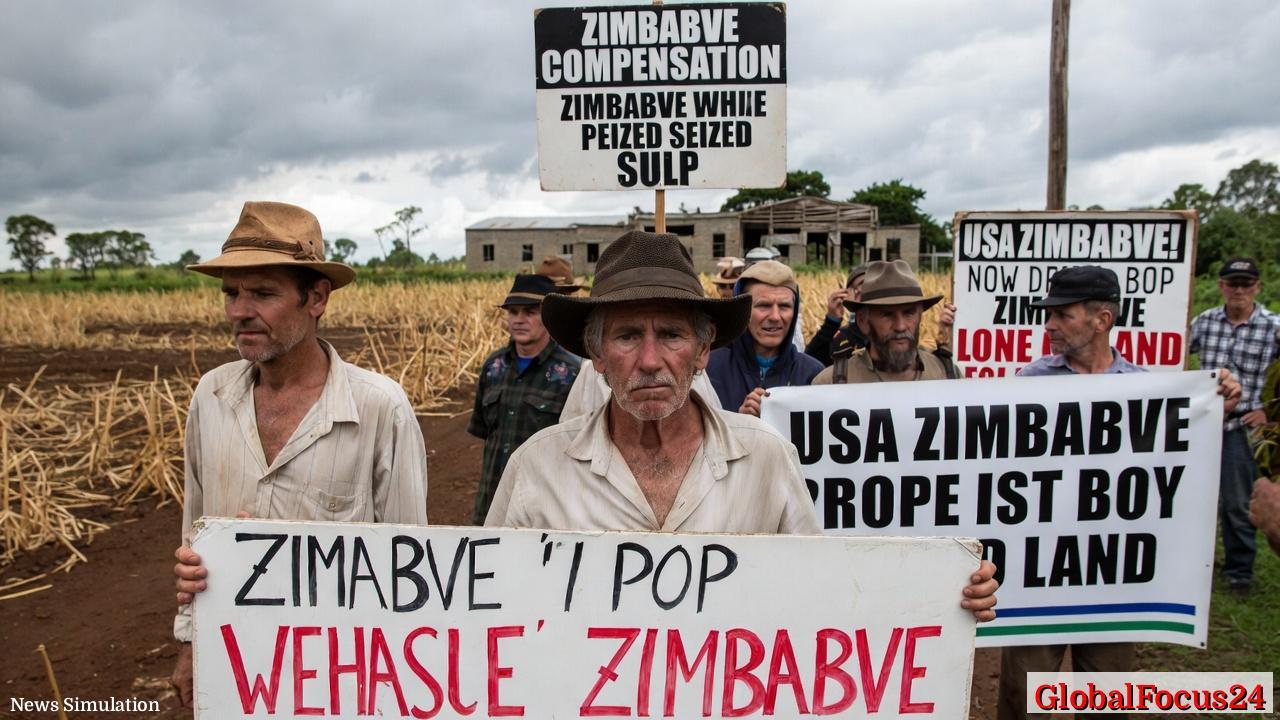
Desperate Zimbabwean Farmers Pin Hopes on U.S. Help for $3.5 Billion Compensation Deal
Decades After Seizures, A Lingering Wound
More than two decades after Zimbabwe’s controversial land reform program reshaped its agricultural landscape, the country’s dispossessed white farmers are rallying behind a new push for long-promised compensation. The initiative, driven by a Washington-based lobbying effort with ties to former U.S. President Donald Trump’s circle, seeks to secure billions in unpaid reparations from the Zimbabwean government — a pursuit fraught with economic, diplomatic, and generational urgency.
At the heart of the dispute is a 2020 agreement in which Harare pledged to pay $3.5 billion in compensation to farmers for infrastructure and improvements on roughly 4,500 commercial farms seized in the early 2000s under former president Robert Mugabe’s “fast-track” land reform program. The plan was meant to redress colonial-era inequities by redistributing land to landless Black Zimbabweans, but its execution proved chaotic and devastating to the national economy.
The Land Reform Legacy
When the farms were taken, they accounted for nearly half of Zimbabwe’s most productive land. In the years that followed, the country — once known as the breadbasket of southern Africa — plunged into economic turmoil. Agricultural output collapsed, foreign investment shrank, inflation soared into the billions, and Western nations imposed sanctions.
By the time Mugabe left office in 2017, Zimbabwe’s agricultural exports had dwindled to a fraction of their pre-2000 levels. The once-prosperous towns of Mashonaland’s farming belt saw equipment rusting in empty fields and schools closing as families fled abroad. The ripple effects were felt across the region: neighboring South Africa and Zambia gained market share in commercial farming, while Zimbabwe’s economy survived largely on informal trade and remittances.
President Emmerson Mnangagwa, who came to power after Mugabe’s resignation, pledged to repair Zimbabwe’s strained international image and restore confidence among investors. Central to that promise was honoring the $3.5 billion compensation agreement — a landmark effort meant to close a painful chapter in Zimbabwe’s history.
A Promise Deferred
However, paying that bill has proven nearly impossible. With a national debt exceeding $23 billion and a chronic shortage of foreign currency, Zimbabwe lacks the fiscal space to meet its full obligation. In 2023, the government proposed a compromise deal: farmers would receive an immediate cash payment covering 1 percent of their total compensation, while the balance would be securitized in 10-year treasury bonds earning 2 percent interest, paid semiannually.
The offer was met with skepticism. Only about 17 percent of the affected farmers — roughly 700 of the 4,500 — agreed to the terms. Many cited doubts about the government’s ability to service the bonds and frustration that at 2 percent interest, the arrangement offered little protection against inflation or currency volatility.
For aging farmers, the issue is also deeply personal. Many are now in their seventies or eighties, uncertain whether they will live to see even partial restitution. “What good are ten-year bonds to men who may not be here in ten years?” one former farm owner said in a recent interview. “We are not asking for charity. We are asking for Zimbabwe to keep its word.”
The Washington Strategy
In late 2025, a private lobbying group in Washington took up the farmers’ cause, launching an effort to persuade U.S. lawmakers to press for full payment of the $3.5 billion. The group, which has historic ties to officials who served in the Trump administration, argues that resolving the compensation dispute is pivotal for restoring Zimbabwe’s access to international credit and for stabilizing its agricultural sector.
Their campaign aligns with ongoing debates in Congress over the Zimbabwe Democracy and Economic Recovery Act (ZDERA), a 2001 law that restricts international lending and debt relief to Zimbabwe until it meets certain democratic and economic conditions. A bill introduced in late 2024 proposes repealing that statute, but includes a critical condition: that Zimbabwe must settle the farmers’ compensation within 12 months of enactment.
Under this plan, repayment could unlock new financing from institutions like the World Bank and International Monetary Fund — both of which have withheld direct lending to Zimbabwe for nearly two decades due to arrears and sanctions.
Economic Stakes and Regional Comparisons
The battle over compensation is not merely symbolic. Agriculture once accounted for up to 20 percent of Zimbabwe’s GDP and employed more than 60 percent of the population. The sector’s collapse reverberated throughout southern Africa, disrupting food supply chains and altering trade patterns.
Neighboring countries took divergent approaches to land redistribution. Namibia pursued a slower, market-based system that purchased land from willing sellers, while South Africa has struggled with its own land reform debates, balancing economic stability with social justice. In contrast, Zimbabwe’s sudden expropriation created a vacuum in expertise, as many displaced farmers relocated to Zambia or Mozambique, establishing successful commercial operations there.
Those countries became net food exporters while Zimbabwe — once renowned for its tobacco, maize, and wheat — now relies heavily on imports. A revitalized agricultural sector remains essential to Mnangagwa’s economic recovery plan, but that recovery depends on resolving outstanding debts and rebuilding investor confidence.
The Lithium Lever
Some farmers and analysts believe Zimbabwe’s vast mineral wealth could provide an avenue for resolution. The country holds some of the world’s largest reserves of lithium and rare-earth minerals — critical components in batteries and green technologies. With global demand surging, particularly from the United States and China, Zimbabwe’s mineral deposits could become a bargaining chip in future negotiations.
Supporters of U.S. involvement argue that lithium development offers a mutual benefit: Washington gains a stable source of strategic minerals, while Harare secures economic relief that enables repayment of farmer compensation. “This is about creating leverage, not conflict,” said one lobbyist connected to the U.S. campaign. “If Zimbabwe can demonstrate progress on compensation, Western financing and private capital will follow.”
Divided Reactions Among Farmers
Despite mounting international interest, the former farming community in Zimbabwe remains divided. The Commercial Farmers Union (CFU), which represents many of the affected landowners, has distanced itself from the lobbying effort, warning that external pressure could harden Harare’s stance or jeopardize already delicate debt negotiations.
Others dismiss such caution as misguided. Younger farmers, especially those who returned from abroad to lease land from Black Zimbabwean owners, say international mediation is the only realistic path forward. They argue that Mnangagwa’s government, weakened by inflation and limited reserves, cannot meet its obligations without global financial assistance.
“I want to farm here, not in Australia or the UK,” said a 40-year-old farmer who now operates as a tenant on what used to be his family’s tobacco estate. “But we need a settlement that’s fair and credible. Otherwise, no young people will stay.”
Harare’s Tightrope
For Mnangagwa’s administration, the challenge lies in balancing political legitimacy with fiscal pragmatism. Many of the beneficiaries of land redistribution remain loyal supporters of the ruling ZANU-PF party, and any move perceived as favoring former white landowners risks political backlash. Yet without honoring the 2020 compensation agreement, Zimbabwe’s prospects for international re-engagement appear dim.
Officials in Harare have signaled commitment to the deal, insisting that payments will proceed despite delays. The government has already issued partial treasury notes to some claimants and established a joint resource mobilization committee that includes farmer representatives. Still, progress remains slow, and investors remain wary.
The Road Ahead
The coming year will likely determine whether Zimbabwe can finally resolve the compensation saga that has haunted its post-independence history. If Washington’s involvement proves successful, it could open the door to fresh investment, debt forgiveness, and renewed agricultural growth. Failure, however, risks deepening the cycle of mistrust and leaving another generation of farmers — black and white alike — trapped in economic uncertainty.
Across the farmlands of Mashonaland and Matabeleland, hope flickers in small but telling ways. In some districts, displaced farmers work side by side with new landholders, sharing irrigation systems or jointly cultivating crops. Others, too old to start again, continue to wait for justice that has been promised but never delivered.
For Zimbabwe, the resolution of this long-standing dispute is more than a matter of money. It is a test of whether the nation can reconcile its turbulent past with the promise of a more stable future — and whether long-withheld trust can finally be restored between a country and those who once fed it.