)
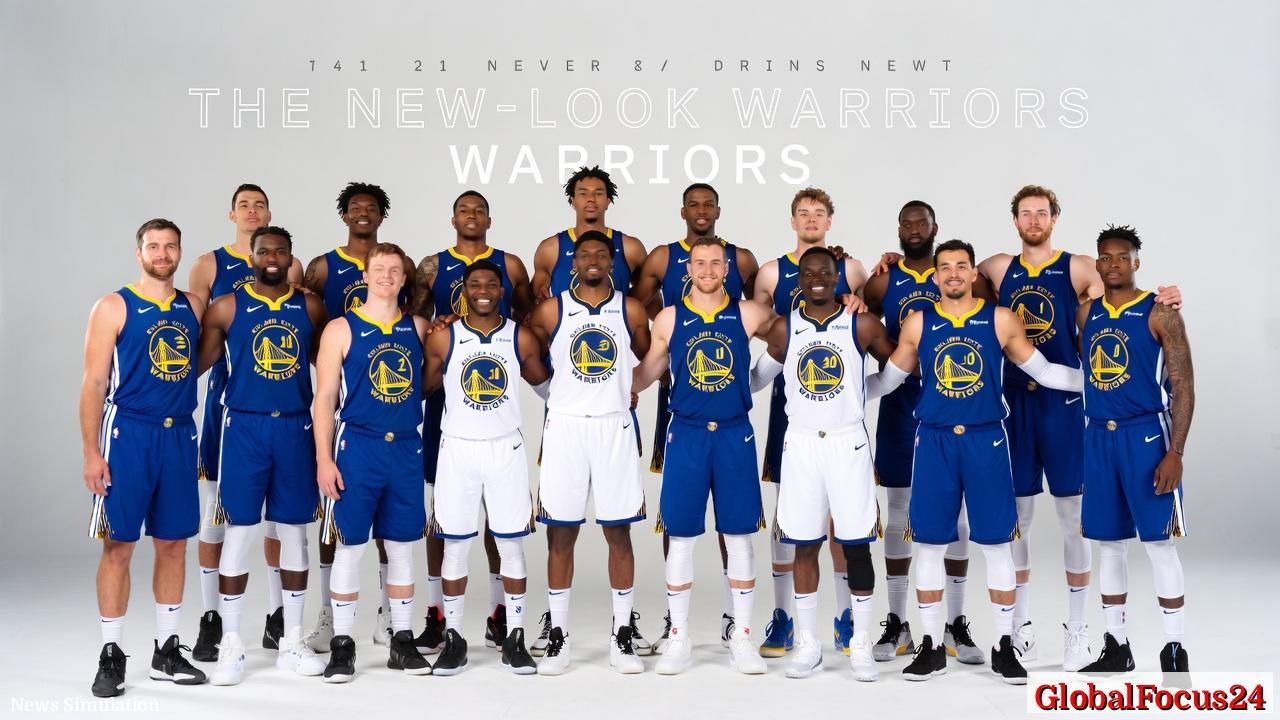
The New Look Warriors: A Seamless Rise Across the NBA Landscape
In recent seasons, the term “new look” has become shorthand not just for a refreshed lineup, but for a broader shift in how a storied franchise approaches talent, strategy, and community engagement. The Warriors, long associated with a homegrown core and an era-defining style, have once again recalibrated their approach, blending veteran savvy with fresh depth to sustain competitiveness in a demanding Western Conference. This piece traces the evolution, evaluates the economic and regional implications, and situates the team within a broader historical arc that stretches from golden-era dynasties to today’s data-driven front offices.
Historical context: from dynasty to retooling The NBA’s late-2010s era saw the Warriors ascend from mid-market stalwarts to a global brand, powered by a core of homegrown stars and a revolutionary style of spacing, pace, and shooting. The franchise’s ascent was not merely about talent; it was built on a culture of development, analytics-informed decision-making, and a willingness to trade velocity for versatility. As the league evolved, so did the front office’s playbook, incorporating newer analytics, load management considerations, and a broader scouting network to identify undervalued wings and big-man fits. The current retooling—characterized by a mix of familiar faces and newly minted role players—continues that tradition: iterative evolution rather than a wholesale rebuild, anchored by a championship mindset and a disciplined, data-informed approach to player development and game plan execution.
From a regional lens, the Warriors’ story has always been inseparable from the San Francisco Bay Area’s economic and cultural ecosystem. The franchise has leveraged the region’s tech sector, media attention, and diverse fan base to expand its influence beyond the hardwood. This proximity to innovation corridors has shaped every major strategic decision, from sport-science partnerships to modern training facilities, enabling the team to translate conditional advantages into tangible on-court performance. The result is a franchise that not only competes for championships but also models how elite sports franchises can integrate community engagement with high-performance operations.
Economic impact: local and regional reverberations A franchise of the Warriors’ scale contributes to a broader economic ecosystem that extends well beyond game nights. Ticket sales, premium experiences, and media rights payments ripple through related sectors, supporting jobs at arena operations, hospitality partners, and local businesses. The team’s streaming and media distribution arrangements also feed into a regional broadcasting landscape that benefits advertisers and content creators seeking proximity to one of the league’s marquee brands. While the core revenue streams are well-documented, the incremental impact of a stable, high-performing team on local economic activity—hotels, restaurants, transportation, and retail—has been the subject of incremental analyses by local economic research centers and industry groups.
Beyond direct spending, the Warriors’ strategic choices influence regional labor markets. A successful season can bolster demand for event staff, training personnel, and scouts in the surrounding area, while sustained competitiveness supports long-term employment in venues and allied sectors. The club’s community initiatives, including youth programs and charitable partnerships, also produce measurable social returns, contributing to the region’s human capital development and civic engagement. These activities align with broader economic impact frameworks that consider direct, indirect, and induced effects—elements that local policymakers often weigh when assessing the value of professional sports franchises to regional vitality.
Comparisons with peer franchises: consistency and adaptability In evaluating the Warriors against peers, several dimensions stand out: consistency of performance, adaptability to league-wide shifts, and ability to monetize off-court assets. Historically, franchises that blend consistent on-court success with diversified revenue strategies tend to outperform their peers in long-run stability. The Warriors’ current phase, marked by a hybrid roster and a refreshed supporting cast, mirrors a broader trend in the NBA toward flexible, multi-season planning. Compared with teams that lean heavily on a single veteran core or a rapid, high-variance rebuild, the Warriors’ approach emphasizes sustainable development, scalable salary structures, and strategic use of mid-level and veteran minimum contracts to sustain roster depth without sacrificing cap flexibility.
Regionally, the team’s footprint overlaps with other major markets in California and the broader Pacific Division, creating competitive pressure for top-tier players and attracting sponsorships from a dense corporate landscape. The economic gravity of a successful team in the region can influence player mobility, franchise valuations, and fan engagement metrics across multiple markets, underscoring how the Warriors’ trajectory resonates beyond Oakland and San Francisco. In this sense, the club’s evolution reflects a continental pattern: teams that harmonize on-court excellence with strong regional ties tend to secure enduring relevance in a rapidly changing sports economy.
Strategic pillars behind the new look
- Depth and versatility: The emphasis on multi-positional players who can guard multiple positions and switch across lineups helps mitigate matchups that once exposed weaknesses. This approach increases lineup flexibility, enabling more dynamic defensive schemes and faster transitions on offense.
- Development-driven acquisitions: New arrivals are often chosen for their potential to contribute in multiple roles rather than as one-trick specialists. The focus on player development ecosystems—coaching continuity, sports science support, and individualized growth plans—fosters incremental improvements that compound over a long season.
- Spurs for the modern bench: A robust, well-paid second unit is not a luxury but a strategic imperative in today’s NBA. The new-look Warriors lean on bench depth to sustain pace, push differentiation during third quarters, and maintain offensive rhythm when stars rest.
- Cultural continuity with advance analytics: The franchise continues to leverage analytics for decision-making while maintaining a narrative-centered approach to team identity. This blend is designed to sustain a competitive edge while preserving a clear, values-driven message to fans and players alike.
Public reaction and fan engagement Public sentiment surrounding a “new look” team often oscillates between cautious optimism and measured skepticism. In engaging with the fan base, the Warriors have emphasized accessible storytelling—highlighting player development milestones, behind-the-scenes looks at training, and community outreach efforts. The response from supporters typically reflects a balance between appreciation for the franchise’s heritage and excitement about fresh faces who promise new moments of brilliance. Local media coverage has tracked the accumulation of on-court chemistry, noting early-season improvements and the assessment of new rotations against established expectations. The public narrative mirrors the broader arc of professional sports, where legacy teams must continuously redefine themselves to remain relevant across generations of fans.
Player development and talent pipeline Constructing a durable pipeline requires a blend of institutional memory and external scouting. The Warriors’ development machinery—combining seasoned coaching staff with modern player development practices—aims to extract incremental gains from players who may initially enter the league with limited minutes but high ceilings. Comprehensive conditioning programs, targeted skill workouts, and structured in-season progression plans are designed to optimize each player’s contribution over the course of a season. This emphasis on growth is particularly important for young players who can serve as future cornerstones or complementary pieces, ensuring the franchise remains adaptable to evolving league tendencies while preserving competitive parity.
Regional comparisons and the broader market The Warriors’ trajectory can be contrasted with other NBA franchises operating in similarly dynamic markets. California’s dense sports market presents both opportunities and pressures: a large fan base, complementary media ecosystems, and intense sponsorship activity, balanced against high operating costs and intense competition for top players within the region. In parallel, rival teams that have pursued aggressive cap management and youth development have demonstrated that long-term sustainability depends on a steady influx of affordable talent and the ability to monetize development successes into on-court performance. The Warriors’ path illustrates how a storied franchise can balance tradition with innovation, leveraging regional assets to sustain competitiveness in a high-stakes league environment.
Historical context revisited: lessons from past cycles Past cycles offer instructive lessons for evaluating the new look. The most durable franchises have demonstrated a capacity to evolve while preserving core cultural tenets—team identity, organizational discipline, and a clear path for player advancement. The Warriors’ recent adjustments echo those themes, reaffirming that sustained success hinges on a well-calibrated mixture of continuity and change. By maintaining a steady philosophy while incorporating new talent and tactical refinements, the team aims to extend its competitive lifespan and preserve its status as a premier destination for elite players, coaches, and partners.
Conclusion: a calibrated ascent toward sustained relevance The new-look Warriors represent more than a tactical shift or roster refresh; they embody a philosophy of deliberate evolution within a high-performance ecosystem. Grounded in historical precedent and buoyed by a robust regional footprint, the team seeks to translate changes on the court into tangible benefits for fans, partners, and the broader economy of the Bay Area. As the season unfolds, observers will look for signs of cohesion in the rotation, the maturation of younger players, and the team’s ability to navigate the inevitable ebbs and flows of a demanding schedule. If management’s bets pay off, the Warriors will not merely repeat past triumphs but build upon them, forging a durable model of excellence that resonates across seasons and generations. The ongoing narrative will likely echo in local arenas, cable broadcasts, and community programs, where the franchise’s day-to-day work translates into longer-term cultural and economic impact for the region.
Note on performance metrics and future outlook While the on-court results will ultimately define success, the early indicators—offensive efficiency, defensive versatility, and depth utilization—provide a framework for evaluating progress. Analysts track advanced metrics such as pace-adjusted points per possession, defensive impact across multiple lineups, and the consistency of bench production. In a league where margins are narrow and every game offers a different strategic challenge, the Warriors’ emphasis on adaptability and development may offer a competitive edge that persists through the season and beyond. As the team navigates February through spring, fans and scholars alike will monitor how the integration of new players translates into meaningful, repeatable performance against a schedule crowded with elite opponents.
Public records and community engagement The franchise’s public commitments—youth outreach, charitable partnerships, and arena improvements—constitute a broader impact that extends beyond wins and losses. Community engagement initiatives are often designed to generate lasting benefits, including access to sport for underrepresented groups and support for local nonprofits. These efforts reinforce the team’s role as a civic partner, helping to anchor their relevance in the community even during less successful seasons. By aligning corporate sponsorships and philanthropic activities with team values, the Warriors strengthen public goodwill, which in turn supports long-term brand health and local support.
Final thoughts In sum, the Warriors’ reimagined lineup and strategic underpinnings reflect a mature, forward-looking approach to professional basketball. The blend of veteran leadership, young talent, and a renewed emphasis on depth and adaptability positions the team to navigate a competitive landscape while continuing to contribute to the broader regional economy and culture. The season ahead will reveal how well the new look translates into consistent performance, but the foundation is clearly aiming for sustained relevance, not merely a fleeting surge. For fans and observers in the Bay Area and beyond, the continued evolution promises more chapters in a storied franchise’s ongoing pursuit of excellence.