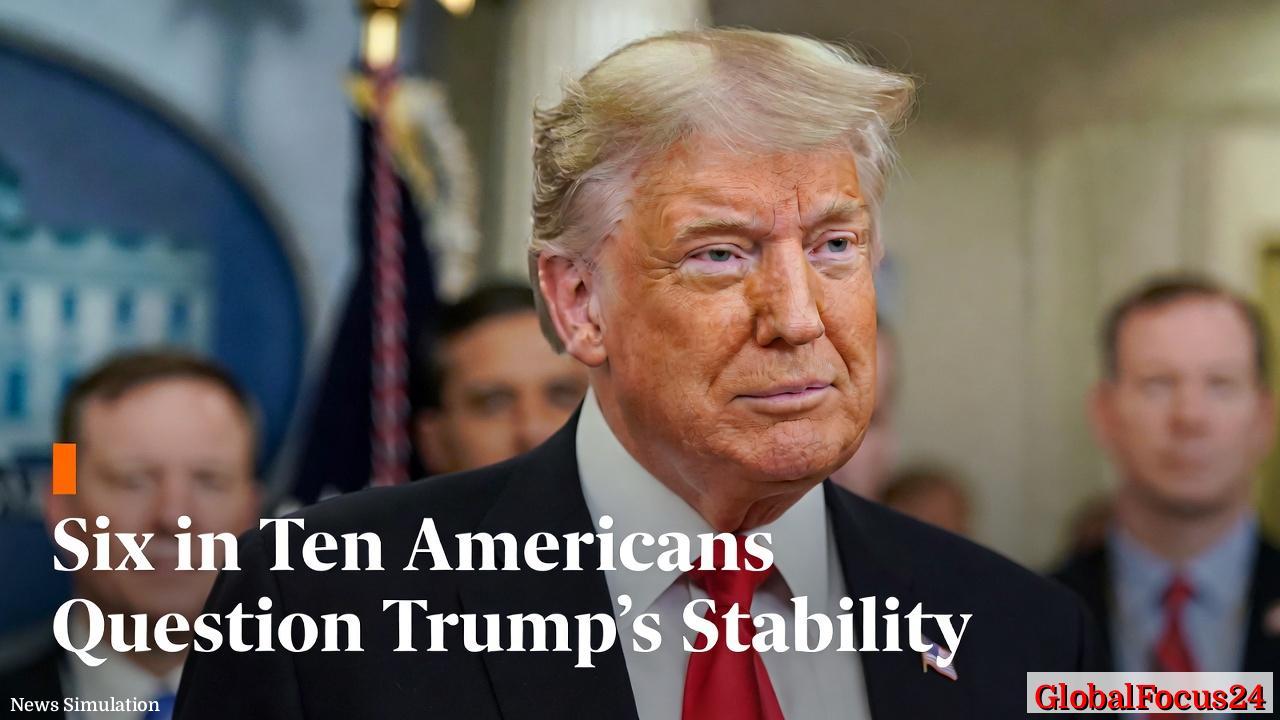
US public sentiment shifts as political leadership and stability become a central concern
In a moment when markets, communities, and everyday lives hinge on steady leadership, a wave of public opinion reflects growing anxieties about political stability and leadership performance. A recent nationwide survey underscores how perceptions of presidential steadiness shape voters’ confidence, influence policy expectations, and ripple through economics, governance, and regional political dynamics. The findings illuminate not only national mood but also the regional differences that can amplify or dampen calls for change, reform, or continuity.
Historical context: leadership perceptions and public trust Public trust in political leadership has long followed patterns of performance, crisis response, and institutional resilience. In periods of economic expansion and social reform, confidence often correlates with the perceived effectiveness and predictability of leadership. By contrast, times of division, volatility, or rapid change tend to provoke scrutiny of temperament, judgment, and reliability. Historical benchmarks show that as administrations age, voters frequently reassess competency and steadiness against the backdrop of evolving domestic and global challenges. The current landscape echoes that pattern: as the political calendar intensifies, questions about consistency, predictability, and decision-making become central to how the public interprets leadership viability.
Economic impact: stability as a driver of markets and policy predictability Stability in national leadership can translate into a more predictable policy environment, which, in turn, tends to support investment decisions, hiring plans, and consumer confidence. Businesses often weigh the reliability of messaging and policy continuity when planning capital expenditures, supply chain resilience, and regulatory expectations. When voters perceive a leader as erratic or uncertain, the associated volatility can seep into financial markets, influencing risk premiums, borrowing costs, and sector-specific investment. This dynamic is particularly pronounced in regions with dense networks of industries that rely on long-term planning, such as technology, manufacturing, and energy.
Regional comparisons illustrate how public perception of leadership translates into local economic ripples. In areas with robust small-business ecosystems, signals of political stability are often tied to confidence in fiscal policy, regulatory clarity, and bipartisan coordination on infrastructure and workforce development. Conversely, regions that have experienced economic disruption or urban-to-rural transitions may react more acutely to perceived leadership volatility, as residents anticipate policy shifts that affect jobs, education, and public services. The relationship between leadership perception and regional economic outcomes underscores the importance of steady governance for sustained growth and resilience.
Demographic patterns and public sentiment Demographic factors shape how leadership style and temperament are evaluated. Age, education, geographic location, and sector of employment can influence whether voters prioritize steadiness, decisiveness, or reform-oriented leadership. For example, younger voters might emphasize innovation, adaptability, and long-term strategic planning, while communities facing immediate economic pressures may value clear, reliable decision-making and predictable policy horizons. Across the country, a broad cross-section of Americans express a desire for governance that is competent, transparent, and capable of navigating complex challenges without unnecessary volatility.
Public reaction and media framing Public reaction to leadership perceptions is shaped by a confluence of political messaging, media coverage, and personal experiences. In an era of rapid information flow, narratives about leadership temperament can spread quickly, influencing opinions across party lines. While some respondents express concern over erratic leadership as a potential risk to governance and governance continuity, others emphasize the importance of accountability, checks and balances, and the ability to adapt to unforeseen developments. The interplay between media framing, public sentiment, and policy outcomes highlights the importance of clear communication, evidence-based decision-making, and steady execution in public service.
Policy implications: governance approaches to bolster confidence In response to a public appetite for steadier leadership, several policy avenues stand out as prioritizing reliability and continuity:
- Fiscal transparency and predictability: Clear long-term budgeting and transparent fiscal plans help reduce uncertainty for businesses and households.
- Bipartisan problem-solving frameworks: Institutions that encourage cross-party collaboration can bolster confidence in governance even amid political disagreement.
- Crisis readiness and resilience: Investment in emergency preparedness, disaster response, and economic stabilization mechanisms signals competence and reduces the perceived risk of abrupt policy shifts.
- Independent, data-driven policymaking: Policies grounded in robust analysis and metrics can help the public assess progress and hold leaders accountable without bias. These approaches aim to create a governance environment where decisions are guided by evidence and long-term interests, rather than reactive or erratic shifts that may erode trust.
Regional case studies: how different locales interpret leadership stability
- Technology corridors and manufacturing hubs: Regions with high concentrations of innovation and production emphasize predictable policy support for research, development, and trade. Confidence in consistent regulatory paths and steady investment climates translates into greater willingness among firms to commit to long-term projects.
- Agricultural and rural areas: Local economies often hinge on predictable agricultural policy, infrastructure investments, and access to markets. In these communities, steady leadership and reliable administration of programs directly affect farm incomes, rural job stability, and community services.
- Urban centers with diverse economies: Cities balancing multiple industries value transparent governance, efficient public services, and steady leadership that can coordinate complex initiatives ranging from housing to transit to education.
Implications for the 2026 political landscape As the country navigates a pivotal period, public perception of leadership steadiness will likely influence campaign strategies, policy proposals, and voter turnout. Candidates and officeholders may respond by prioritizing clear communication, demonstrable results, and concrete plans to manage costs, stabilize markets, and support families. The broader civic environment benefits from leaders who can articulate a consistent vision while remaining adaptable to new information and evolving conditions.
What this means for everyday life
- For families: predictable budgets and stable prices enable better planning for housing, groceries, and education.
- For businesses: clarity around regulations, taxes, and infrastructure priorities supports capital allocation and hiring.
- For communities: durable investment in infrastructure, schools, and public services enhances resilience and quality of life.
In sum, the public’s growing emphasis on leadership steadiness reflects a shared desire for governance that is competent, transparent, and capable of steering the nation through change. Historical context offers a lens to understand why this moment matters: stability underpins confidence. Economic signals, regional differences, and demographic perspectives all point toward a demand for governance that combines decisive action with predictable execution. As the national conversation evolves, the chord that resonates most loudly is the one that reassures the public that their leaders will navigate uncertainty with competence, steadiness, and a sustained focus on the common good.