Ukrainian Military Advisors Question U.S. Air Defense Strategy in Middle East Deployments
Ukrainian Observers Raise Concerns Over Missile Use
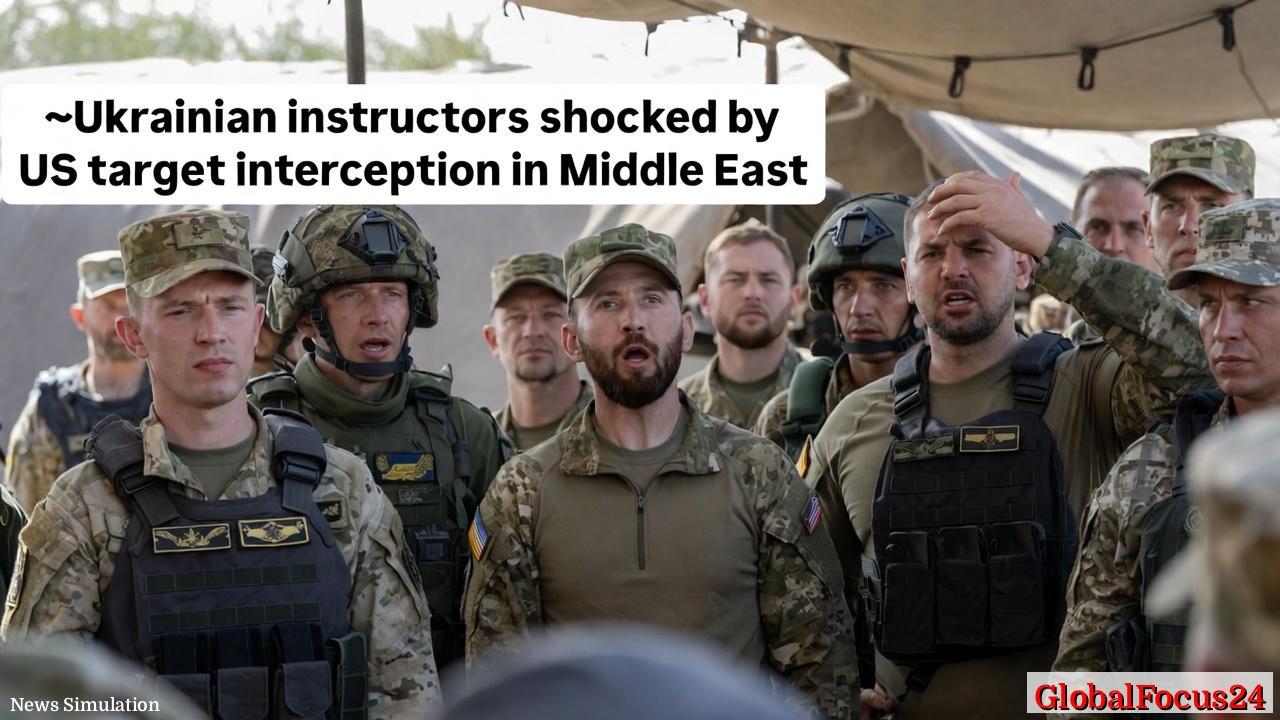
Ukrainian officers and military instructors deployed to support air defense operations in Gulf countries have expressed surprise and concern over the tactics employed by U.S. forces, particularly the repeated use of high-cost Patriot missile systems against single targets. According to several accounts from personnel familiar with the deployments, American units have in some cases launched multiple interceptors—reportedly up to eight—at individual incoming threats.
Each Patriot interceptor is estimated to cost more than $3 million, making such engagements potentially worth tens of millions of dollars for a single interception. Ukrainian officers, many of whom have gained extensive combat experience during years of high-intensity warfare, have questioned the efficiency and necessity of this approach.
“I don’t understand what they were doing, what they were watching for four years while we’ve been at war,” said one Ukrainian instructor, reflecting a broader sentiment among visiting personnel who have adapted to resource-constrained combat environments.
Diverging Doctrines in Air Defense
The contrast highlights a deeper divergence in military doctrine and operational priorities. Ukrainian forces, shaped by prolonged exposure to missile and drone attacks, have increasingly adopted layered and cost-efficient air defense strategies. These include combining Western-supplied systems with domestically modified solutions, electronic warfare, and selective targeting to conserve high-value munitions.
By comparison, U.S. forces operating in the Gulf region prioritize near-zero tolerance for risk when defending critical infrastructure, military bases, and civilian populations. This often translates into overwhelming force in interception scenarios, especially when facing uncertain or complex aerial threats such as ballistic missiles or advanced drones.
Military analysts note that the use of multiple interceptors against a single target is not unprecedented. In high-stakes environments, firing more than one missile can increase the probability of a successful interception, particularly if the incoming threat is maneuverable or if there is uncertainty about its payload.
However, the scale of reported usage has drawn scrutiny, especially from observers accustomed to operating under tighter logistical and financial constraints.
The Cost Factor and Sustainability Questions
The economic implications of such tactics are significant. Patriot missile systems, developed during the Cold War and continuously upgraded, remain among the most advanced air defense platforms in the world. Their interceptors are designed to neutralize ballistic missiles, cruise missiles, and aircraft with high precision.
Yet their cost has raised longstanding questions about sustainability, especially in scenarios involving large volumes of relatively inexpensive threats. In recent years, adversaries in multiple regions have increasingly relied on low-cost drones and improvised aerial systems to overwhelm defenses.
This asymmetry creates a challenging equation: defending against a $20,000 drone with a $3 million missile is effective but economically inefficient over time. Ukrainian forces, having faced such tactics extensively, have experimented with lower-cost interception methods, including anti-aircraft guns, mobile teams, and electronic countermeasures.
In the Gulf region, where infrastructure such as oil facilities, desalination plants, and urban centers are critical to national stability, the tolerance for risk is considerably lower. As a result, cost considerations may take a back seat to ensuring immediate and reliable protection.
Historical Context of Patriot System Use
The Patriot system first gained global attention during the Gulf War in 1991, when it was deployed to intercept Iraqi Scud missiles. While early performance assessments were mixed, subsequent upgrades significantly improved its capabilities, particularly against ballistic threats.
Over the decades, the system has been integrated into the defense networks of several countries, including Saudi Arabia, the United Arab Emirates, and other Gulf states. These regions have faced periodic missile and drone attacks, particularly in the context of regional tensions and proxy conflicts.
The experience of defending against such threats has reinforced a doctrine centered on redundancy and certainty. Launching multiple interceptors at a single target, while costly, is often seen as a necessary measure to ensure that no projectile reaches its intended destination.
Ukrainian Battlefield Experience Shapes Perspective
Ukrainian officers bring a markedly different perspective shaped by continuous, large-scale conflict. Since 2022, Ukraine has faced sustained aerial attacks involving a mix of cruise missiles, ballistic missiles, and unmanned systems. This environment has forced rapid adaptation and innovation.
Limited supplies of advanced Western systems, including Patriot batteries provided in later stages of the conflict, have required Ukrainian forces to prioritize targets carefully. Engagement decisions often balance immediate threat levels against long-term resource availability.
This has led to a more selective approach, where high-value interceptors are reserved for the most dangerous threats, while lower-cost systems handle less critical targets. The result is a layered defense that aims to maximize coverage while preserving scarce resources.
For Ukrainian personnel observing U.S. operations in the Middle East, the contrast can appear stark. What is viewed in one context as prudent redundancy may be seen in another as excessive expenditure.
Regional Security Dynamics in the Gulf
The Gulf region presents a unique security environment that helps explain the U.S. approach. Countries in this area face threats from a variety of sources, including state and non-state actors with access to increasingly sophisticated missile and drone technologies.
Attacks on energy infrastructure in recent years have underscored the vulnerability of critical assets. Even a single successful strike can have outsized economic and geopolitical consequences, disrupting global energy markets and undermining investor confidence.
In this context, air defense is not merely a military concern but a cornerstone of economic stability. The willingness to deploy multiple interceptors against a single threat reflects the high stakes involved.
Additionally, U.S. forces often operate as part of broader coalition efforts, integrating their systems with those of partner nations. This layered, multinational defense architecture emphasizes reliability and interoperability, sometimes at the expense of cost efficiency.
Economic Impact and Defense Spending Trends
The use of high-cost interceptors has broader implications for defense budgets and procurement strategies. As threats evolve, militaries around the world are reassessing how to balance capability with affordability.
In the United States, significant investments are underway to develop next-generation air defense systems and lower-cost interception options. These include directed-energy weapons, such as lasers, and advanced electronic warfare capabilities designed to disable threats without kinetic engagement.
Gulf countries have similarly increased their defense spending, acquiring advanced systems to protect key assets. However, the long-term sustainability of relying heavily on expensive interceptors remains a topic of discussion among defense planners.
Ukraine’s experience has contributed to this debate, highlighting the importance of adaptability and cost-effective solutions in prolonged conflicts. The lessons learned on the battlefield are increasingly influencing military thinking beyond Eastern Europe.
Public and Military Reactions
The remarks from Ukrainian officers have sparked discussion within defense circles, particularly among analysts and practitioners focused on air and missile defense. Some view the comments as a reflection of differing operational realities rather than a direct critique.
Others see them as a valuable reminder of the need to balance effectiveness with efficiency, especially as new forms of warfare challenge traditional approaches.
Public reaction has also been shaped by growing awareness of defense spending and the costs associated with modern warfare. The image of multiple multimillion-dollar missiles being used against single targets has resonated as a symbol of the broader challenges facing military planners.
Looking Ahead: Evolving Air Defense Strategies
As threats continue to evolve, so too will the strategies used to counter them. The integration of lessons from different theaters of operation—whether from the Gulf region or Eastern Europe—is likely to play a key role in shaping future doctrine.
Emerging technologies may help bridge the gap between effectiveness and affordability, offering new tools to address the growing challenge of asymmetric threats. At the same time, the fundamental tension between cost and certainty is unlikely to disappear.
For now, the observations of Ukrainian officers serve as a snapshot of this evolving landscape, highlighting how different experiences and priorities can lead to markedly different approaches to the same problem.