US and Israel Announce Death of Iran’s Supreme Leader Ayatollah Ali Khamenei
A Major Turning Point in Middle East History
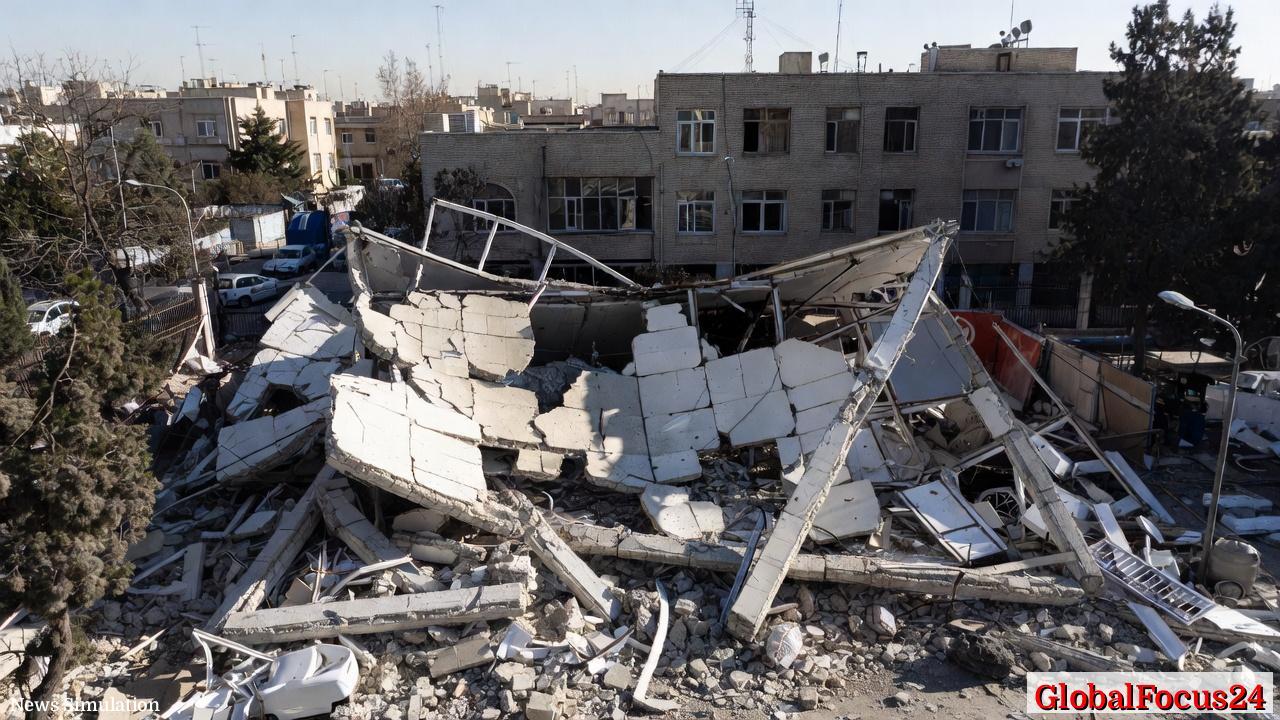
In a stunning development with wide-reaching global repercussions, United States and Israeli officials announced that Iran’s Supreme Leader, Ayatollah Ali Khamenei, was killed overnight in a coordinated military strike on Tehran. According to early reports, the attack targeted Khamenei’s heavily fortified compound in the capital, reducing sections of it to rubble. The 86-year-old leader, who ruled Iran since 1989, is believed to have died instantly.
Confirmation of Khamenei’s death, if verified, marks the most significant political shake-up in the Middle East in decades. The state of Tehran has not faced such a leadership vacuum since the 1979 Islamic Revolution, an event that transformed Iran from a monarchy into an Islamic republic guided by clerical authority.
Iranian state media has denied the Western accounts, insisting the Supreme Leader remains "alive and commanding the field," though no recent images or proof of life have been released since the early hours following the attack.
Predawn Strike on Tehran
The strike reportedly occurred before dawn, with blasts reverberating across northern Tehran. Residents described scenes of chaos as anti-aircraft fire lit up the sky and air raid sirens wailed. Israeli intelligence sources suggested that precision-guided munitions targeted strategic command sites, including the complex housing Khamenei’s residence, subterranean bunkers, and key military communications centers.
Satellite images captured after sunrise appeared to show extensive damage to the core of the compound, though independent verification remains limited amid restricted access and communications blackouts.
The Pentagon confirmed participation in the operation but emphasized coordination and intelligence-sharing rather than direct troop involvement. US officials described the mission as part of a broader campaign to "neutralize imminent threats" arising from Iranian-backed proxies in the region.
Official Reactions and Ongoing Uncertainty
President Donald Trump, who has remained a vocal critic of Iran’s leadership for years, addressed the nation following the announcement. "This marks justice delivered for the many victims of Khamenei’s decades of terror," he stated, calling the strike a “historic opportunity” for Iranians to reclaim their future.
In Jerusalem, Israeli Prime Minister Benjamin Netanyahu echoed those sentiments, saying, "The regime’s architect of aggression is no longer with us." Israeli defense sources claimed they possess photographic evidence confirming Khamenei’s death, with officials describing a 99 percent certainty based on intelligence verification.
Contrastingly, in Tehran, officials exhibited defiance. Iran’s Foreign Minister stated during a brief appearance, "As far as I know, the Leader is alive and steadfast." The Revolutionary Guard Corps, meanwhile, vowed "harsh retaliation" and announced retaliatory missile fire targeting Israeli defense sites along the northern front, sparking renewed fears of regional escalation.
Global Shockwaves and Oil Market Response
The announcement sent immediate tremors through global markets. Crude oil prices surged by more than 15 percent within hours of the news, reflecting both uncertainty over Iran’s stability and the specter of retaliatory attacks on regional energy infrastructure. The Persian Gulf, a transit point for a fifth of the world’s daily oil supply, remains on high alert.
In Kuwait and Saudi Arabia, energy ministries declared emergency readiness procedures, citing concerns about potential Iranian missile activity around the Strait of Hormuz. Analysts noted that any extended disruption could have cascading effects across global supply chains already stretched by political instability and climate-related production challenges.
The Iranian rial, which had been under significant pressure from years of sanctions, fell sharply in parallel trading markets, while neighboring economies, including Turkey and Iraq, braced for potential refugee outflows and border security concerns.
Historical Context and the End of an Era
Ayatollah Khamenei rose to power after the death of Ayatollah Ruhollah Khomeini in 1989, becoming only the second Supreme Leader in Iran’s post-revolution history. His tenure was defined by a combination of ideological rigidity and pragmatic survival. He steered Iran through prolonged isolation under international sanctions, maintained control through the Revolutionary Guard, and oversaw a network of proxy movements across the Middle East, from Hezbollah in Lebanon to the Houthis in Yemen.
Khamenei’s rule also coincided with tumult at home—mass protests, economic crises, and growing generational discontent. The government’s suppression of demonstrators and control over social freedoms drew widespread condemnation but ensured regime continuity. His death, verified or not, could unravel that careful balance, leaving the political establishment scrambling to maintain cohesion.
Analysts warn of competing factions already maneuvering within Iran’s complex power structure. Under the Iranian constitution, the Assembly of Experts is responsible for selecting a new Supreme Leader. However, with internal communications possibly disrupted and security apparatuses in turmoil, that process may face unprecedented delays or disputes.
Regional Repercussions and Security Realignments
Across the Middle East, governments reacted swiftly. Saudi officials called for restraint while reinforcing air defenses near major oil installations. The United Arab Emirates initiated security reviews of its transport and energy sectors, wary of Iranian cyber operations.
Israel placed its northern regions on high alert, closing airspace near the Lebanese border amid fears of retaliatory missile attacks from Hezbollah. In Iraq and Syria, US bases are reportedly reinforcing defensive positions.
Beyond immediate military considerations, the potential end of Khamenei’s leadership opens profound diplomatic questions. Will a successor support continued defiance against the West or attempt detente to ease sanctions and rejoin international trade frameworks such as the nuclear accord?
For Washington, the answer may shape not only Middle Eastern security but also energy policy, defense spending, and global strategic alignments with partners such as Saudi Arabia and the European Union.
Economic Impact Beyond the Region
The shockwave from Tehran reverberates far beyond the oil markets. Asian economies, especially those reliant on Iranian crude before US sanctions—such as China, India, and South Korea—stand to experience ripple effects in energy costs.
Stock markets in Tokyo, London, and New York opened uncertainly, with defense and energy sector shares climbing while aviation and manufacturing stocks declined. Economists predict that sustained tension could inject inflationary pressure into an already fragile global recovery, particularly as freight and insurance rates for Middle Eastern shipping routes soar.
In Europe, leaders convened emergency energy meetings to discuss coordinated reserve releases and alternative supply strategies through Mediterranean and North African producers. France and Germany both urged “measured responses” to avoid escalating the conflict into a full-scale regional war.
The Path Ahead: Unanswered Questions
If confirmed, Khamenei’s death would end a regime defined by ideological rigidity and regional ambition. Yet, as analysts stress, removing one figurehead may not immediately diminish Iran’s far-reaching military influence or its capacity for asymmetric warfare. The Revolutionary Guard retains operational independence, overseeing vast missile stockpiles and cyber capabilities that have been central to Iran’s deterrence strategy.
Meanwhile, millions of Iranians appear to be processing the moment with both apprehension and guarded hope. Reports from Tehran and Mashhad describe sporadic demonstrations—some mourning, others celebrating—while authorities restrict mobile networks to limit information flow.
Much now depends on whether Iran’s fragmented leadership can project stability. Without clear succession, the country could face internal fracturing, with clerical elites, military leaders, and reformist politicians vying for control. Such instability could, in turn, inflame broader conflicts stretching from the Eastern Mediterranean to the Persian Gulf.
A Volatile New Chapter
The reported death of Ayatollah Khamenei—if authenticated—marks the end of one of the longest and most consequential leadership eras in modern Iranian history. His tenure reshaped regional power balances, often in confrontation with the United States and Israel. Now, with his absence, the geopolitical chessboard tilts once again.
For decades, Iran’s strategy revolved around Khamenei’s centralized authority, binding together sectarian movements, paramilitary networks, and a national ideology rooted in defiance. His possible removal leaves an uncertain vacuum—one that adversaries and allies alike are watching with acute attention.
Whether this moment ushers in reform, backlash, or further conflict will depend on decisions made in the coming days. What’s certain is that the Middle East has entered one of its most unpredictable and potentially volatile chapters in a generation.