)
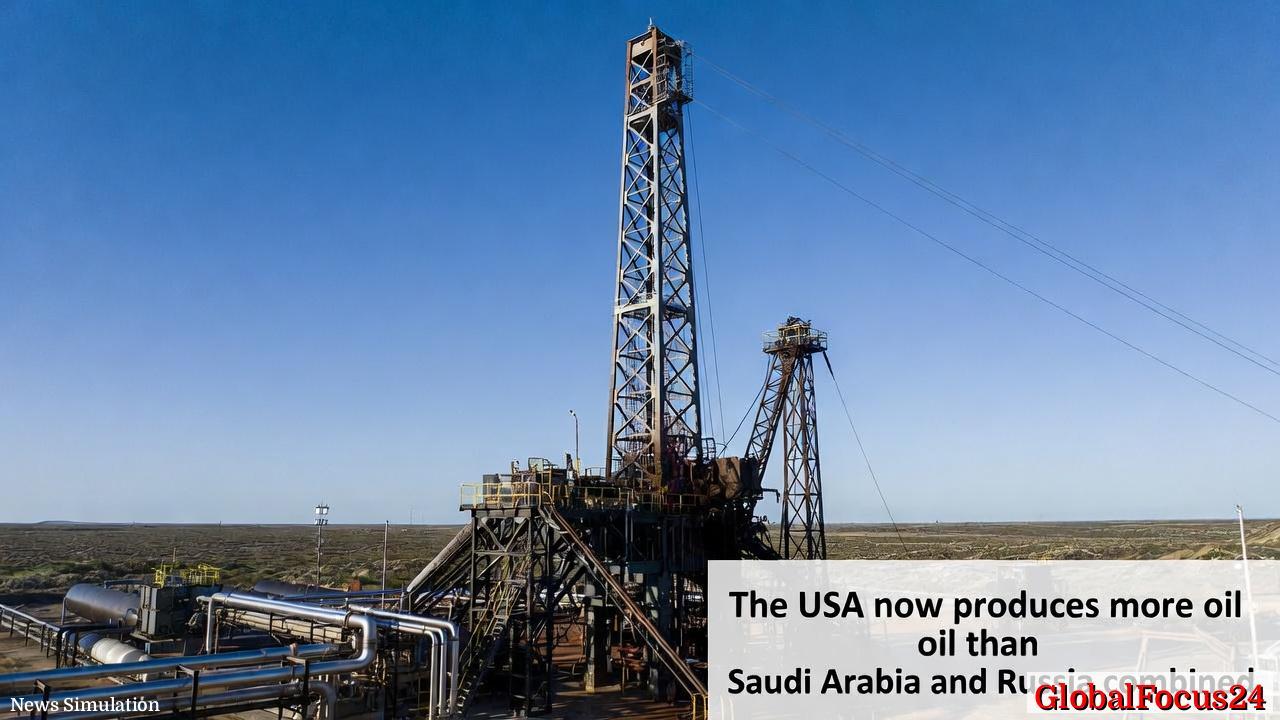
OIL SHOCK, NEW ERA: HOW AMERICA NOW PRODUCES MORE OIL THAN SAUDI ARABIA AND RUSSIA COMBINED
In the early decades of the 21st century, the energy landscape shifted from dependence on a handful of global giants toward a broader, more dynamic mix of producers. Today, the United States stands at the pinnacle of oil production, signaling a profound recalibration of global energy markets, geopolitics, and regional economic trajectories. This article examines the historical arc that led to this moment, the macroeconomic consequences for oil markets and domestic industries, and how regional comparisons illuminate the evolving balance of power in energy production.
Historical context: a century-long evolution of American energy prowess
The United States has long been a major player in global oil markets, but the trajectory of domestic production has been marked by cycles of discovery, technology, regulation, and market demand. In the early 1900s, U.S. oil booms were driven by frontier exploration and conventional extraction. Over time, the maturation of fields such as those in Texas and the Gulf coast created a robust, diversified base that powered industrial growth and transportation networks. The ensuing decades saw periods of rapid expansion, then consolidation or decline as aging fields required recovery techniques and new plays emerged. This historical rhythm—boom, decline, revival—set the stage for the modern era’s breakthroughs in unconventional resources, which would redefine national output and the country’s role in world oil markets.
Two pivotal turning points marked the contemporary rise of American production: the shale revolution and policy-driven investment in efficiency and infrastructure. Advances in horizontal drilling and hydraulic fracturing unlocked vast reserves previously considered uneconomical, expanding the productive capacity of formations such as the Permian Basin, the Bakken, and the Eagle Ford. The resulting surge in supply coincided with steady, albeit uneven, demand growth, helping to temper global prices and increase U.S. energy self-sufficiency. This period also coincided with substantial private and public capital flows into drilling, processing, and midstream infrastructure, enabling a production cadence that could respond to price signals with speed and scale.
Economic impact: from price signals to industrial resilience
The immediate economic reverberations of elevated U.S. oil production have been wide-ranging. First, sustained higher domestic output translated into improved energy security and currency stability, factors that influence inflation dynamics and monetary policy considerations. For industries dependent on energy inputs, the effect is a lower marginal cost of production, which can support export competitiveness and domestic investment in energy-intensive sectors such as manufacturing and chemicals. The broader macroeconomic narrative includes a more diversified energy mix that reduces vulnerability to supply shocks emanating from any single country or region.
On the consumer front, higher U.S. oil production has typically contributed to lower gasoline prices during periods of oversupply and rapid ramp-ups, though regional price differentials reflect refining capacity, distribution networks, and policy factors. The distributional implications are nuanced: while smoother prices support household budgets, they also influence public sentiment around energy policy and climate initiatives. In parallel, the energy sector has become a significant source of high-paying jobs, technology transfer, and local tax revenues, particularly in regions with dense shale activity. A robust production profile can also bolster the resilience of local economies against downturns in other sectors by providing a steady stream of investment and employment.
Regional comparisons: how the United States stacks up against traditional powerhouses
To appreciate the magnitude of the current production landscape, it helps to compare regional dynamics across major oil producers. Traditionally, Saudi Arabia and Russia have been anchors of global supply, shaping OPEC+ strategies and the broader price environment. In recent years, sustained growth in American output—driven by shale plays, enhanced oil recovery in mature fields, and incremental improvements in drilling efficiency—has altered the competitive calculus.
- United States vs. Saudi Arabia: In the shale era, the U.S. demonstrated the capacity to rapidly scale up production in response to price signals, a flexibility that complements Saudi Arabia’s strategy of supply management. While Saudi Arabia retains significant spare capacity and influence within OPEC+, U.S. production growth has contributed to a more diffuse and resilient global supply framework. The resulting dynamic is a market where the United States can act as both a major importer of certain crudes and a dominant exporter of light, sweet grades refined domestically or shipped internationally.
- United States vs. Russia: Russia’s output and export infrastructure have historically been intertwined with European markets and Eurasian trade routes. The American efficiency gains, alongside intensified competition for market share in Asia and Europe, created a landscape in which the United States can compensate for regional disruptions elsewhere and provide a broader set of crude and refined product options. The geographic diversification of U.S. supply chains, including robust oil and gas infrastructure on the Gulf Coast and in inland regions, reinforces this competitive edge.
- Global context: Beyond the triad, other producers have grown in importance, yet the United States’ ability to blend high-velocity drilling with rapid processing capacity remains a distinctive advantage. This combination helps stabilize supply at a granular level, contributing to price signals that reflect both global demand and the health of domestic energy industries. The net effect is a more multipolar oil landscape, with the United States positioned as a leading producer and a key player in global energy economics.
Technological and policy dimensions: fuel efficiency, capital, and infrastructure
A core driver behind the United States’ outsized production is the sustained integration of technology with capital investment. Advances in drilling bit design, reservoir modeling, and real-time data analytics have improved the efficiency and safety of extraction, enabling more precise targeting of productive intervals while reducing non-productive time. This technological edge translates into lower costs per barrel and a more scalable production model, even in the face of variable commodity prices.
Supportive policy and investment environments have further amplified production capacity. Private operators, along with public sector incentives and regulatory frameworks, have encouraged risk-taking in new plays and enhanced oil recovery projects in mature basins. Infrastructure investments—pipelines, rail, and port facilities—have reduced logistical bottlenecks, allowing faster delivery of crude to refining centers and export markets. Moreover, the convergence of digital technologies with physical assets has fostered more adaptive maintenance regimes, lowering downtime and extending field life.
Environmental and social considerations: balancing growth with responsibility
As production scales upward, stakeholders weigh environmental and social dimensions alongside economic gains. The shale era has drawn attention to water management, seismic activity in certain regions, and soil and air quality concerns around drilling topics. Industry participants have responded with improved well-cementing practices, enhanced site restoration protocols, and more comprehensive monitoring programs. Public-facing transparency around operational footprints—emissions intensity, methane reduction initiatives, and well integrity standards—has grown in importance for communities near production sites.
Local communities in producing regions have experienced both opportunities and challenges. Job creation and increased municipal revenue can boost schools, infrastructure, and public services, but pressures on housing, traffic, and local ecosystems necessitate thoughtful planning and collaboration between industry, government, and residents. The evolving dialogue around responsible development has spurred partnerships focused on workforce training, community investment, and environmental stewardship, underscoring that energy prosperity and quality of life can advance together when stakeholders align on shared goals.
Global demand and price dynamics: how a new production reality shapes markets
The rise of U.S. oil output does not exist in isolation from global demand trends. The energy market remains sensitive to macroeconomic cycles, geopolitical tensions, and shifts in energy policy worldwide. When U.S. production expands, it can contribute to a broader supply cushion that dampens price spikes during sudden disruptions, while potentially easing pressure on importing nations that rely on steady supplies. Conversely, if demand accelerates rapidly, the same production capacity can help accommodate higher consumption without triggering outsized price increases, contributing to market stability.
The price environment for crude is influenced by several interacting factors: global stock levels, refinery utilization rates, and the mix of crude grades demanded by downstream users. The United States, with its growing export capacity, has been able to pivot between domestic consumption and international markets, providing a flexible channel that helps balance regional supply and demand. This flexibility is particularly valuable during periods of geopolitical uncertainty or supply chain disruptions, where diversified sources of supply help avert sudden shortages.
Implications for energy security, climate policy, and investment decisions
The new production reality has multifaceted implications for energy security. A production profile dominated by a technology-enabled, high-output system reduces single points of failure and broadens the set of credible supply options available to global buyers. For policymakers and industry leaders, the challenge lies in maintaining a resilient, sustainable trajectory that honors commitments to climate goals while sustaining economic growth and job creation. This balancing act invites ongoing collaboration between federal and state authorities, industry associations, and research institutions to accelerate innovations in low-emission extraction, carbon capture, and fuels that complement traditional crude markets.
From an investment perspective, the intensified U.S. production environment has prompted reallocation of capital toward broader energy portfolios. Investors weigh not only short- to mid-term returns but longer-term considerations such as how technology, infrastructure upgrades, and environmental performance influence profitability and risk. In regions where shale plays drive activity, local governments and communities increasingly favor transparent governance and shared-benefit arrangements that align economic gains with responsible development. The financial markets respond to these signals through capital allocation patterns that favor stable, scalable, and sustainable project pipelines.
Regional anecdotes: echoing the national narrative in local economies
Across producing regions—from the Permian Basin’s wide-open plains to the steep limestone outcrops of Appalachia—communities experience a mix of opportunities and pressures. Local chambers of commerce highlight job creation, vendor opportunities, and rising demand for services that accompany a growing workforce. In contrast, commuter corridors near dense drilling zones grapple with traffic congestion and housing affordability, pushing municipal planners to invest in infrastructure and affordable housing strategies. Educational initiatives, from vocational training to STEM programs, align with industry needs, ensuring that the next generation of workers can thrive in high-tech oilfield environments.
Public sentiment around energy development tends to be nuanced. In many communities, the narrative centers on prosperity, resilience, and the potential for long-term prosperity through technological advancement. Yet residents also advocate for responsible practices, community engagement, and environmental safeguards that protect local ecosystems. City leaders increasingly emphasize collaboration with operators to ensure that revenue streams translate into enduring public goods, including schools, parks, and public safety, reinforcing the broader social license to operate.
What the future may hold: trajectory, uncertainty, and opportunity
Predicting the precise path of oil markets remains complex. On one hand, continued adoption of advanced extraction techniques and precision drilling could sustain robust U.S. output in the near term, providing a buffer against price volatility and supporting industrial growth. On the other hand, global policy shifts toward decarbonization, investments in alternative energy, and potential changes in trade patterns could shape demand trajectories in ways that challenge any single producer’s dominance. The remarkable rise of U.S. production, however, is unlikely to be temporary; it reflects a structural recalibration of energy capabilities that broadens the set of instruments policymakers and industry leaders can deploy to navigate the energy transition.
In regional terms, the United States’ production ascendancy reinforces a comparative stance against established centers of oil output. While singular dynamics in Saudi Arabia and Russia will continue to influence global markets, the U.S. position as a leading producer with a broad export footprint suggests a multi-faceted role for American energy in both domestic growth and international energy diplomacy. As supply chains adapt to this new equilibrium, the regions that best balance innovation, environmental stewardship, and community well-being are likely to reap the most sustainable benefits.
Conclusion: a transformative period for energy, economy, and everyday life
The United States’ emergence as the world’s leading oil producer, surpassing traditional powerhouses, marks a watershed moment in energy history. The shift reflects a confluence of technological breakthroughs, capital investment, and strategic infrastructure that together created a production ecosystem capable of scaling to meet global demand. The economic implications extend beyond price dynamics, touching on industrial competitiveness, job creation, and regional development. In the broader picture, this transformation redefines how energy security is understood, how markets are managed, and how communities participate in the energy economy. As the global energy system continues to evolve, the United States’ role as a primary driver of supply will influence policy discussions, investment strategies, and public expectations for years to come.
Key takeaways for readers and stakeholders
- Historical drivers: The shale revolution, enhanced drilling technologies, and purposeful infrastructure investment have together reshaped U.S. oil production.
- Economic impact: Expanded domestic output supports jobs, regional investment, and a more resilient energy economy while influencing consumer prices and industry competitiveness.
- Regional context: The United States now operates alongside long-standing producers with a broader export capability, changing the balance of power in global energy markets.
- Future considerations: Ongoing innovation, environmental stewardship, and policy alignment will determine how sustainable and inclusive the growth of American oil output proves over time.
Endnotes and context for further reading
- The current production landscape is the result of cumulative advancements in drilling techniques and reservoir management, complemented by investment in midstream and export infrastructure that enable rapid scaling of supply when market conditions require it.
- Comparative assessments of regional output illustrate how the United States’ production capacity interacts with global supply dynamics, influencing price formation and energy-security considerations for a diverse set of importing and exporting nations.
- Stakeholders—from policymakers and industry leaders to local communities—continue to navigate the trade-offs between energy abundance, environmental responsibility, and economic opportunity, seeking approaches that balance growth with sustainable development.
In a world where energy markets are increasingly interconnected, the United States’ ascent to the top of oil production charts signals more than a statistical milestone. It represents a recalibration of global energy dynamics, a testament to American innovation and resilience, and a prompt for communities and policymakers to plan thoughtfully for a future defined by diversified energy sources, robust economic activity, and shared prosperity.